
The dolls and I are hoping that you will be able to join us for the festivities here on IzannahWalker.com two weeks from today!
Paula Walton’s doll-making notes

This category is for pictures of and information about antique dolls made by Izannah Walker.
The dolls and I are hoping that you will be able to join us for the festivities here on IzannahWalker.com two weeks from today!
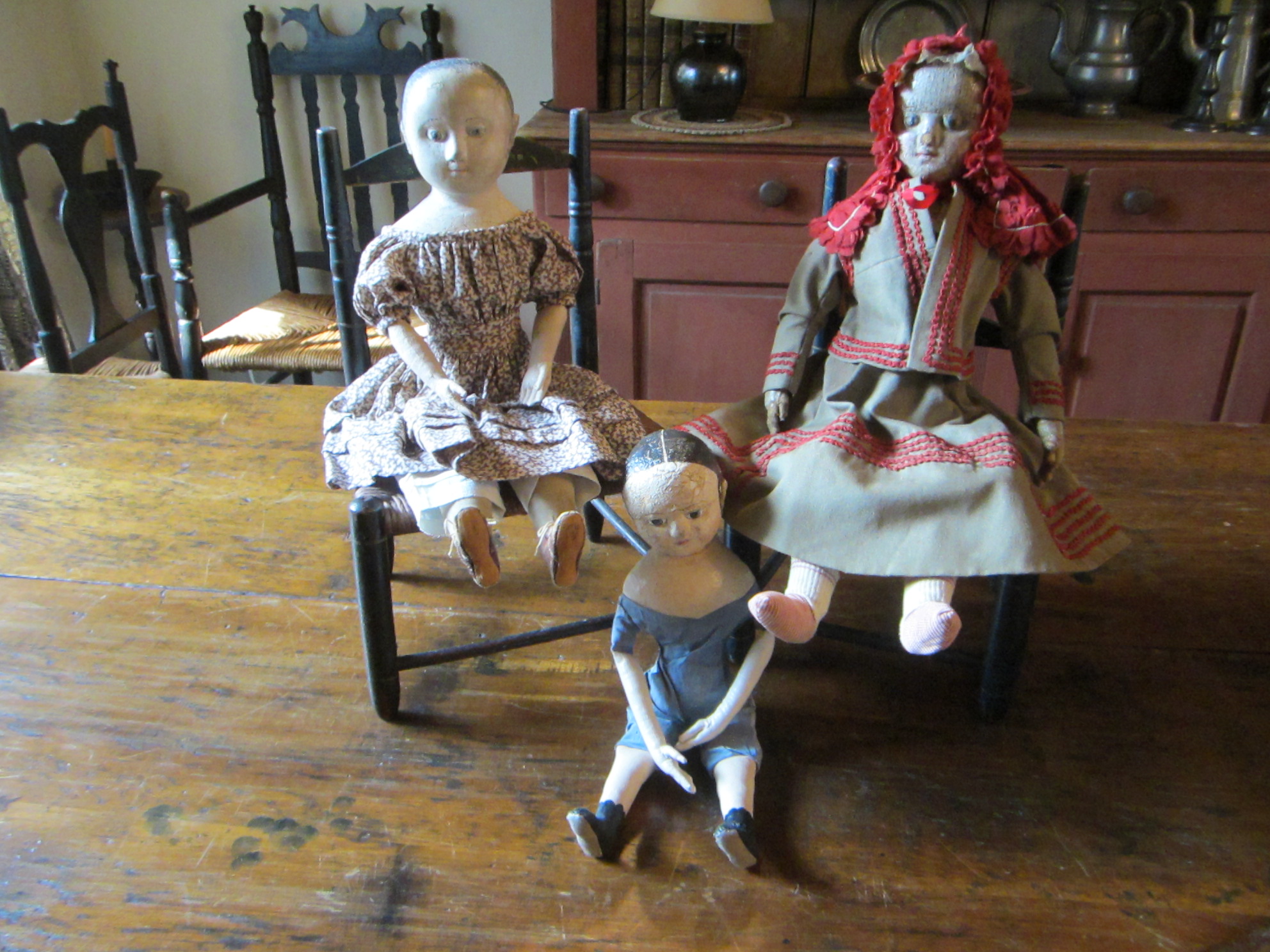
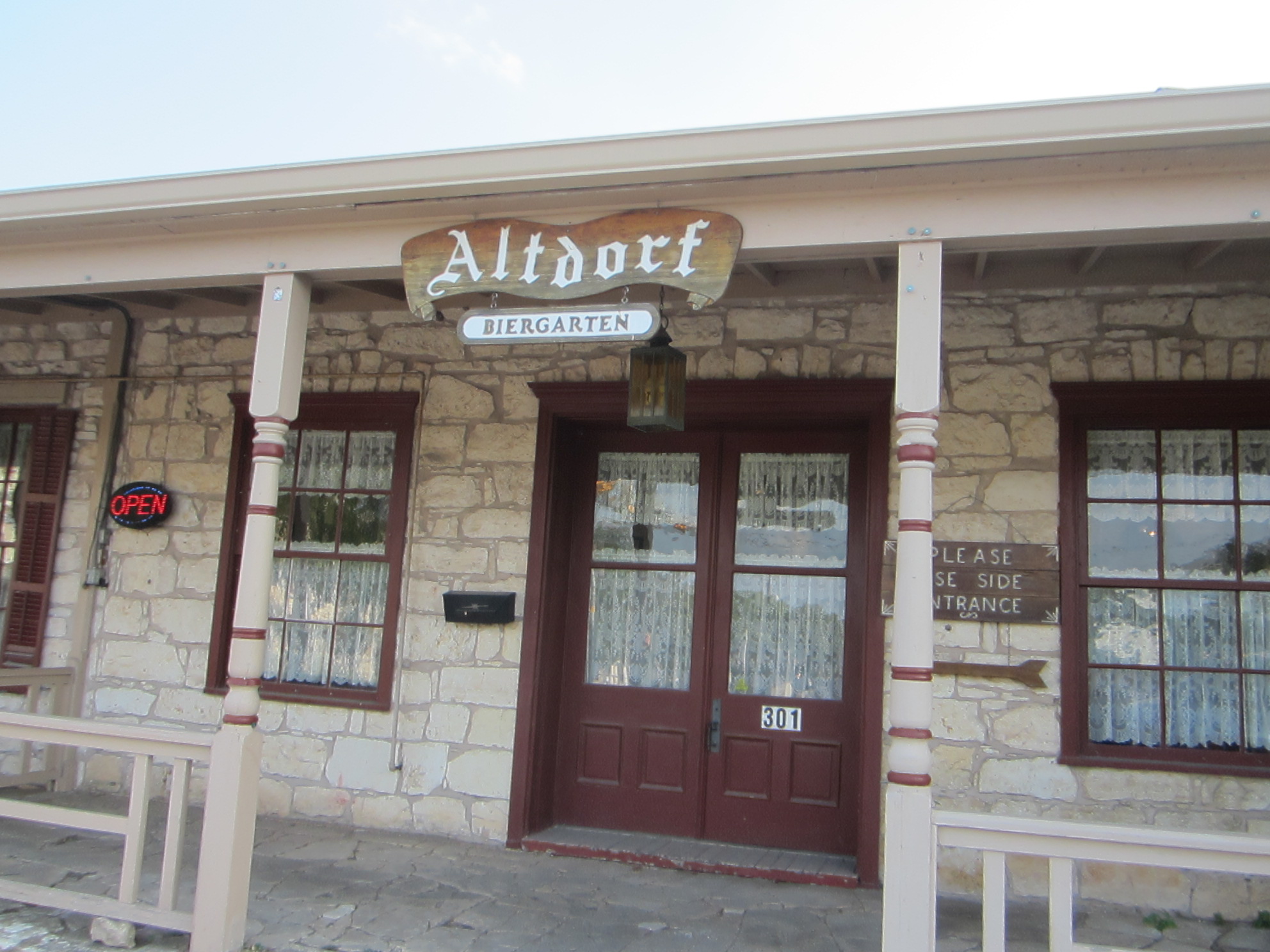
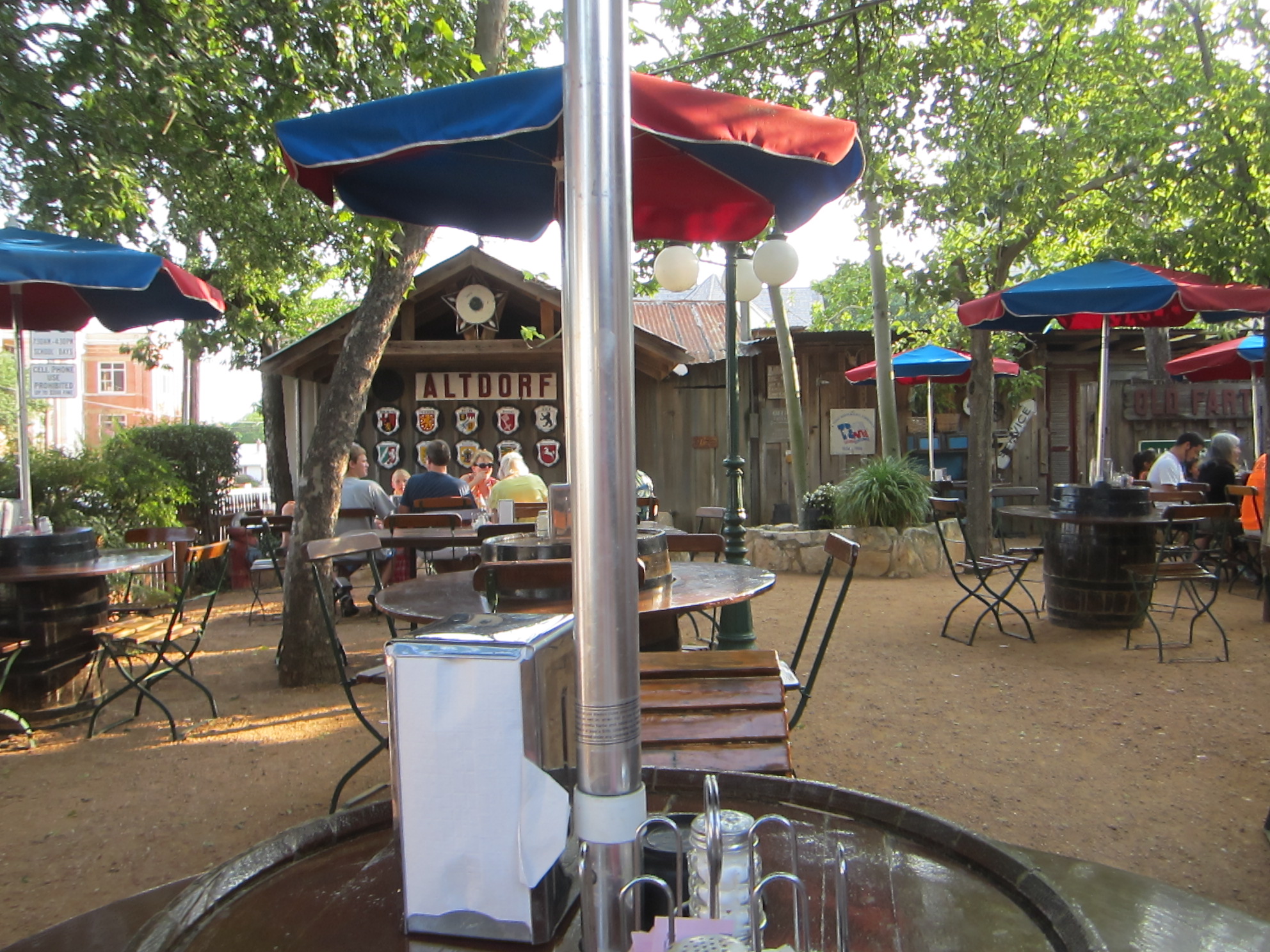
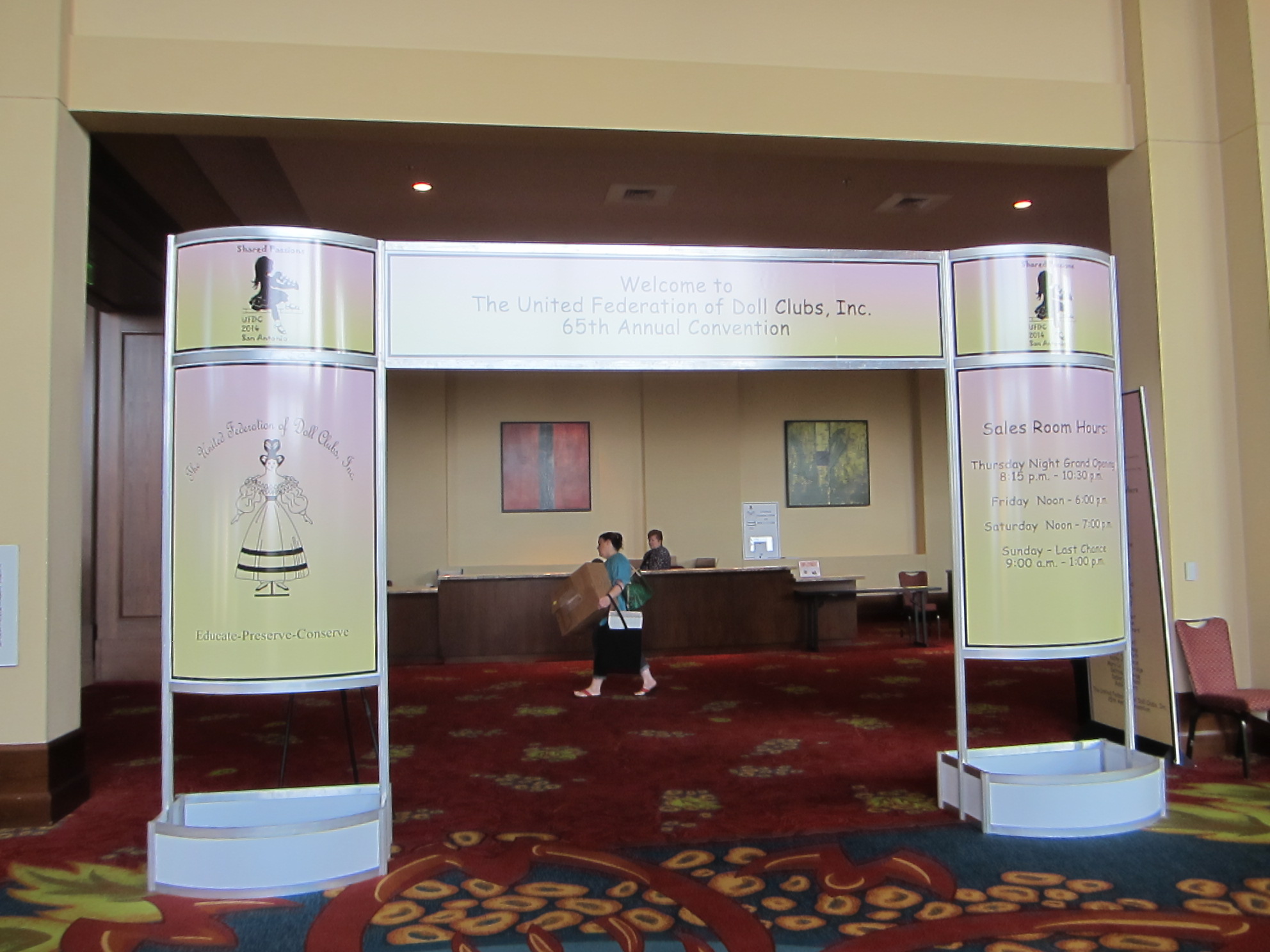
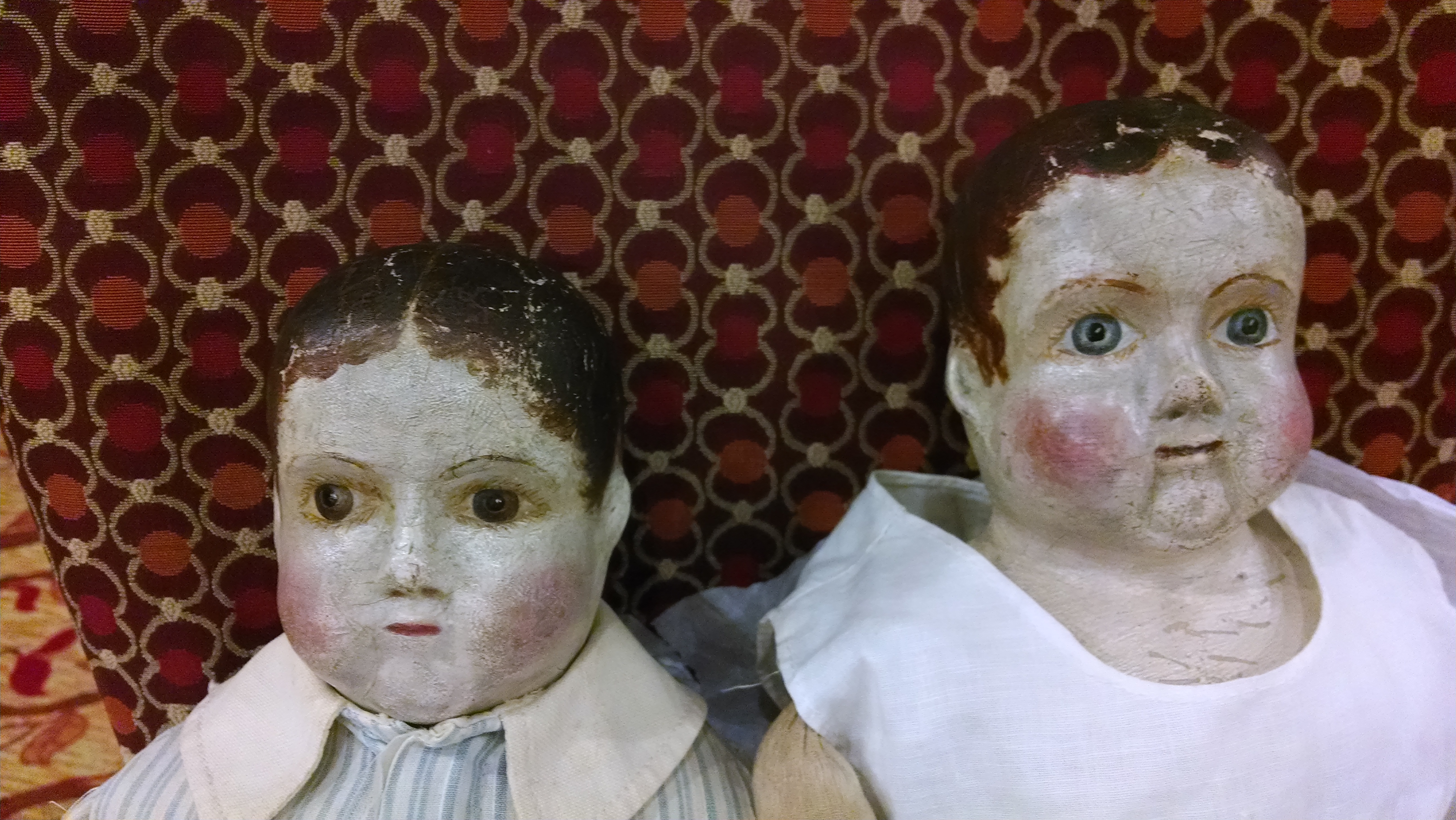
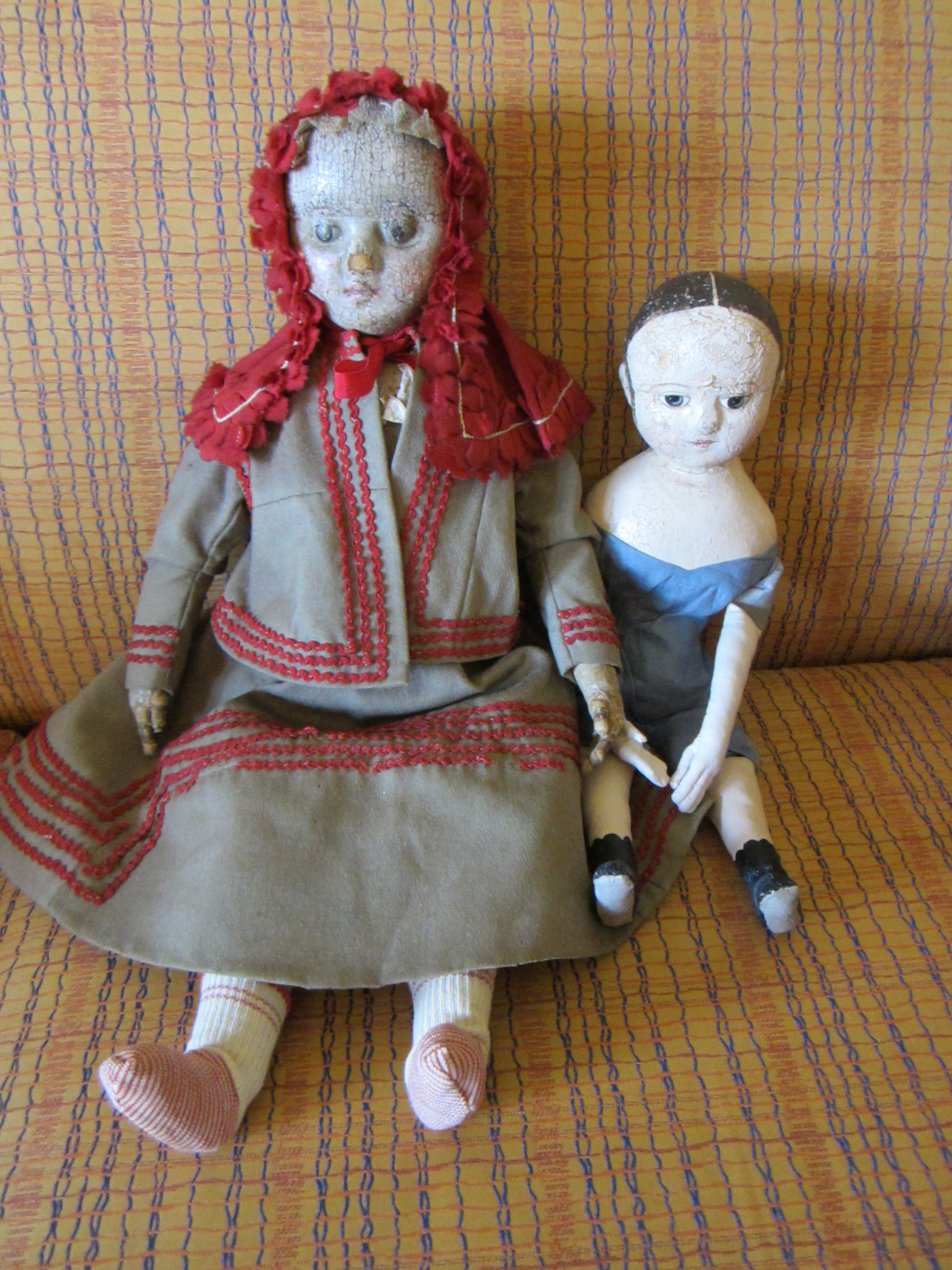
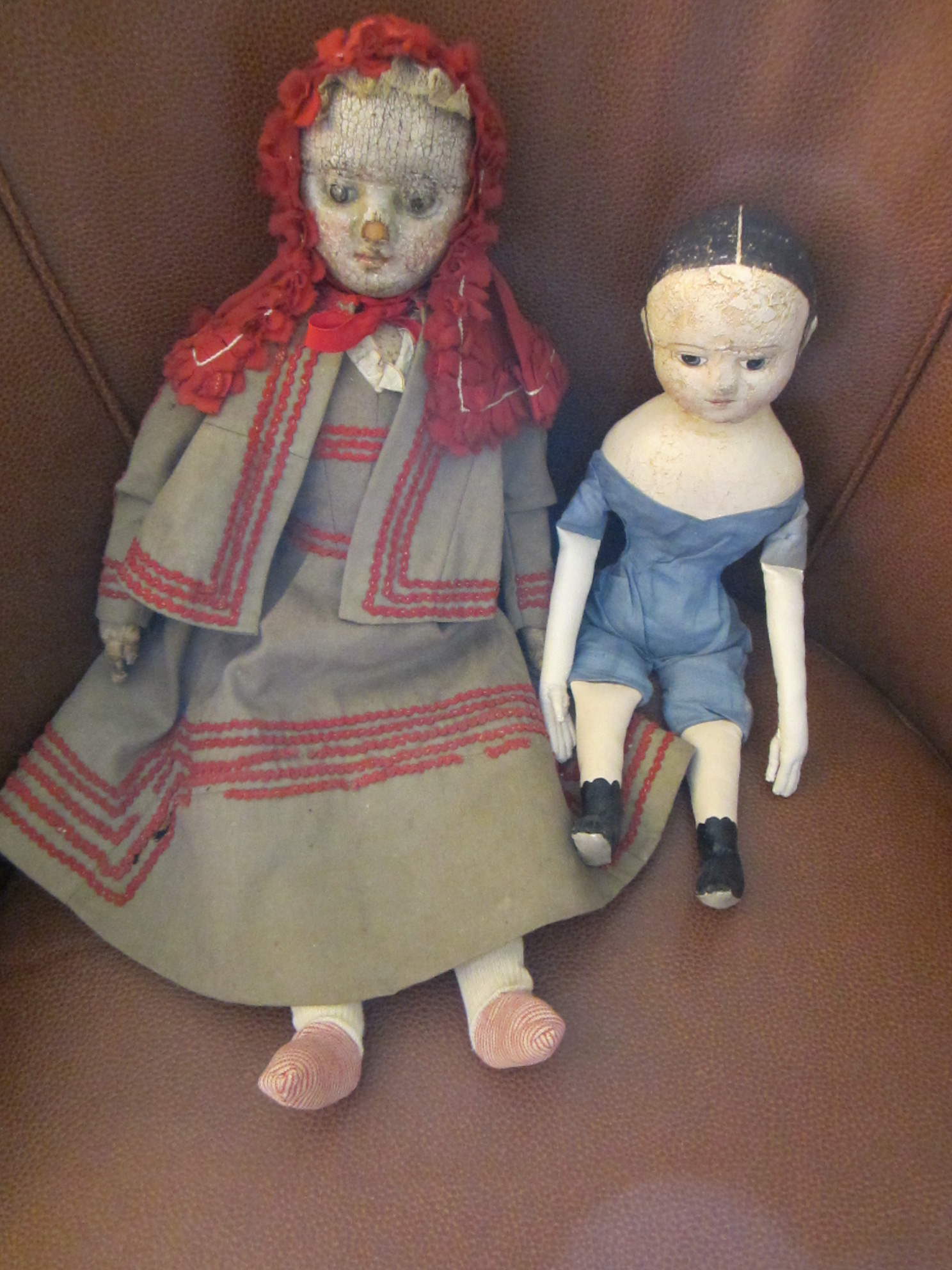
The final leg of Izzybelle’s Texas adventure was our visit to Fredricksberg. After we left the UFDC convention we headed for the hills! (the Texas Hill Country) Izzybelle and Ismay were very excited because they knew that they were going to get to visit all of the dolls that belong to Edith O’Neil during this part of our journey.

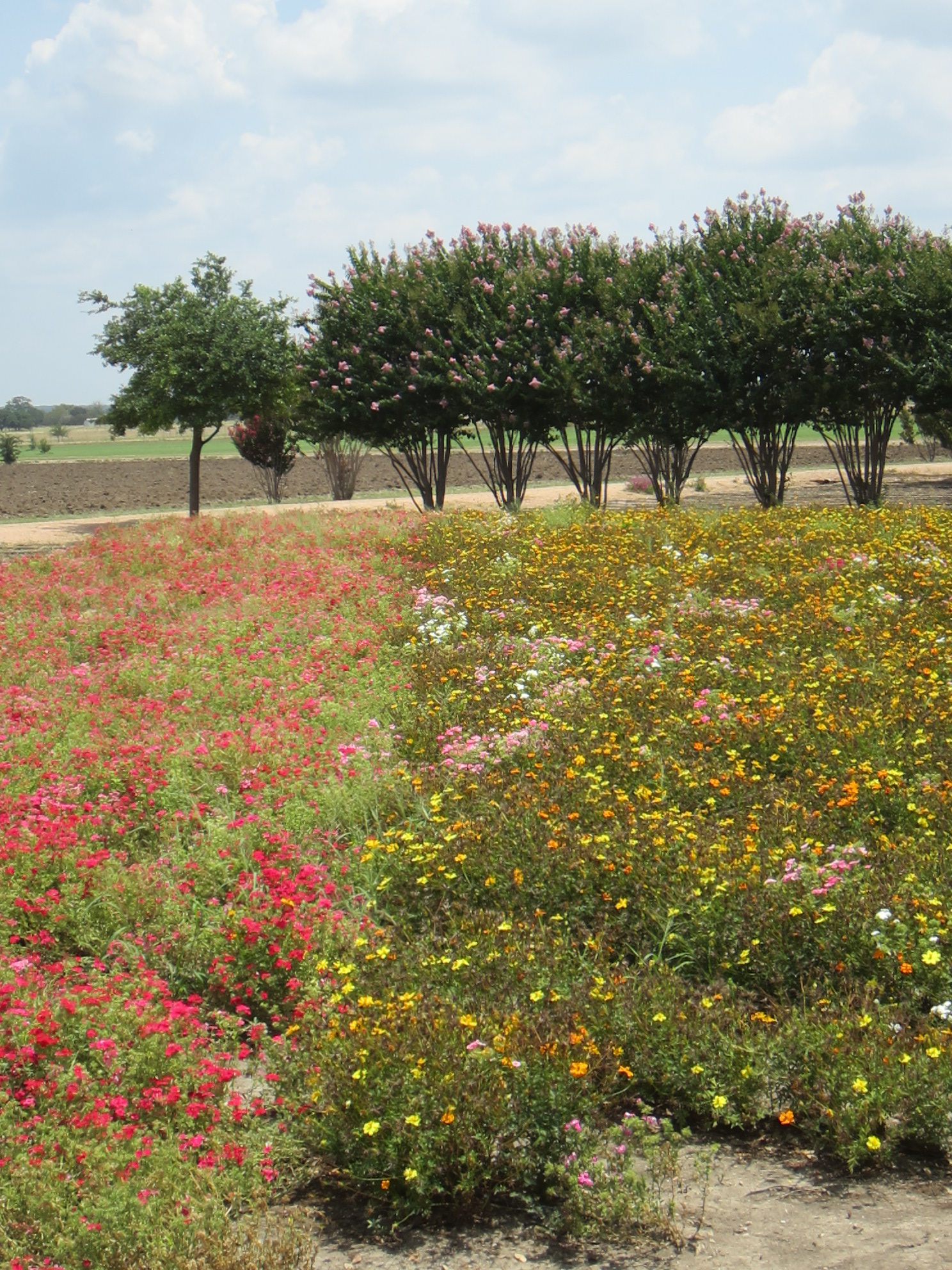
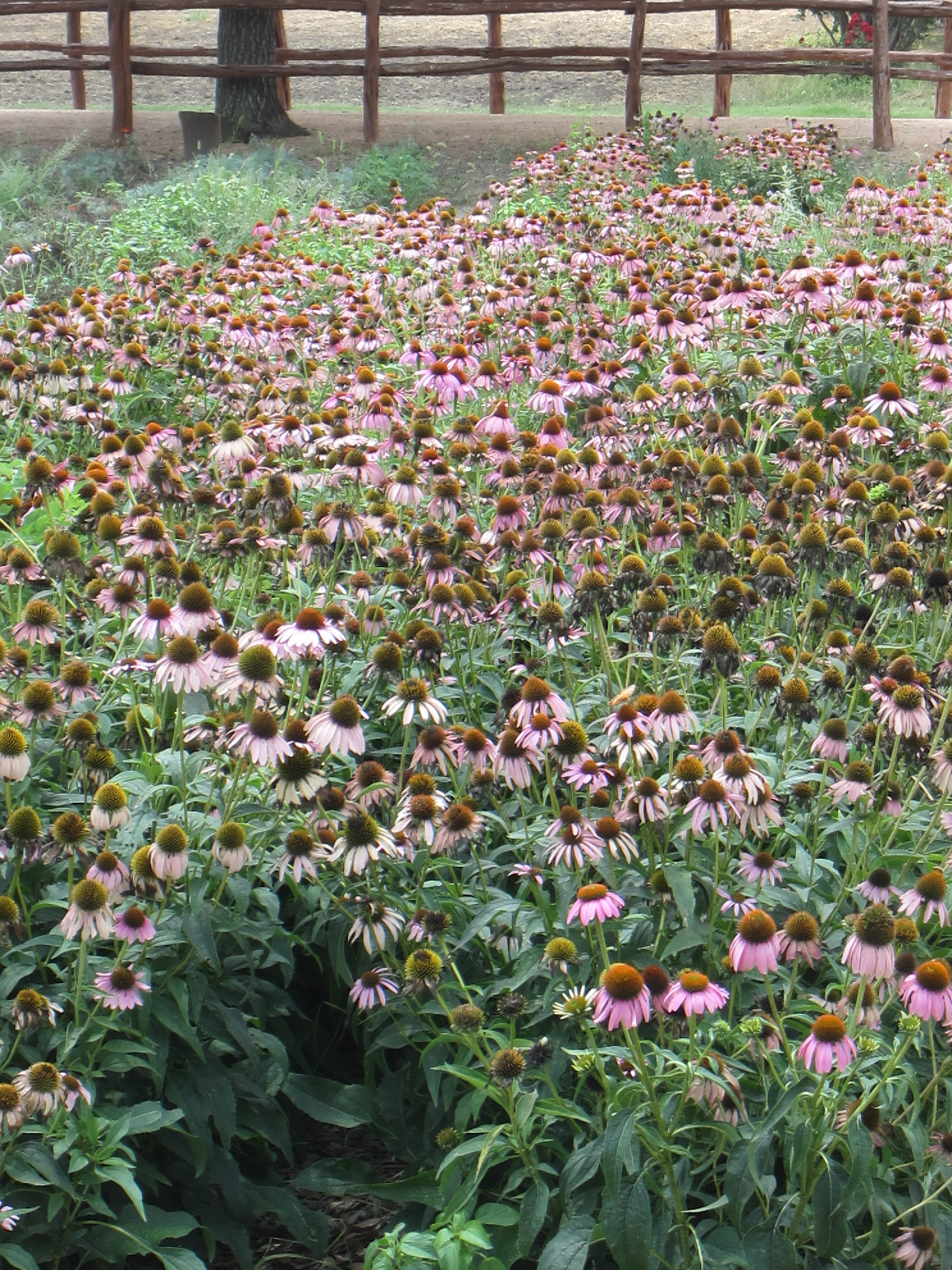
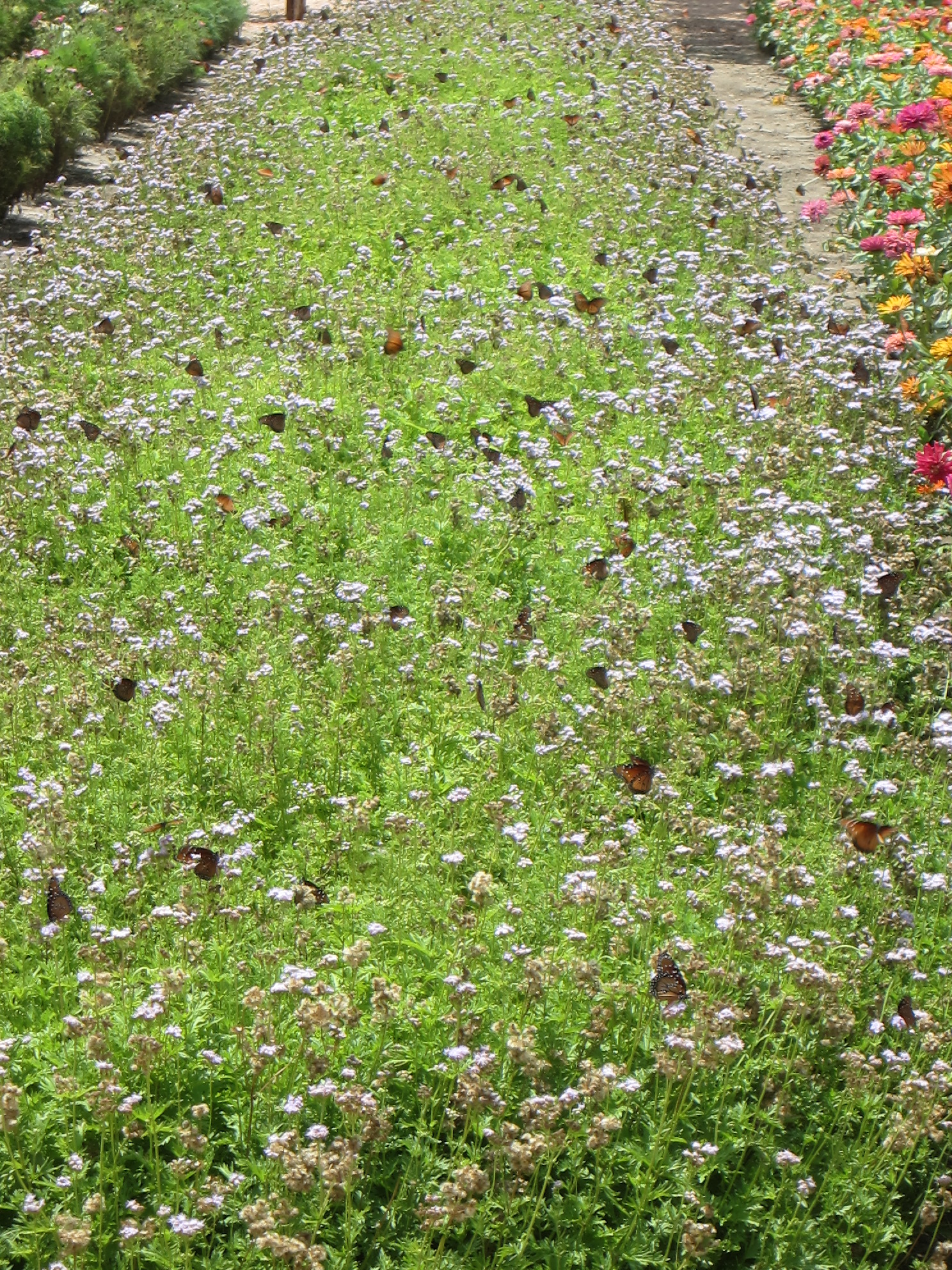
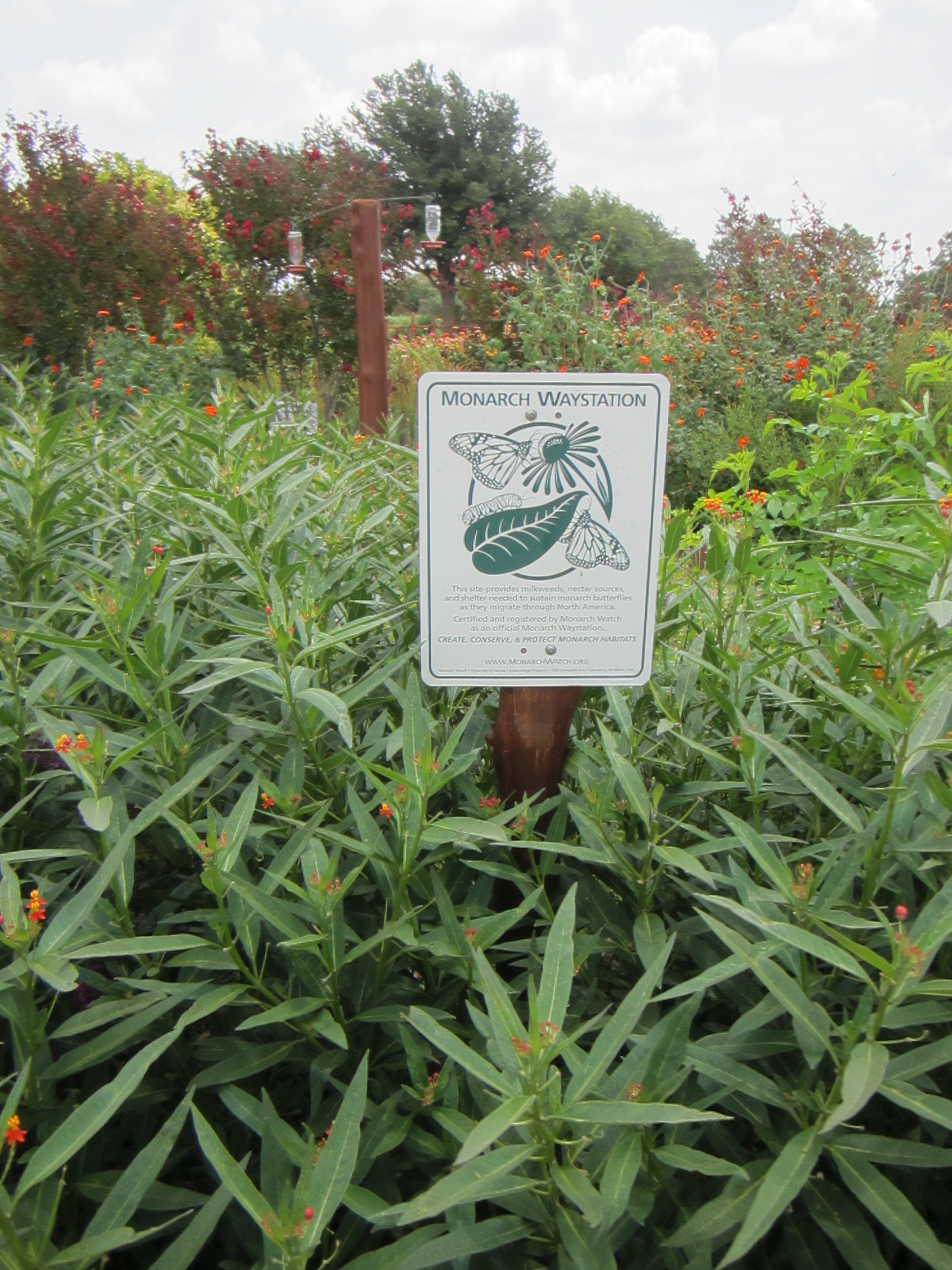

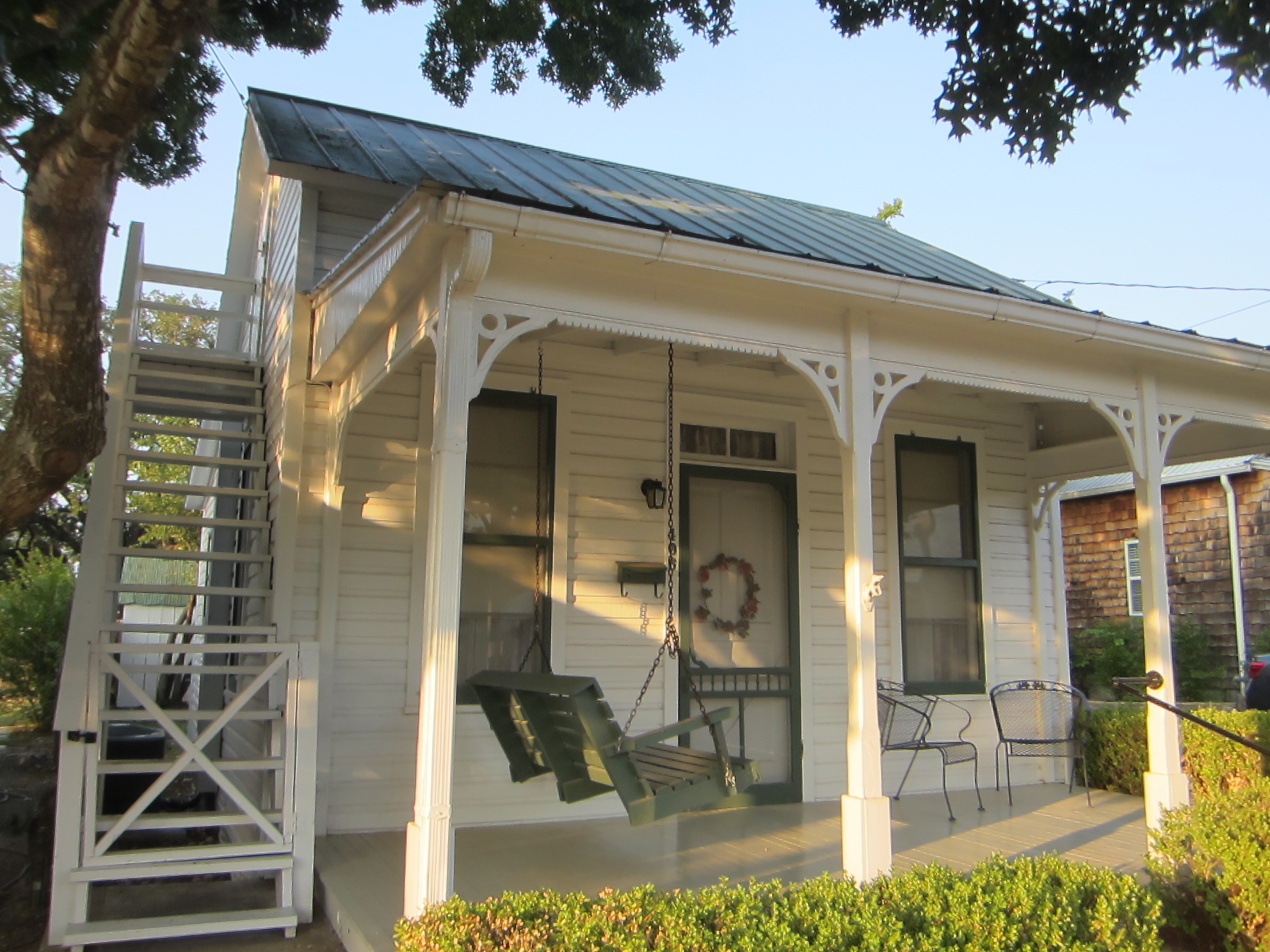
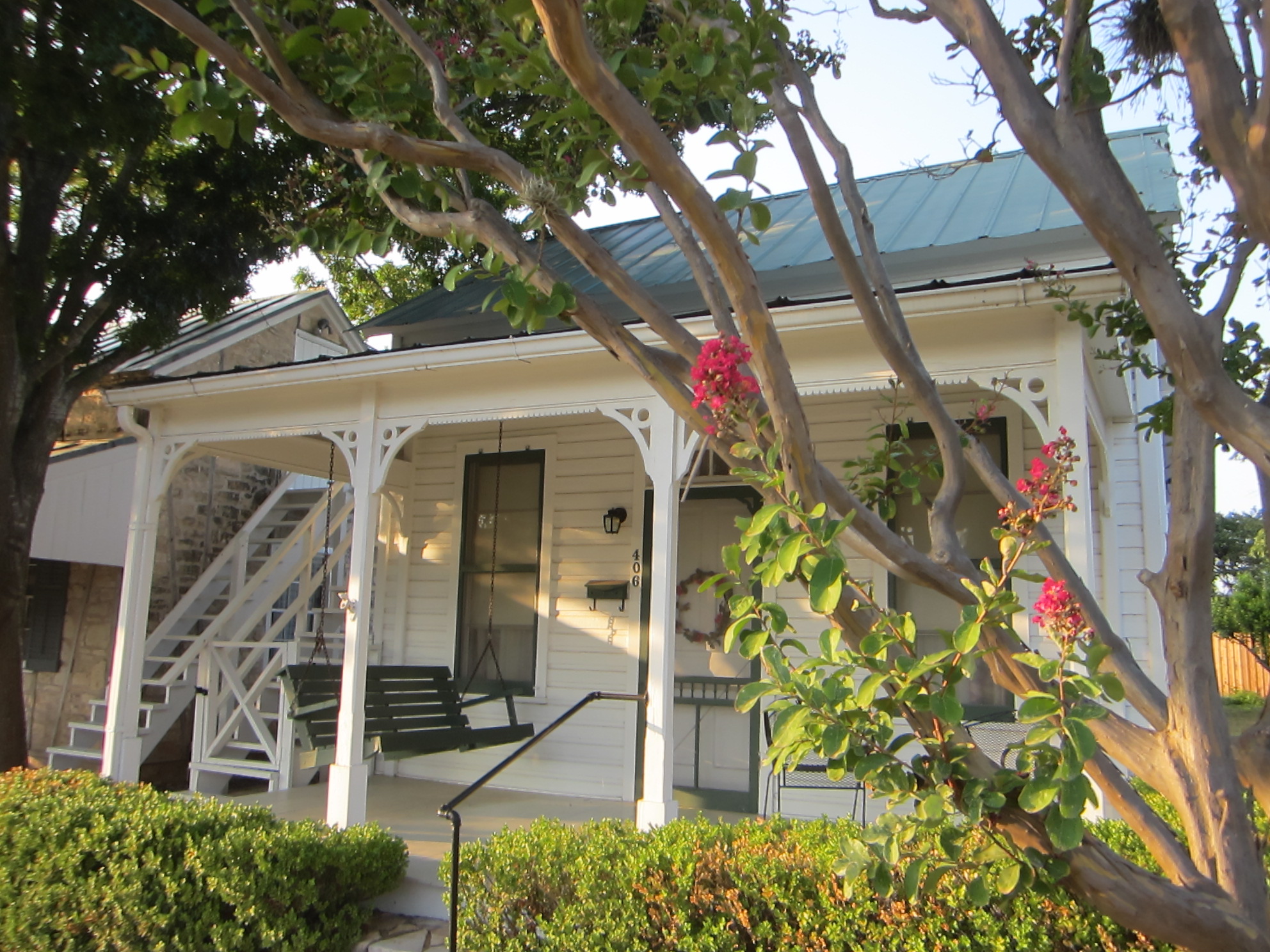
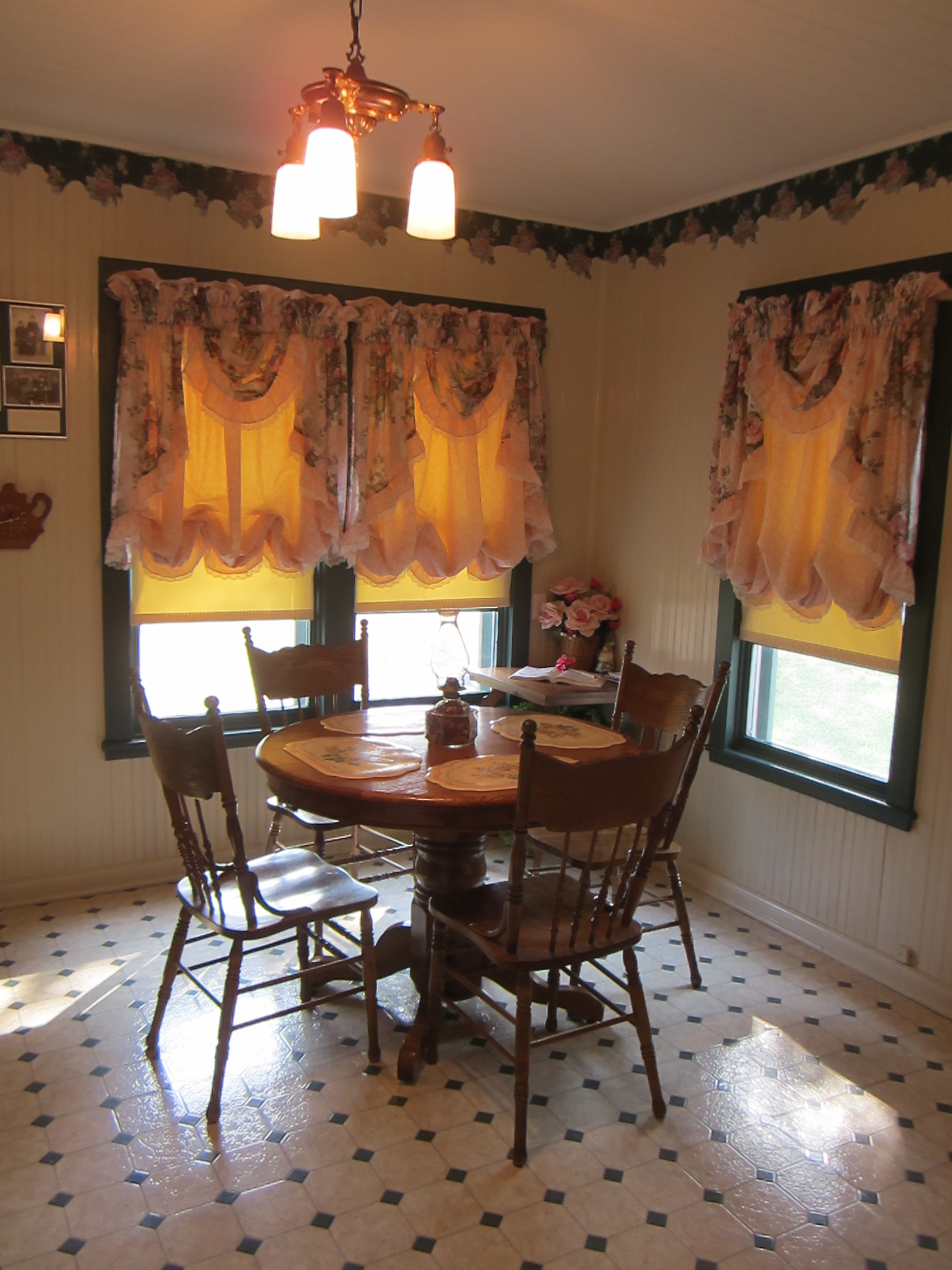


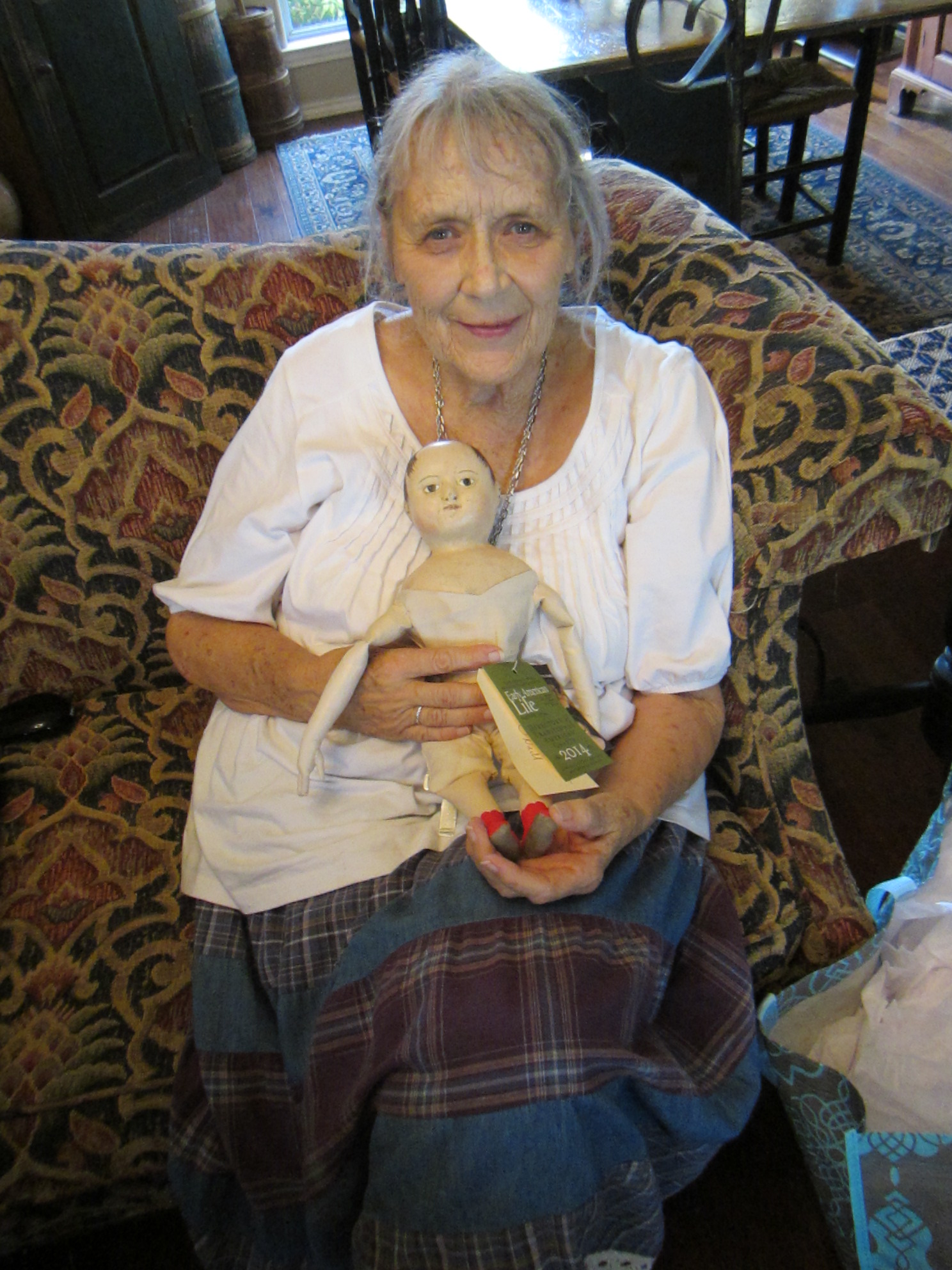
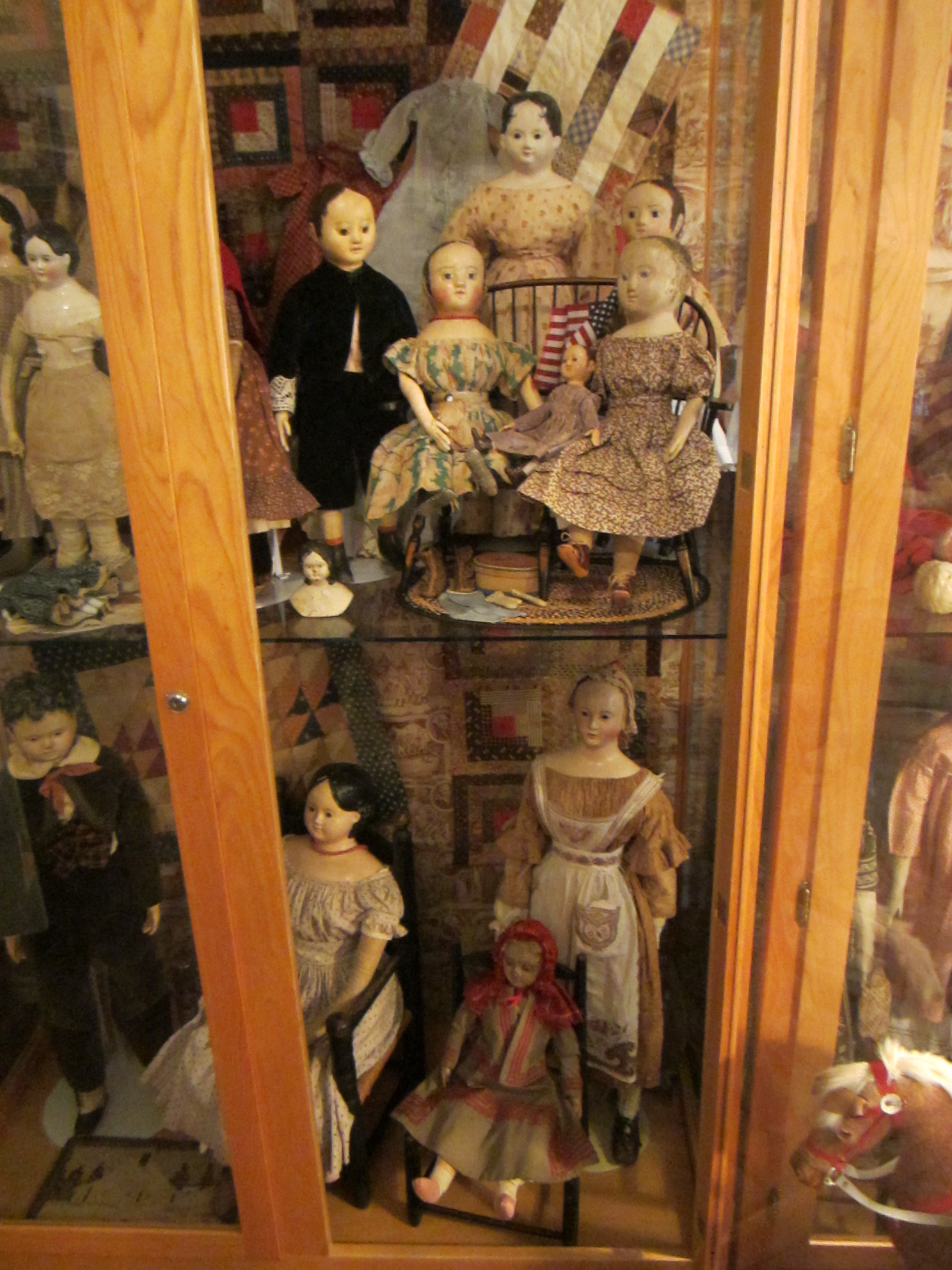
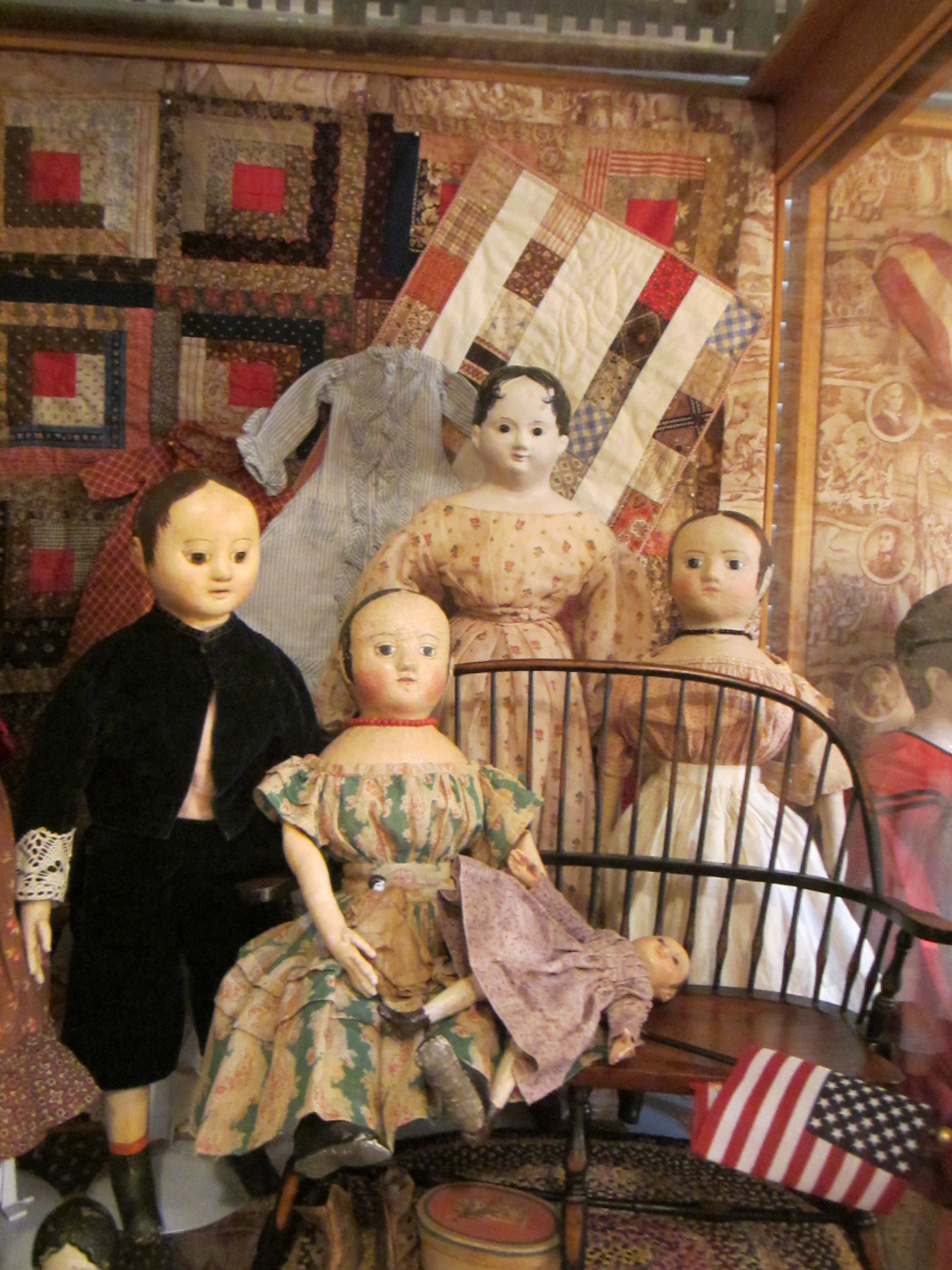
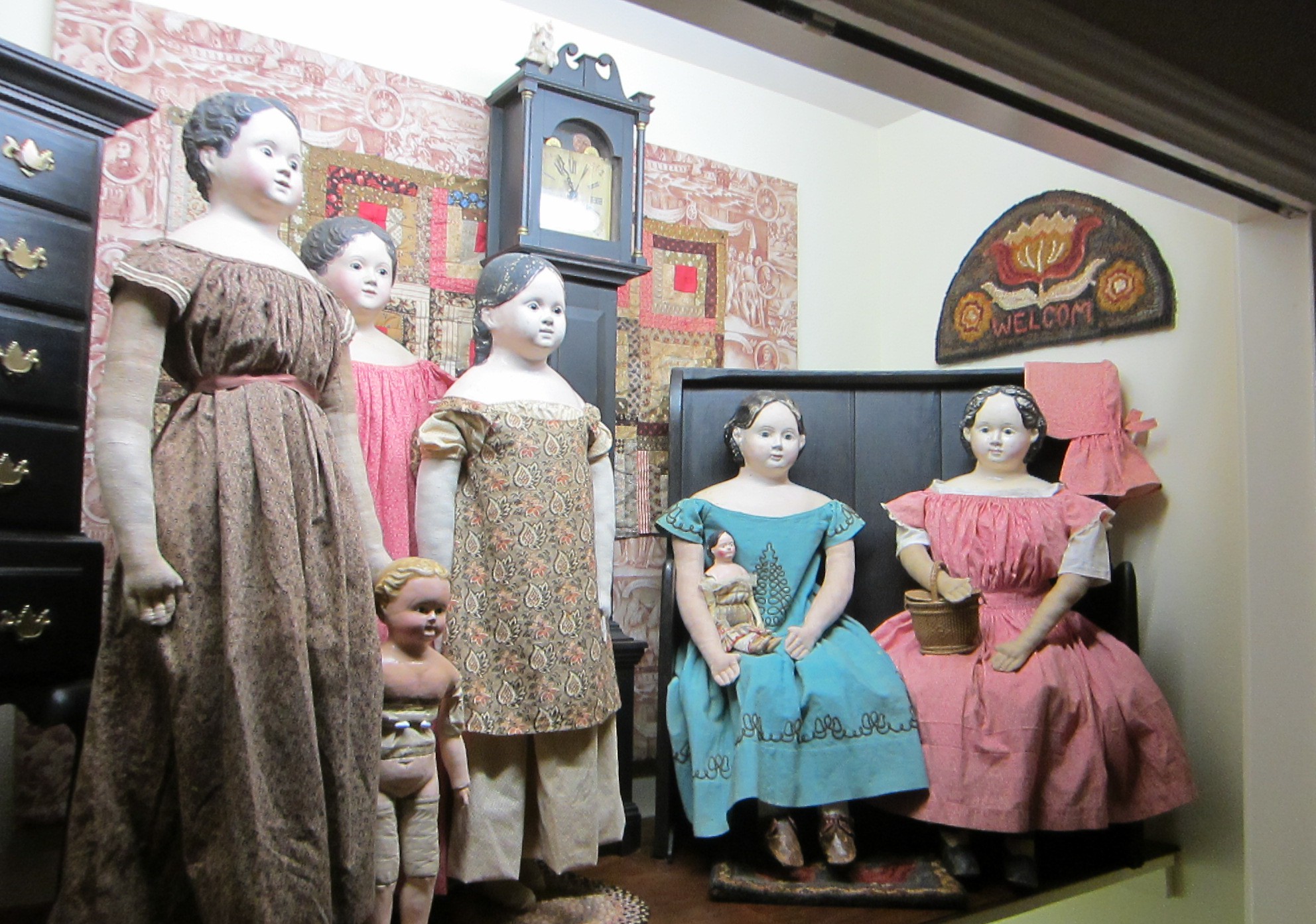
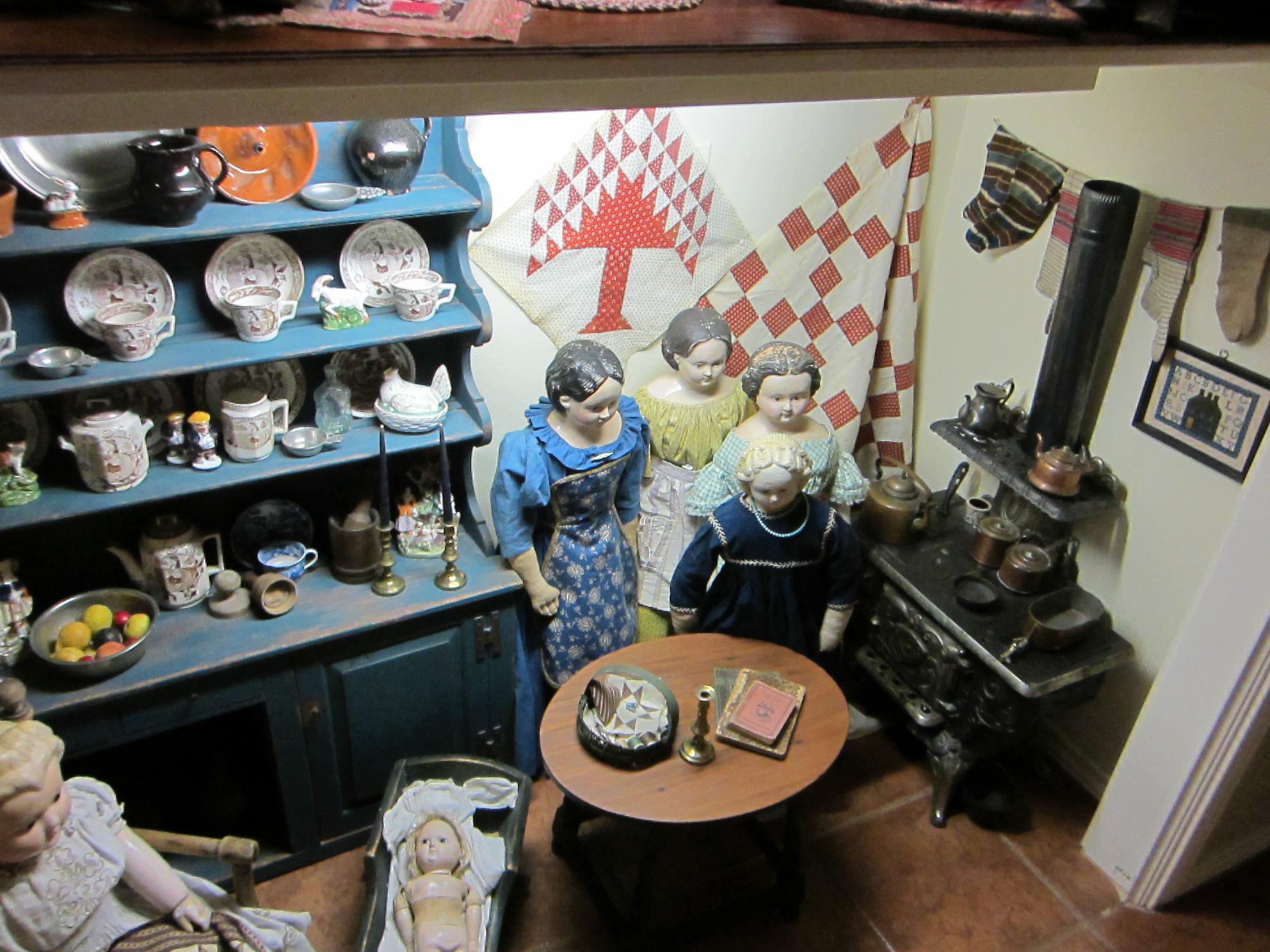
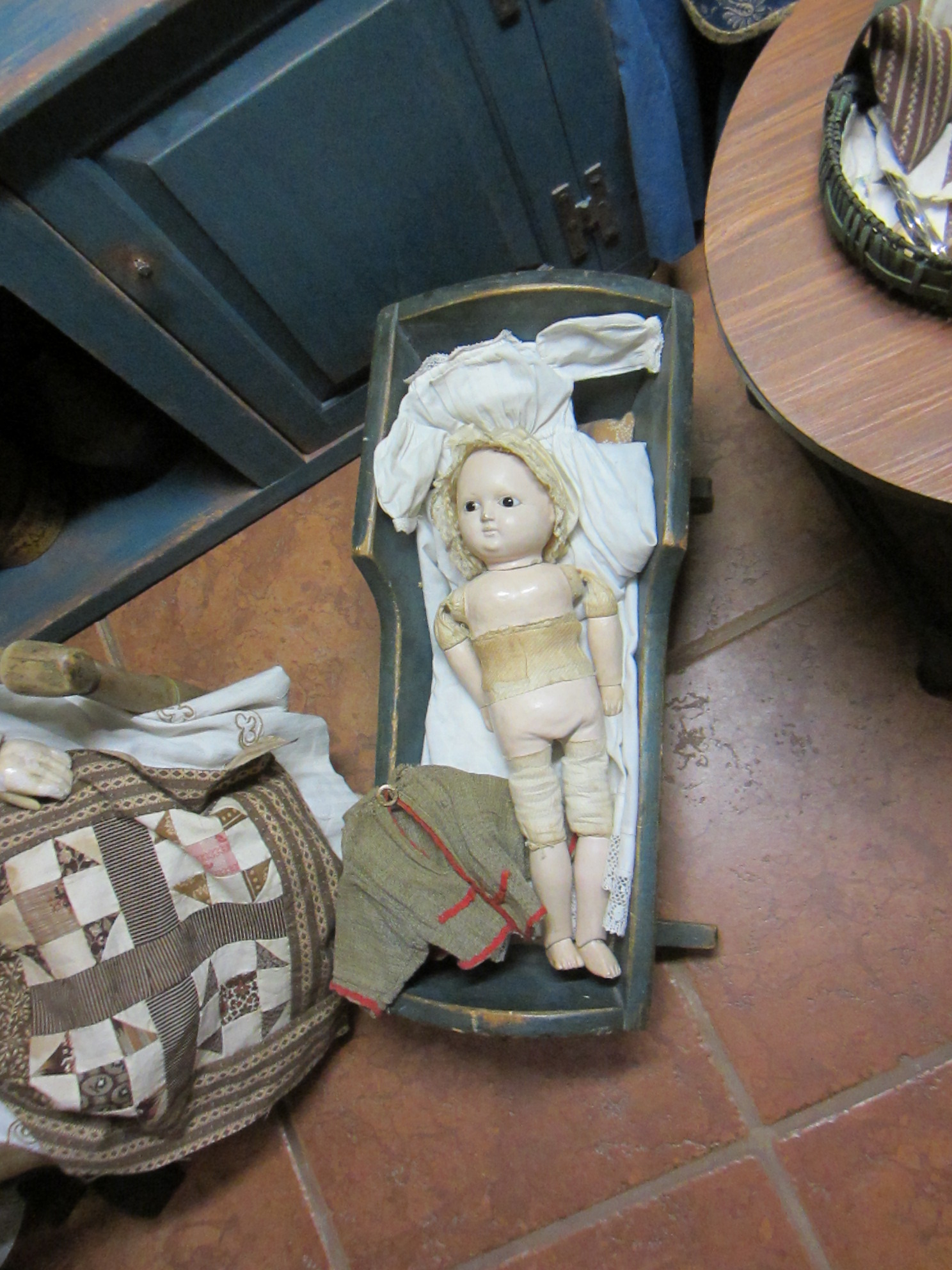
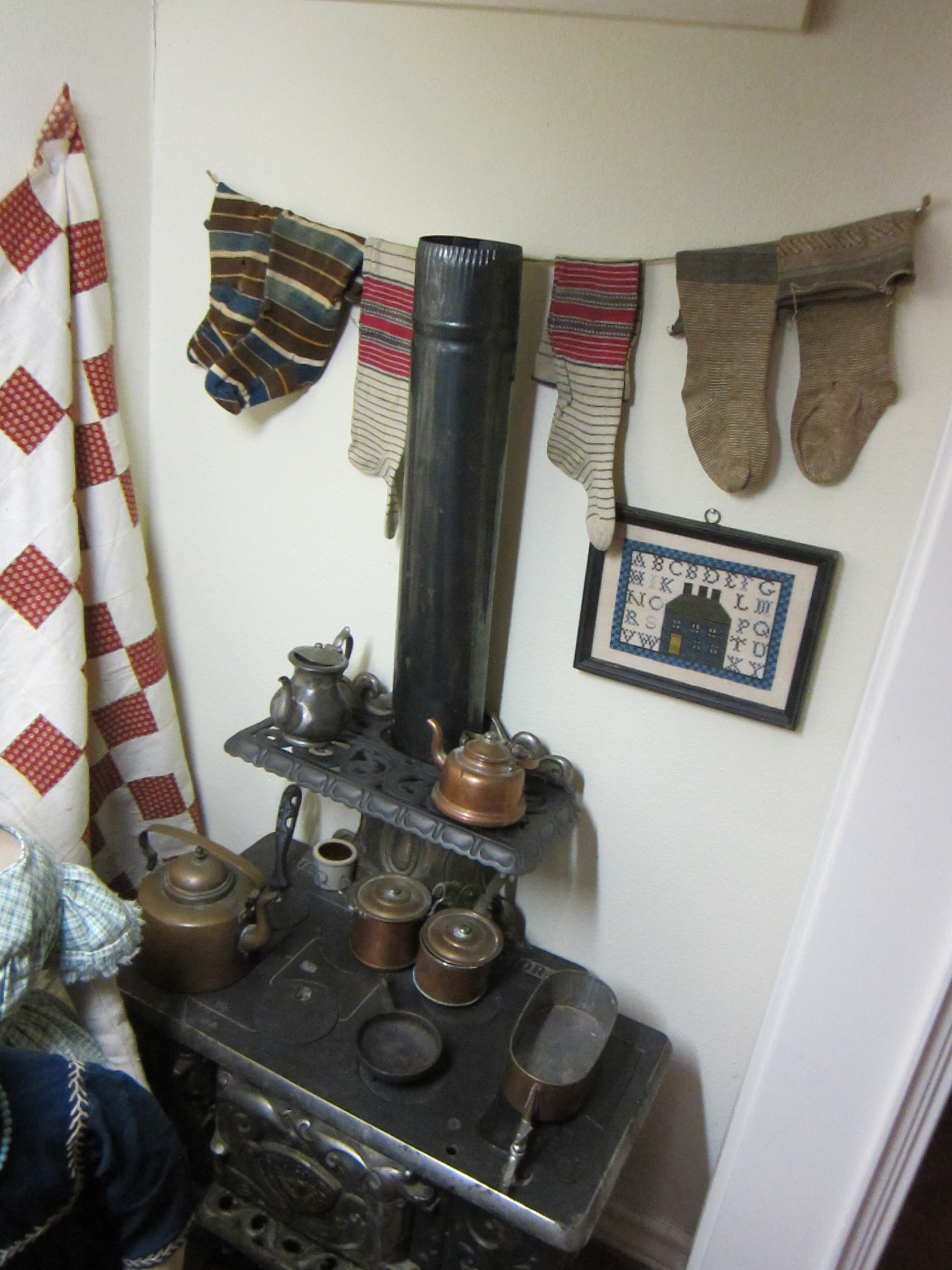
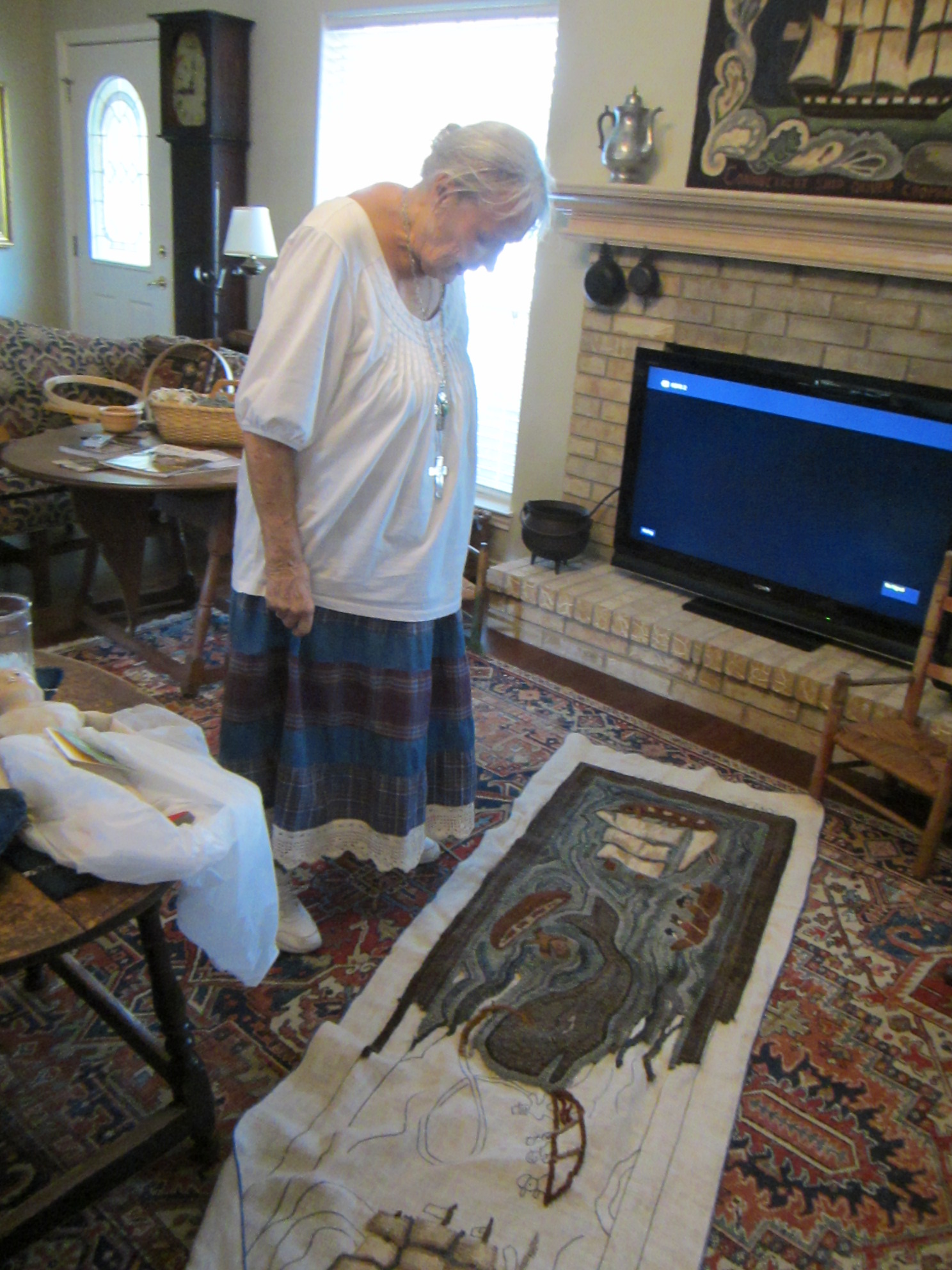
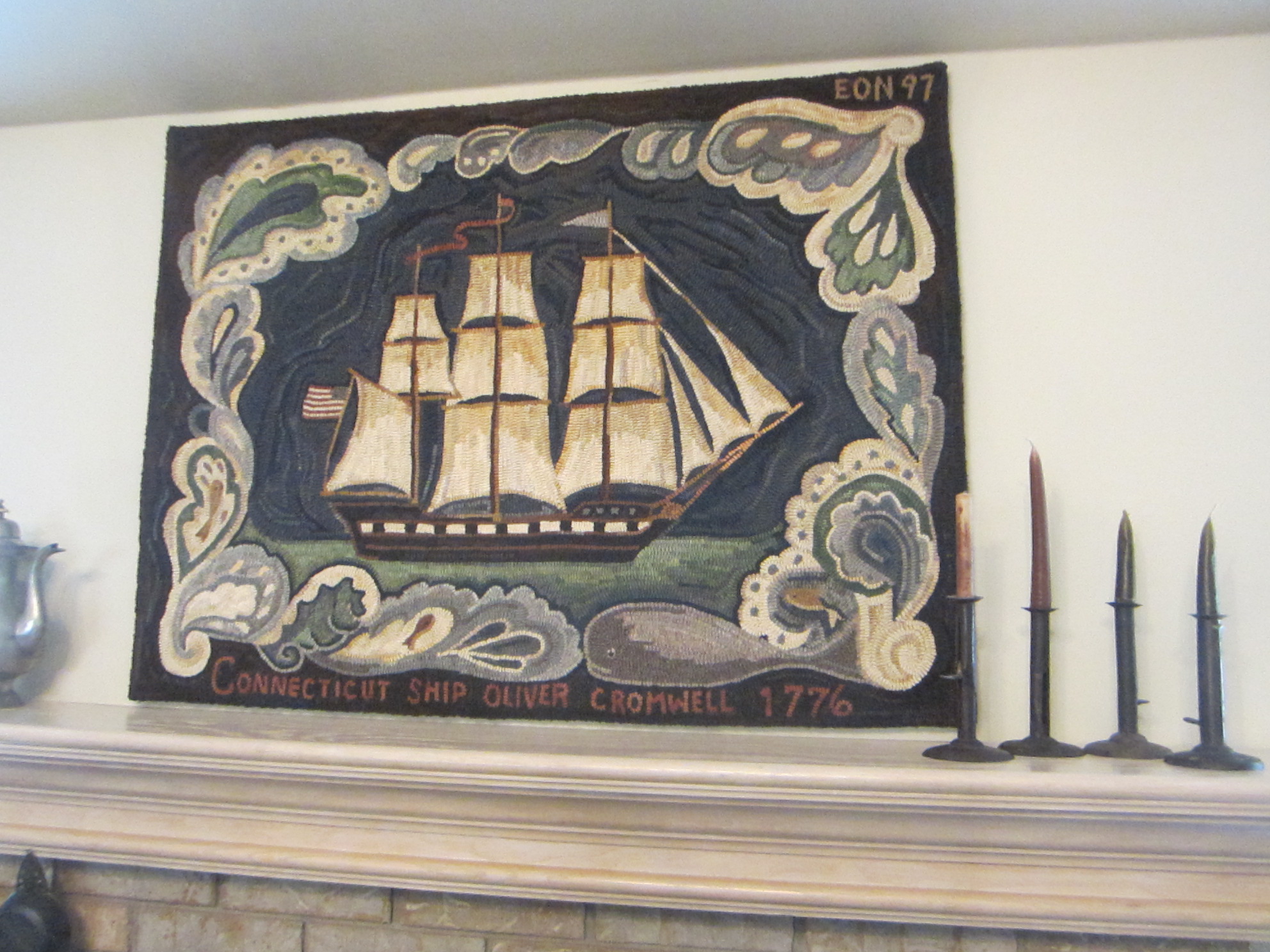
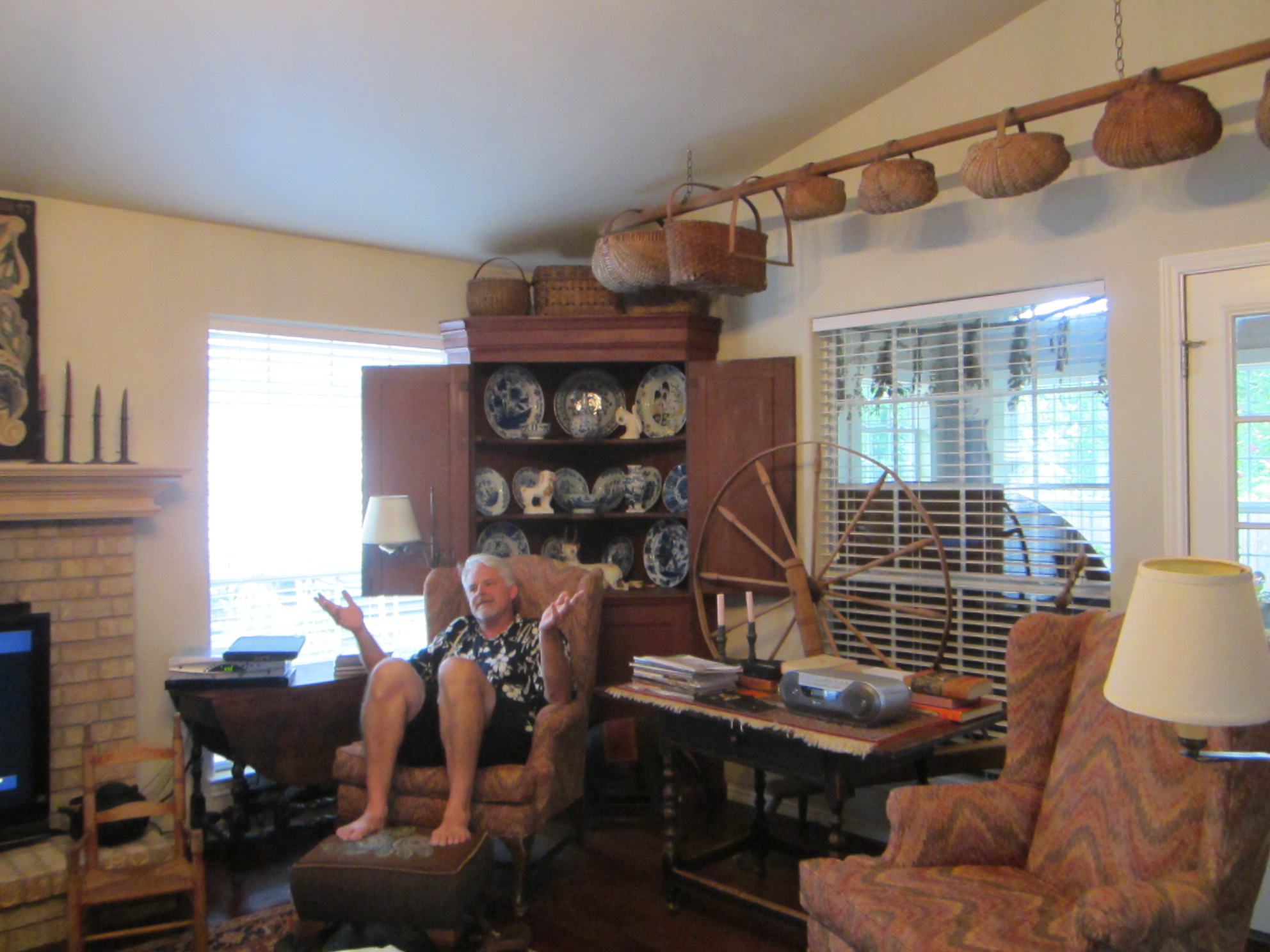
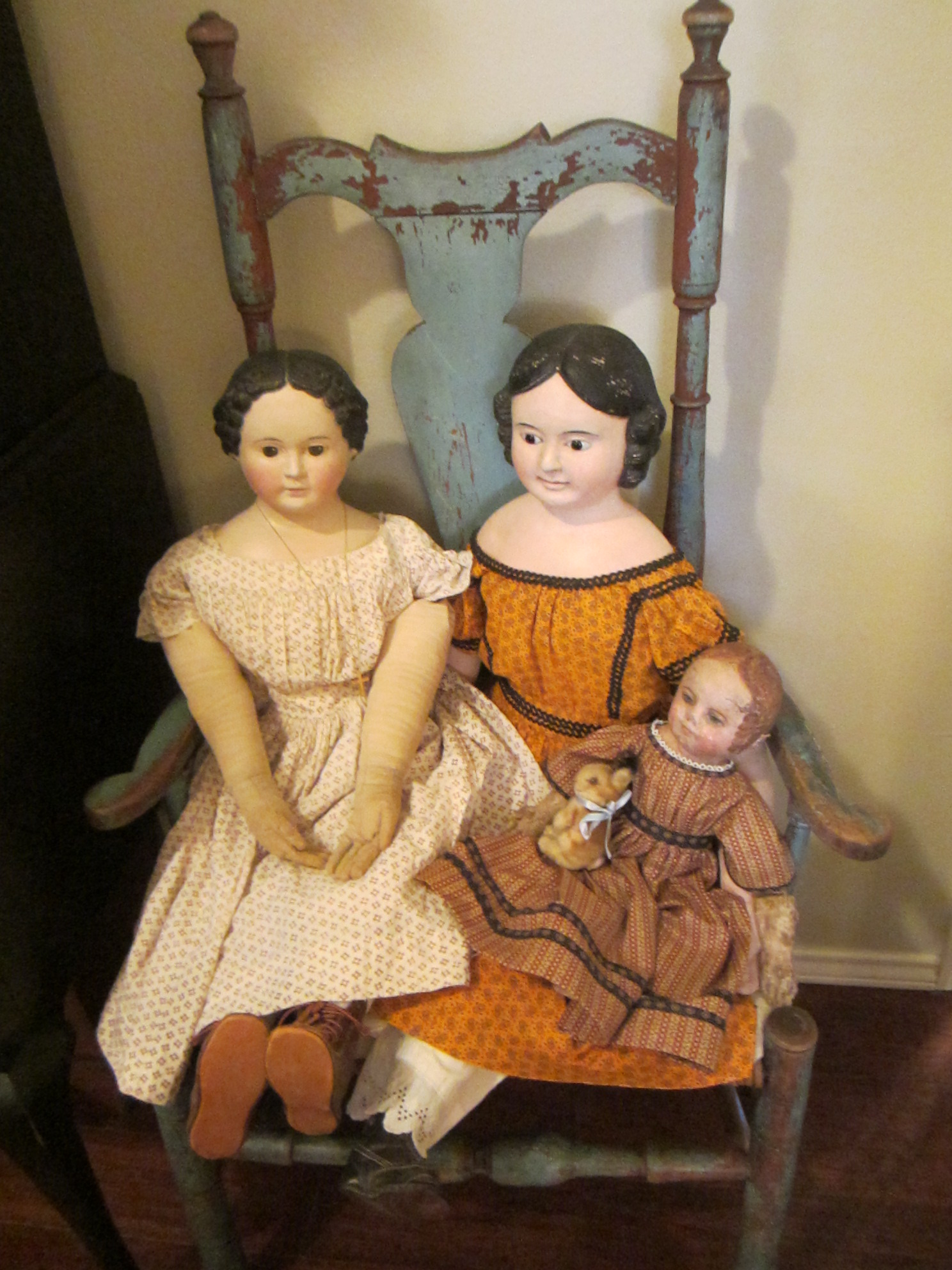
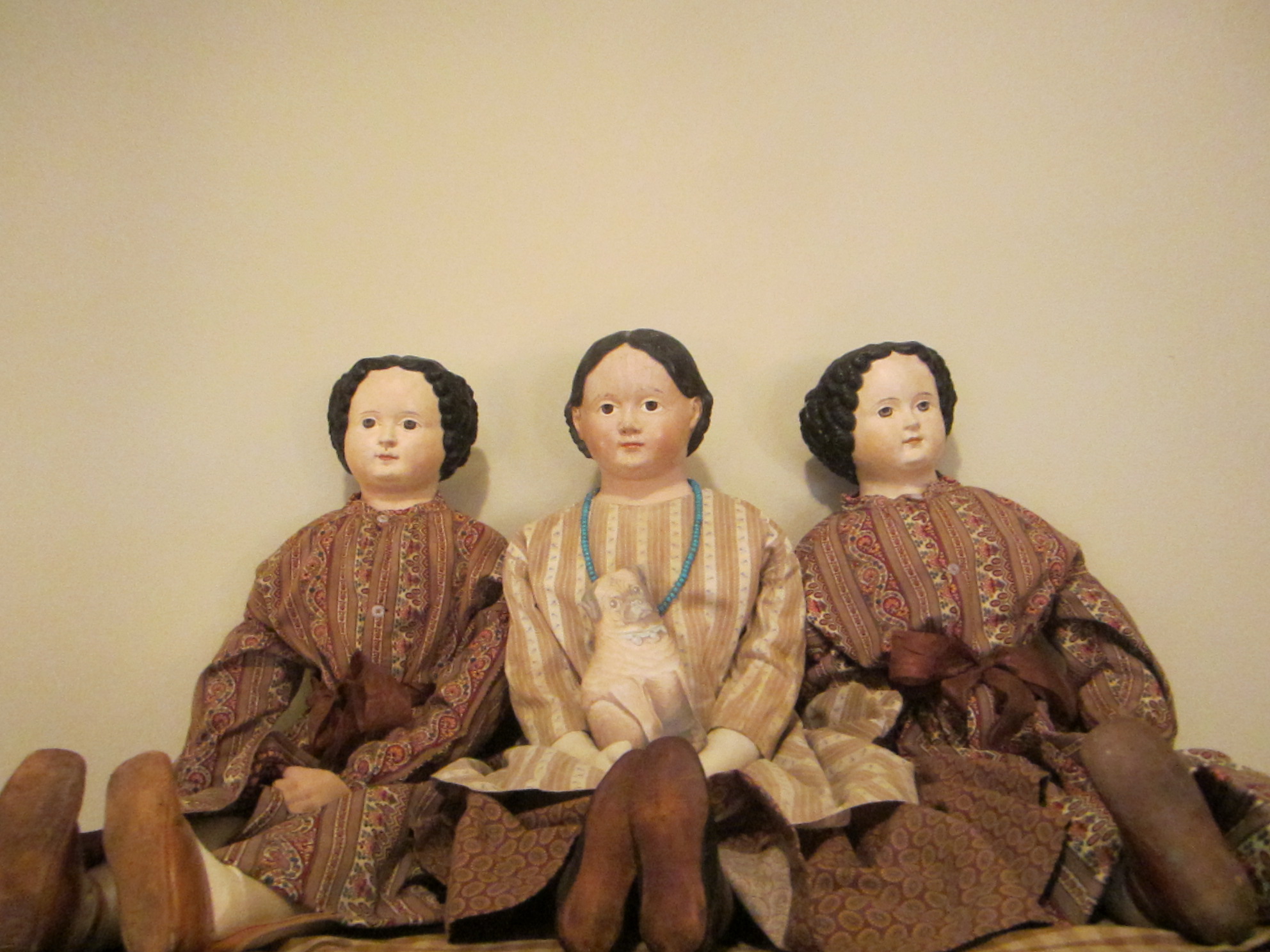
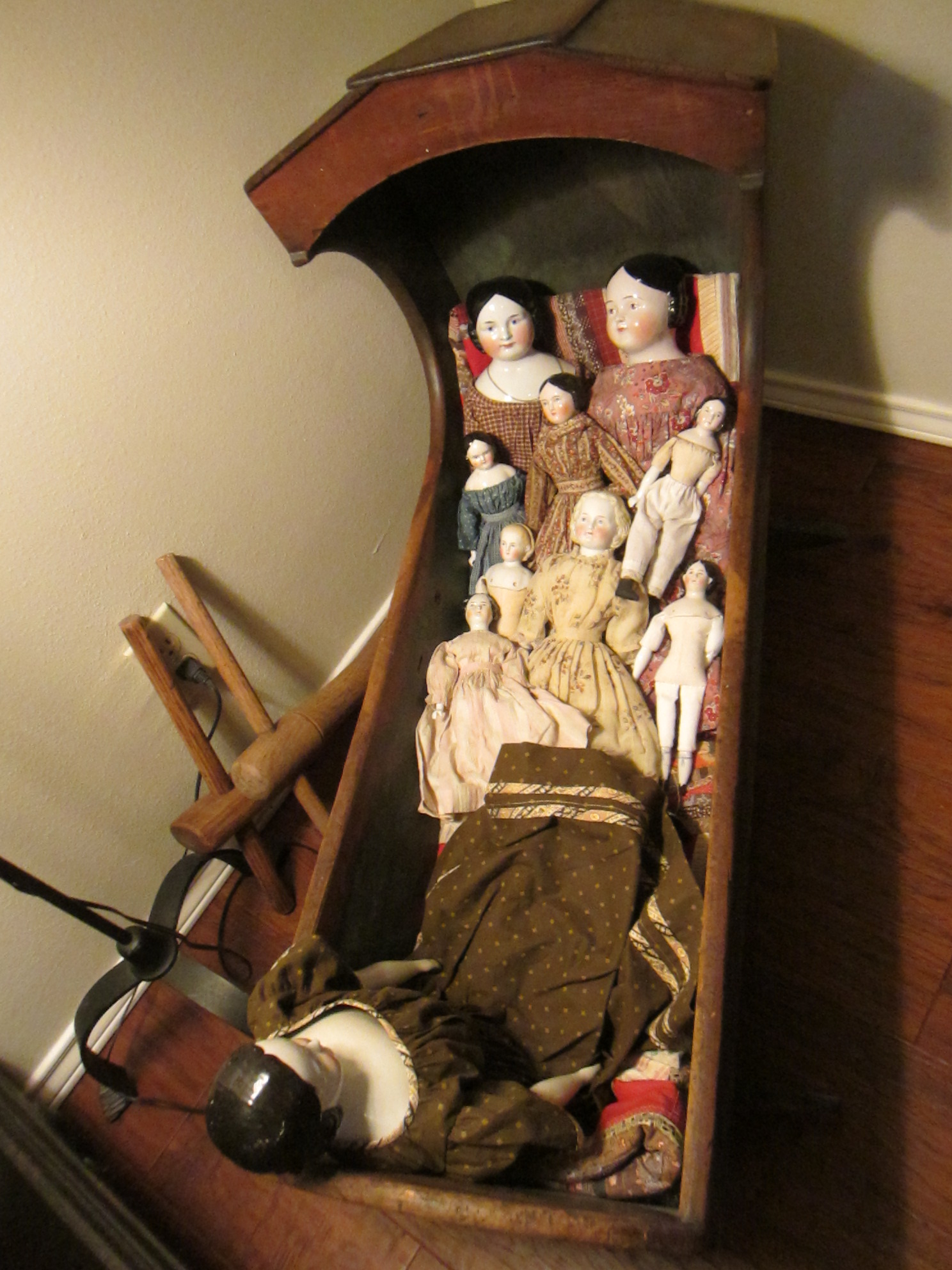
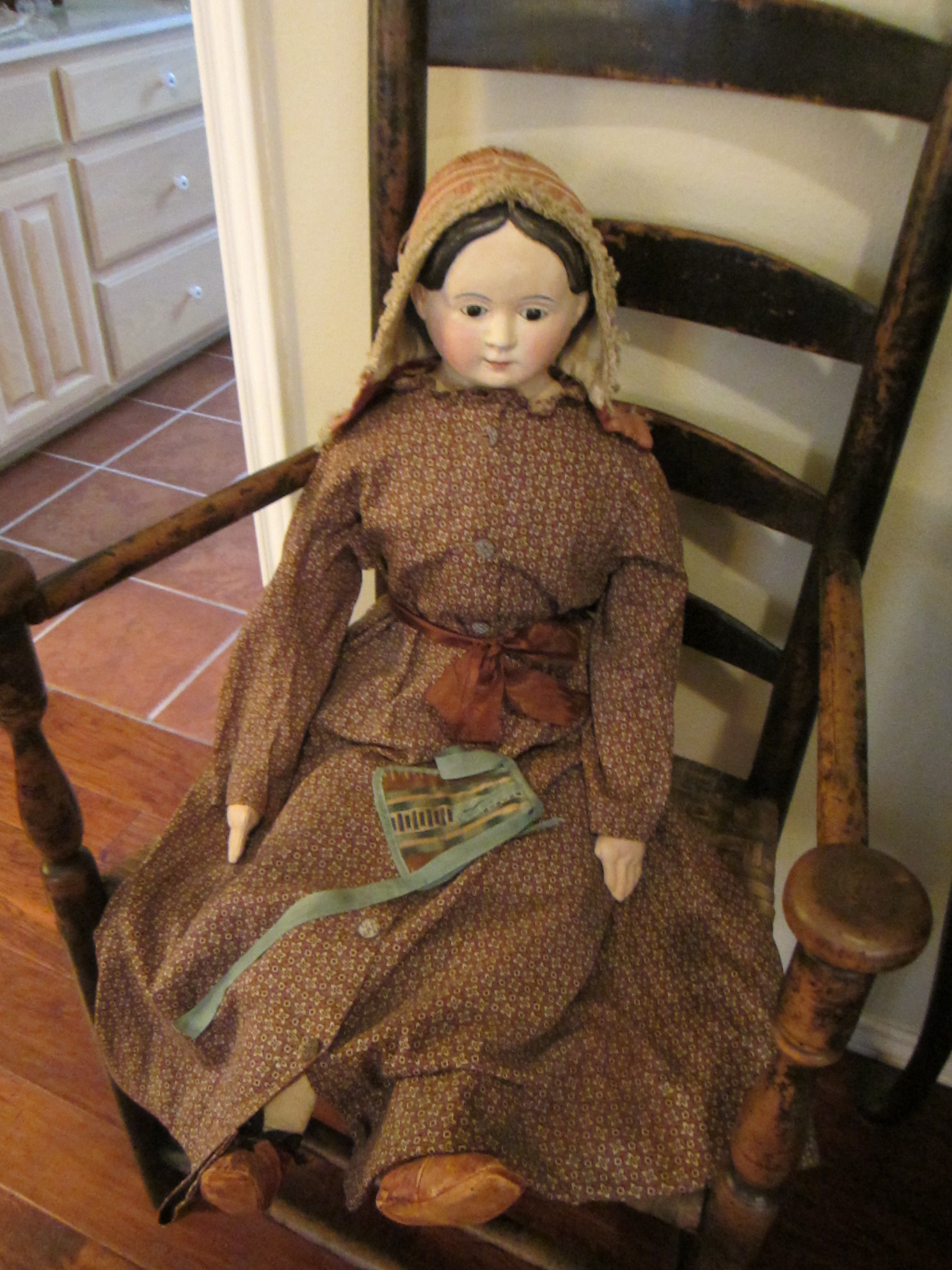
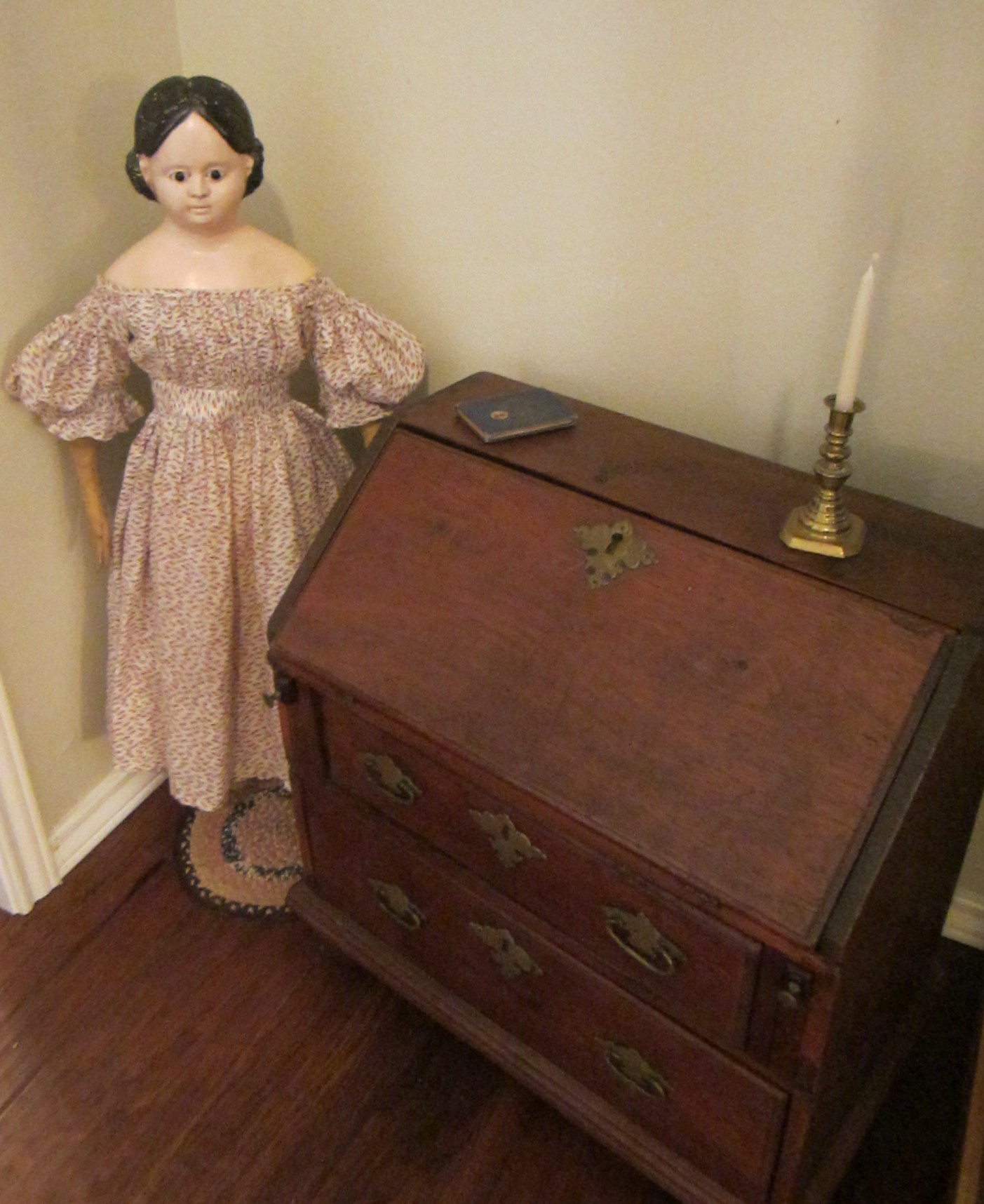
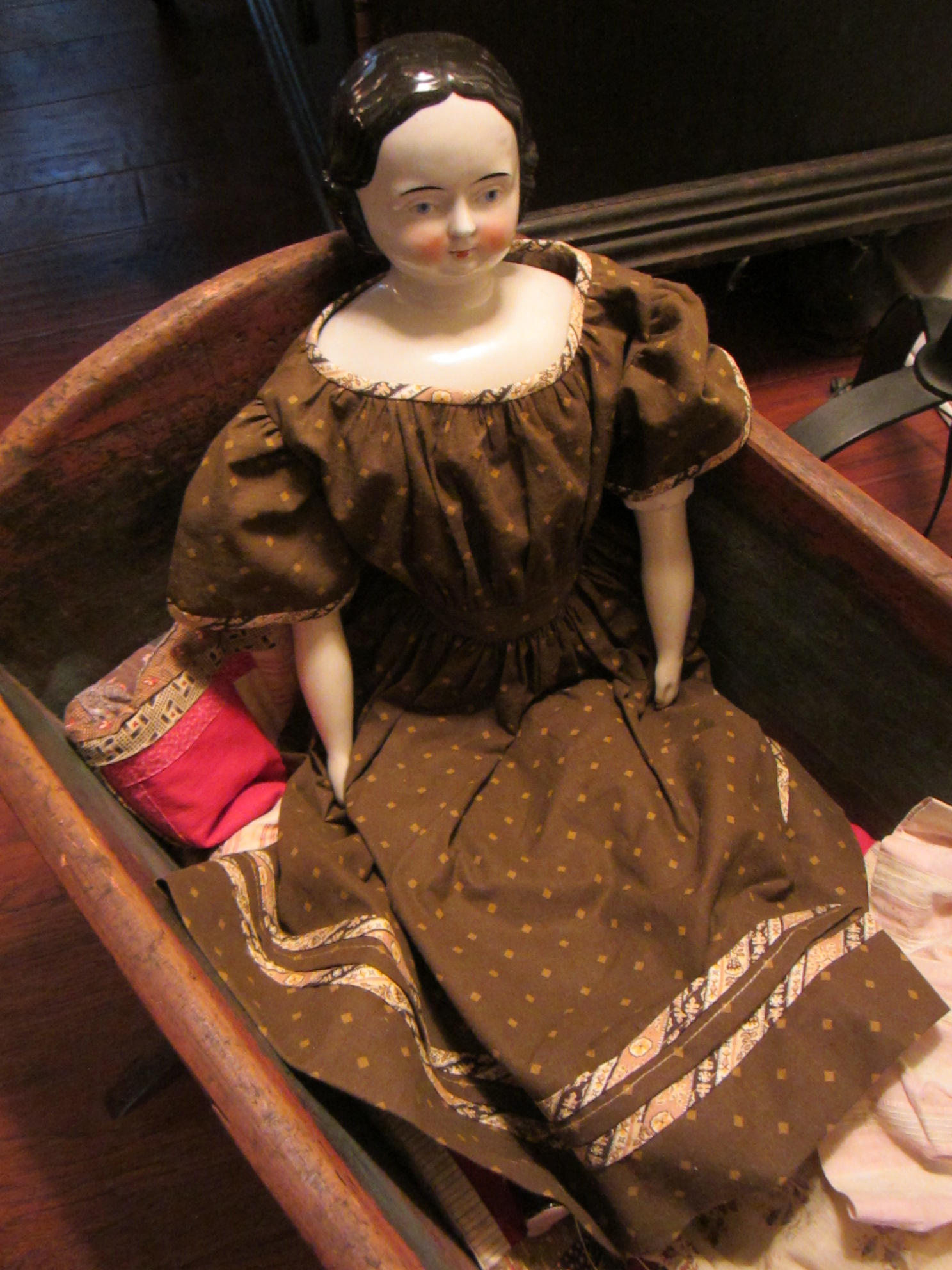
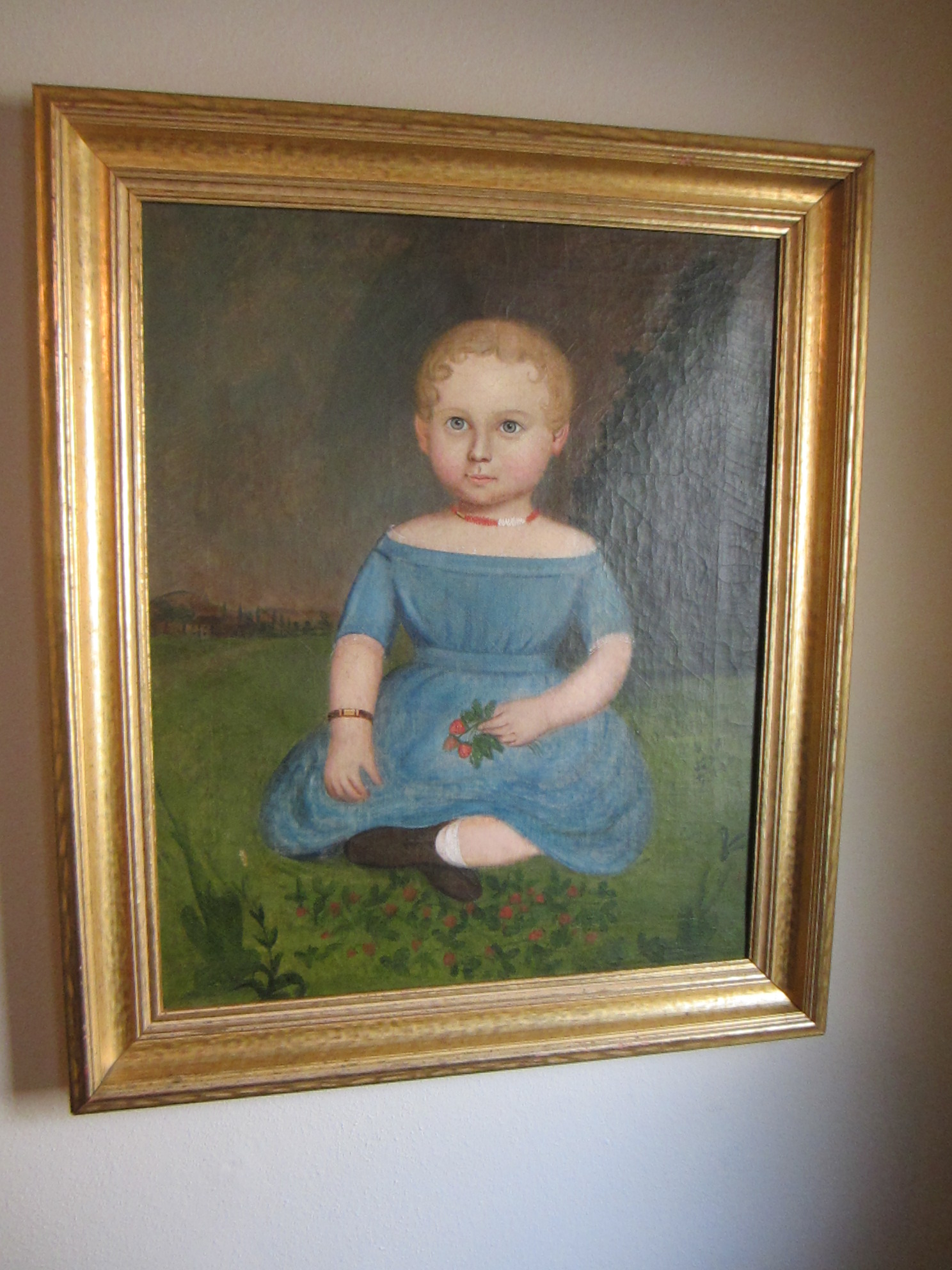
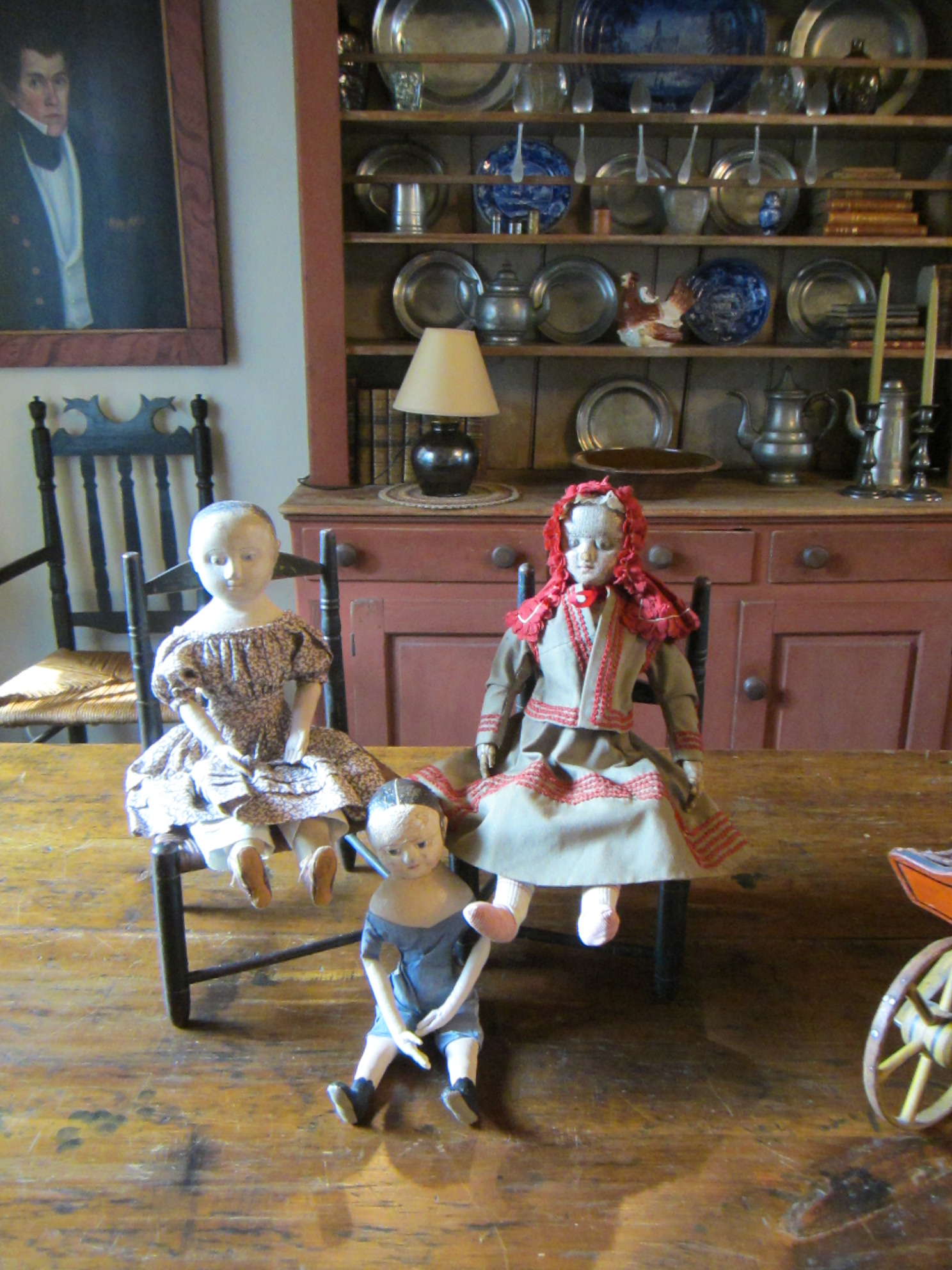
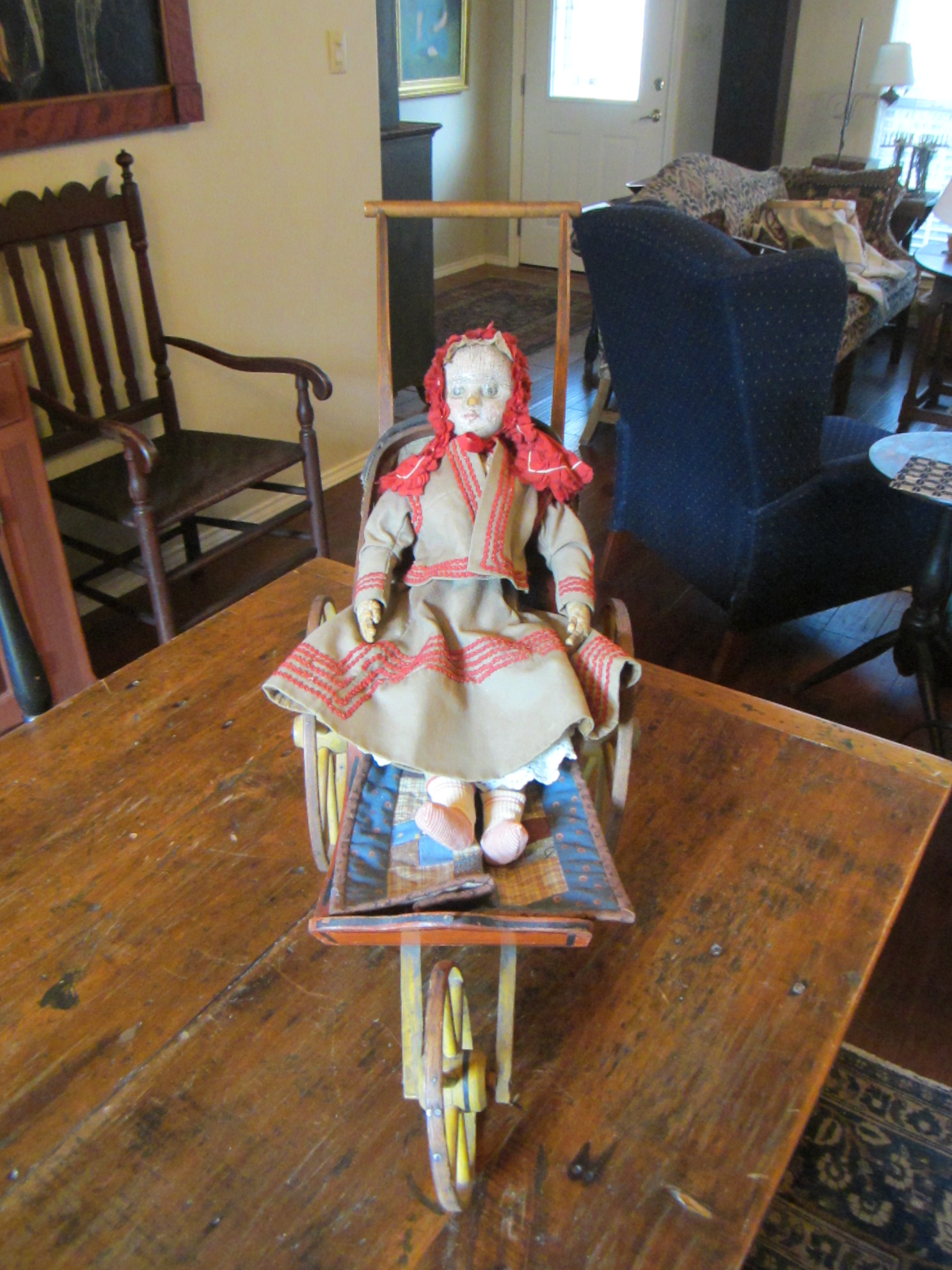
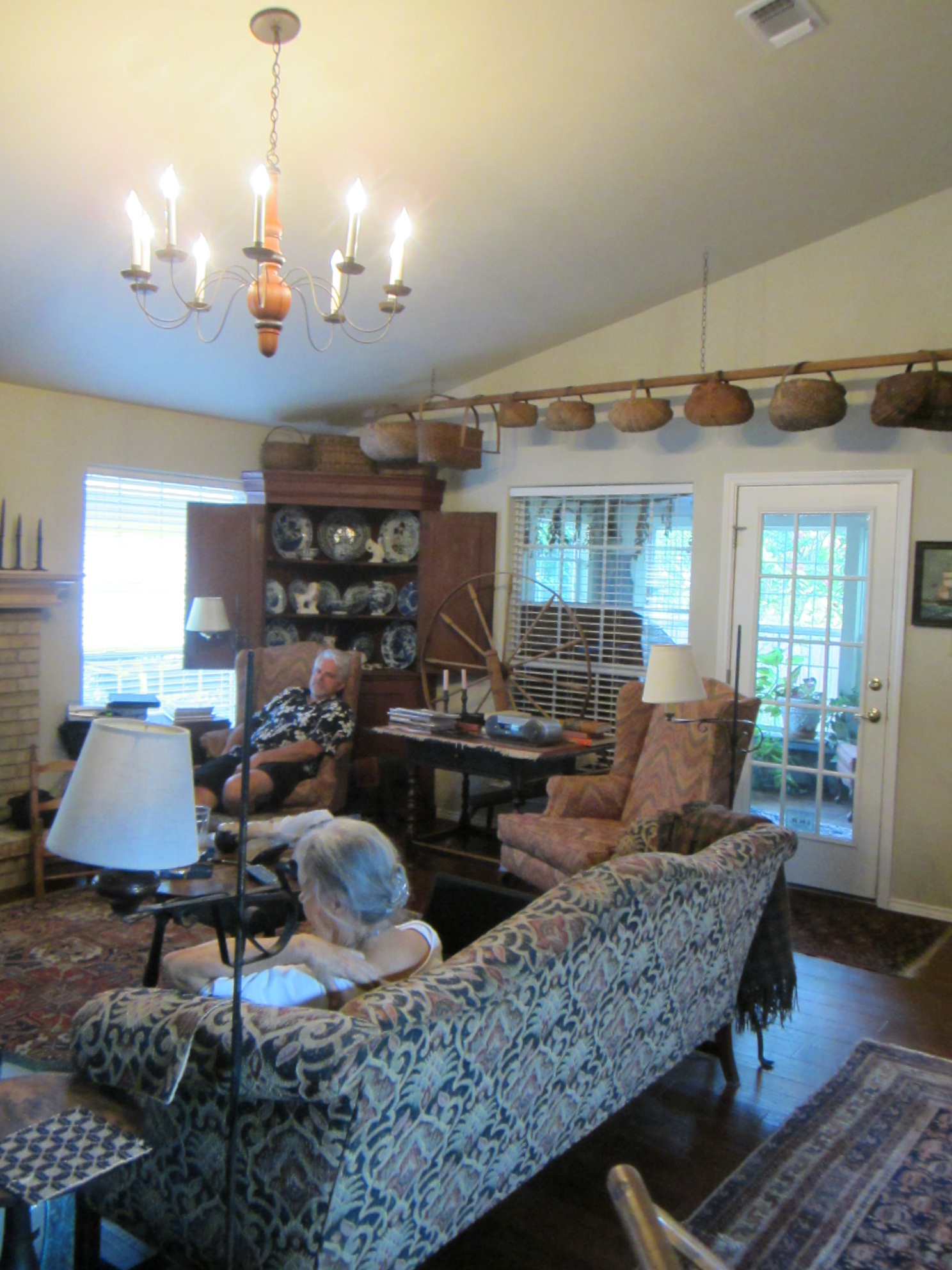
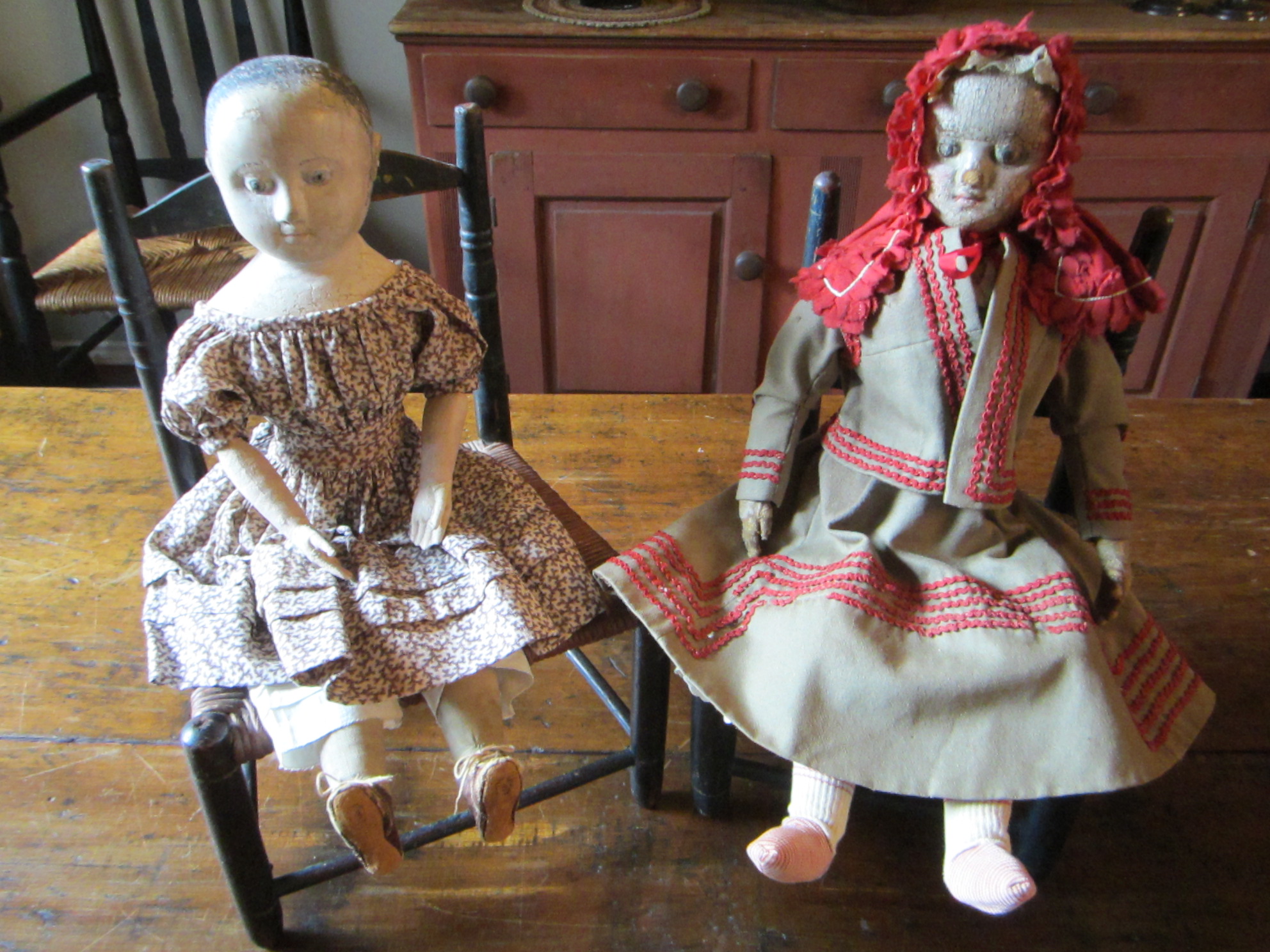
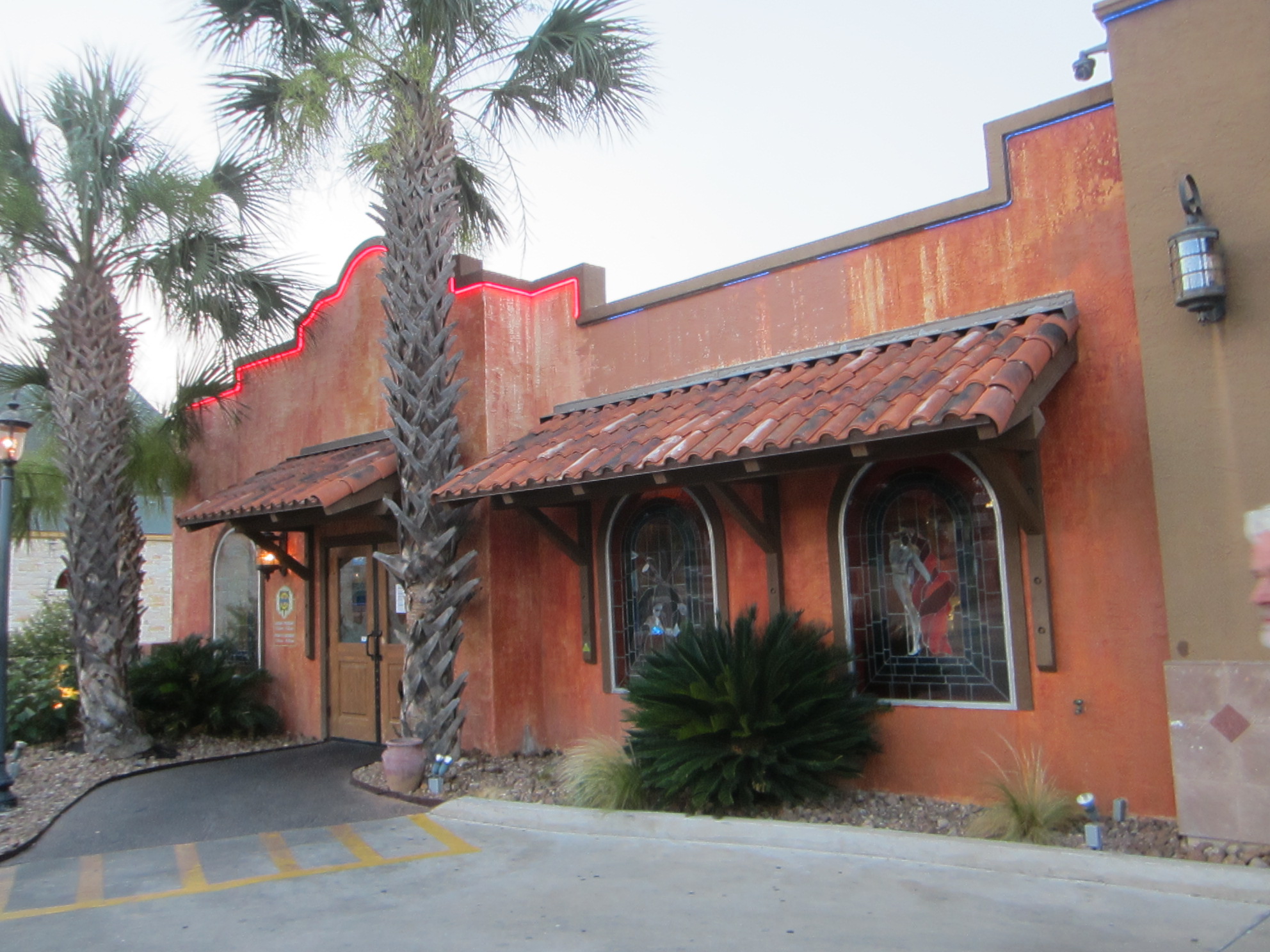
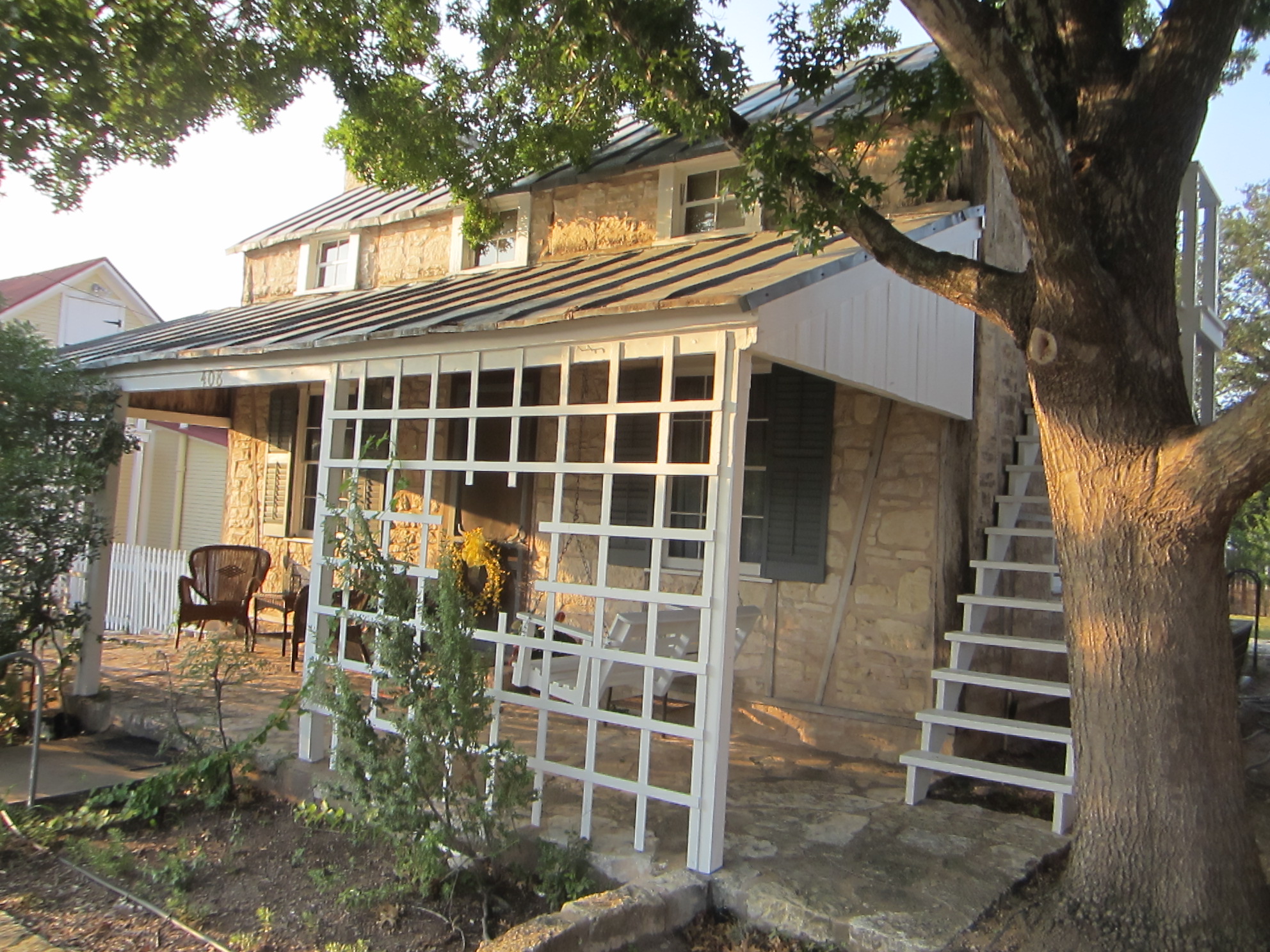


If you loved getting a glimpse of Edyth’s doll collection, you can read about her dolls in much more detail on her blog. Edyth’s fantastic book on rug hooking, Rugs for My Red Cape is out of print, but you can still get a pdf copy from her for what I consider to be a very modest amount for such a great book. If you are not a rug hooker, you’ll want this book anyway – just for the gorgeous photographs of the papier-mache dolls and the 18th century Connecticut cape that Edyth and her husband, Jack, moved and rebuilt in Texas! Also be sure to look for the in depth article that Early American Life will be publishing about Edyth’s home sometime during the next year. I’m sure it will be wonderful and I know the photography will be outstanding!
I hope you enjoyed joining Izzybelle and me for our travels through Texas!!! We wish you could have come too ❤
Izzybelle loved the excitement of the convention and getting to meet new friends!

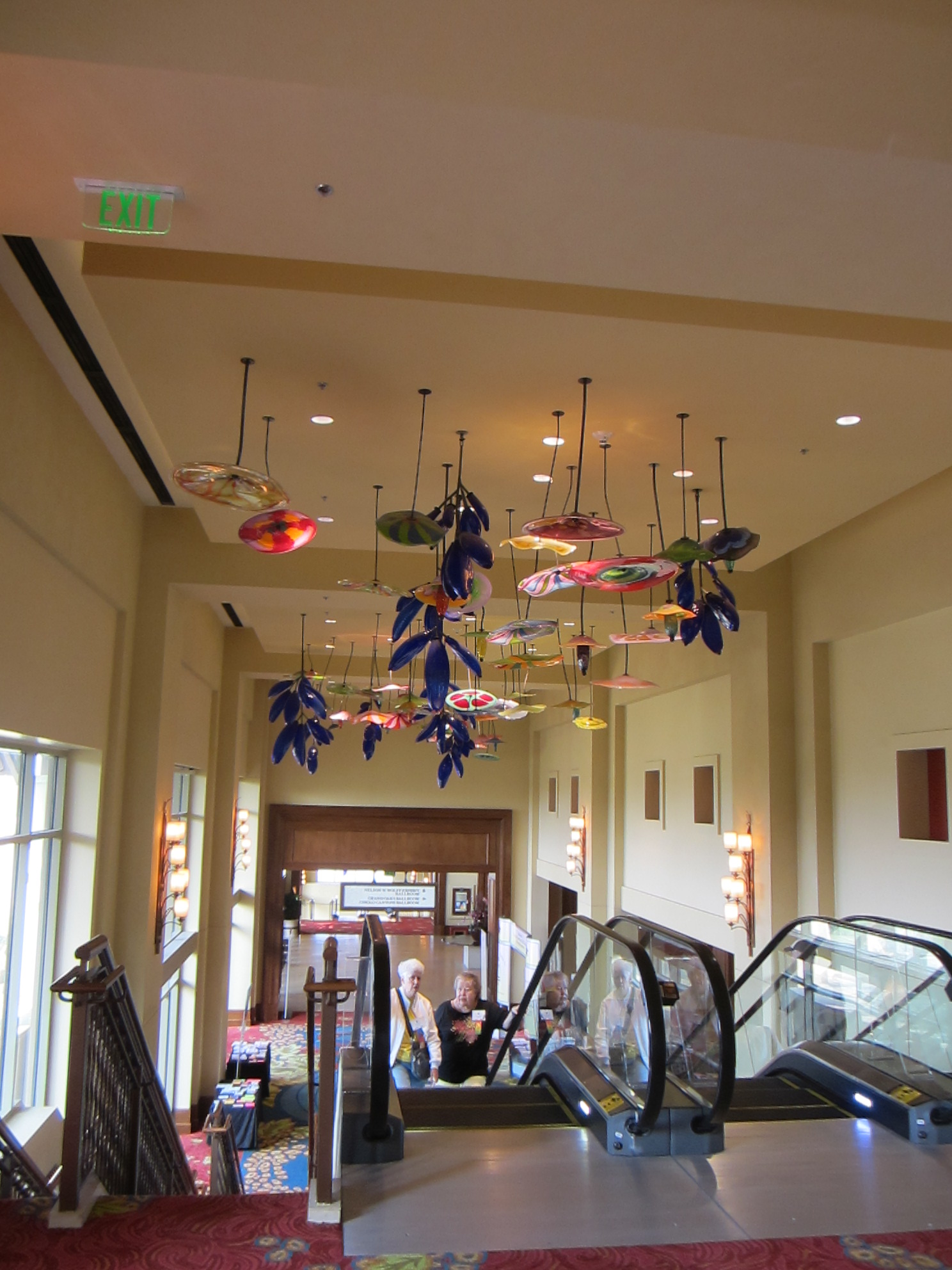

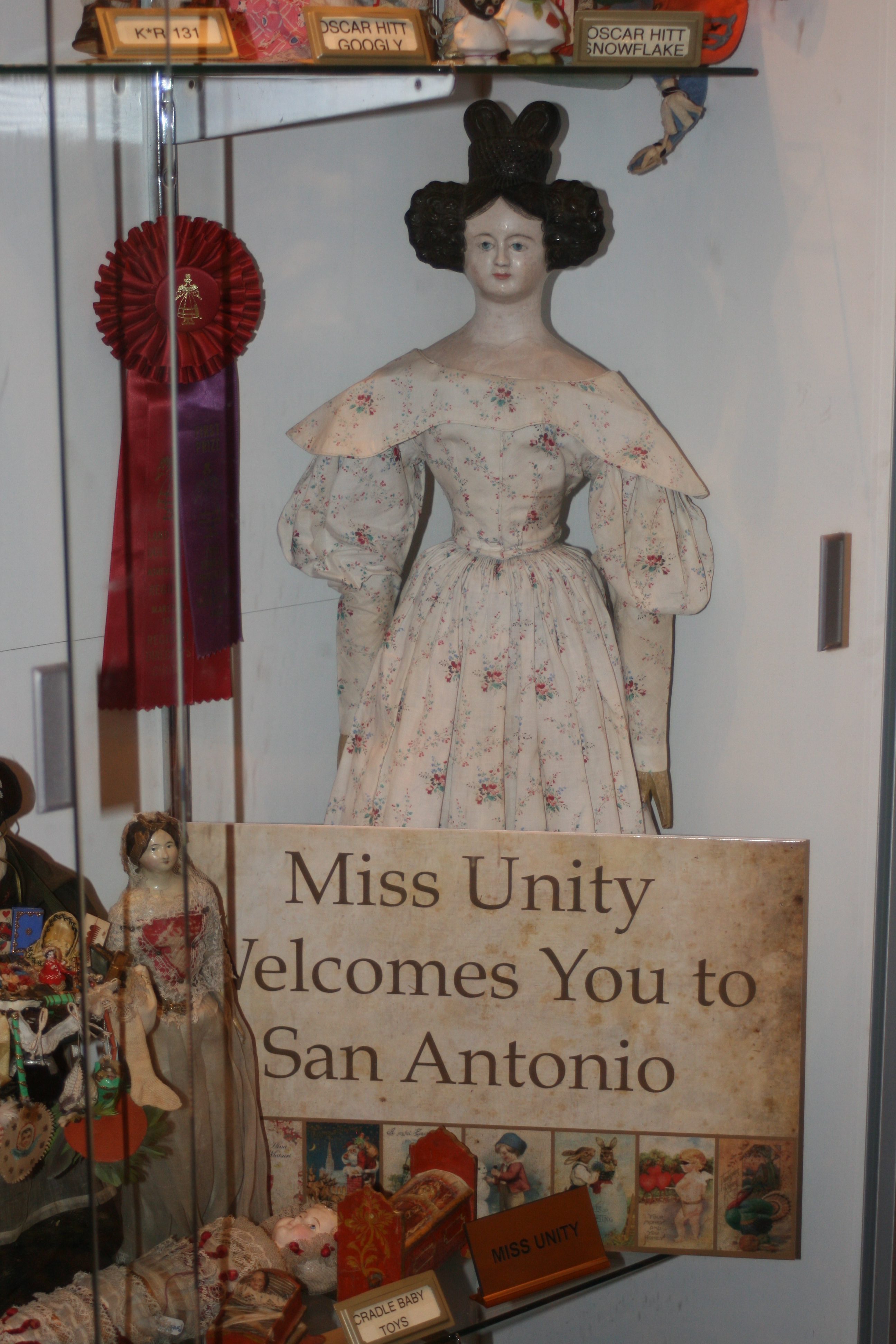
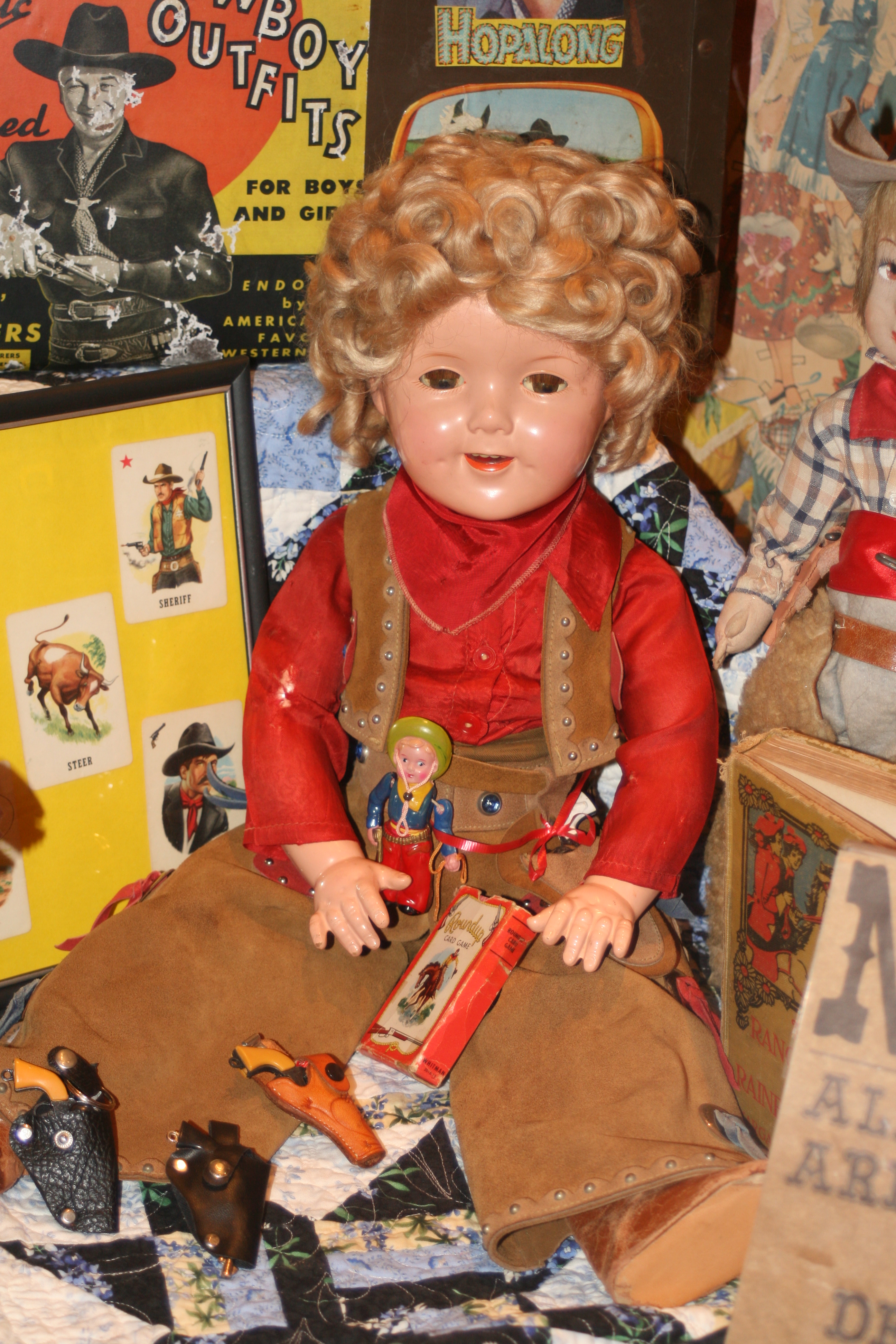
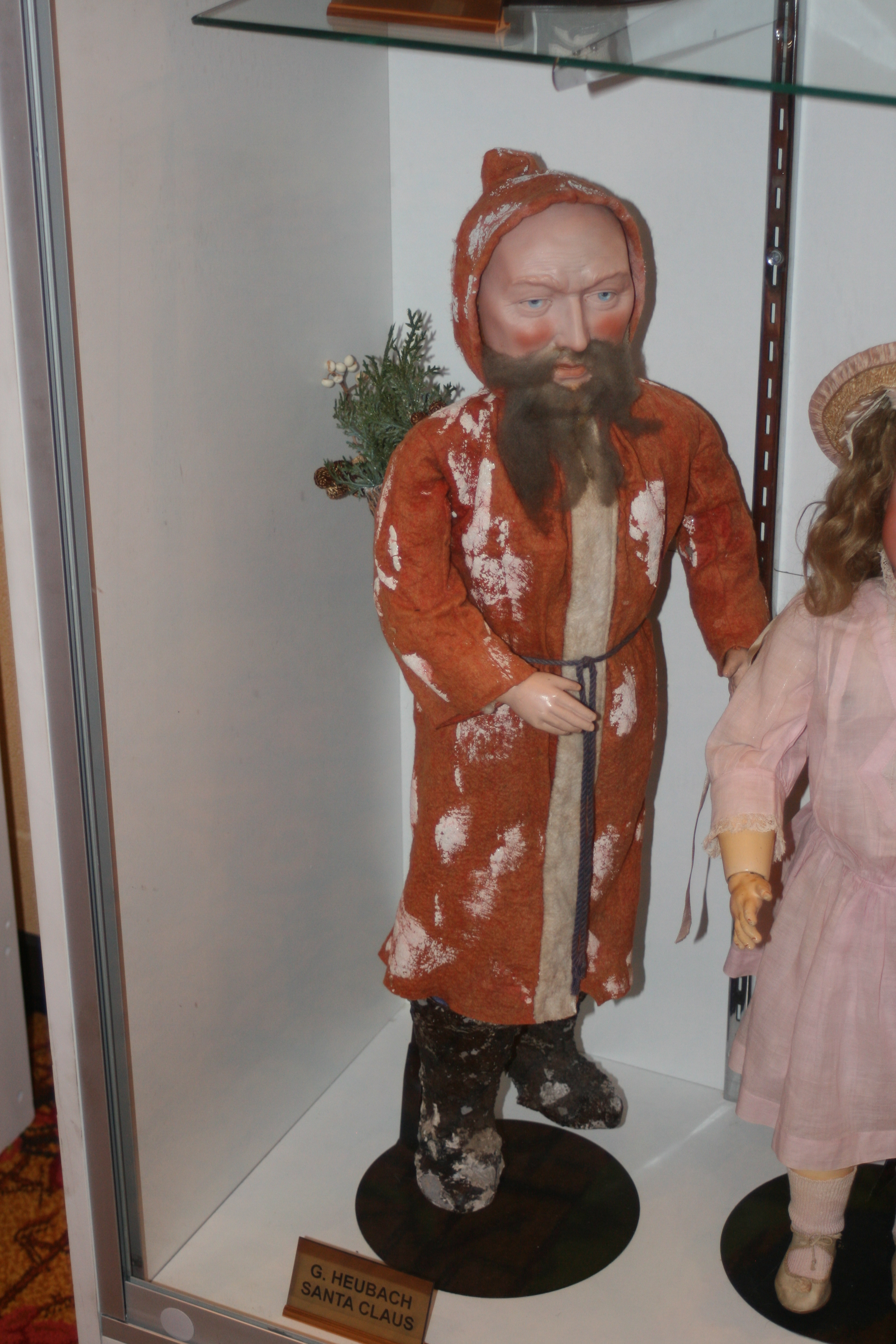
These are some of Izzybelle’s favorite dolls that were on display in the competitive exhibits and special exhibits at the convention.
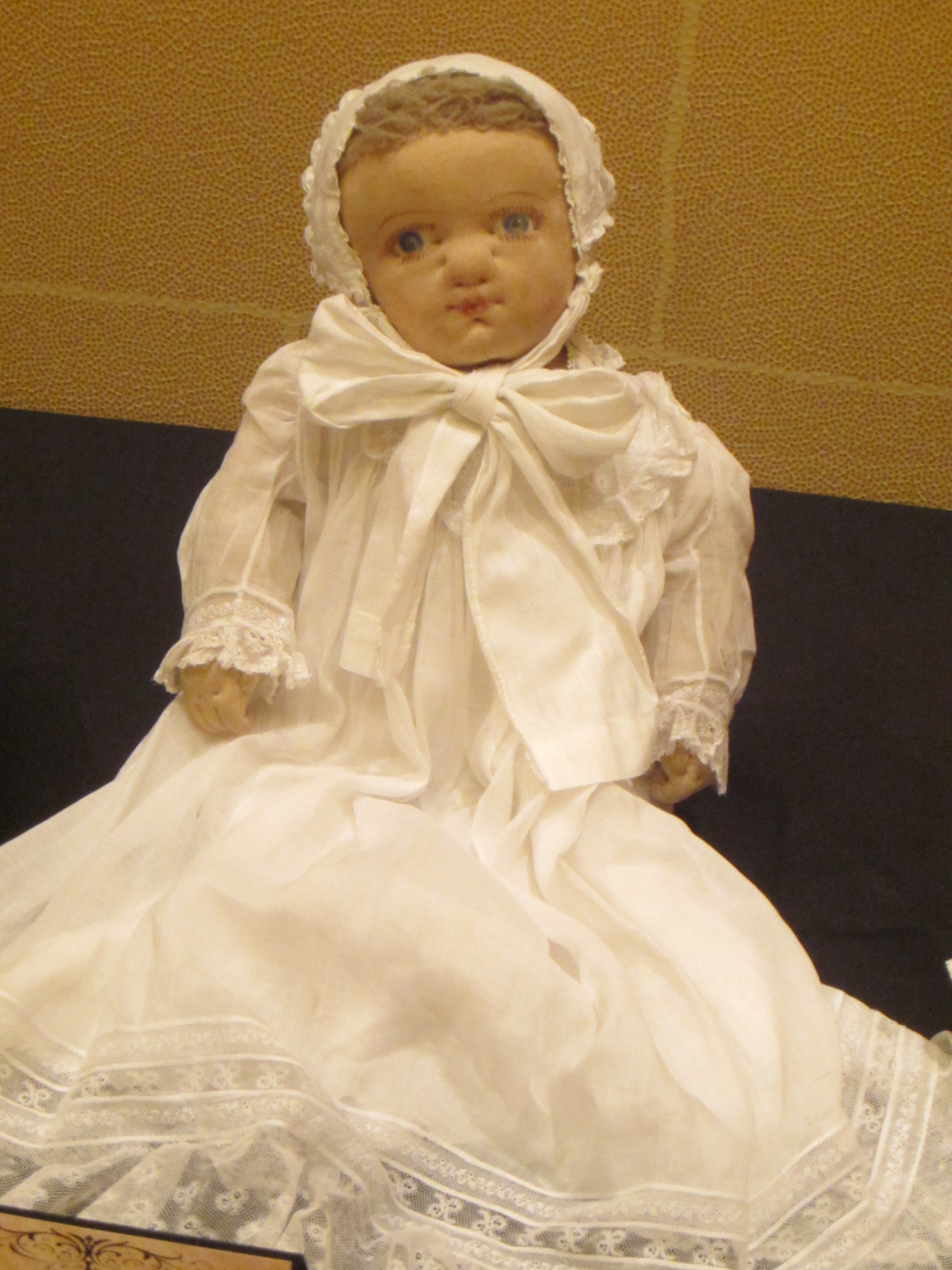
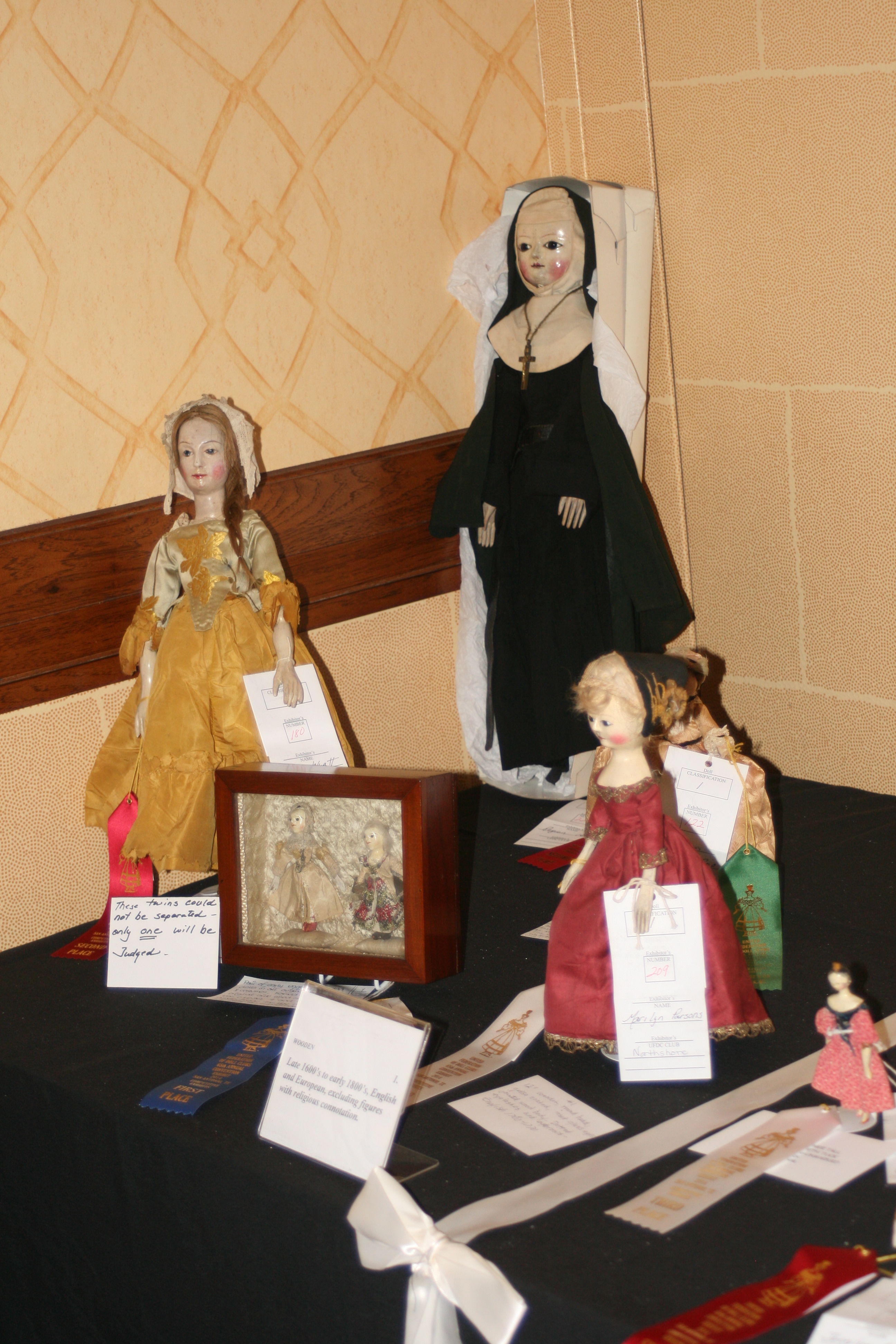
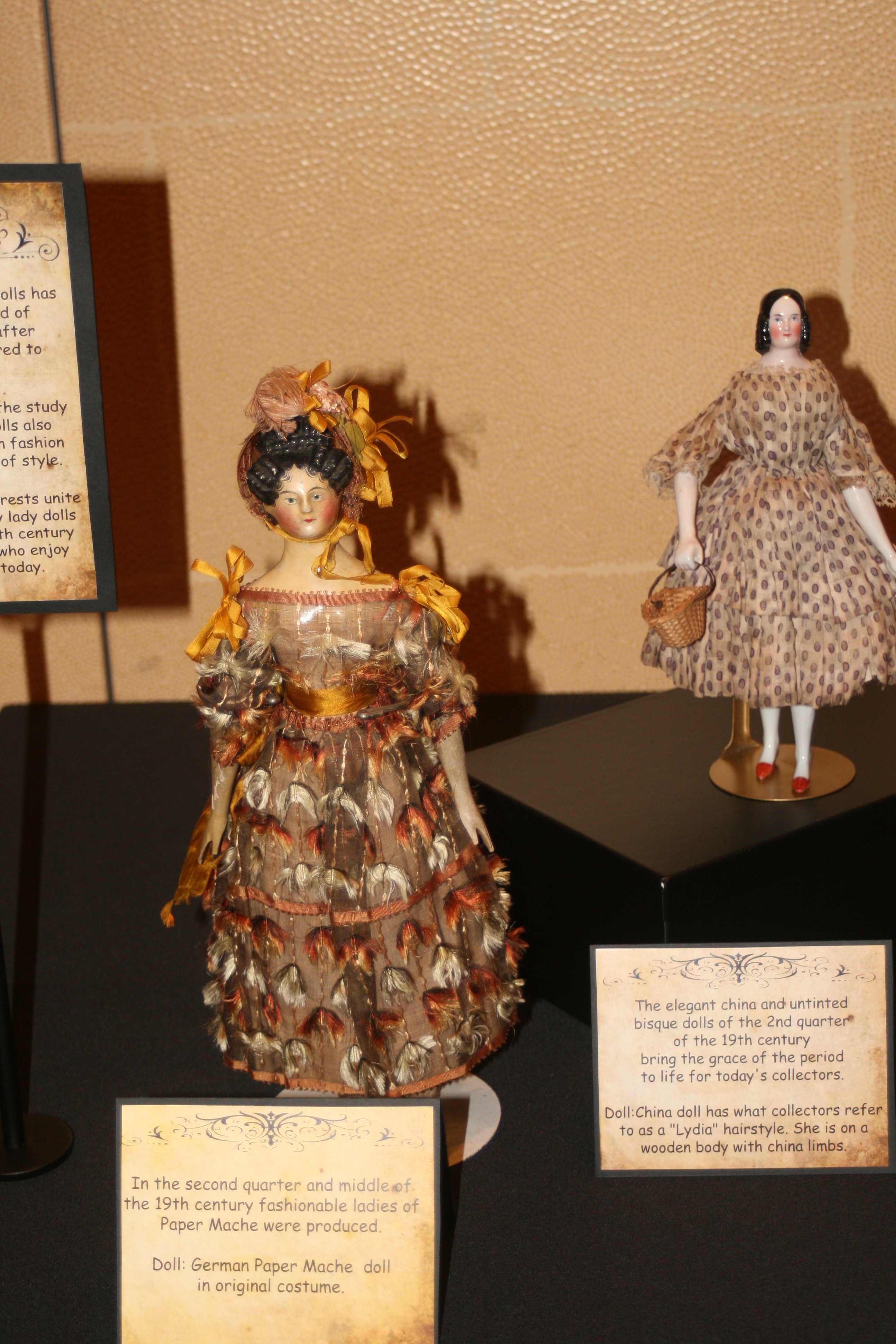
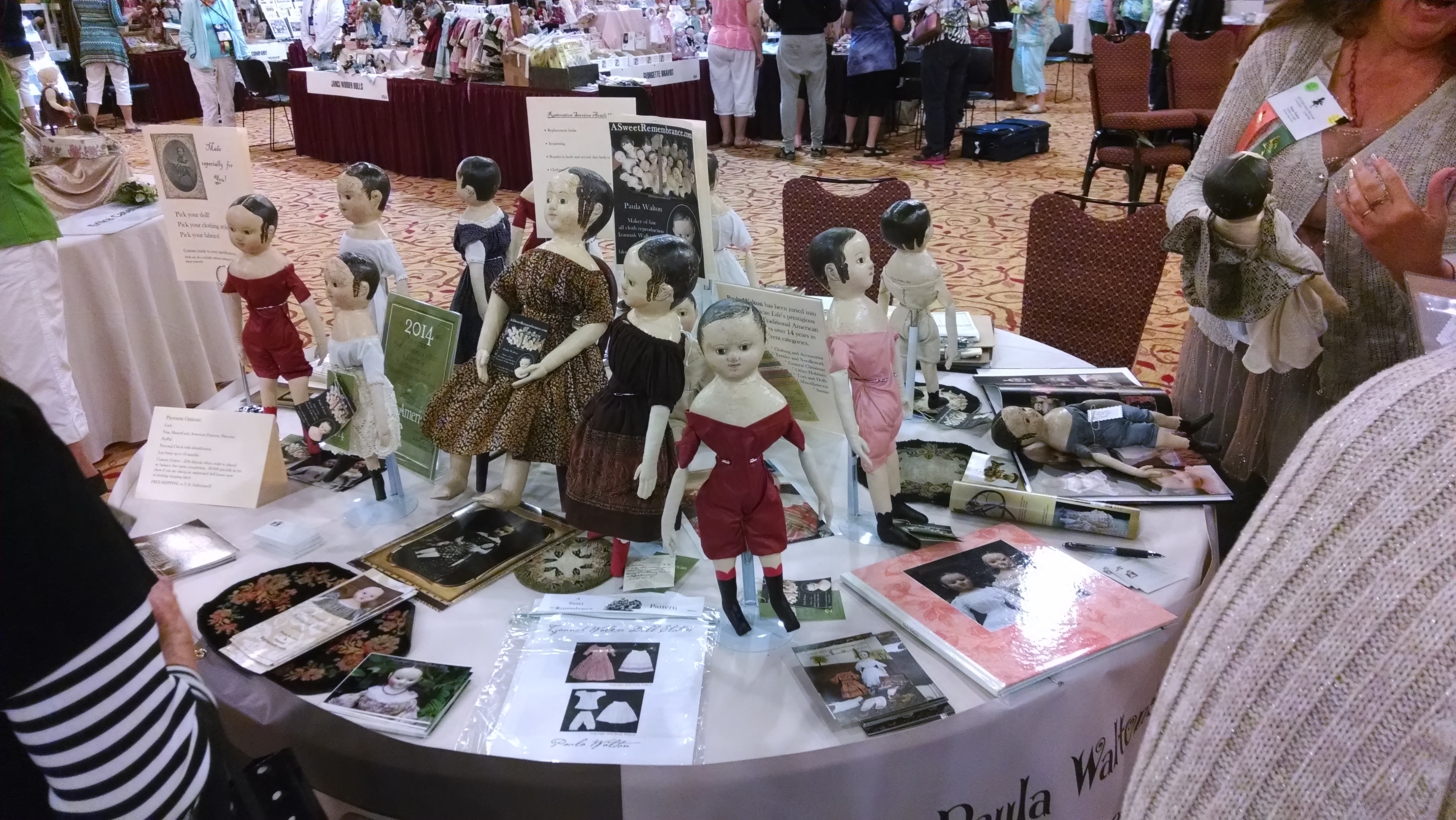
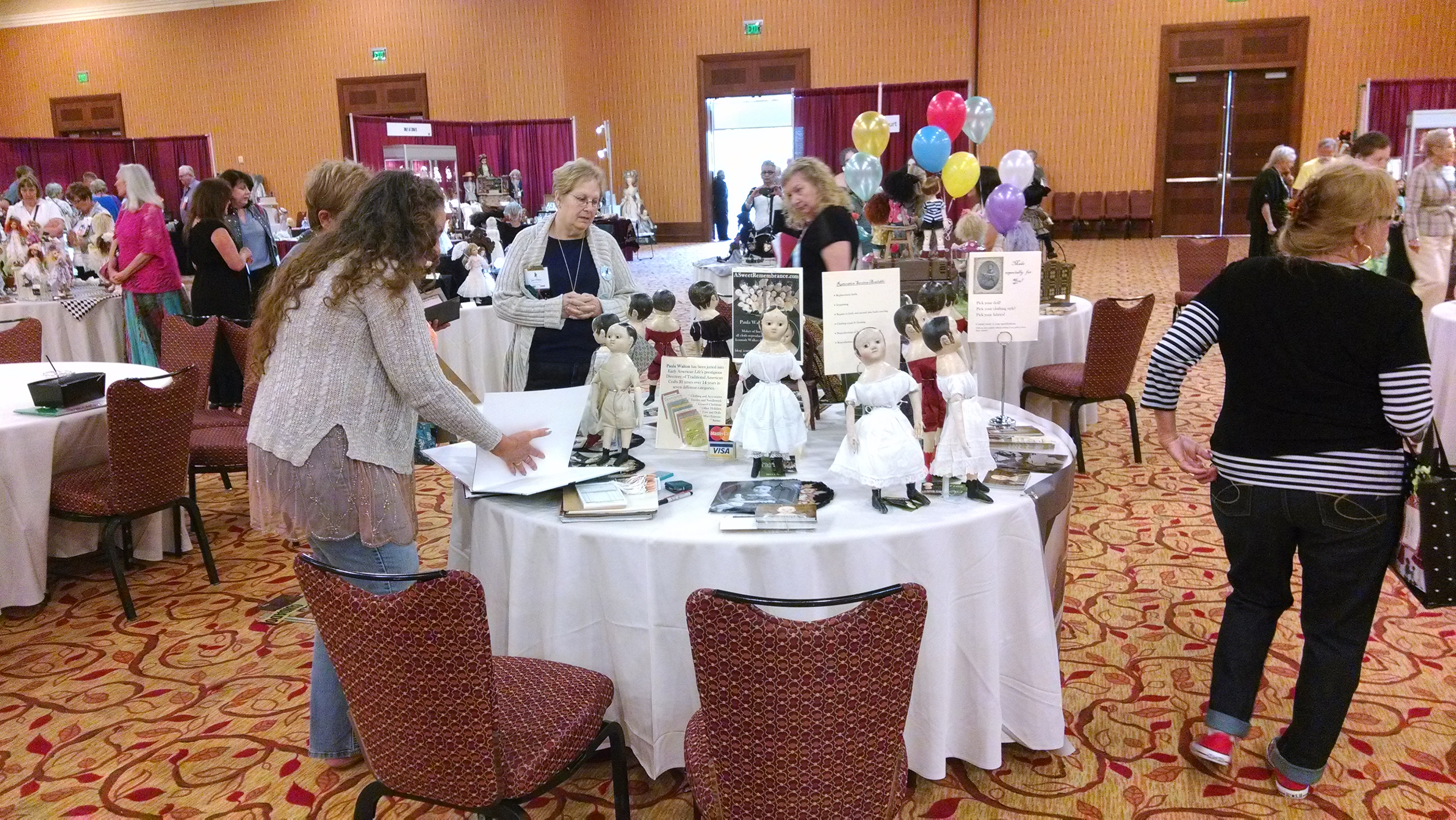
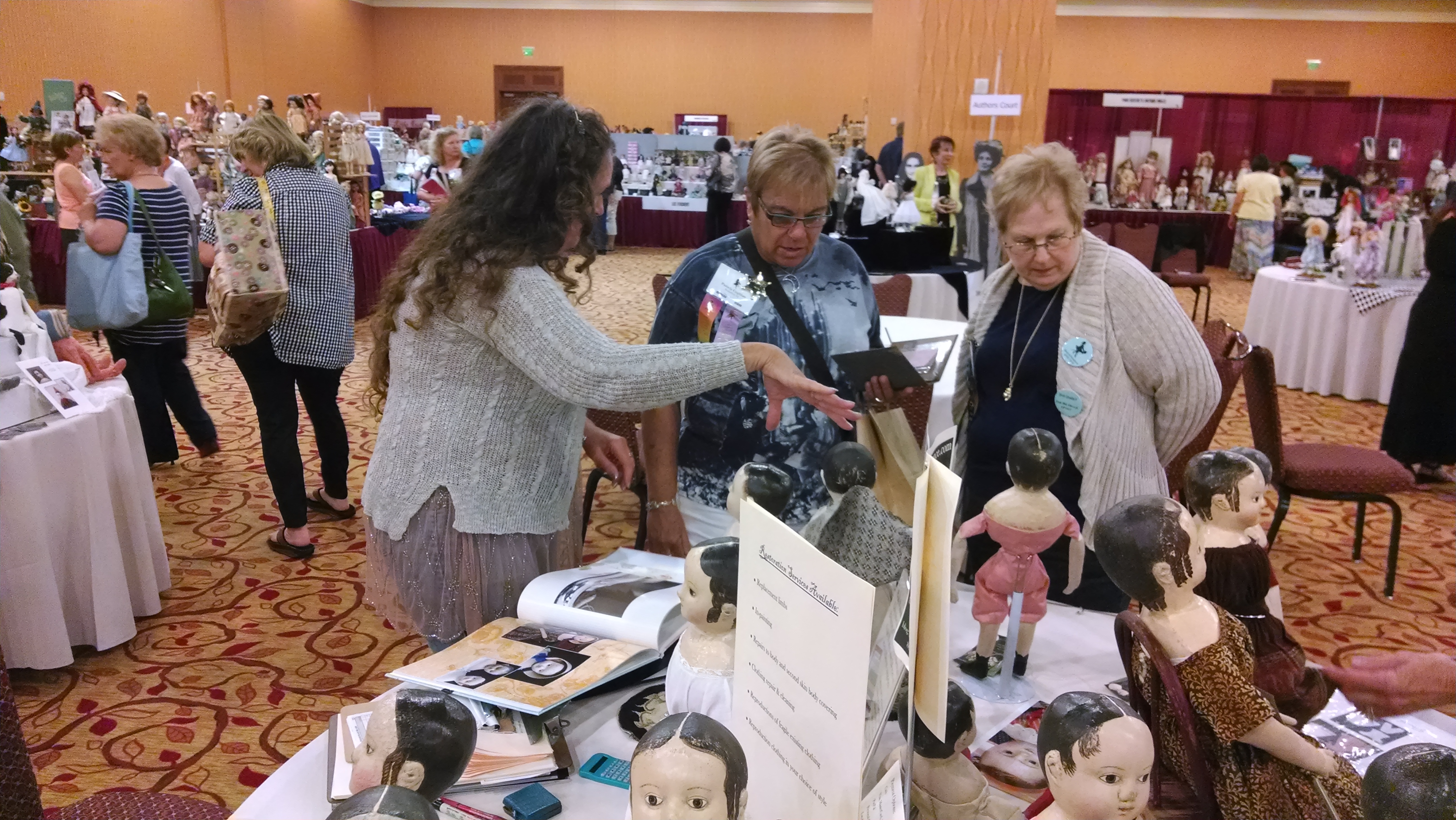
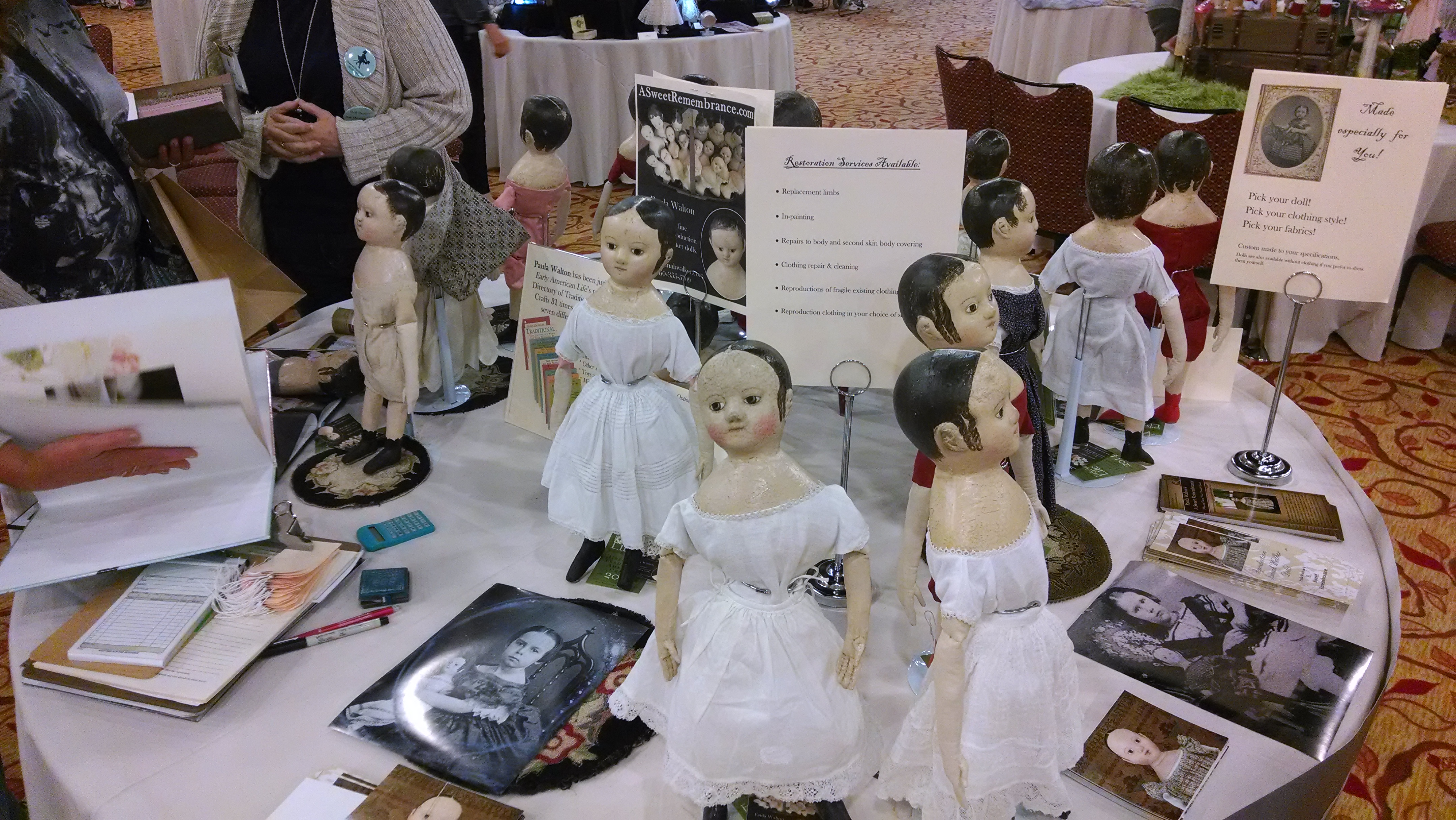
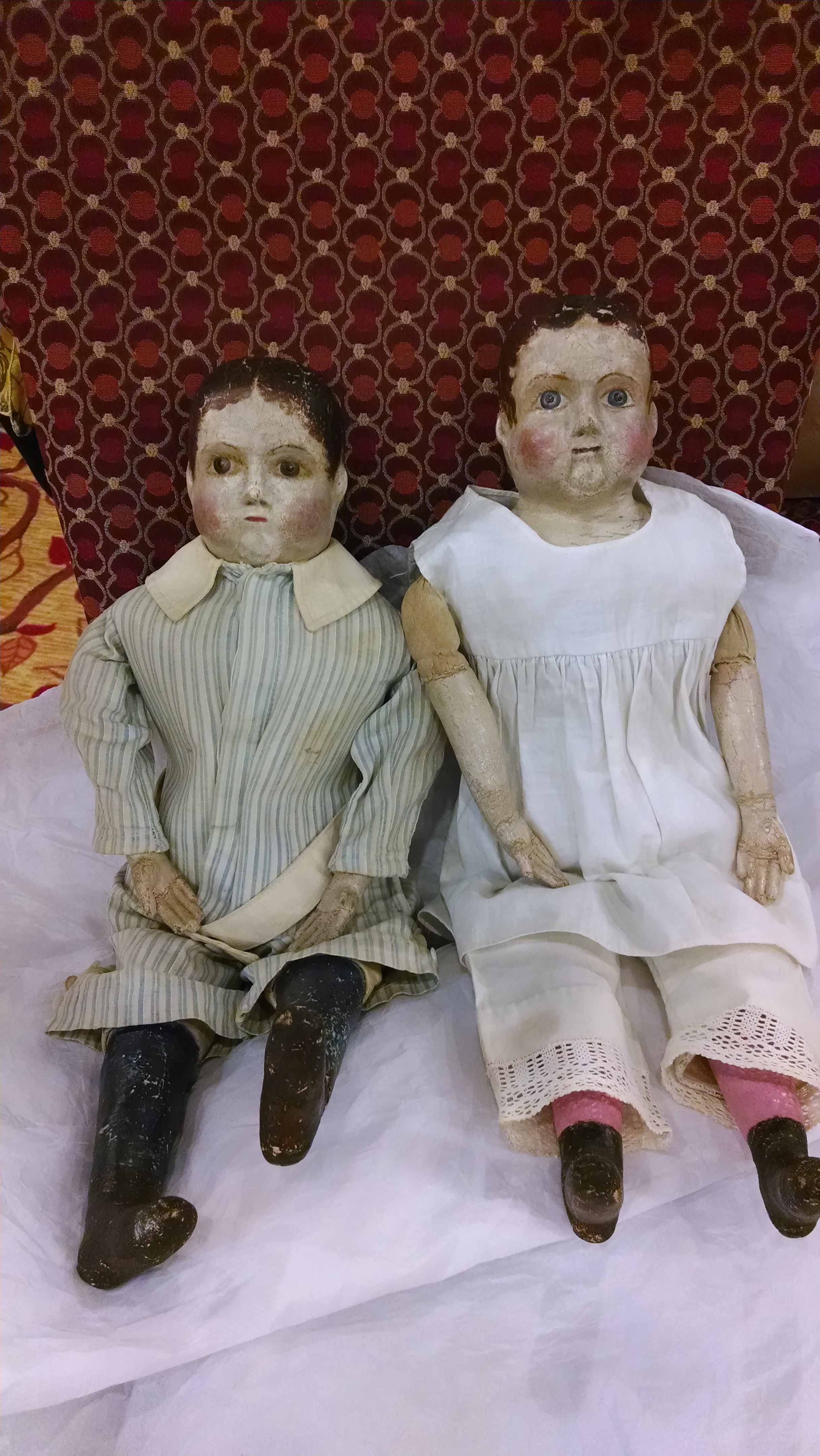
A very, very nice convention attendee brought two of Izzybelle’s cousins, a pair of post patent Izannah Walker dolls, down to meet Izzybelle and the rest of my dolls. It was amazing to get to see them in person!
Izzybelle and I had a fantastic time at the UFDC convention. We did have to say good bye to some of Izzybelle’s sisters, who found new homes, which made Izzy B. sad. However she brightened right up when she found out that Ismay was coming home with us to join our family ❤ ❤ ❤
It’s getting late and Izzybelle is up way past her bedtime, so she will have to tell you all about her adventures in Fredricksberg tomorrow!
You can see a fun video of the Artist’s Showcase at the convention that Turn of the Century Antiques posted on facebook by clicking here.
More photos of the convention can be seen on the UFDC’s facebook page.
This is just fast post before we leave the convention. A long lost sister is coming to live with the rest of the girls and Izzybelle is so excited that she can barely contain herself!
Check out this video of the Artist’s Showcase at the UFDC convention yesterday – and yes, my table is on there 🙂
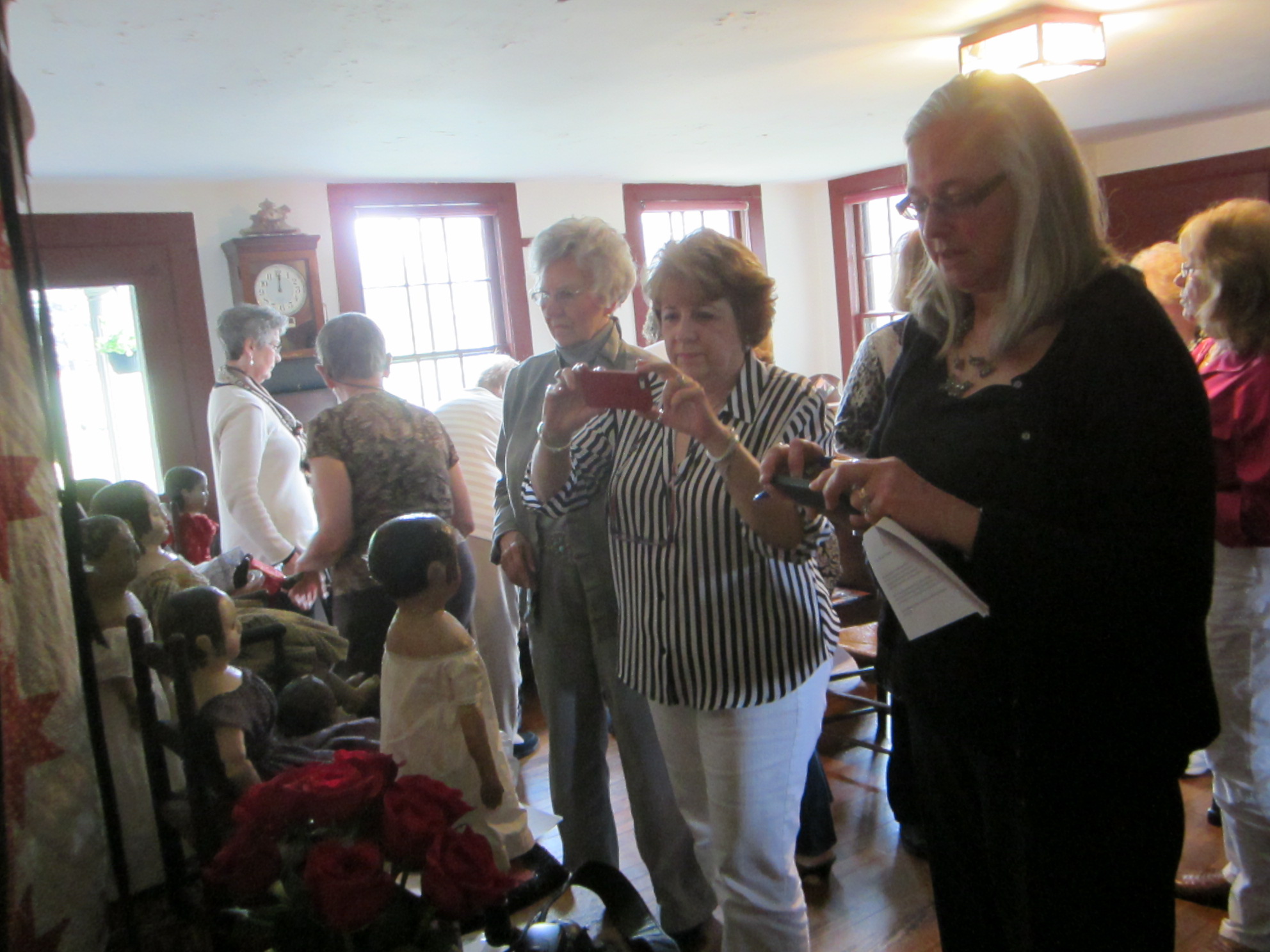
On Saturday I hosted the May meeting of my doll club, the Jenny Lind chapter of the United Federation of Doll Clubs. The topic of our meeting was Izannah Walker dolls. Given the topic, you probably aren’t too surprised that the meeting was at my house this month. 🙂
It was a wonderful afternoon and I really enjoyed having the Jenny Lind members here. They’ve all been incredibly nice to me and I was happy to be able to repay the hospitality that they have shown me. Best of all two antique Izannah Walker dolls came along to the meeting! My girls were thrilled at the chance to see their sisters and have a family reunion.
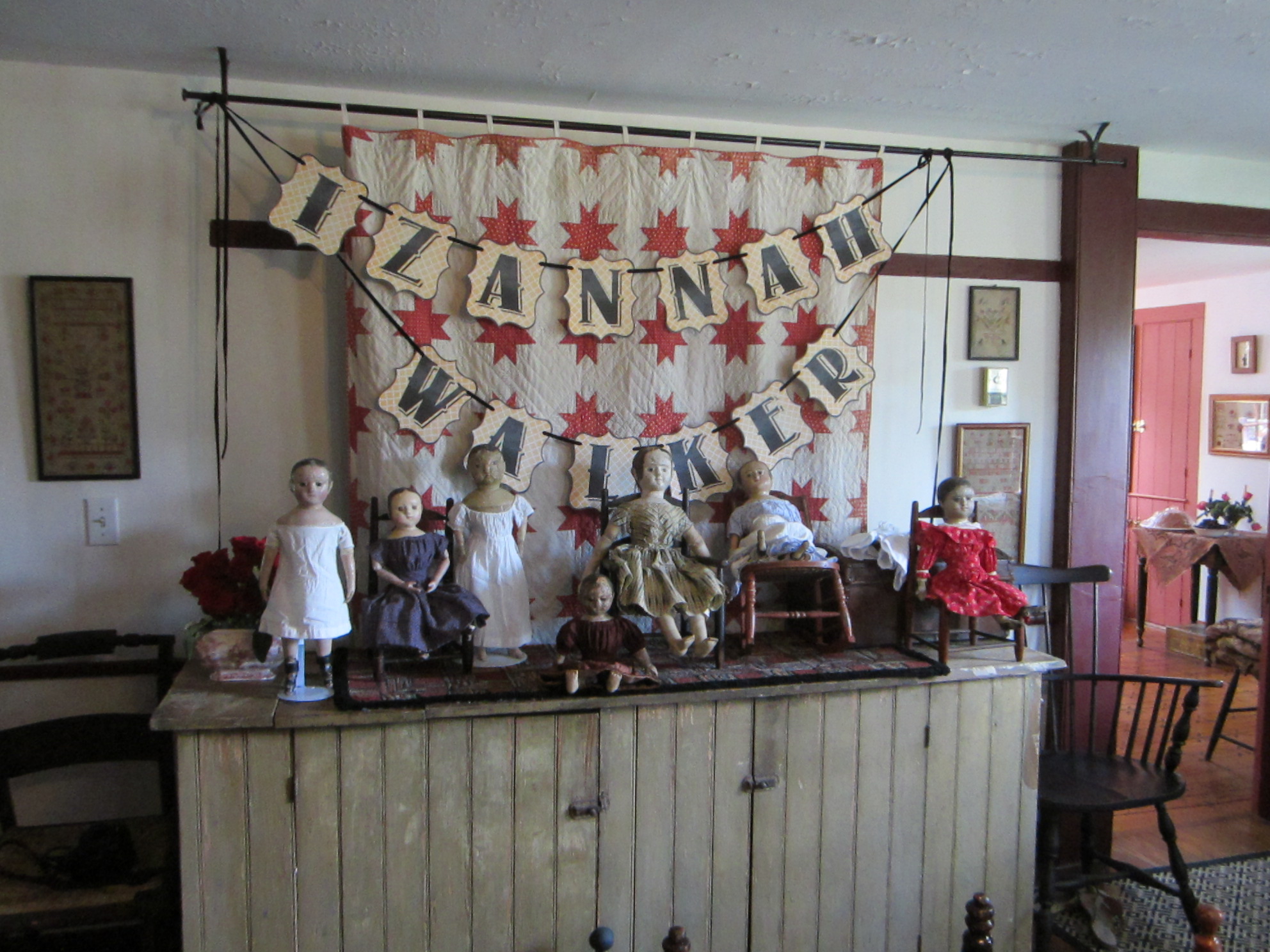
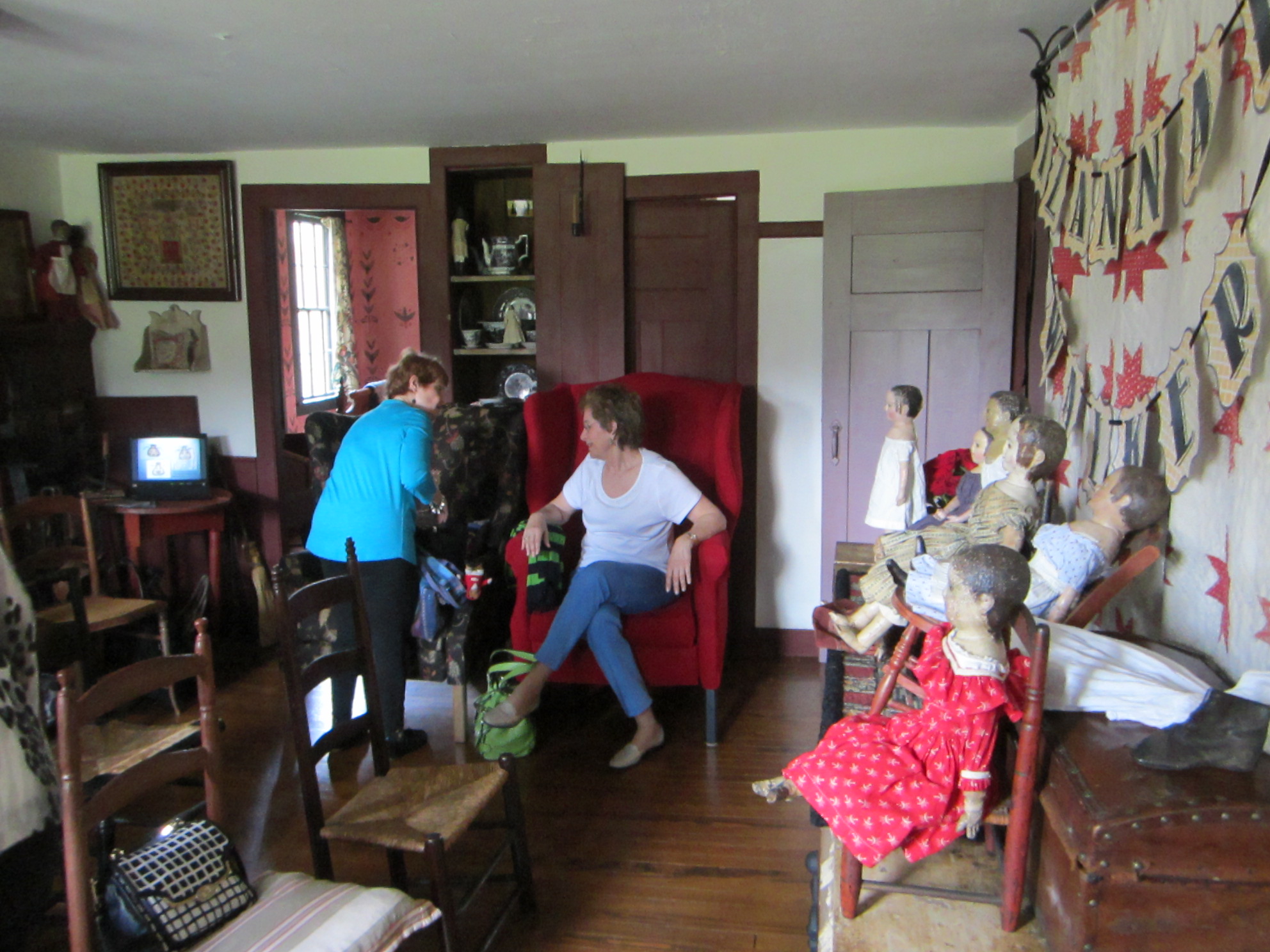
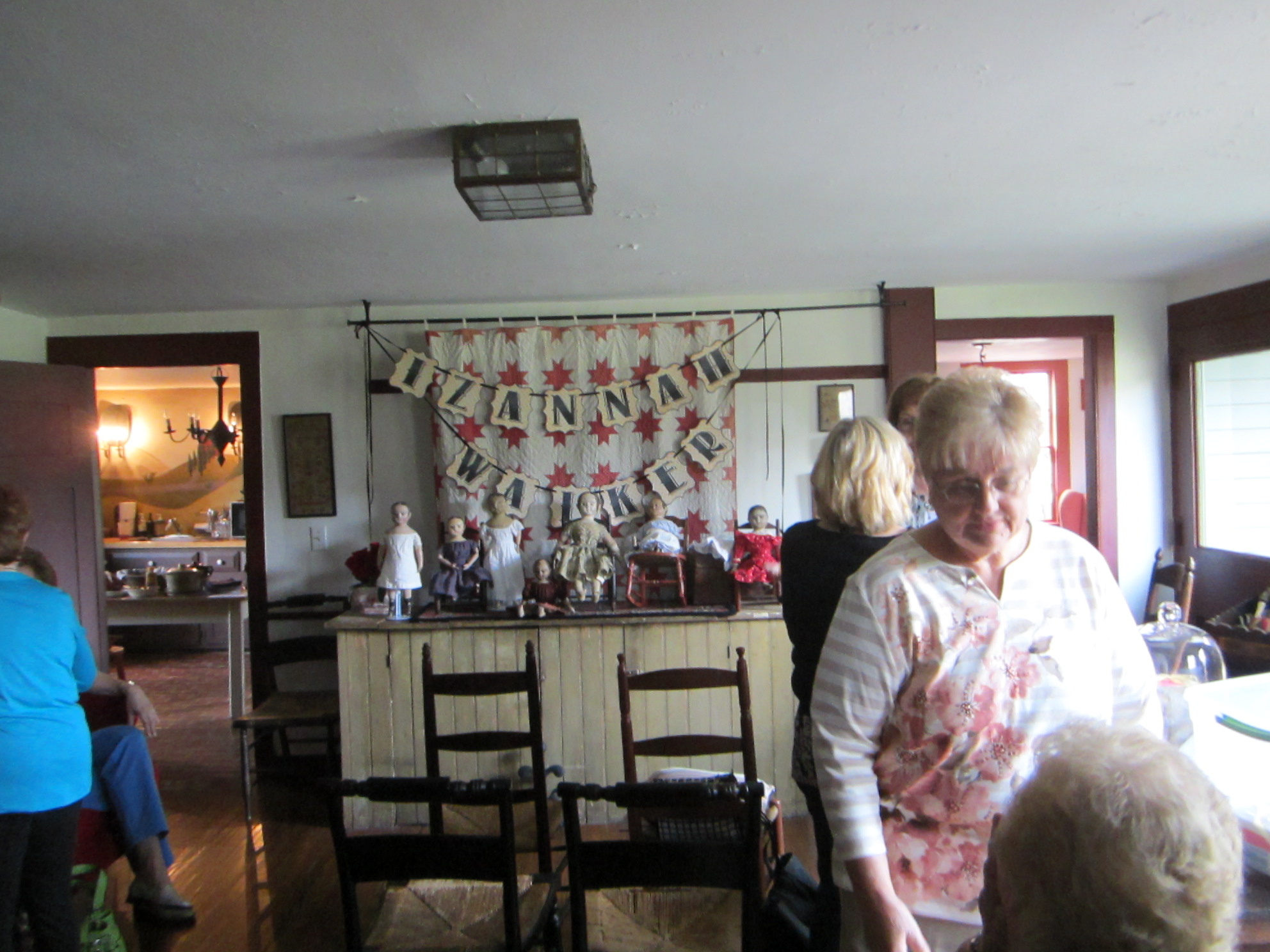
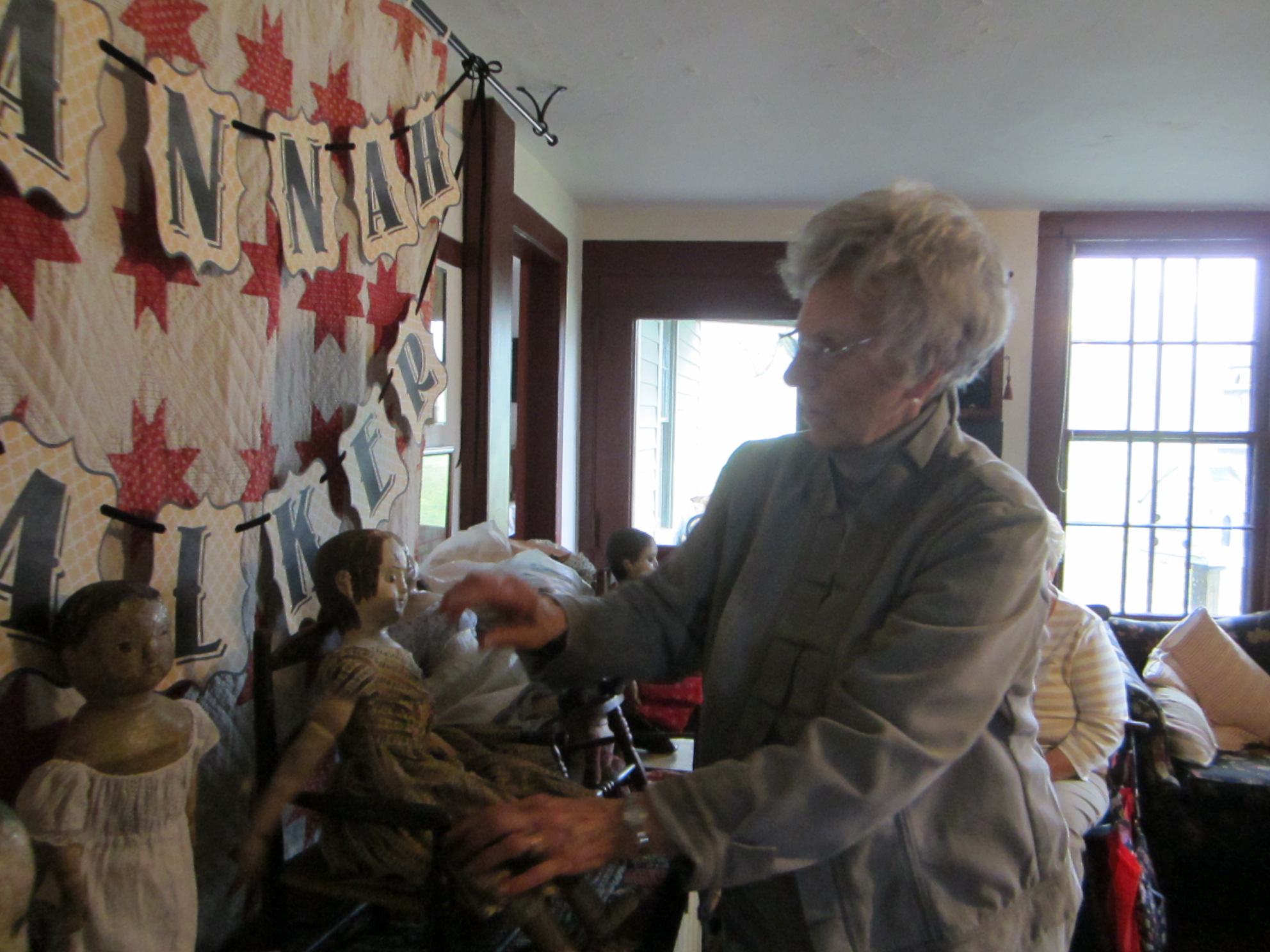

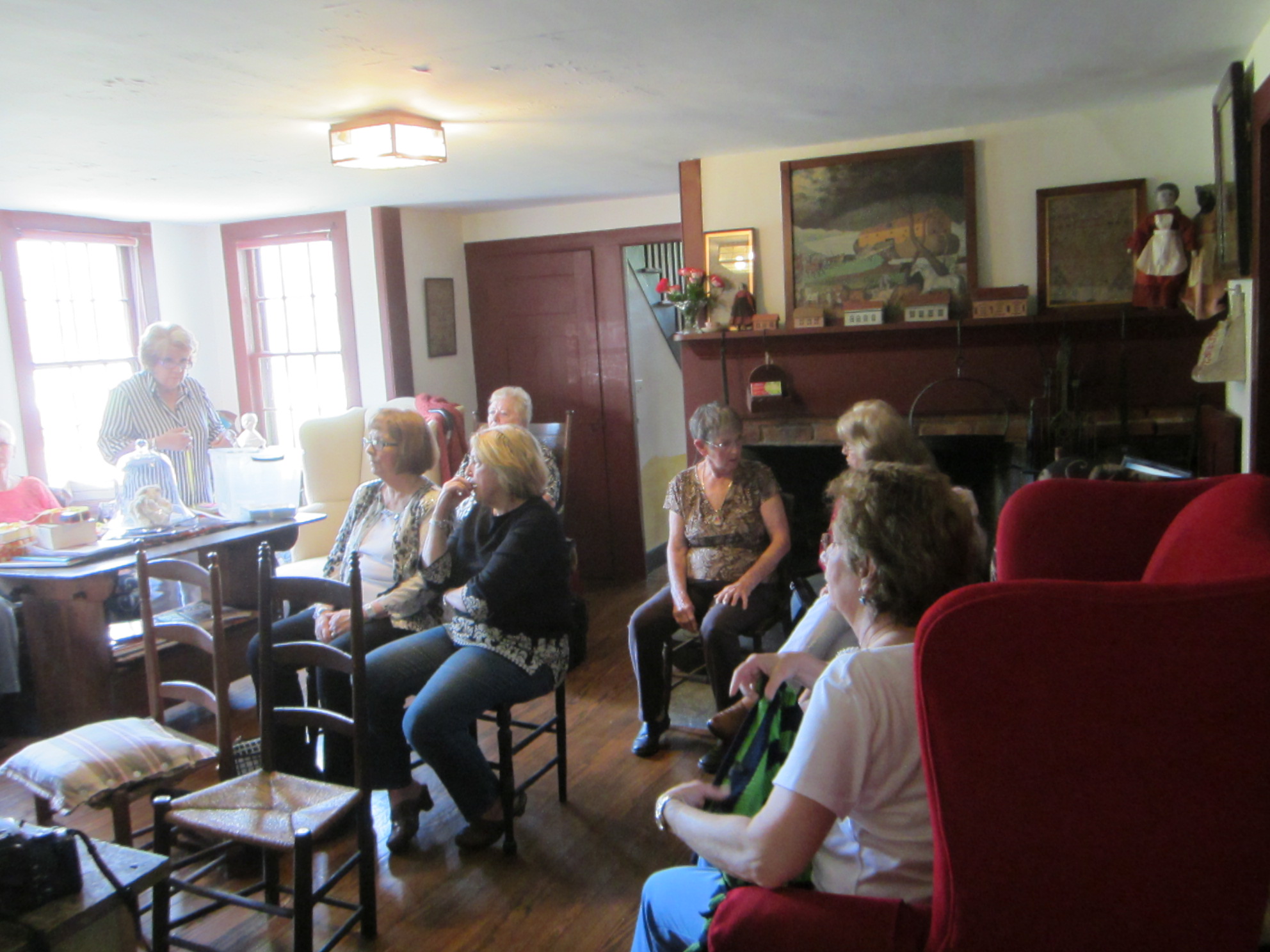
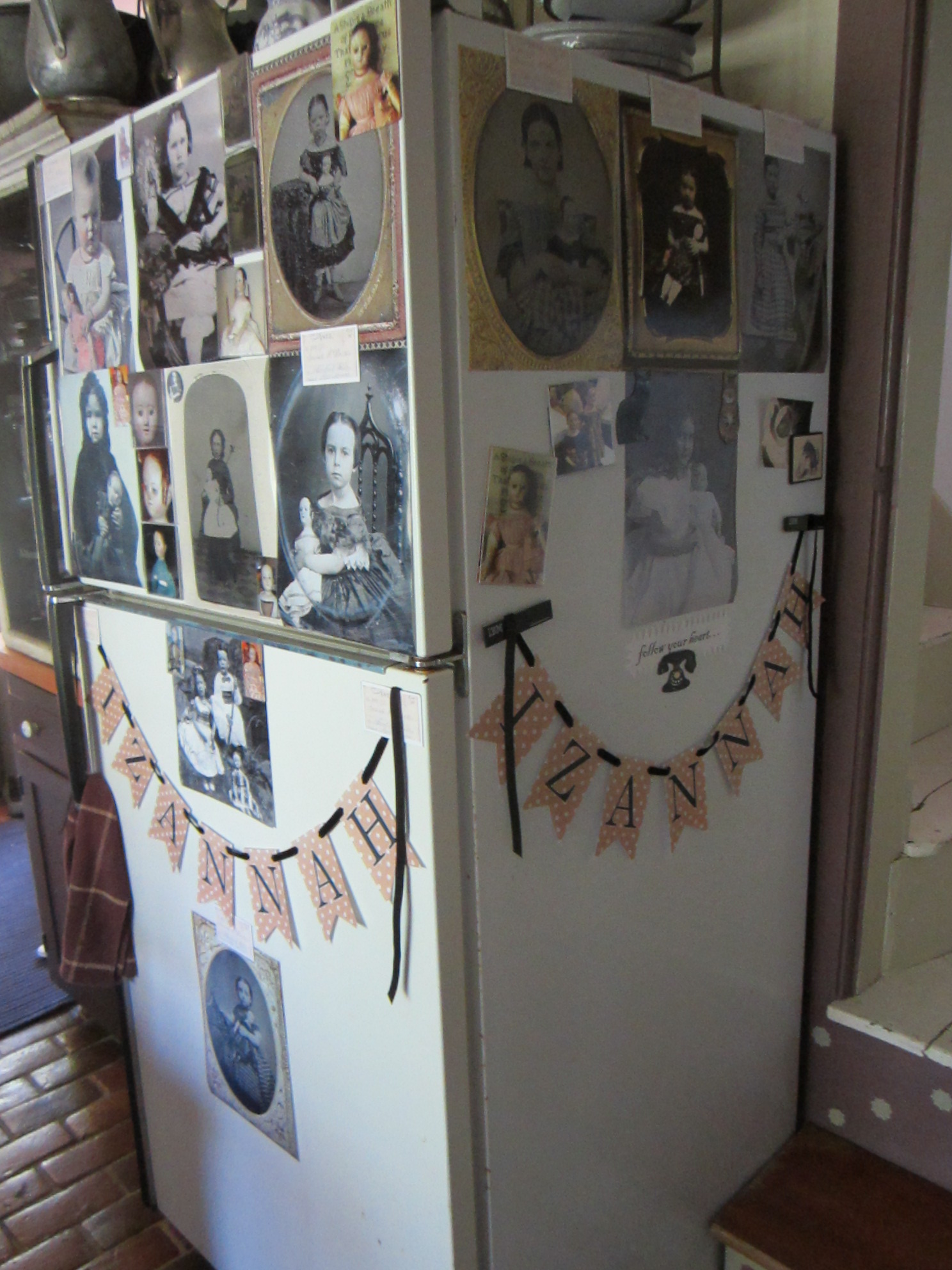
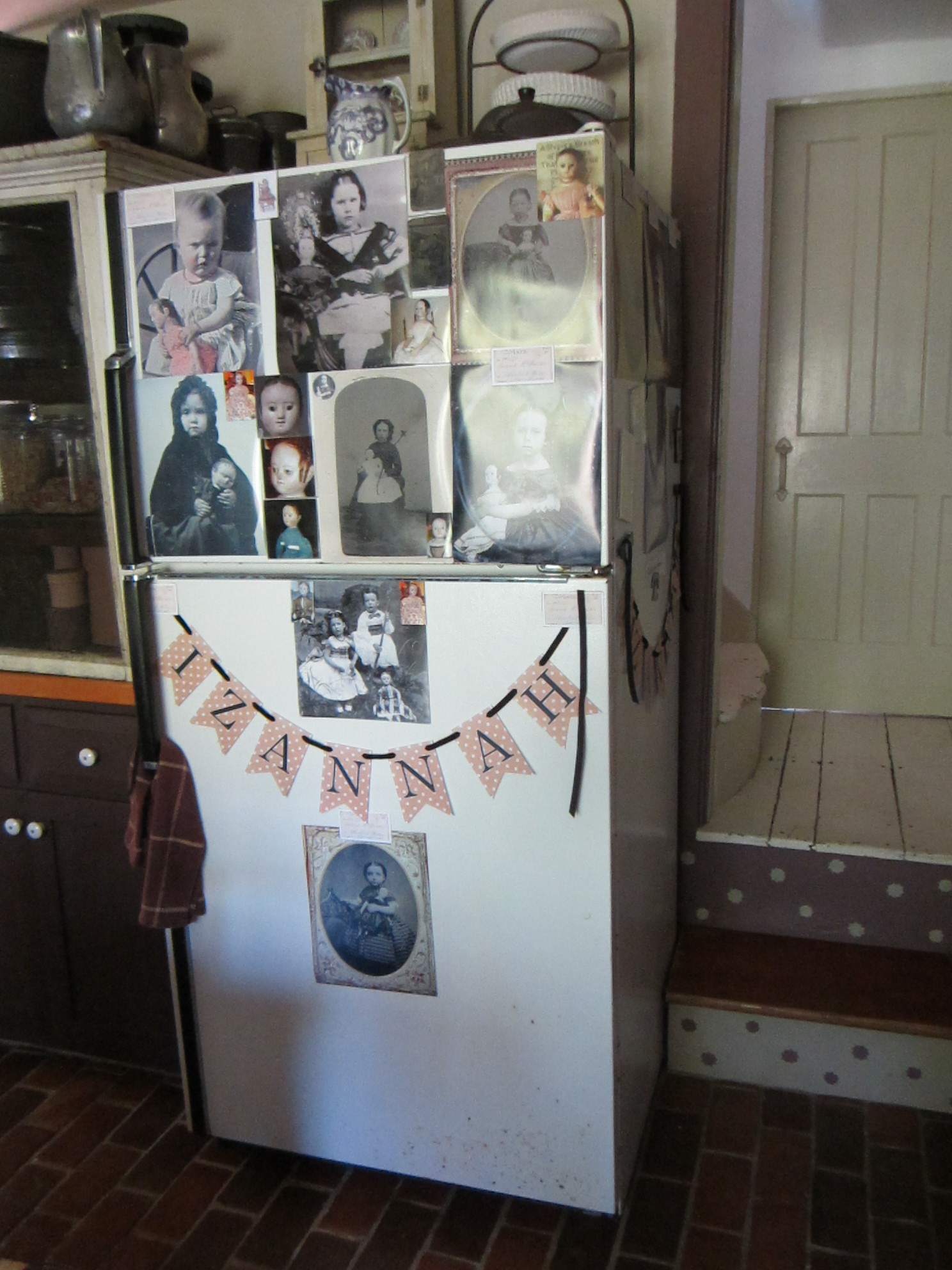
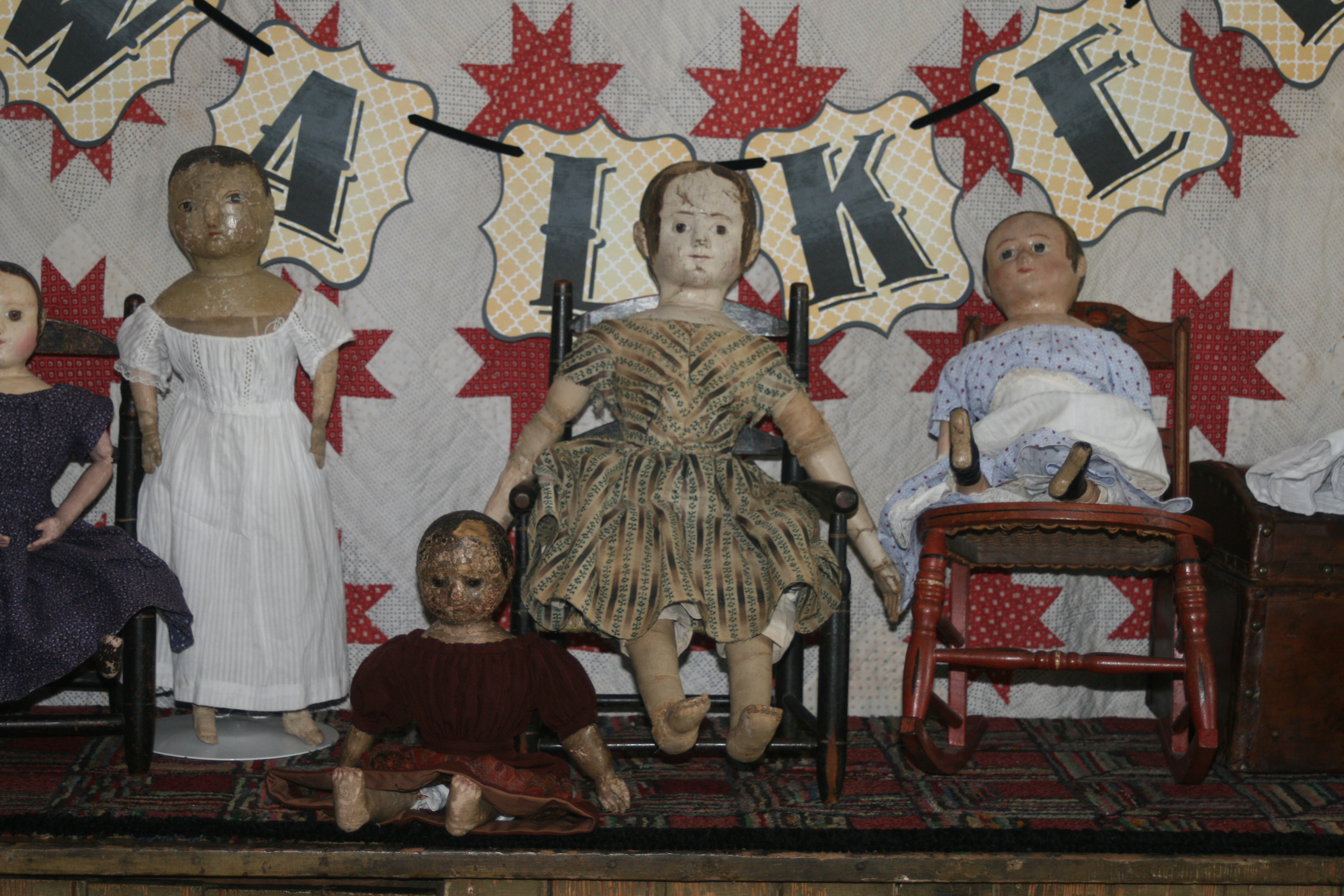
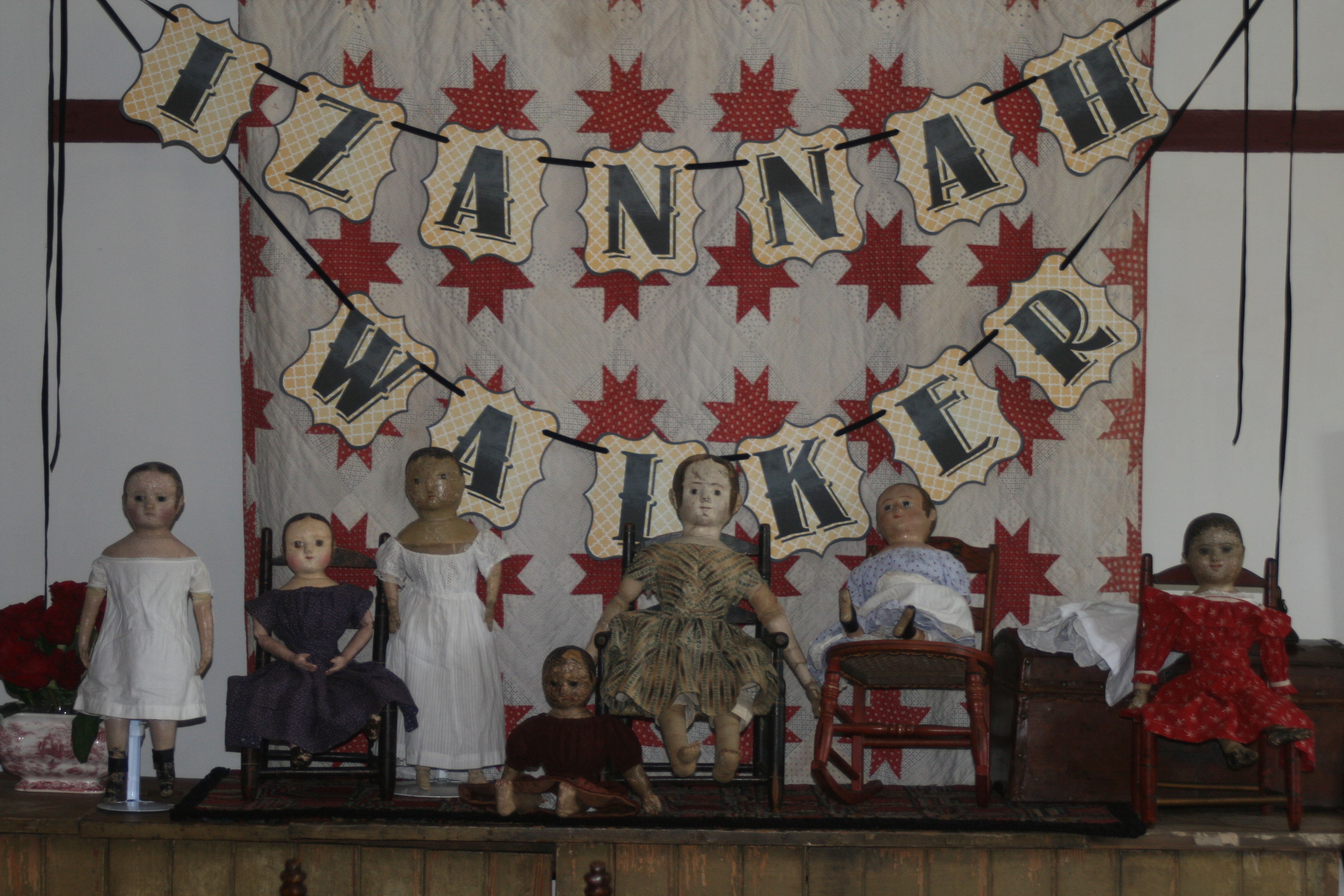
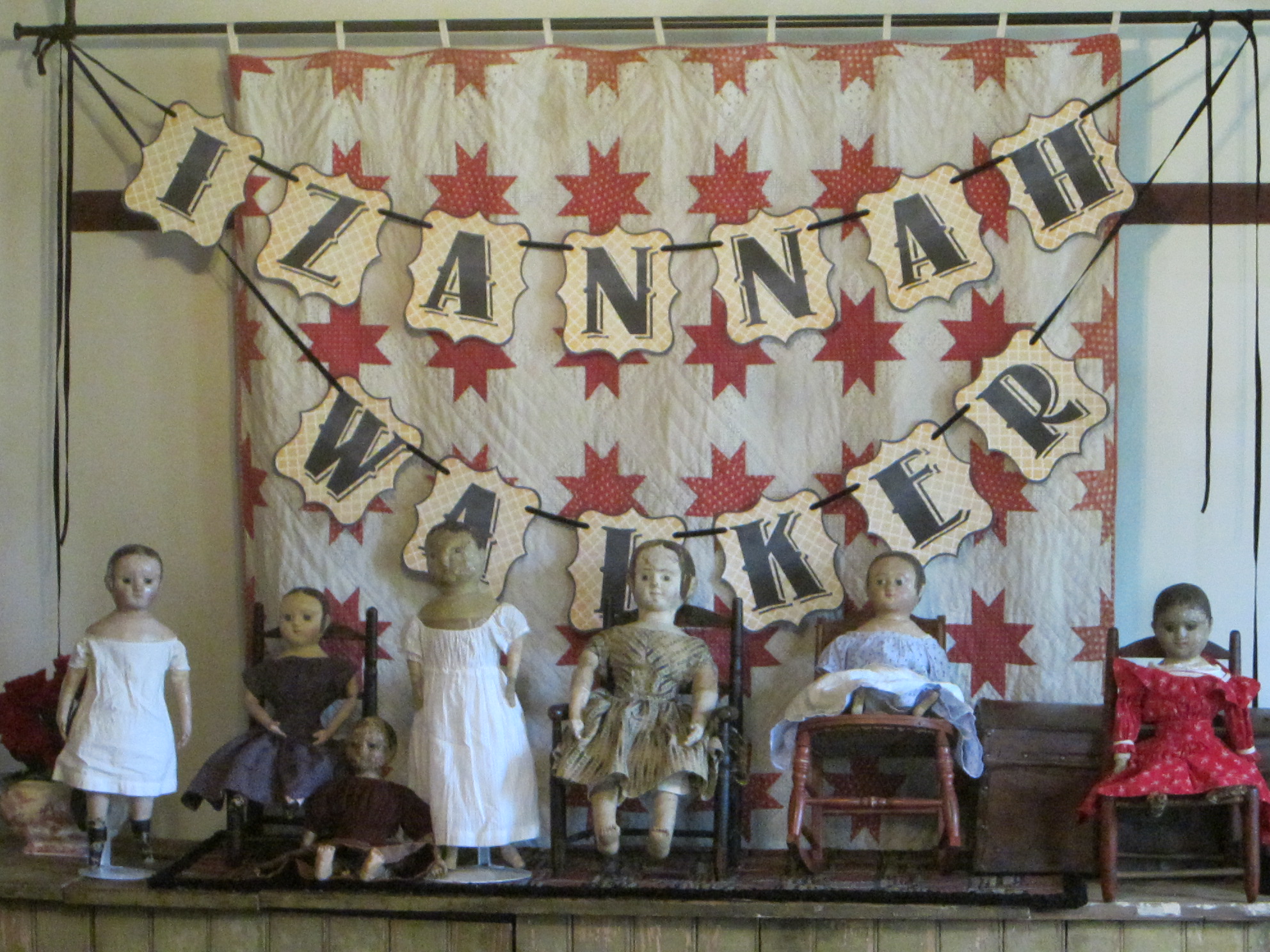
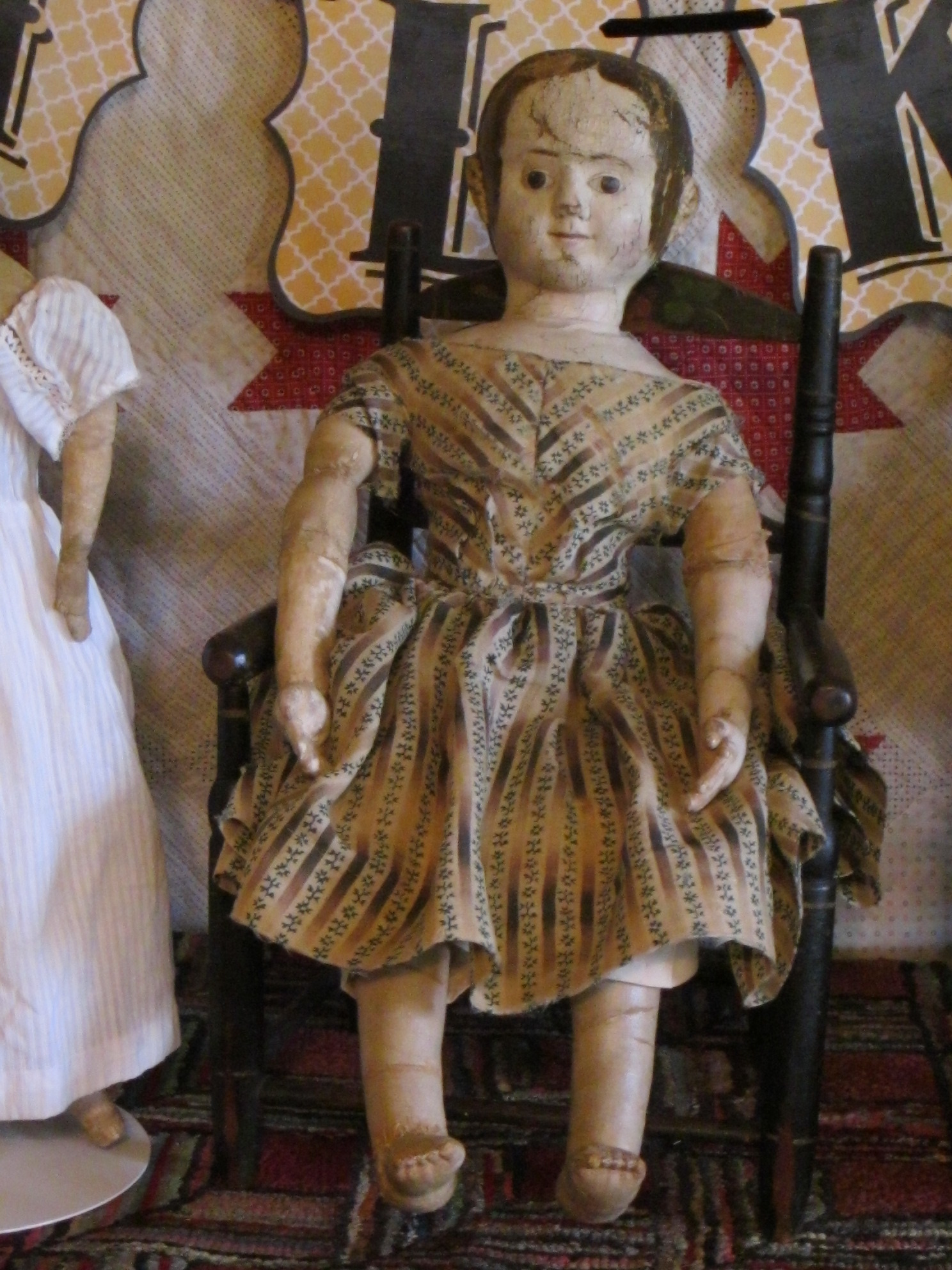
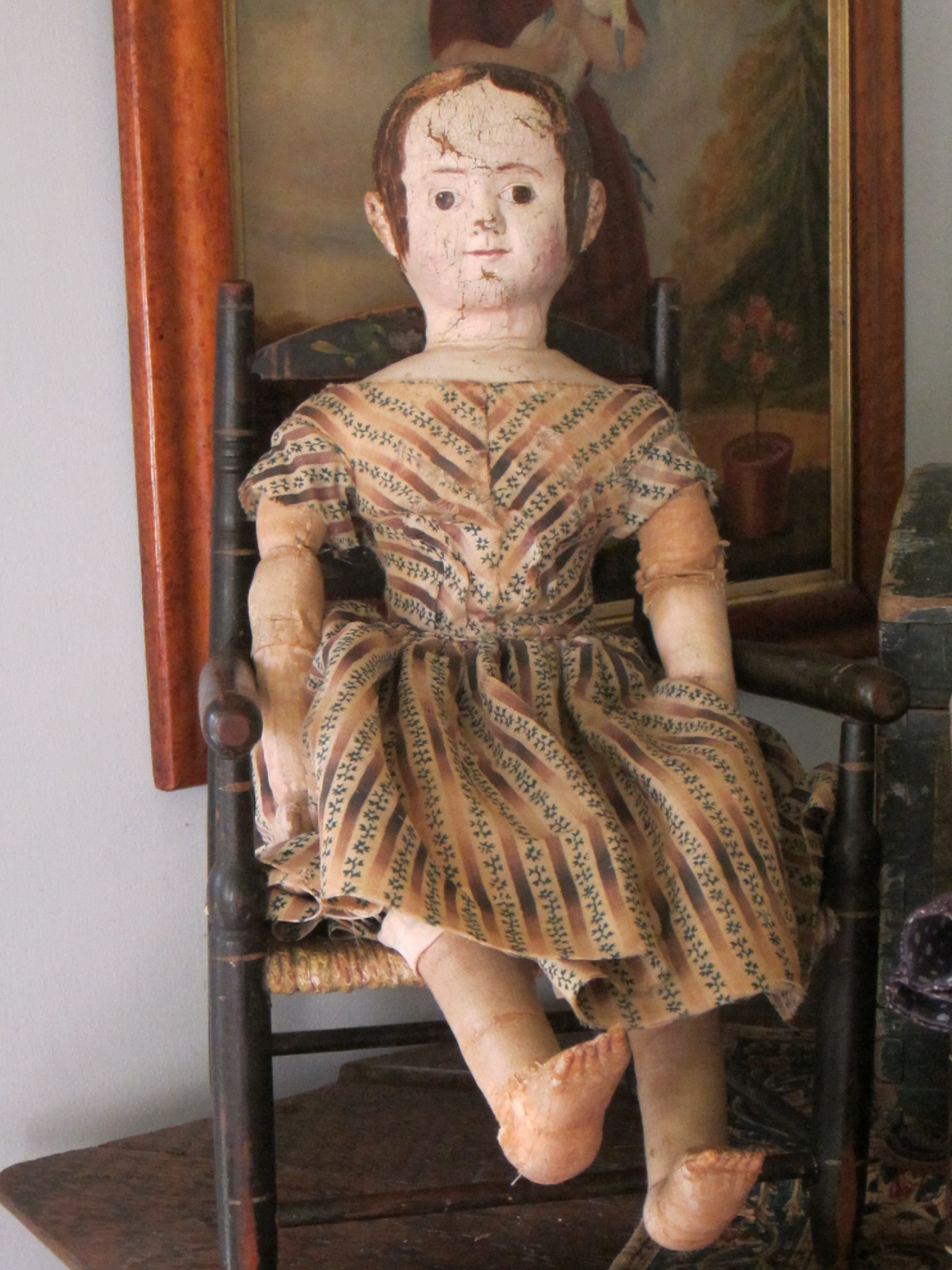

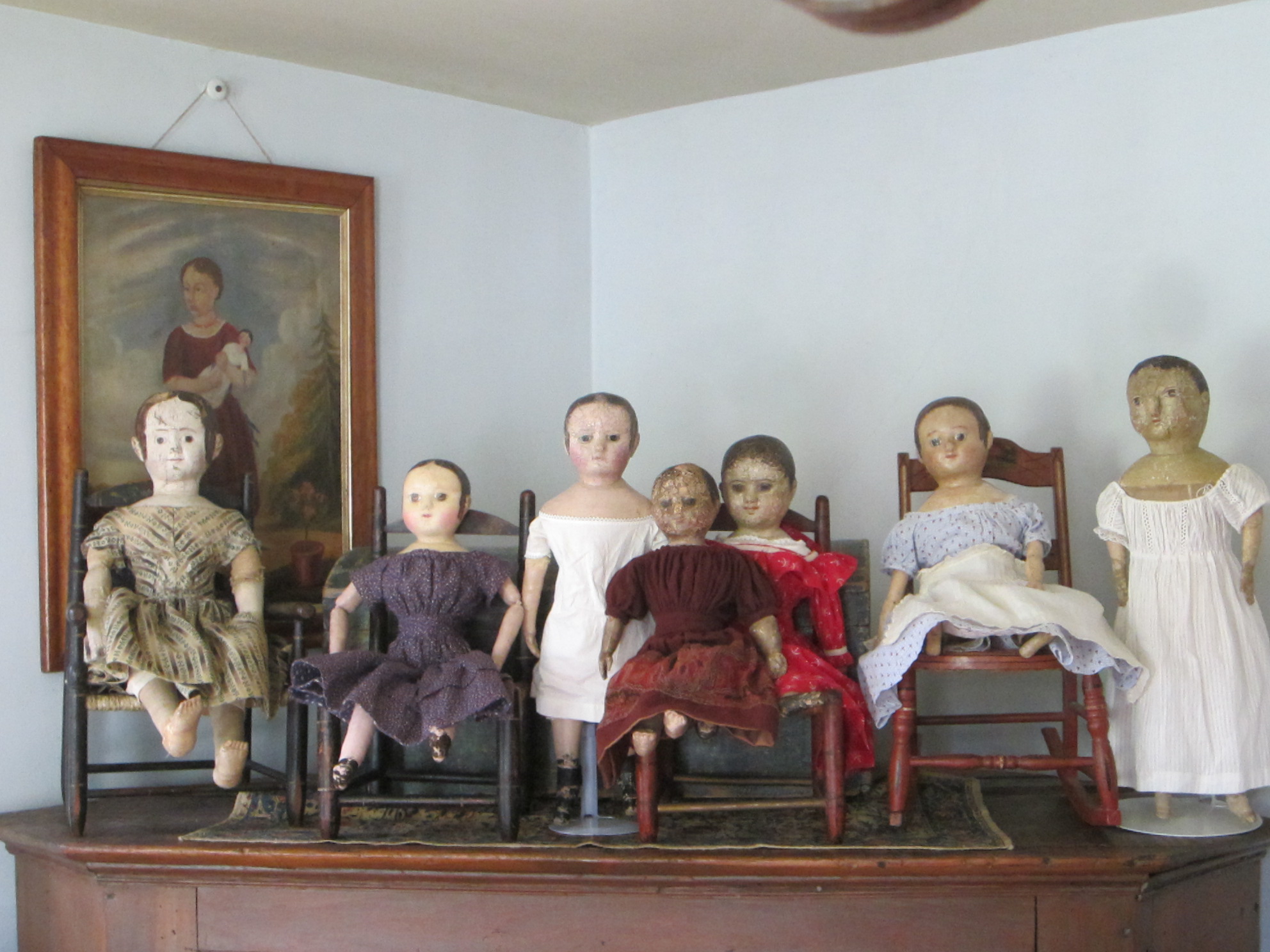
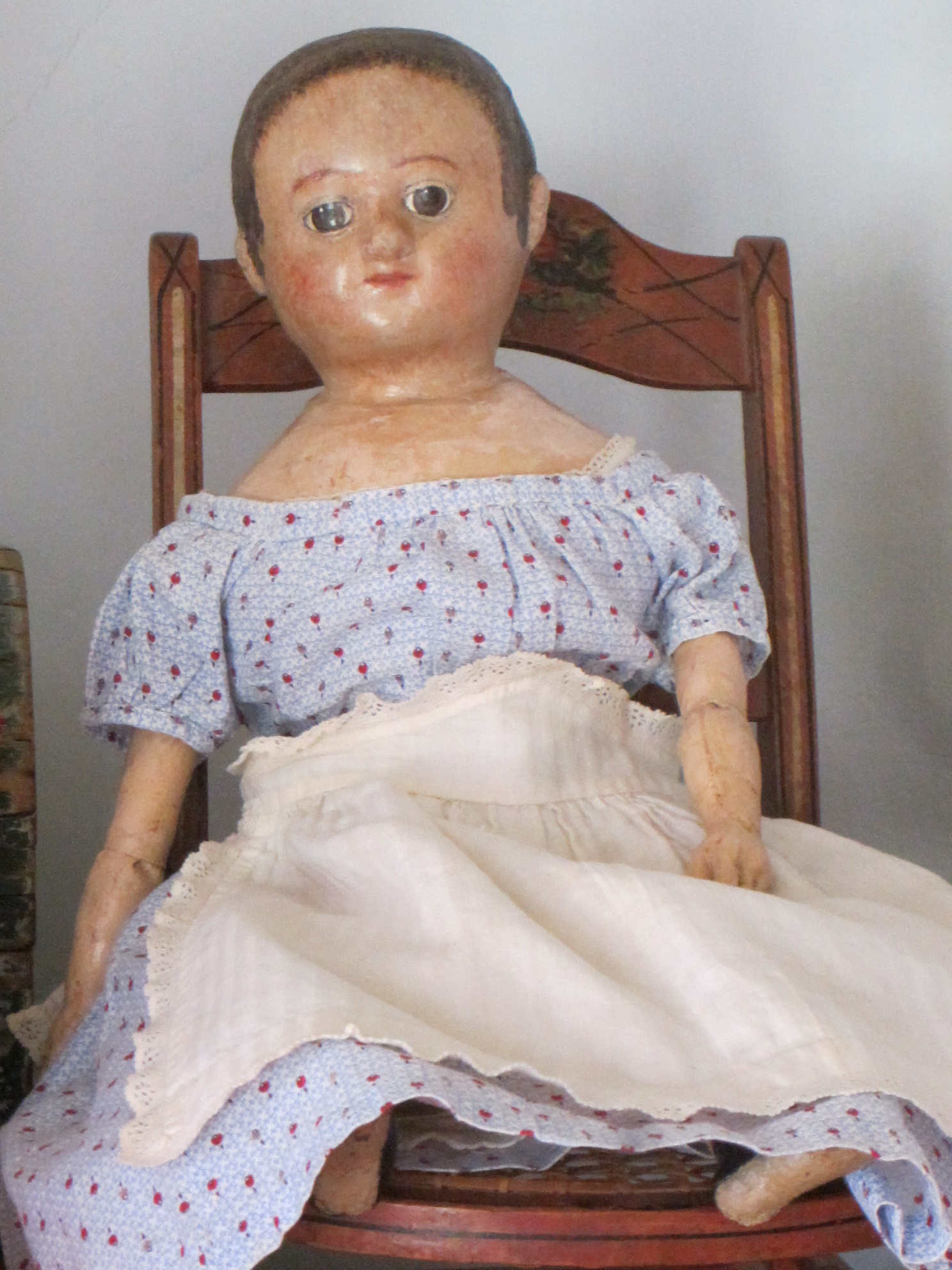
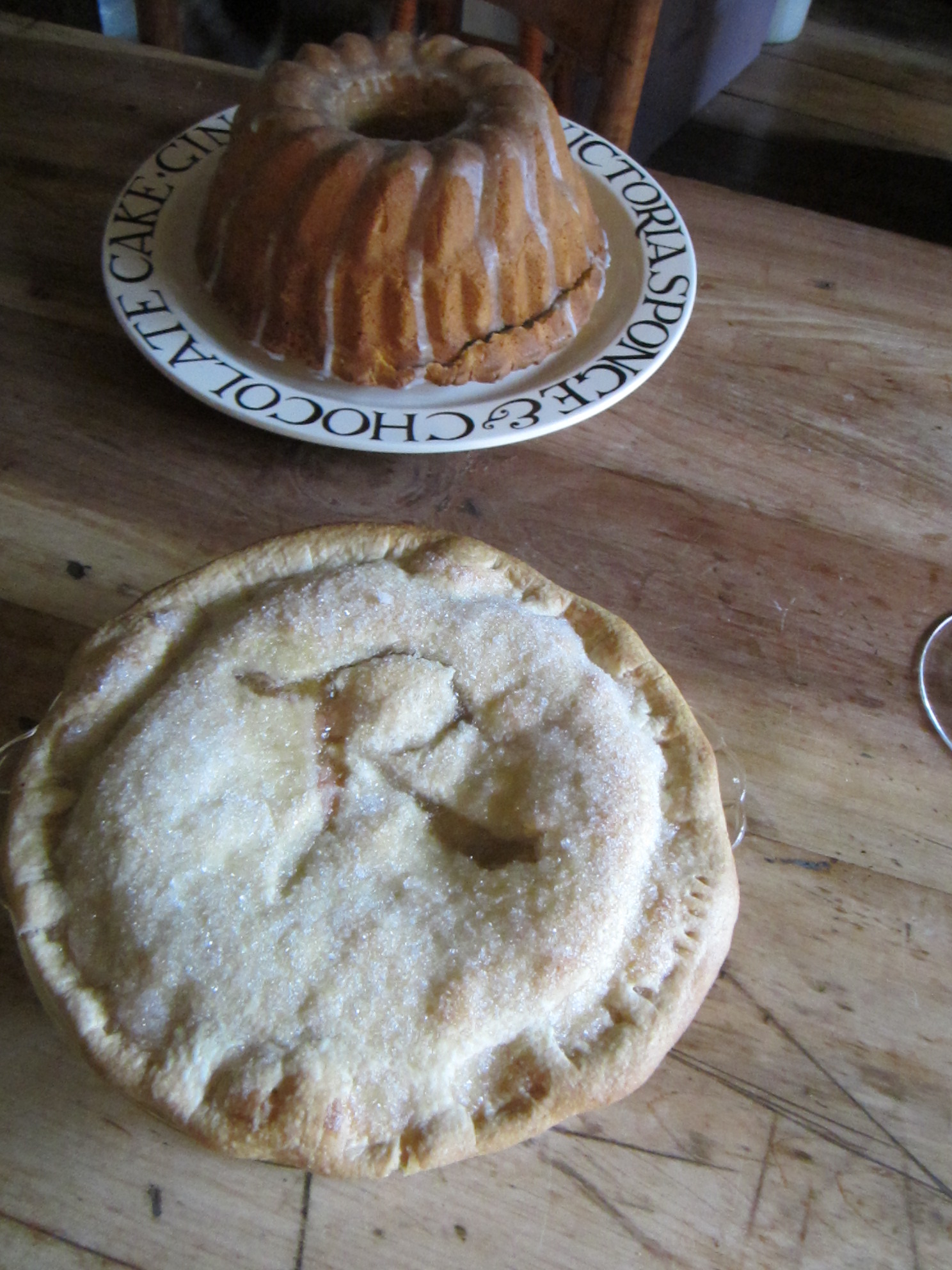
Once everyone arrived, we began the day with a business meeting. After sorting through all the current club issues, we took a break for an outdoor lunch on the patio. Here is a copy of the menu…
A 19th Century New England Picnic
Pounded Cheese with Crackers
Salad of Field Peas and Early Greens
Baked Ham and Pumpkin Biscuits with Cherry Relish and Mustard
Baked Beans
…
Vanilla and Violet Pound Cake
Rhubarb Pie with Whipped Cream
Dried Apple Bread Pudding
Fresh Blackberries
…
Violet Iced Tea
Iced Tea with Fresh Mint
Lemonade
Coffee
Water
…
Eli Whitney’s Grandmother’s Ginger Cookies
&
Shrewsbury Cakes
to nibble on your journey home…
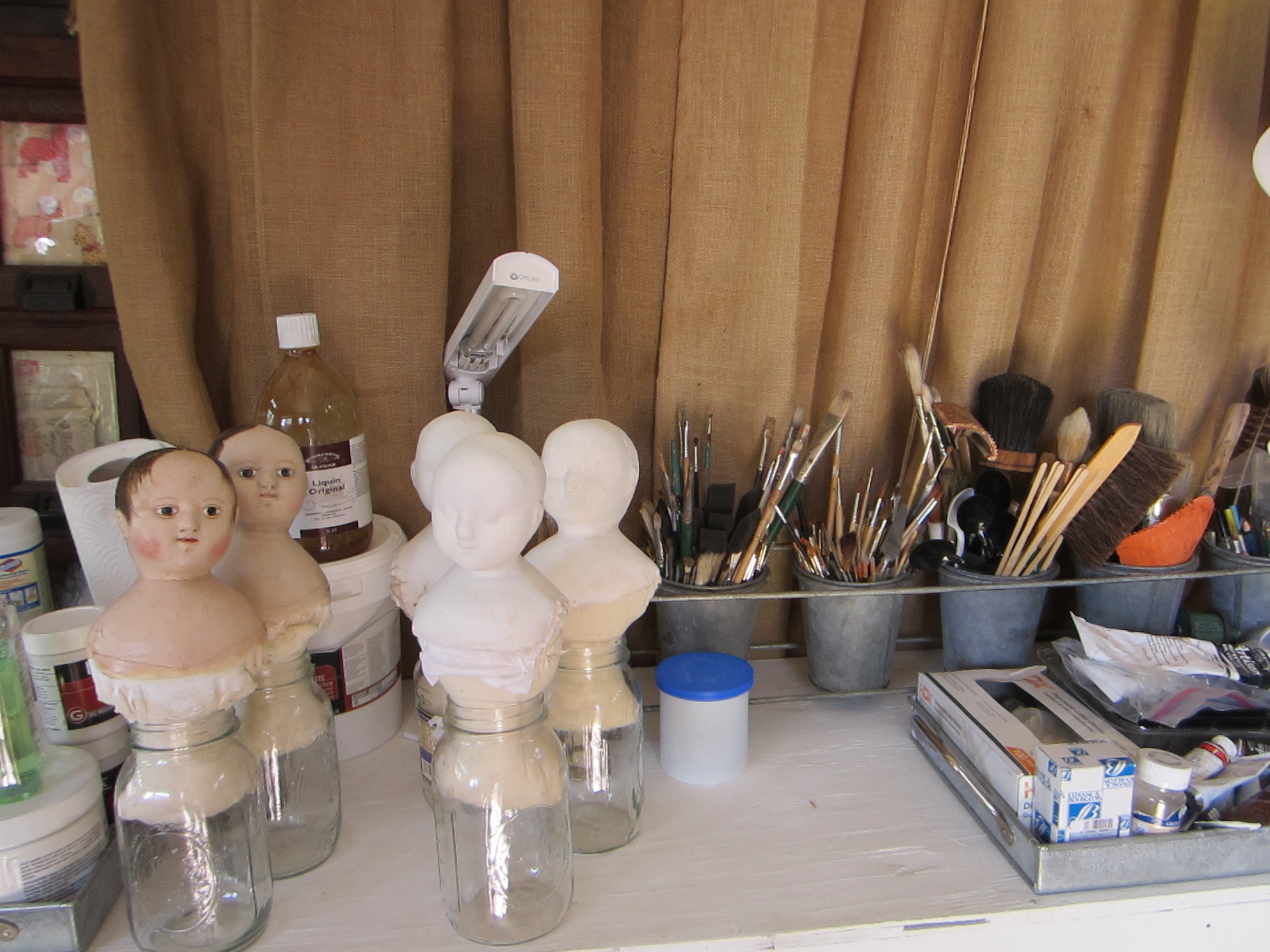
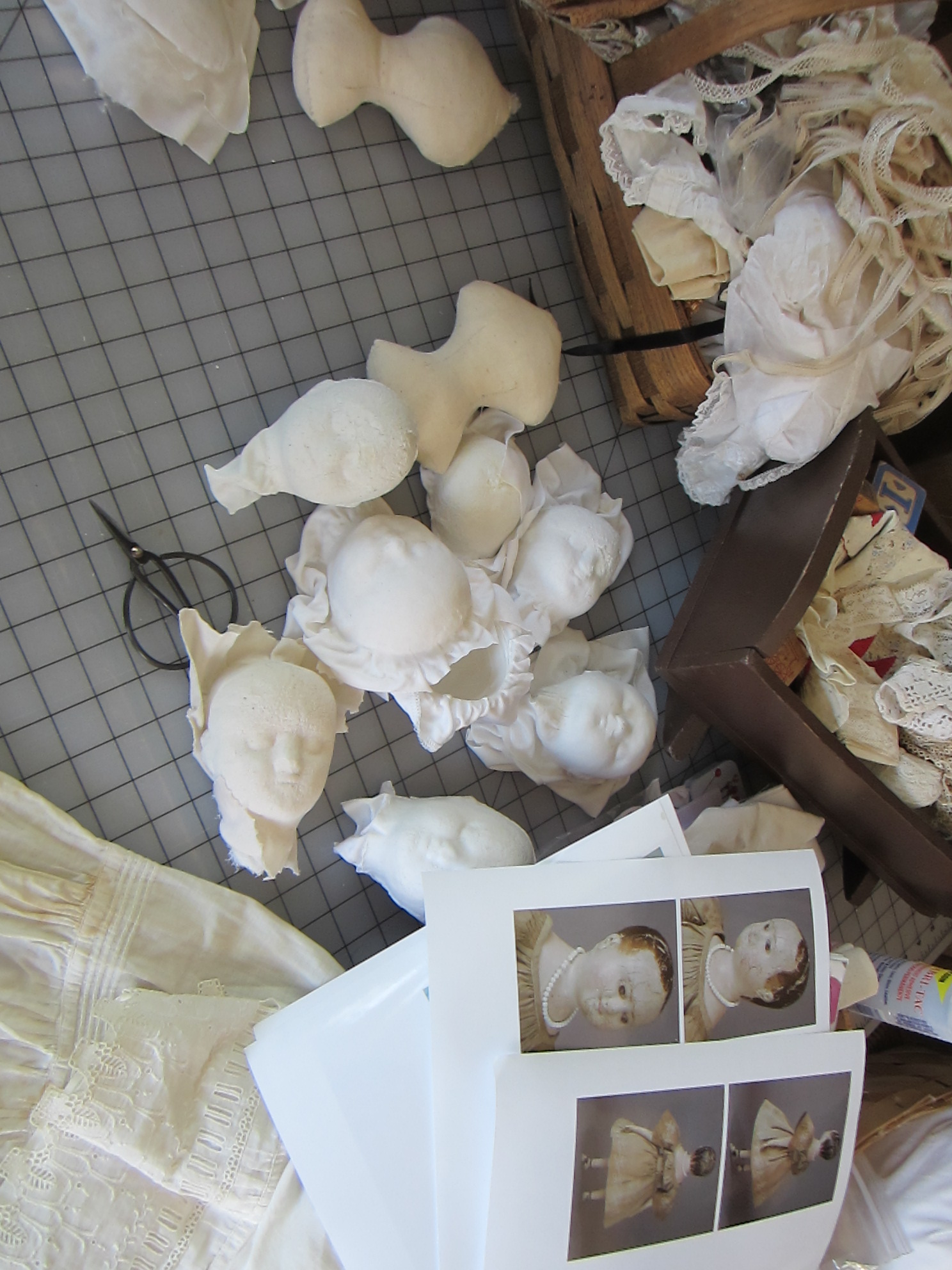
After lunch, we moved back inside for my program on Izannah Walker’s dolls. I gave a brief over view of Izannah’s life and how she made her dolls. Then I told a bit about the Izannahs in my collection and learned about the two visiting dolls as well. We talked about other collectors we know who have Izannah Walker dolls, then finished the day with a trip out to my studio for those who wanted to see my reproduction dolls in progress and find out what they look like “underneath it all”.
This article was the basic core of my lecture on Saturday, with many added bits and pieces along the way. If you look down at my sources, you will see that one of them was an article written in 1968 by Maurine Popp of the Jenny Lind Doll Club!!! Several of the members recall going to the auction when Maurine’s collection was sold.
A Doll Maker’s Reflections on Izannah Walker and her Dolls; With Insights on Pressed Cloth Heads
By Paula Walton
Many articles have been written about Izannah Walker and her hauntingly beautiful, iconic cloth dolls. I have found all of them extremely interesting and well worth reading. However, it occurred to me that none of the articles that I have seen were written by someone who has actually made full size reproductions of Izannah’s pressed cloth heads and has experienced firsthand the joys and frustrations of this unique type of doll making. So I’ve decided to join the ranks of doll lovers and historians who have gone before me in writing about this fascinating woman and her exceptional dolls.
It feels like I have loved Izannah Walker dolls for my entire life, although I know that can’t be true. When I look back, I think that I first became aware of her dolls right around the time that we moved to New England, 24 years ago. I do know that since my very early childhood I have loved and wanted to own antique dolls. As soon as I knew that such things as really old dolls existed I longed for one (or more!).
Izannah Walker and her dolls hold a very special place in doll history. On November 4, 1873, she was the first woman to receive a United States patent for making dolls.
Izannah Walker was born in Bristol, Rhode Island on the 25th day of September in 1817. I have read there is documentation that she started making dolls in 1828. She would have been 11 years old in 1828, the same age that I was when I first learned to sew. Norma H. Robertson, Izannah Walker’s grand-niece, stated that her great aunt began making stockinette dolls in 1845 for friends, and as her business developed, she put her three sisters to work painting faces. Other research and information that I have seen states that Izannah had two sisters, plus several older half-siblings, and that Izannah, her older sister Jane and her aunt Jane Hintz were all three doll makers.
One of my favorite Izannah stories is a reminiscence by Mrs. Helen Pierce of when the Walker sisters were living on Main Street in Somerset Village, MA. Mrs. Pierce tells a tale of the Walkers hanging their dolls out on the clothesline to dry when it was too damp in the house and how the air in the neighborhood was then permeated with the smell of oil paint. I can certainly relate to that, having hung my share of dolls out on the clothesline!
The Mystery of Molds and Lessons Learned About Pressed Cloth Heads
One of the things that I find most endearing about the Walker dolls is their differences. This may be because three individual women had a hand in their construction, either working together or apart. It is also, in my opinion, a very basic fact of life when a doll maker is creating dolls with pressed cloth heads. While all of the original dolls are recognizable as Walker dolls, they do come in many sizes, from 13 to 27 inches* in height, and often have very striking differences from one another. The majority of the dolls are girls, although there are a few boy dolls and even fewer black dolls, with lovely short, nubby, black wool hair.
There has been a great deal of speculation in the doll world about the number and origin of the molds Izannah Walker used to make her dolls. I can’t offer any clues about how the molds were made. Did she sculpt her own prototype heads and then have them made into metal molds? Did she hire others to create both the original sculpt and molds? Or did she commission molds from commercially available European dolls? Her patent information shows the use of a metal mold and dye, but did she always use metal molds? Is it possible that her earlier dolls were created using plaster molds, which were long established in the doll making industry at that time, and would wear out and need replacing more frequently?
What I can say with some confidence is that it is very likely that she used fewer molds than many people think. Obviously, she had to have a variety of molds for the different sized dolls that she made and it is equally obvious that her early dolls used very different molds than her later, patented dolls. What I have found when making pressed cloth heads is that heads made using the same mold will turn out quite differently from one another. When making pressed cloth heads, you do not get the same consistency as you do when casting materials such as bisque, papier-mâché and wax that can be poured into a mold and hardened. Izannah’s pressed cloth heads were made in sections that had to be joined together, a process that sometimes causes individual heads to come out a bit larger or smaller than each other. After the front and back sections of the head were sewn and or glued together, the head was stuffed with cotton, horsehair, sea grass or other materials. The pressed cloth heads are not rigid like the heads of a china or porcelain doll. They are somewhat flexible and their shape can be altered by how tightly the stuffing is packed into the head. All of these factors can and will change the appearance of the finished pressed cloth head.
Another point that I would like to mention here is that when studying photographs of Izannah Walker dolls, it is important to remember that the photographs do not always look the same as the doll does in person. I am by no means a professional photographer, but I am a person who takes an inordinate number of doll photos, using several different cameras and lenses. The type of lens used to take a photograph will have a big impact on how the doll looks, as will the lighting and angle from which the photo is taken. People who have only seen Izannah Walker dolls in photographs are often very surprised when they first see one of the dolls in person. The dolls are smaller and much more delicately proportioned than they often look in photos. Their eyes are not as large and their foreheads aren’t quite as curved and pronounced as people expect. I am fortunate enough to have been able to visit several museums and view dolls in person that I had previously only seen in photos and I can attest that there is a real difference. I see this same difference when I photograph both my antique Izannah Walker dolls and the reproductions of them that I make. So some Walker dolls may look more similar in person than they do when compared in photographs. Especially when they are photographs taken by different people, using different cameras, lighting, etc.
The painting style is another variable from doll to doll. Again, this may be due to more than one person wielding her brush, or it may be because when a doll maker paints a doll, each one is slightly different from the next. Even if you have never made a doll in your life, I’m sure that you can relate. Think about your signature. It is something you do over and over again. Is it exactly the same every time? When you make your favorite recipe, the one you know by heart and don’t have to look up, does it turn out just the same every time? Izannah Walker’s dolls were made over a long period of time. Even if a single person painted them all, it is natural that they would change. When I paint my dolls, the colors will vary a bit since I don’t use a “recipe” to mix my paints. Some days, I paint finer lines than others, paint better curls, make more blushing cheeks and crisper bootlaces. Such is the nature of hand-made artistry and it is why Izannah Walker dolls are so well loved and enduring. The hand of the doll maker shows in each and every one of them. They are similar and yet individual works of art.
I like to think that the women all worked together, even when they were separated by distance (which they were during different periods in their lives). My sister and I make reproduction samplers together, even though she lives in Nebraska and I live in Connecticut. Both of us work on every sampler that we make, each doing our own part to create the final product. It would have been possible for the Walker sisters and their aunt to do the same, and I hope that they did. My sister and I enjoy working together and I’d like for the Walkers to have had the bond that shared goals and joint work brings about.
Construction Features of the Walker Dolls
Like any other reproduction-sewing project, making an Izannah Walker doll is an eye opening experience to the difference between 19th century and 21st century sewing construction. People in the 1800’s obviously viewed pattern making and sewing construction differently than we do today. The shapes of many of the pattern pieces used to make these dolls and their clothing are unfamiliar to modern seamstresses.
Izannah’s earliest dolls had heads that were made of molded and pressed cloth joined to the bodies at the neck. This is different than the later patented dolls that had molded and pressed cloth heads and shoulder plates that were glued onto the bodies. I think the early dolls are prettier than their later sisters, and they are the type of Izannah Walker dolls that I prefer to reproduce. The front of the pre-patent doll’s head is joined to the back just in front of the ears. The back of the head has a partial center seam.
Often you will see that the dolls have repaired ankles. This is because they have a seam at the ankles that connects the foot to the leg. Modern cloth dolls are seldom made this way. The dolls have narrow waists, with wide shoulders and hips. The unpainted portions of their bodies are covered with a “second skin,” which gives them a neat, finished appearance, and points to the care with which they were made. I find all of these details intriguing. They are part of what draws me to study Izannah Walker’s dolls and have kept my interest in them so strong for many years.
Izannah Walker dolls were made using molds. That does not mean that they took less work or are less desirable than a doll that has a one-of-a-kind sculpted face. For me, understanding how the Walkers made their dolls and using those same techniques to make dolls of my own gives me an even deeper love and appreciation for the originals. Through years of experience, I know exactly why some of the dolls have that characteristic crease at the hollow of their throat, why the paint on the earliest dolls cracked and peeled, why the hands have such a wonderful shape and how to make that slight curve at the wrist. I treasure the experience, the knowledge and the insight, and I would urge you to try your hand at making a doll using Izannah’s methods. It will give you a wonderful glimpse into her world and her art.
Izannah Walker managed to capture an evocative moment of American history and very firmly convey a sense of her time and place in a child’s toy. These toys continue to be treasured, loved and marveled at today.
* There are rumors of a “life-size” doll that was owned by members of the Walker family.
Sources for some of the information used in this article and additional reading:
American Folk Dolls by Wendy Lavitt (Knopf 1982)
American Rag Dolls Straight From The Heart by Estelle Patino (Collector Books 1988)
“An American Master of Cloth” by Helen Nolan, Dolls, February 1995 (this article is about Martha Chase and only has a brief mention of Izannah Walker)
“The Art of Dolls 1700-1940” by Madeline Osborne Merrill, Doll Reader, April 1985
Cover Photo by Dorothy McGonagle, Doll News, 1989
“Dolls by Izannah Walker” by Donna C. Kaonis, Antique Doll World, September/October 1993
The Doll Collection of Helen Gage, Auction Catalogue by Marvin Cohen Auctions, December 1984
“Dolls of Rhode Island” by Carolyn Guise, Two Hundred Years of American Dolls, The New London Doll Club United Federation of Doll Clubs Region Fourteen Meeting, May 1977
Early American Dolls in Full Color, by Helen Nolan (Dover Publications 1986)
“Early American Stockinette Dolls: Part 1- Izannah Walker and Martha Chase Dolls” by Judy Beswick, The Cloth Doll, Fall 1998
Encyclopedia American Dolls by Ruth S. Freeman (Century House 1952)
“The “Holy Grail” of Early American Dolls” by Catherine Riedel, Yankee magazine, November/December 2009
“Izannah Walker – Godmother to Cloth Doll Makers” by Susan Hedrick, Soft Dolls & Animals, Summer 1998
“Izannah Walker’s Iconic Dolls” by Edyth O’Neill and Dixie Redmond, Early American Life, Christmas 2011
“An Izannah Walker Reunion” by Carol Corson, Antique Doll Collector, August 2011
“Izannah Walker: The Mystery Deepens” by Helen Nolan, Dolls, August 1994
“The Little Doll With The Little Curl” by Maurine S. Popp, The Jenny Lind Doll Club of Southern Connecticut Region 14 of The United Federation of Doll Clubs, April 1968
Made to Play House: Dolls and the Commercialization of American Girlhood, by Miriam Formanek-Brunell (Johns Hopkins University Press, 1998)
“The Mystery of Izannah Walker” by Helen Nolan, Dolls, September 1993
“The Search for Izannah Walker” by Monica Bessette, Doll News, Spring 1994
“Stitches in Time” by Diane Goff, Doll Reader, July 1993
Summer in Marseilles at the Turn of the Century Auction Catalogue by Theriault’s 1993
“They’re Just Down-Home Folk” by Wendy Lavitt, Dolls, May 1993
The Treasury of Beautiful Dolls, by John Noble (Weathervane Books, 1978)
“Walker Dolls: A Family Affair” by Monica Bessette, Doll News, Summer 1998
This article and the accompanying images, like all posts and photographs on http://www.izannahwalker.com, are copyrighted by Paula Walton and may not be published or reproduced in any form without the express written consent of the author.
Today the dolls and I have had to bid farewell to Cindy’s doll. The girls were all sad to see her go, especially her older sister Isabeau…


Even though Isabeau found it hard to say good-bye she knows in her heart that her younger sister is going to a good home where she will be loved, especially after I let her read the letter that I just received.
“Dear Paula,
The best surprises are those that unfold gradually. The process of making “Cindy’s Doll” has been all I imagined and hoped for when I first called you last November. Once I’d set things in motion I watched with much satisfaction as Cindy studied her choices, showed them to (our daughters) and me, and after due consideration, settled on one or another.
When “Cindy’s Doll” is actually here in hand she will become part of a loving family. I will be sure to let you know when Cindy has chosen her name. We’ve had several discussions of names, but need to hold her and know her to find out which name is really hers.
To you I extend my compliments on your skill and creativity. To take an almost forgotten art and bring it back to life as you have, mainly by just “figuring it out” with hand and eye and inner motivation is a gift, and I thank you for sharing it with us.
We are so excited to meet our doll, to have her join our family, to give her a name, and to cherish her.” …
What more could a loving big sister or a doll maker ask for… ❤ ❤ ❤
 Last week I added one more member to my Izannah Walker family. She came to me from Edyth O’Neill, a long time antique dealer and doll collector, who is renowned for her amazing hooked rug designs and folk art portraits and paintings. How could I resist bringing this small Texan back to New England, since it is a journey that I have made myself, with a few stops along the way. I was born in Amarillo, Texas, up in the panhandle of the state, quite a distance from Edyth’s home in Fredricksburg, and spent a lot of time during my childhood visiting relatives throughout Texas. Now this tiny kindred spirit and I are both snugly ensconced in an 18th century house, a mere 106 miles from Izannah Walker’s home in Central Falls, Rhode Island.

Edyth named this doll Patience. I have always had a special fondness for virtue names, so much so that I named one of our family cats Patience. She was part of our family for 16 years, all through my sons childhoods, and is something of a family legend. It’s turning out to be a bit confusing to have a second Patience in the house. We may need to fall back on family tradition and call her by her middle name instead, as my mother and her siblings were known, or her initials like my father and uncle. No matter what her name is, her sisters and I are over joyed to have her here.
I will need to spend some time making her a wardrobe, but in the mean time all of her sisters are happy to share theirs. They spent an hour this morning going through their trunks to see what they had that would fit her.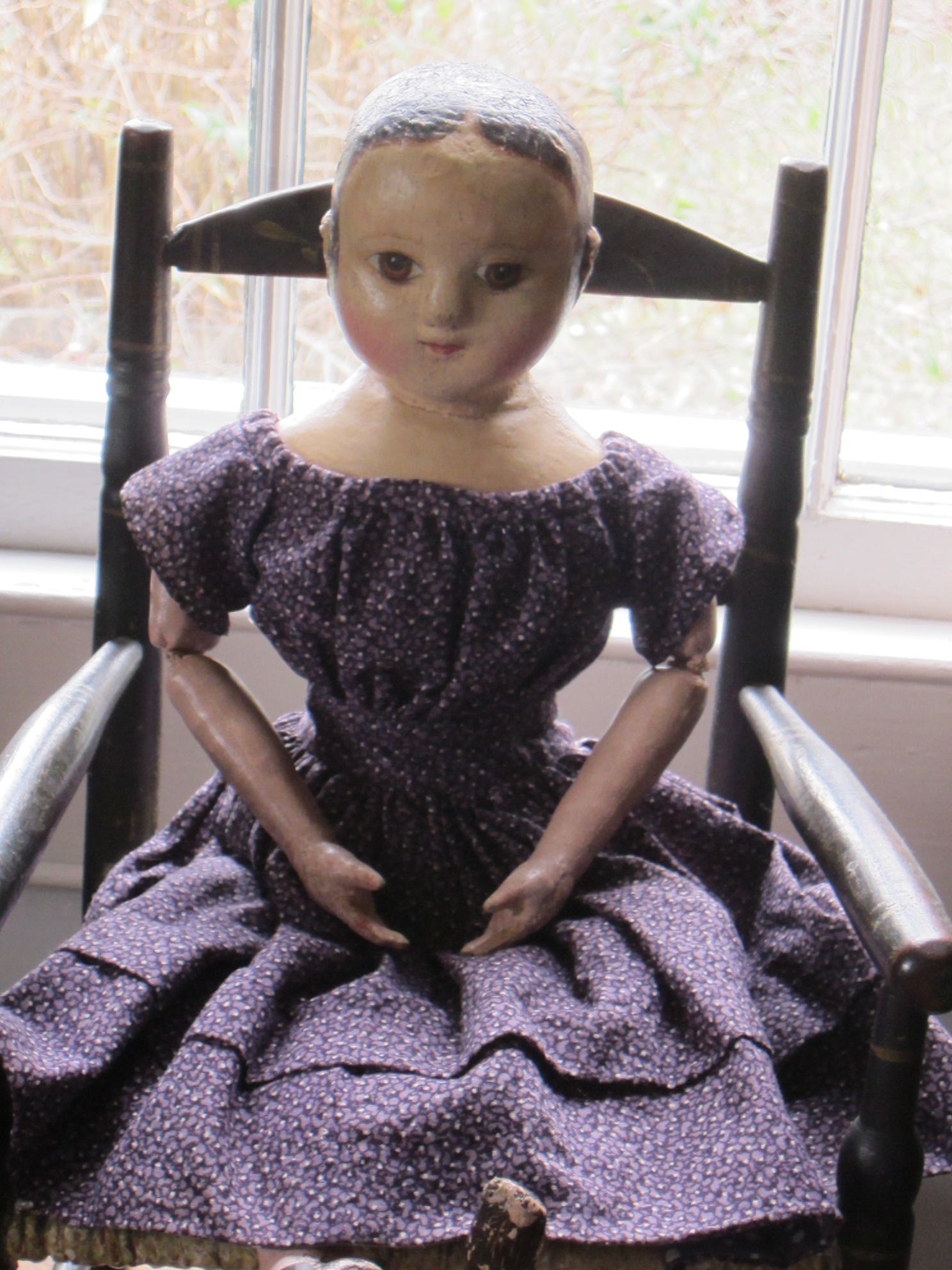

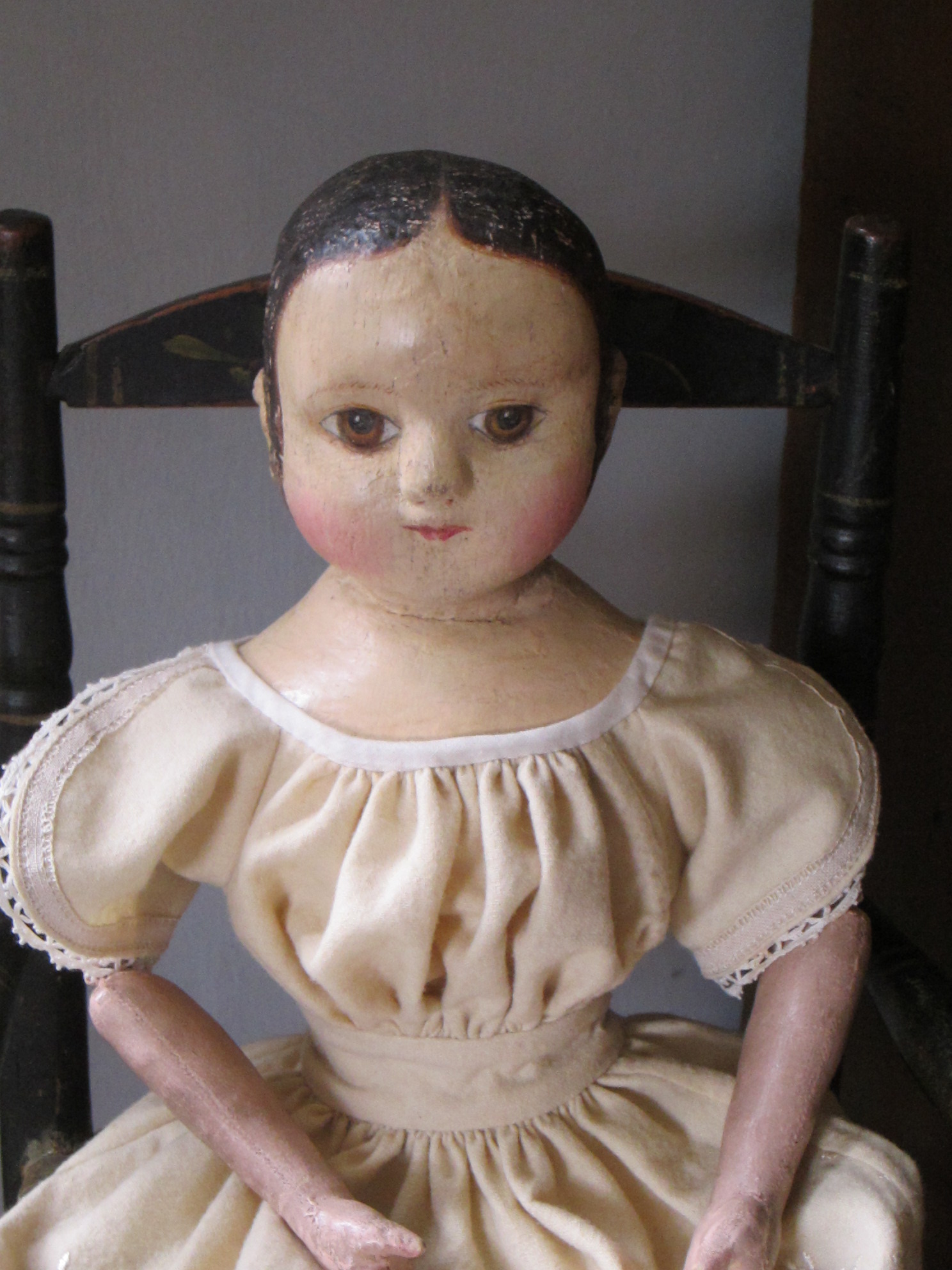



I’ve just posted more photographs from the day of the Early American Life photo shoot at our home last December. Several of the photos show my antique Izannah Walker dolls and my reproductions as well. Click here to see the photos at Paula Walton’s 18th Century Home Journal.

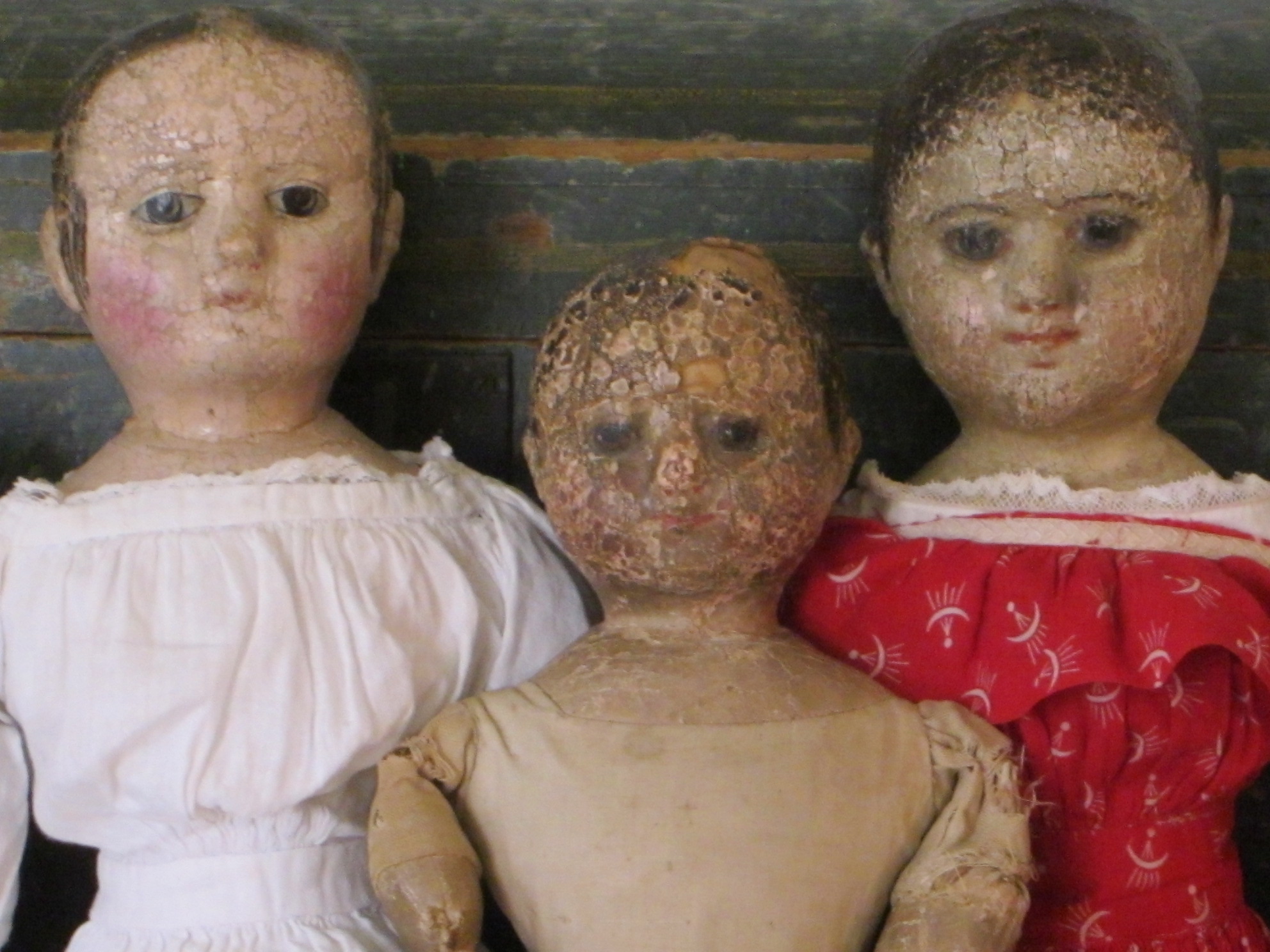
Earlier this week I purchased a small, humble, pre-patent Izannah Walker doll from Nancy Stronczek of American Beauty Dolls and Vintage Costume Jewelry. Coincidentally Nancy and I were both selling dolls at the Jenny Lind Doll Show last Sunday, but Nancy didn’t bring this Izannah to the show. I had no idea that we had even been in the same ball room for eight hours until Nancy pointed it out to me. Which just proves that I really was working and not shopping! A lovely display of vintage jewelery did catch my eye on my one quick circuit of the room and I’m pretty sure that if this tiny Izannah had been there, my internal Izannah radar would have guided me to her.
Coincidences aside, I am just happy to have found her at all, and our near meeting in Southbury will simply add one more footnote to the long story of this little doll’s life. As you can see she has been quite an adventuresome girl. Somewhere along the line she lost her arms and legs and had them replaced with Martha Chase limbs. Nancy speculates that this was done at the Martha Chase factory, as they offered “doll hospital” services there. For the past 35-40 years she has been packed away with a group of other dolls to keep her company. It is very probable that this doll has stayed in New England for her entire lifetime.
I just had to buy this doll. I felt like she was asking me to bring her home and take care of her. She needed someone who could look past all of her faults and sincerely love her just for what she is, without wishing she was something better or more beautiful. Seventeen years ago I saw another very bedraggled Izannah Walker doll for sale in Brimfield, MA. Most of her paint was gone, she was ripped, torn and grimy and I didn’t care a bit about any of that. My husband Brian was appalled! He simply could not believe that I would even consider paying $395.00 for a doll in that condition (I simply can’t believe she cost so little!). He talked me out of buying that doll, the very first Izannah I had ever seen in person, which I have regretted ever since. In the intervening years times have changed. Yesterday, when he first saw this little doll, he told me “I think you did good”. He is now more in tune with all things Izannah, whether he wants to be or not 🙂 , and the condition and price of this doll did not faze him in the least!





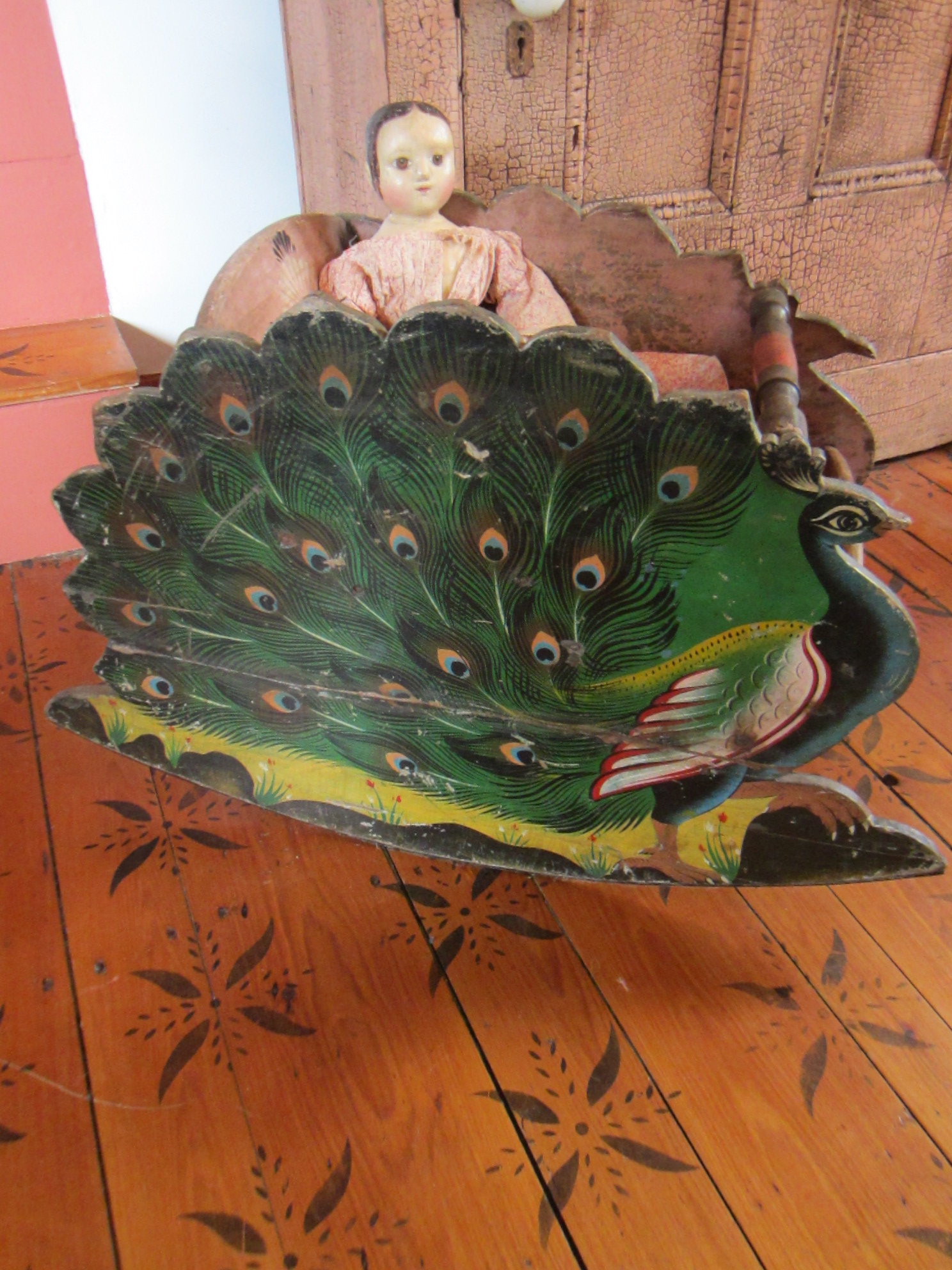
 On Friday I spent a wonderful day at the home of Peggy Flavin, who is a very talented doll maker and good friend. I got to know Peggy last year when she attended my Izannah retreat and from the very first moment we met I felt like I had known her forever!
 Visiting Peggy was such a treat and definitely one of the highlights of my year. This was the perfect season to drive up to Cape Ann, as the leaves are just starting to show their true glory. Autumn deepened the further north I went. However even a fall drive through New England can not compare to the joys of visiting a true kindred spirit. Not only does Peggy make and collect dolls, but she lives in a beautiful 18th century home. Every bit of her house is filled with wonderful treasures, remarkable details, and love.


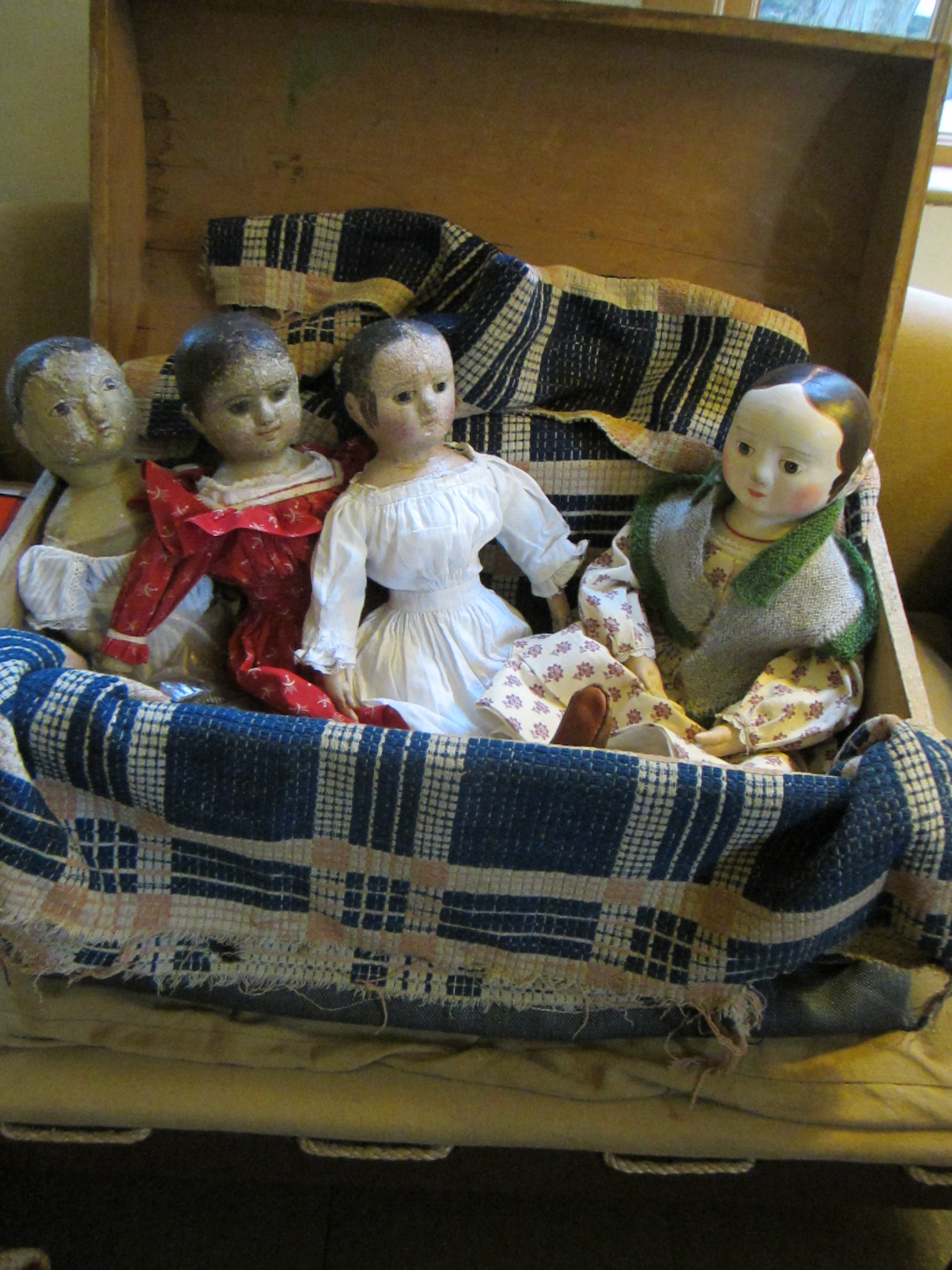

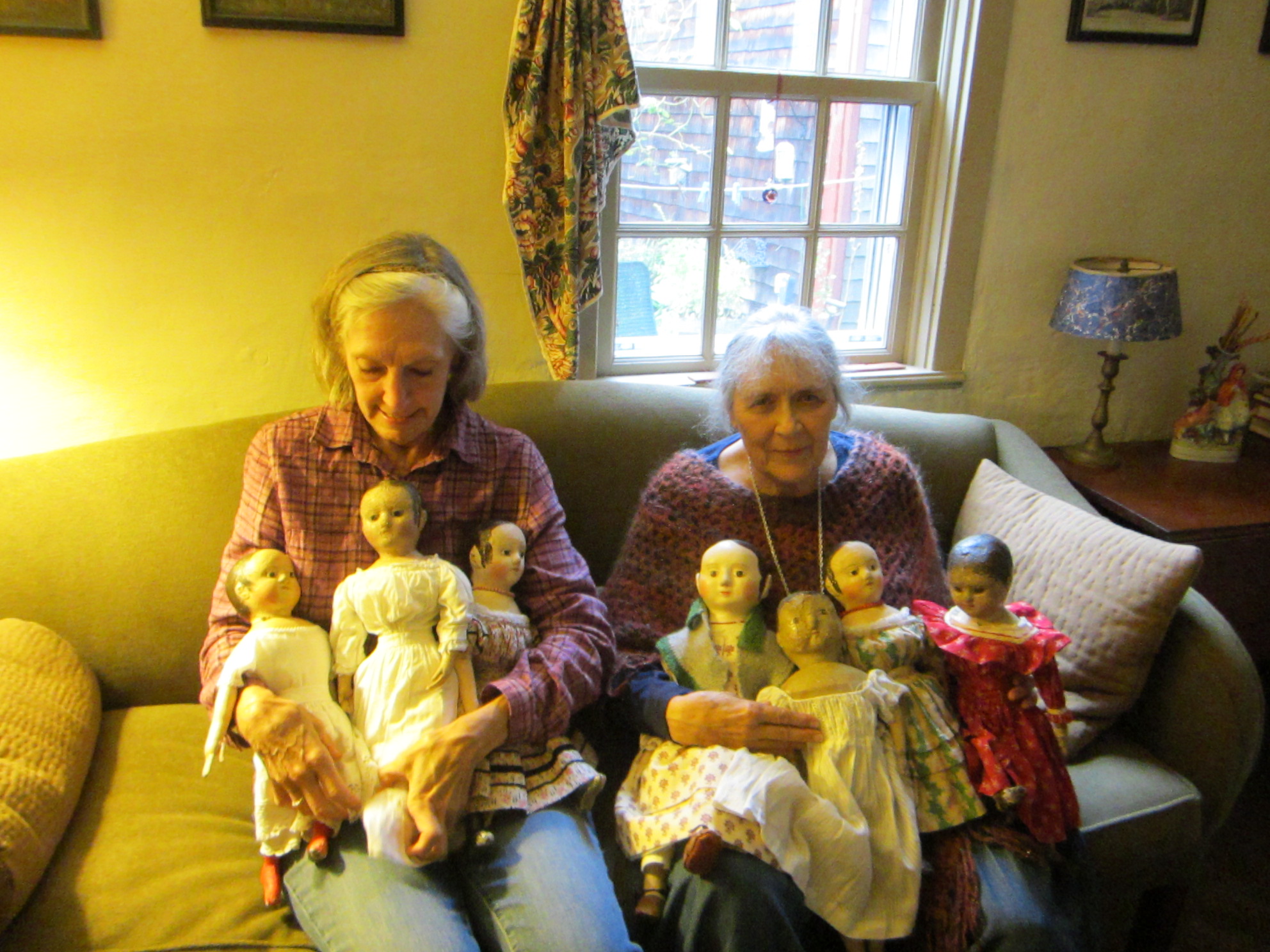
An added pleasure of my visit to Peggy, was getting to meet and spend time with Edyth O’Neil, extraordinary rug hooker, antique dealer and doll collector. The three of us spent all afternoon talking about dolls, dolls and yet more dolls! Listening to Edyth brought back memories of my mother, aunts and grandmothers, as they all shared her soft Texas drawl and expressions. In the evening we had supper at the remarkably cozy pub that Peggy and her husband Dennis own. Both the food and the company were amazing.

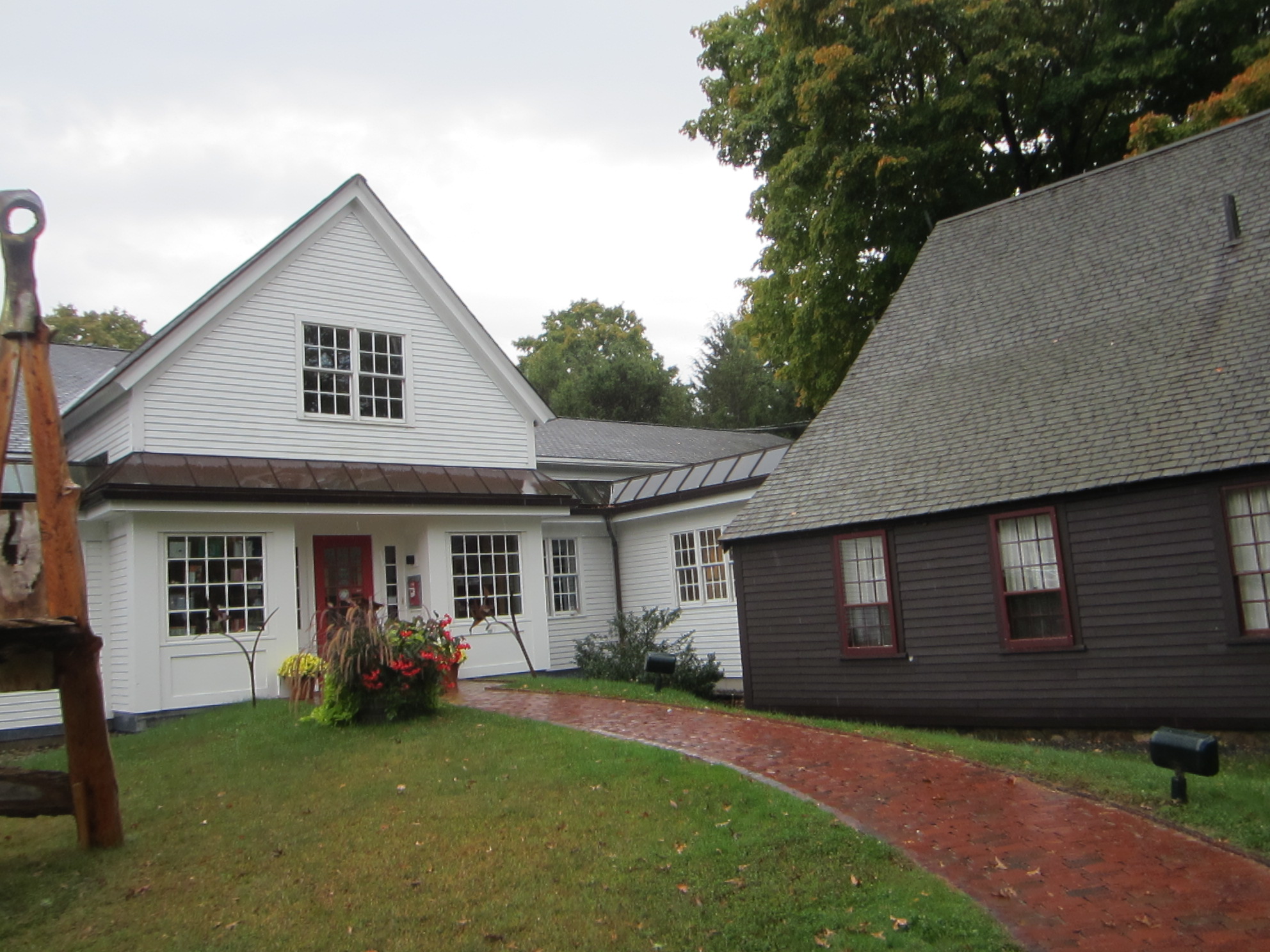
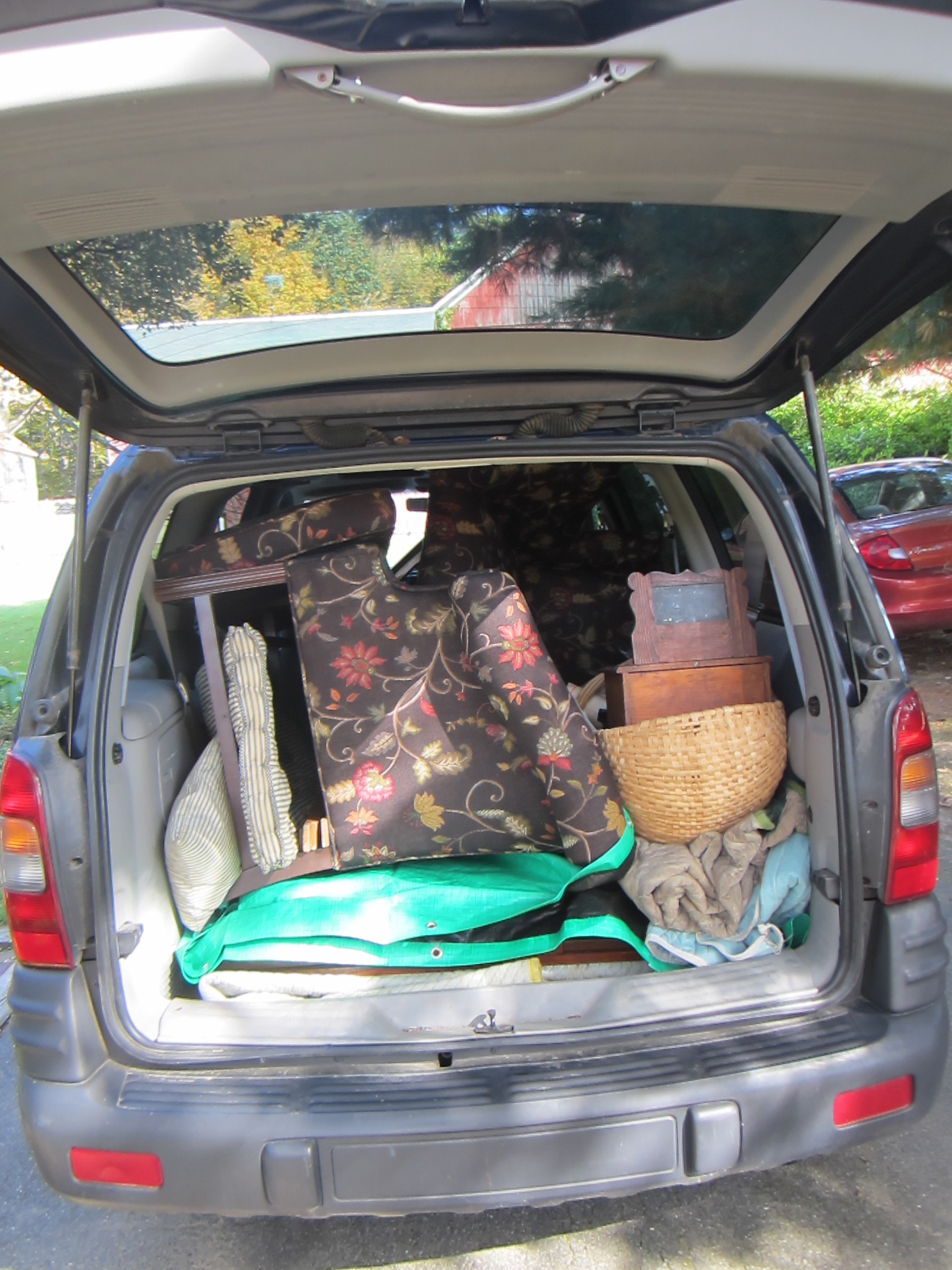
On Saturday morning we were all up early, so that Peggy and Edyth could attend a meeting of the Doll Collectors of America and I could head to Sturbridge to pick up some of my furniture that Angel House has been reupholstering.
I had a splendid visit to Gloucester and can’t thank Peggy and Dennis enough for making me feel so welcome!
** Peggy and Edyth both have wonderful blogs. Peggy is just getting hers set up. What she has so far is excellent. Edyth’s blog is long standing and always an interesting read!
 Izannah Walker Journal