Doll Clothing · Reference Materials

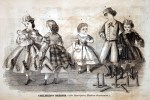
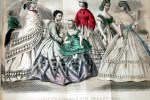
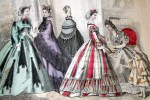
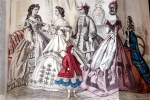
c. 1860’s Girl’s Clothing Styles

Izannah Walker is generally known to have begun making dolls around 1845, even though she did not apply for a patent until November 4, 1873.  A majority of the original clothing in which she dressed her dolls reflects the styles worn by children in the 1840’s and 1850’s.  However, 1860’s clothing would also be perfectly appropriate.

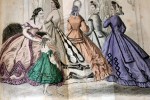
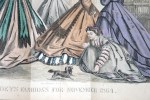
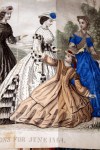
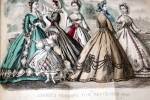
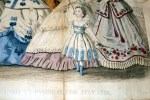
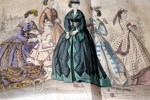
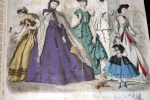
To provide you with a bit of dress-making inspiration, here are some illustrations that appeared in Godey’s Lady’s Book in 1858, 1862, 1864 and 1866.  In the future I will post some more 1850’s Godey’s illustrations, although the 1850’s illustrations are not as lavish as these from the 1860’s.

(click on each photo to see it in full size)

Antique Izannah Walker Dolls · Doll Clothing · Izannah Inspired Artist Dolls

Share and Share Alike

Sharing is a beautiful thing!  If you would like to share photos of your antique Izannah Walker dolls or your newly made Izannah inspired dolls, I would love to post them here for everyone to oooh and aaah over.  I would also just love to see photos of any doll dress (petticoat, chemise, etc.)  that you have made using my Izannah Walker Doll Clothes Pattern.  It’s always so neat to see the way different seamstresses will interpret a pattern and marvel at the way different fabrics and notions change the look of a dress.  You can send photos that you would like me to post to Paula@asweetremembrance.com.  Please include your name and your website and/or blog, if you have one that features your work.

I would also welcome your input on what you would like to see included in my upcoming Izannah Walker Reproduction Doll Class by Mail.  I’m still in the midst of writing up the instructions, so if there is something that you have always wondered about concerning Izannah Walker dolls, feel free to reply to this post and tell me what your question is.  I’ll try to cover the answer in my class instructions.

Of course, if you run into any questions at all or think of something else you’d like to know when you are in the midst of taking the class, you can always ask me then too.  Unlimited telephone and email support is included in the class.

Doll Clothing · Where to Shop

Pattern Sale

From now through Halloween all of my patterns, cross stitch charts and  spun cotton ornament class by mail kits are on sale at 20% off.  This includes my Izannah Walker Doll Clothes Pattern.  Visit A Sweet Remembrance to shop the sale.  The 20% discount is my Halloween “treat” to you.

Doll Clothing · Painted Cloth Doll Making · Stray Comments

Copyrights and Ethics

I am quite fond of antique hooked and shirred rugs. I enjoy working on rugs because it is a very peaceful occupation. Although to be honest, the thing I like best about rug hooking is that it gives me a great reason to dye wool.

Last night I was reading a book that one of my sons gave me for Christmas, entitled Creating an Antique Look in Hand-Hooked Rugs by Cynthia Smesny Norwood, ISBN 978-1-881982-59-3. It’s an excellent book that I highly recommend. As I was reading, I was reminded again how very scrupulous rug hooking books and magazines (in particular Rug Hooking Magazine) are about copyrights.

Cynthia Norwood has written a very detailed, yet clear and easy to understand definition of what copyrights are and how they pertain to you as a craftsperson, whether you sell your work or not. She also discusses copyrights as they apply to antiques. Page 17 of Creating an Antique Look in Hand-Hooked Rugs should be required reading for any and everyone who creates any type of art or craft.

By now, I’m sure that you will have noticed that I am very careful to only sell patterns and finished dolls that are based on antiques that I own, or my original designs. This keeps me out of the murky waters of possible copyright infringement. Even though antiques no longer have copyright protection, you should give credit to the original artisan. Also be aware that the current owners of the antique item do have rights as well.

Speaking of antique reproductions, another thing I should mention is that you need to sign and date your work. Obviously it would be a miracle if we were able to perfectly recreate an antique doll or antique doll clothing. Knowledgeable collectors are going to be able to immediately tell the difference between a newly made doll and a genuine antique. Even so, you want to make sure that you very clearly mark your work. People that do not know as much about antiques could be deceived, especially if your work should ever be sold on the secondary market.  The more hands an item passes through, the more chance there is that information concerning it will be garbled or lost.   Remember what happened when you played “Telephone” as a kid?

My husband Brian and I run into this all the time with antique carousel horses. We find reproduction horses that are being sold by people who honestly believe that they are antiques, due to their inexperience in the field.

Doll Clothing · Where to Shop

Selecting the Appropriate Fabric for Your Doll’s Dress

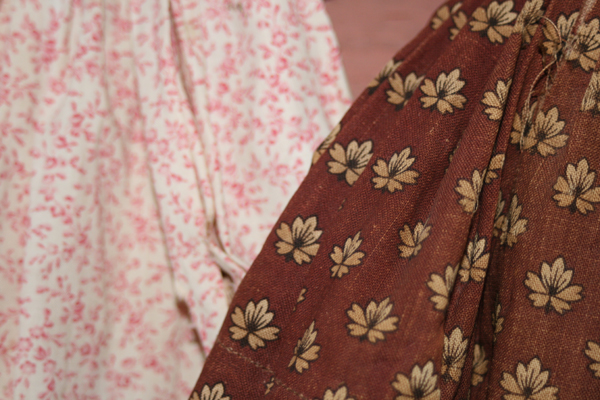
izannah-and-dressI’m going to admit right up front that seeing an Izannah Walker style reproduction doll, or worse still, a re-dressed antique Izannah, wearing a dress made of fabric that does not fit the style and age of the doll is something that sets my teeth on edge. Ok, that means that I’m really, really picky. I find even the most beautifully made dress very distracting when the material used is obviously wrong. It takes my attention away from the doll itself. So I’m on a one-woman crusade to help doll makers find antique reproduction fabrics that will blend in with the style of their dolls and act as a perfect finishing touch to all of their hard work.

Finding a good selection of mid-1800’s reproduction print fabrics appropriate for dressing an Izannah Walker doll is very easy, due to the current popularity of quilting. Even better news for those of us interested in Izannah type doll making is that reproduction Civil War era quilts are very big with quilters right now, so there are a lot of different fabrics to choose from.
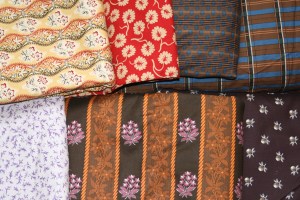
repro-fabricWhen looking at reproduction fabrics, remember you can always pick fabrics from an earlier time period than your doll, as people saved and re-worked the fabric from used garments. Doll clothing, like quilts, could easily have been made from someone’s stash of worn out clothing.

Locate a shop in your area that sells quilting fabrics and supplies. Give them a call to make sure that they have Civil War era fabrics, and then treat yourself to a field trip. Browse through the shop and enjoying imagining your dolls dressed in all of the interesting prints you will find.

If you prefer armchair shopping, I would like to suggest one of my favorite online sources for reproduction fabrics and one that you will find really easy to remember, www.reproductionfabrics.com . One of the best things about this site is that it is divided into time periods for you, which makes picking the right fabric a sure thing. Make sure to sign up for Margo’s newsletter. She shares very interesting textile tidbits and often has special sales for newsletter subscribers.
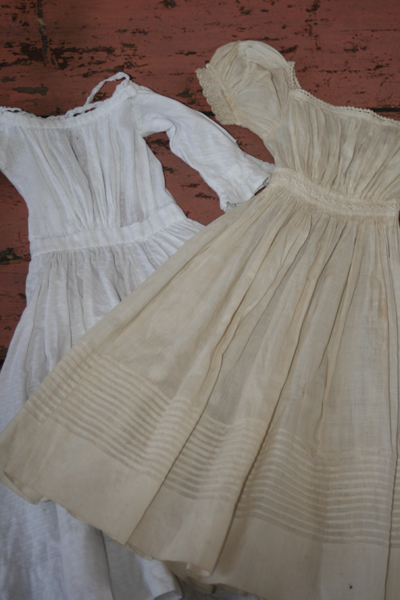
white-dresses-two1If you are looking for very fine white cottons, both plain and white on white, www.mini-magic.com is the place to go.


Some books on the subject that I find helpful are:

Dating Fabrics A Color Guide 1800-1960 by Eileen Jahnke Trestain

ISBN 0-89145-884-0

America’s Printed Fabrics 1770-1890 by Barbara Brackman

ISBN 1-57120-255-2


Two quilt books that have some great close-up photographs of antique fabric are:

American Folk Art Quilts by Maggi McCormick Gordon

ISBN 978-1-57076-400-4

American Quilts and Coverlets in The Metropolitan Museum of Art by Amelia Peck

ISBN 978-0-9797400-0-8
dress-fabric-close-up2

Doll Clothing · Where to Shop

Brown Polished Cotton Lining Fabric

Very often in the mid 1800’s woman and children’s dresses were lined with a medium brown polished cotton fabric, also known as glazed cotton, and cotton sateen. It was a very sturdy, neutral, long wearing choice of lining material.

My Izannah Walker doll without curls wears her original dress, which has a bodice lining and false hem made of this fabric. The pattern for her dress is the one that I sell labeled Izannah Walker Doll Clothes Pattern for 18-1/2″ Doll.

I currently have one source for this lining fabric. It is available online from the Fashion Fabrics Club located in St. Louis, MO. They are selling this 54-inch wide fabric for $6.95 per yard. I have ordered from them several times and always been quite pleased with their fabrics and service.

Doll Clothing · Where to Shop

The Art of Pressing

I am not a big fan of ironing. In fact I will tumble clothes in the dryer over and over again to avoid ironing and one of my very favorite new products is Downy Wrinkle Releaser. Having made that perfectly clear, I would now like to state that there are sometimes when you just have to iron, and pressing seams is one of them.

Hand-sewn seams are most often not pressed open, because the seam will be stronger if the seam allowances are pressed together to one side.

Unless directed differently in your pattern instructions, machine-sewn seams should first be pressed to one side, just like hand-sewn seams, and then opened and pressed flat. This is probably an extra step that you aren’t used to taking, but trust me it will be worth your while to press your seams in this manner.

If you don’t already have one, you might consider getting a tiny quilting iron to use when pressing your doll clothes seams. They should be available at quilt and fabric stores in your local area, and they are certainly readily available online. This is a link to Connecting Threads, one of my favorite online sources for quilting supplies.

For all of you non-ironing fans, like me, cheer up. There is absolutely no reason at all for you to press seams when you are sewing your doll. You just need to iron her clothes.

Doll Clothing · Where to Shop

“Button, button, who’s got the button?”

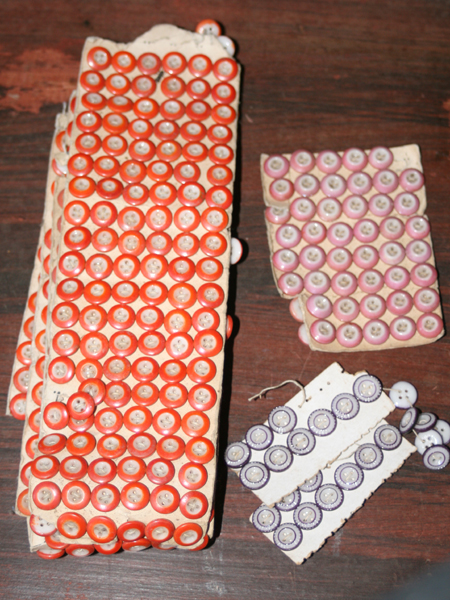
If you already own a copy of my Izannah Walker Doll Clothes Pattern for 18-1/2″ Doll then you know that the buttons called for in the pattern instructions are small white glass buttons with a painted rim. If you are searching for buttons like these, the best source is antique button dealers.

I buy quite a lot of old buttons and while my very favorite way to buy them is by the jar full, (for some reason old buttons are very often found inside of antique canning jars and sold by the jar) I very seldom find this particular type of button that way.

More often than not I buy individual buttons of this type from button dealers. Probably the most famous of all antique button shops in the U.S. is Tender Buttons. Located at 143 E 62nd Street, New York, NY 10065, (212) 758-7004. They are open weekdays 10:30 am – 6 pm; Saturday 10:30 am – 5:30 pm. Tender Buttons is a lot of fun to visit, but they aren’t the most cost effective place to buy your antique buttons. I’ve had the best luck and gotten the lowest prices buying buttons at Brimfield, the thrice-yearly outdoor antique extravaganza that takes over the town of Brimfield, MA. There are usually multiple button dealers that set up in Brimfield, many of whom congregate in the same location, making it easy to go from booth to booth.

I’ve also had whole huge cards of these buttons given to me by a friend. Obviously I have the BEST friends in the world! So spreading the word around and about that you are searching for glass buttons is also a good thing to do.

glass-buttons

Doll Clothing

Historic Seam Finishes For Doll Clothing

You’ve found that perfect fabric for your doll’s dress, your mind’s eye is focused on the finished dress and no other material will do. Unfortunately the fabric of your desire is loosely woven and unravels like crazy if you even glance at it, to say nothing of what it does when you actually approach it with a pair of scissors in your hands. What do you do?

Obviously Izannah would not have resorted to using Fray Check or a serger. Your solution is to use the seam finishes that she could have used.

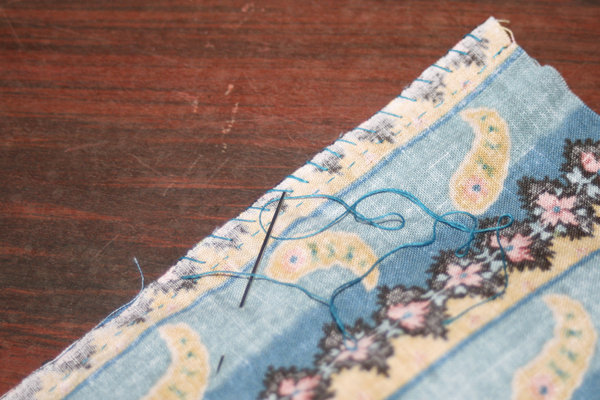
overcast-seamMethod one is to overcast your seam allowances by hand using a single strand of thread. This actually goes a lot faster than you would think and is the 1800’s version of finishing seams by running them through your serger. Something that will save you some work is cutting whatever straight seams that you can along the selvedges of your fabric and letting the selvedge itself act as a seam finish. This was commonly done in the 1700 and 1800’s. Because old fabrics did not have printing along the selvedges like some modern fabrics do, I only use unprinted selvedges this way. Usually one edge of your fabric will have no printing.
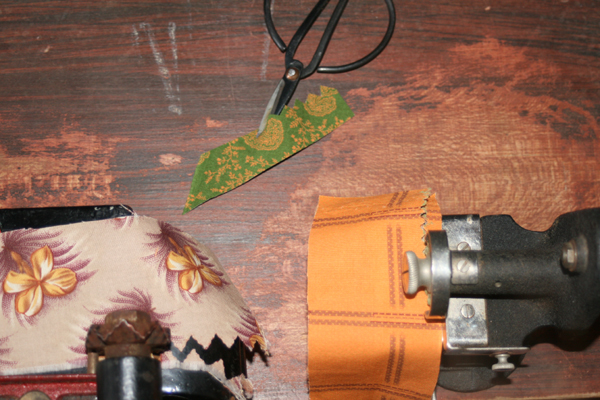
pinkersA second method is to pink your seams. To do this you may use pinking sheers, a pinking machine, or hand pink the edges of your seams using a pair of straight scissors. The oldest forms of pinking are hand pinking, or the use of pinking irons. Pinking irons were placed along the edge of the fabric and struck with a mallet or hammer. They were primarily used to give a decorative edge to ruched fabric used for trimming 18th century gowns and petticoats. Hand pinked edges were used more commonly as a seam finish. After hand pinking and pinking irons, came pinking machines. Think of them as a hand cranked version of today’s rotary cutter fitted with a pinking blade.

A third option would be to make French seams along all straight seams and overcast curved seams, such as armholes, and gathered waistbands.  This looks especially nice if you are working with a sheer fabric.

The least desirable choice of historic seam finish for doll clothes would be to bind your seams with twill tape or silk ribbon. Avoid this method if possible, as it adds far too much bulk to tiny garments.