You’ve just received an invitation to a birthday party! What is the first thing that you think of??? “What am I going to wear?”
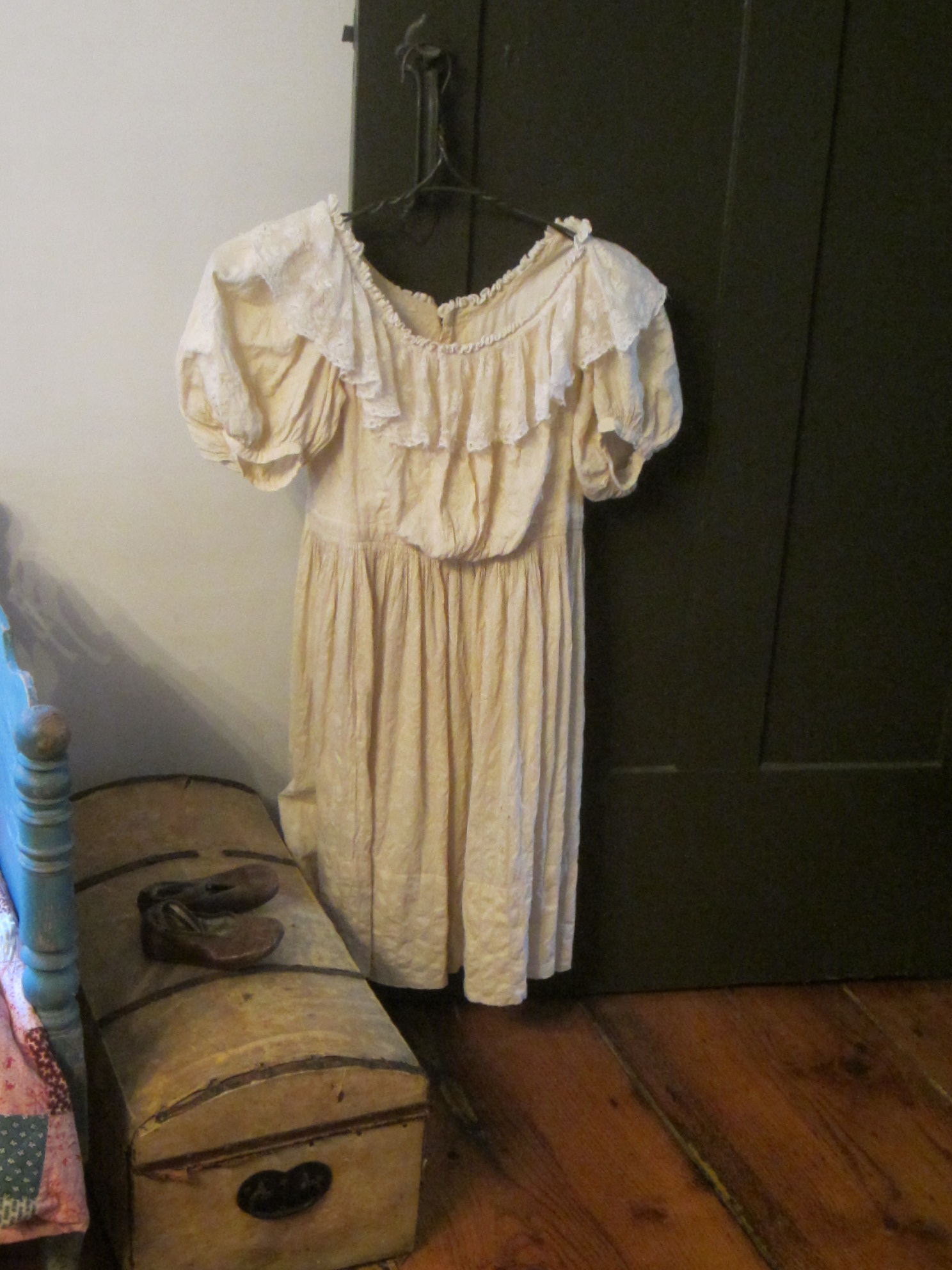
The dolls would like you to step back in time with them, as they show you what a little girl in the mid-1800’s would wear to a party. The dress they are showing off is one of my recent finds from the Elephant’s Trunk Flea Market. It is the approximate equivalent of a modern girls size six.
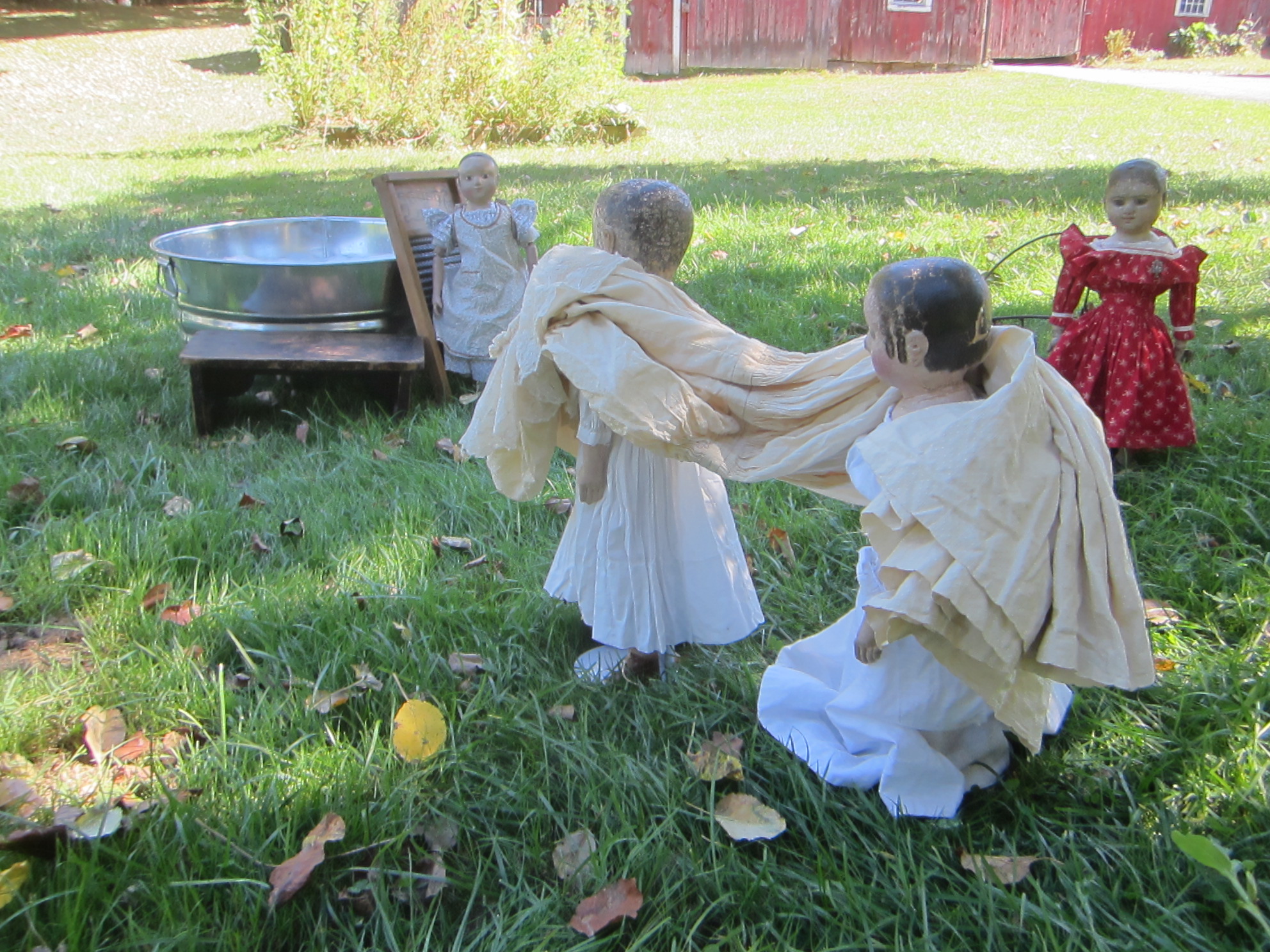
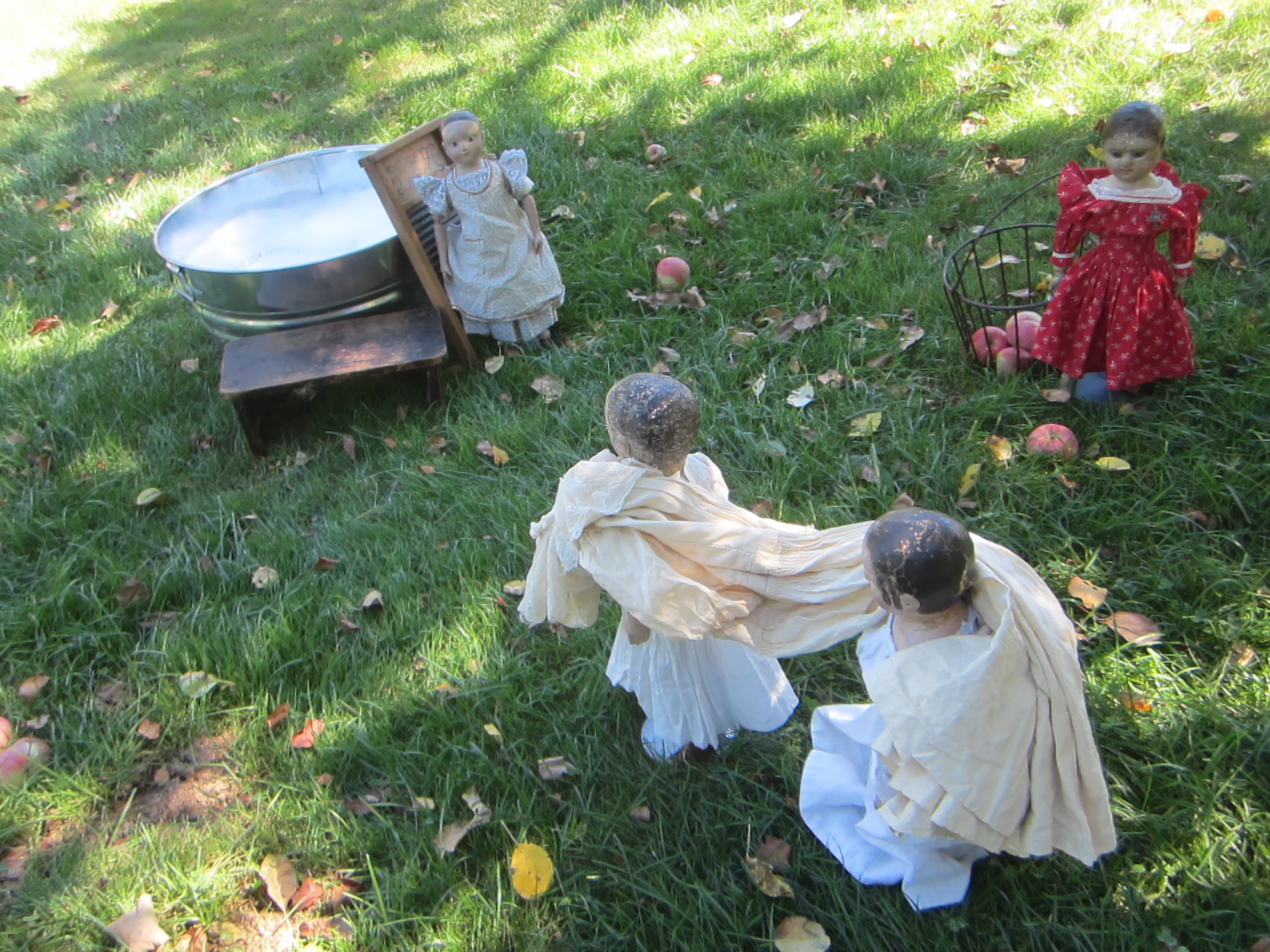
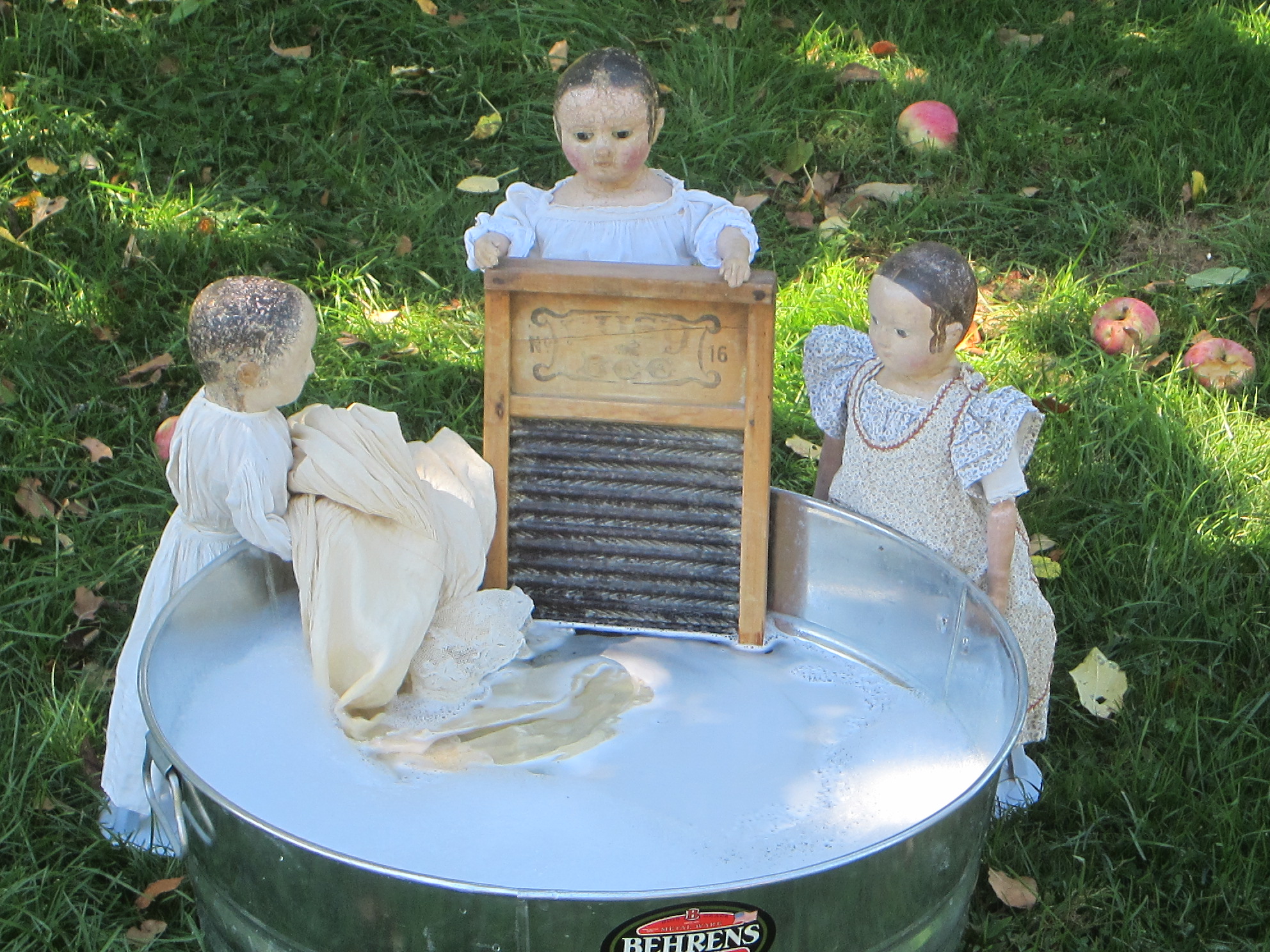
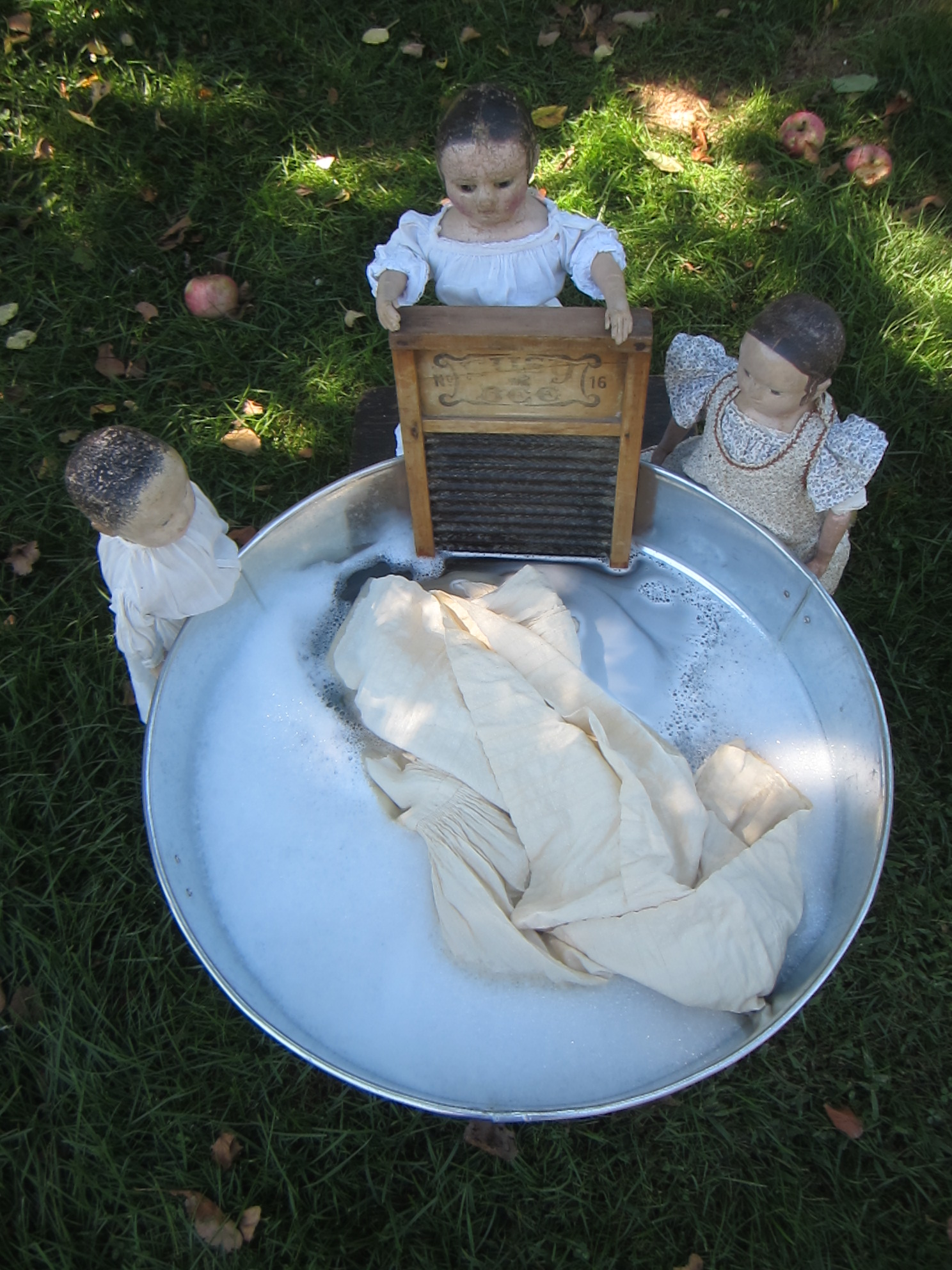
Hannah and Isabeau carry the party dress out to the wash tub.
First Things First
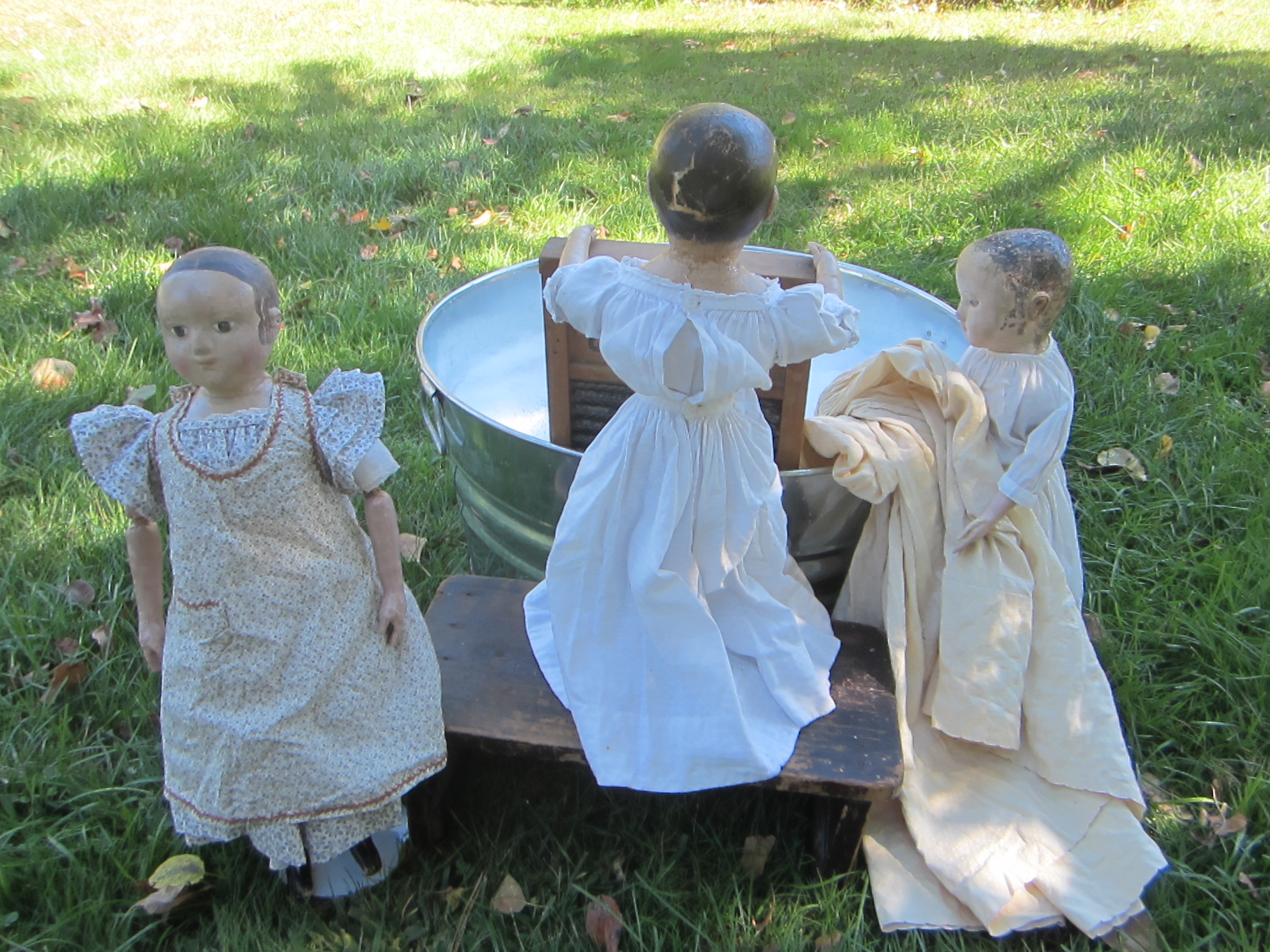
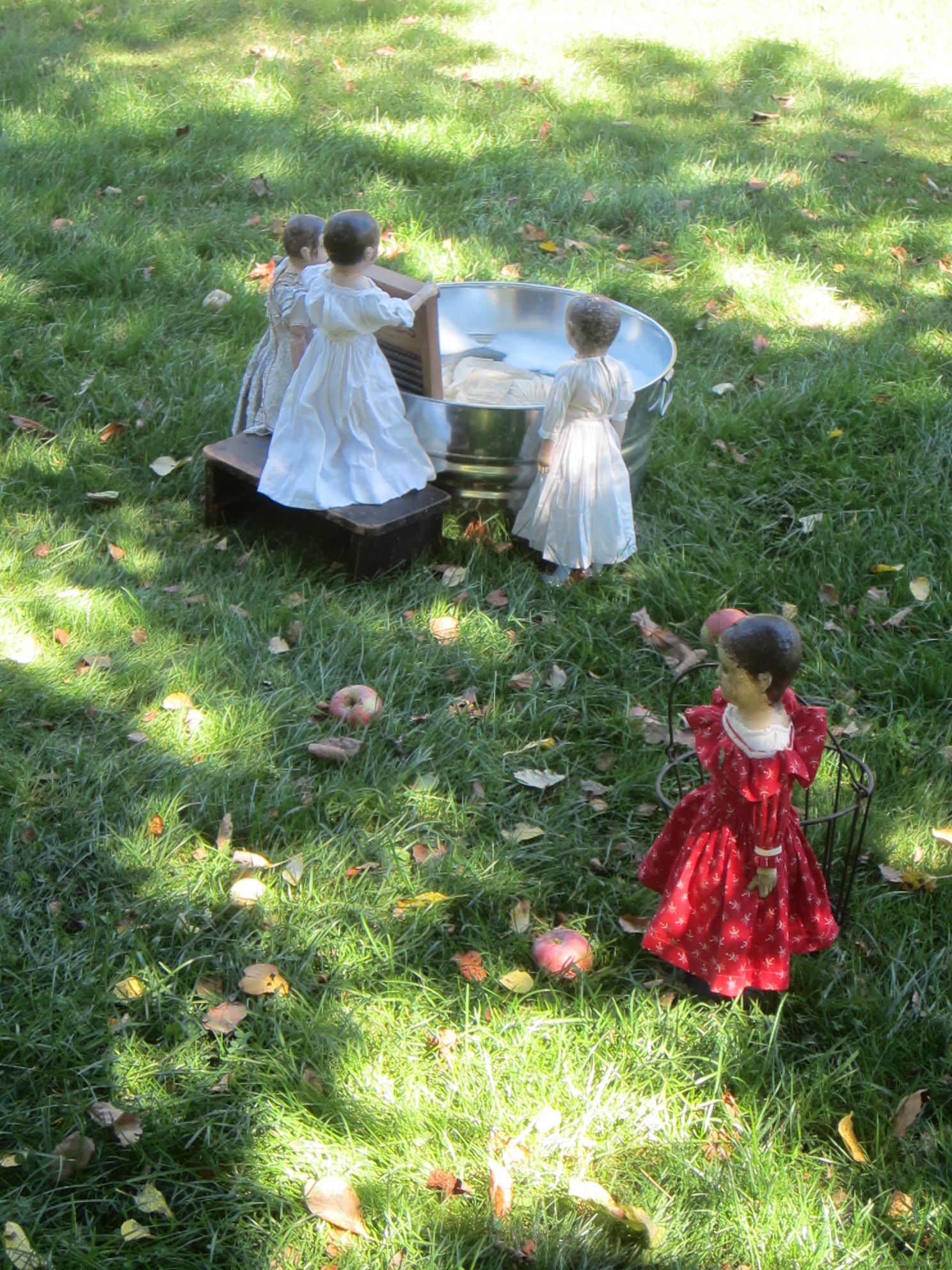
Before you can go to the party, you have to make sure that your best dress is clean. Isabeau, Hannah, and Isane volunteered to do the laundry…
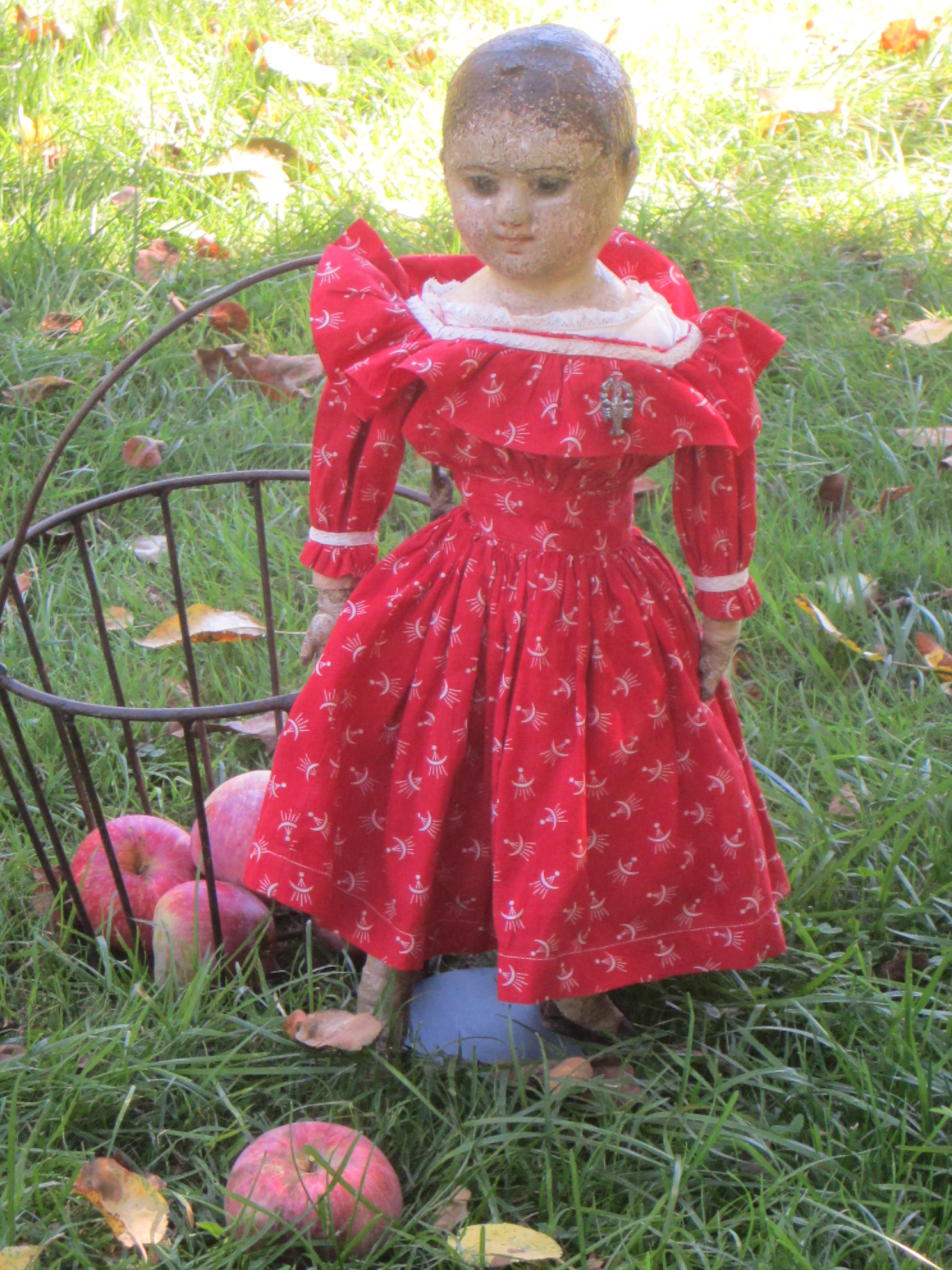
It was a hot day so the girls decided to do the wash in the shade of the apple tree.Zanna came along to pick up windfall apples for pies.“Hannah I think the water temperature is just right.”“Go ahead and put the dress in.”“Now we can let it soak, while we help Zanna pick up the rest of the apples.”“What a perfect day!’ “I hope we have time to sit outside with our quilting later.” “Maybe if we hurry and get finished here we can find a little time to sew before dark.”
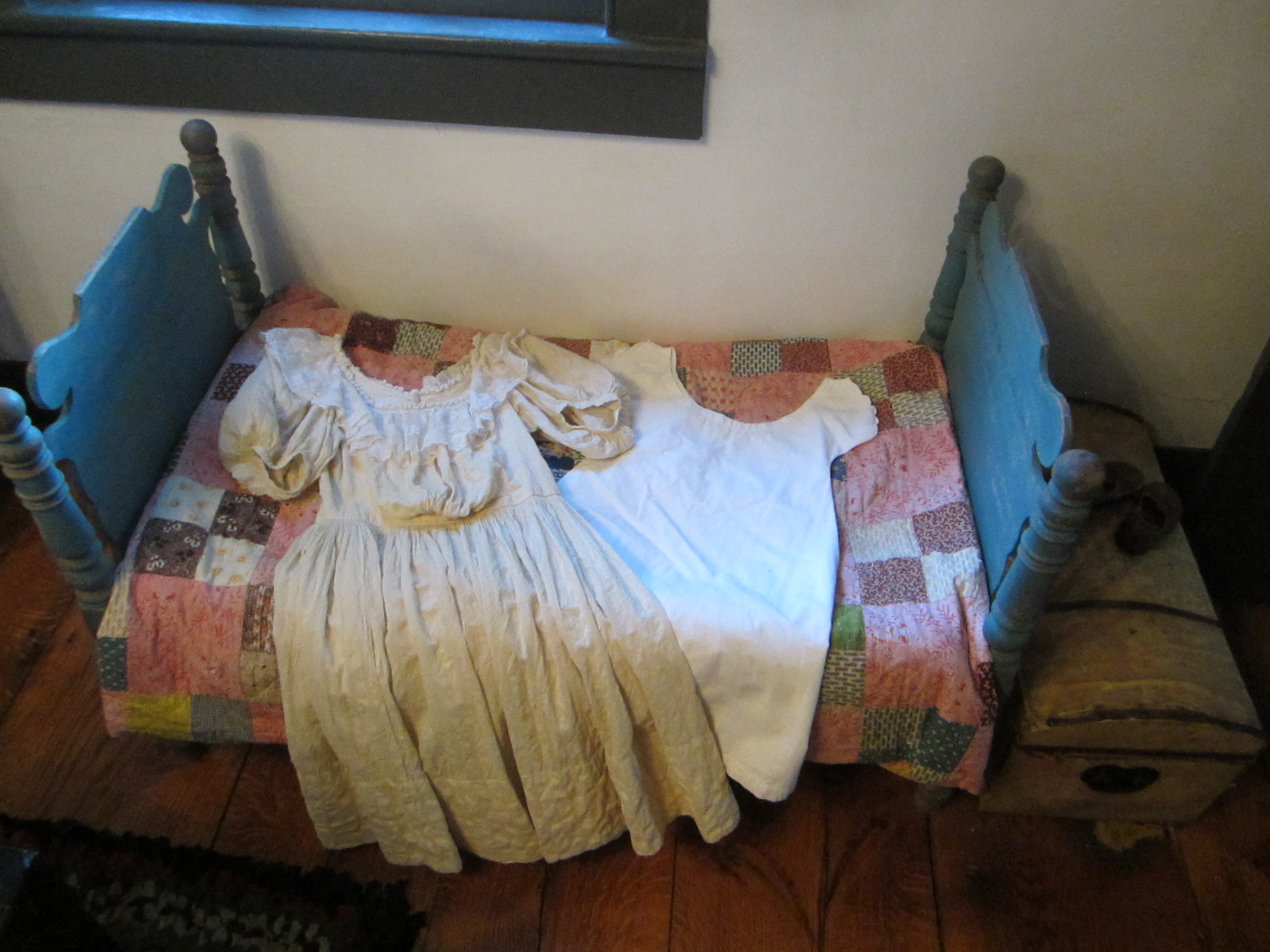
It’s almost time for the party to start, so you’d better get dressed. The girls have laid your clothes out on the bed for you.
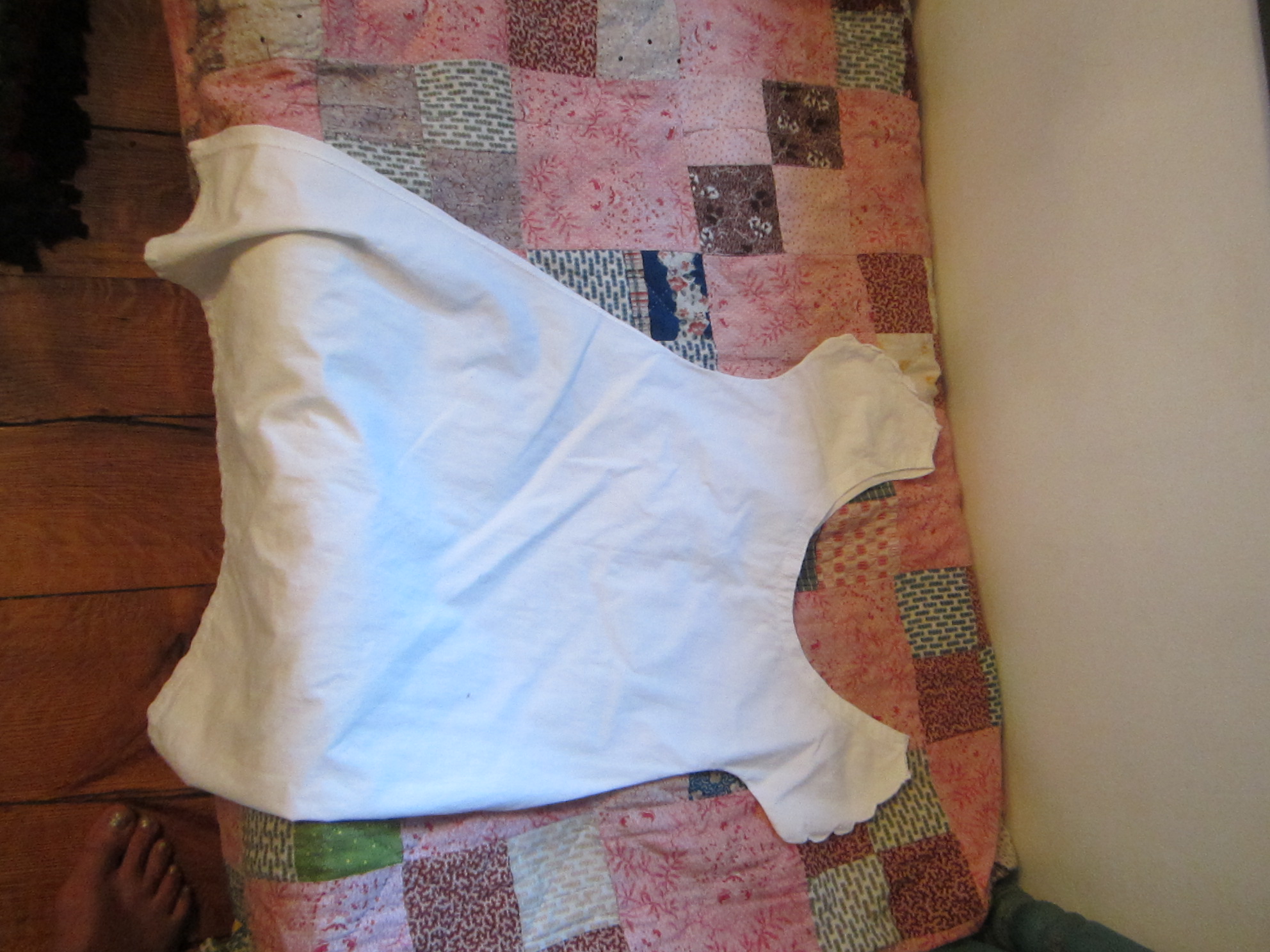
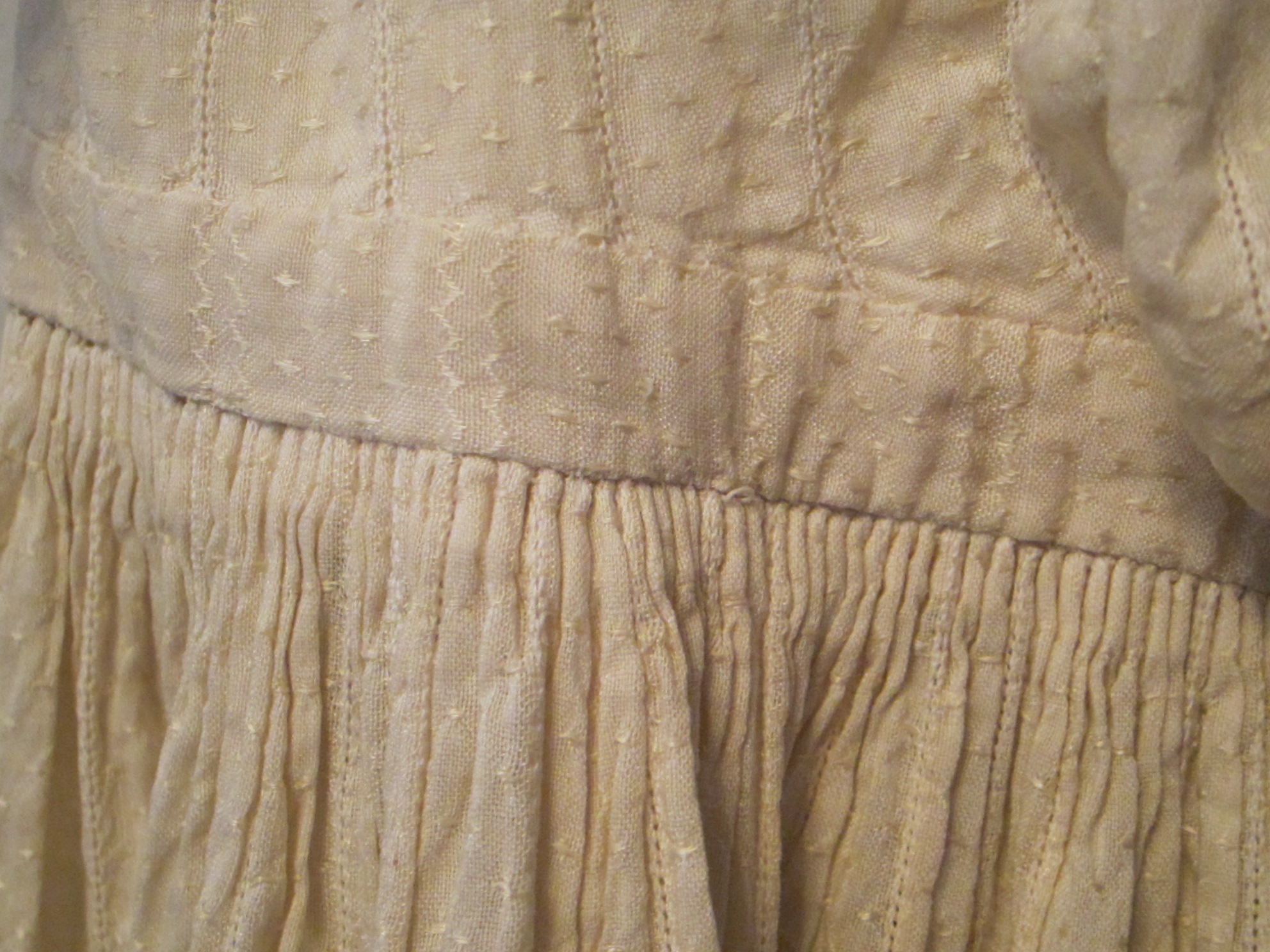
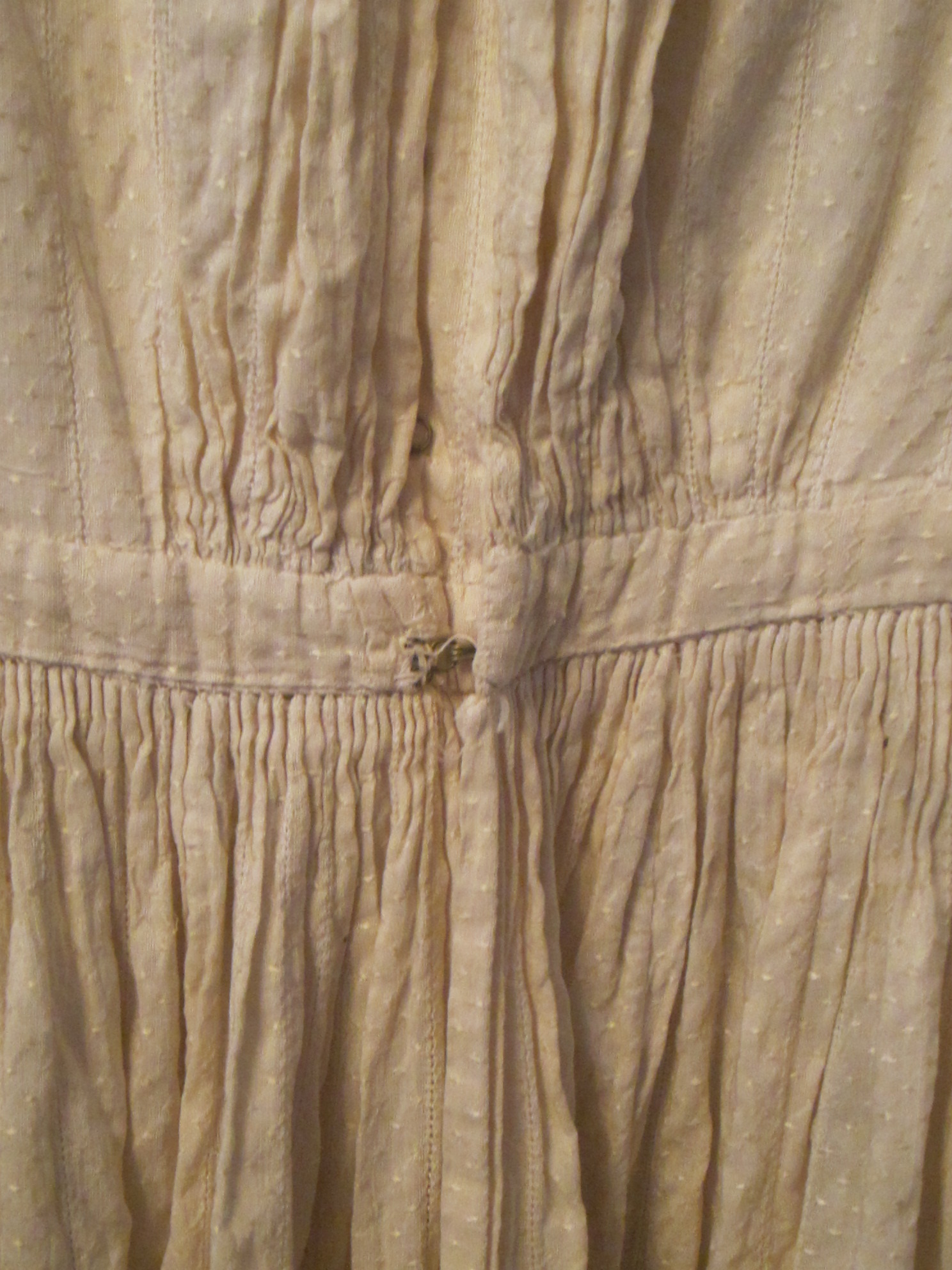
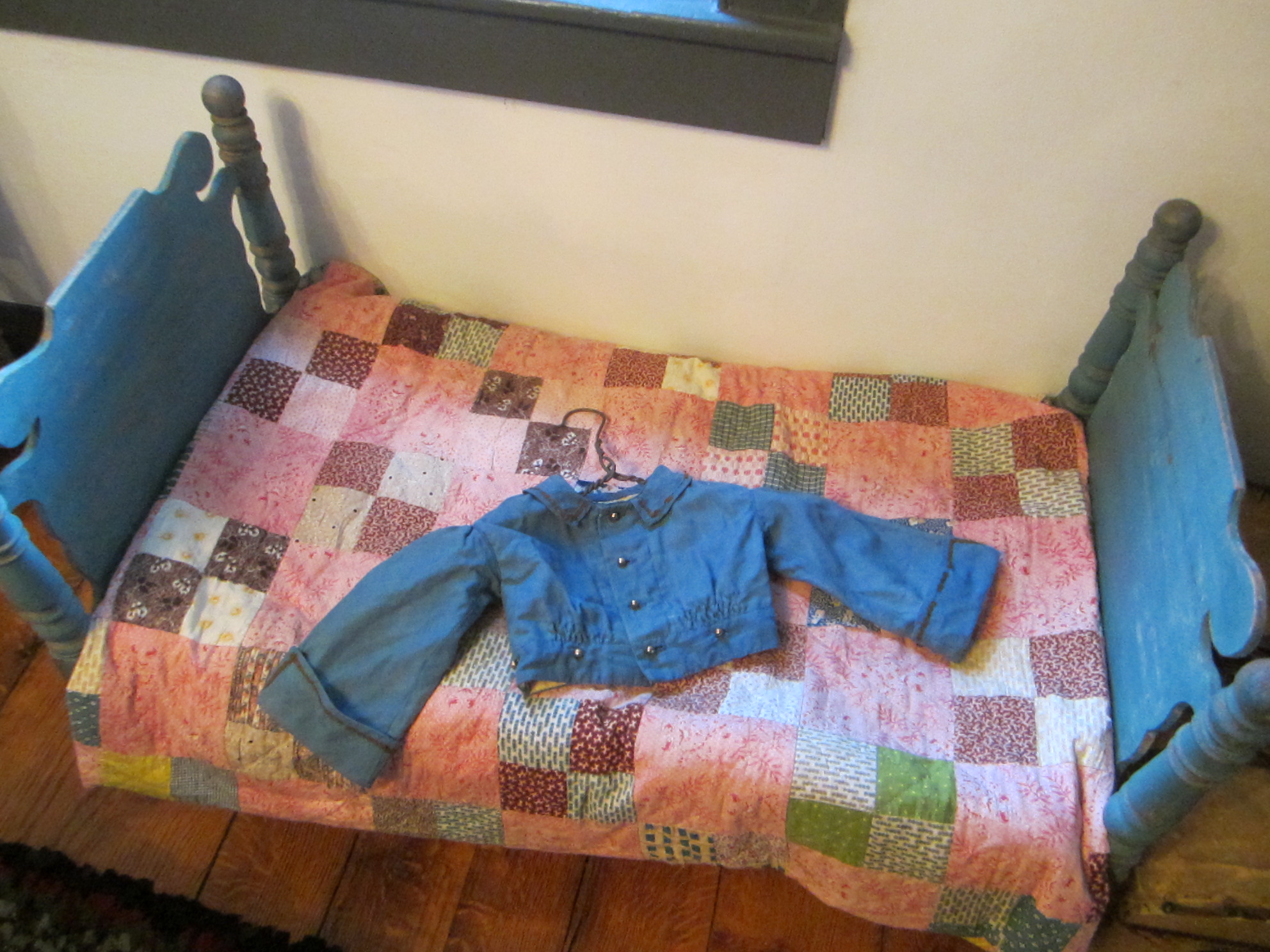
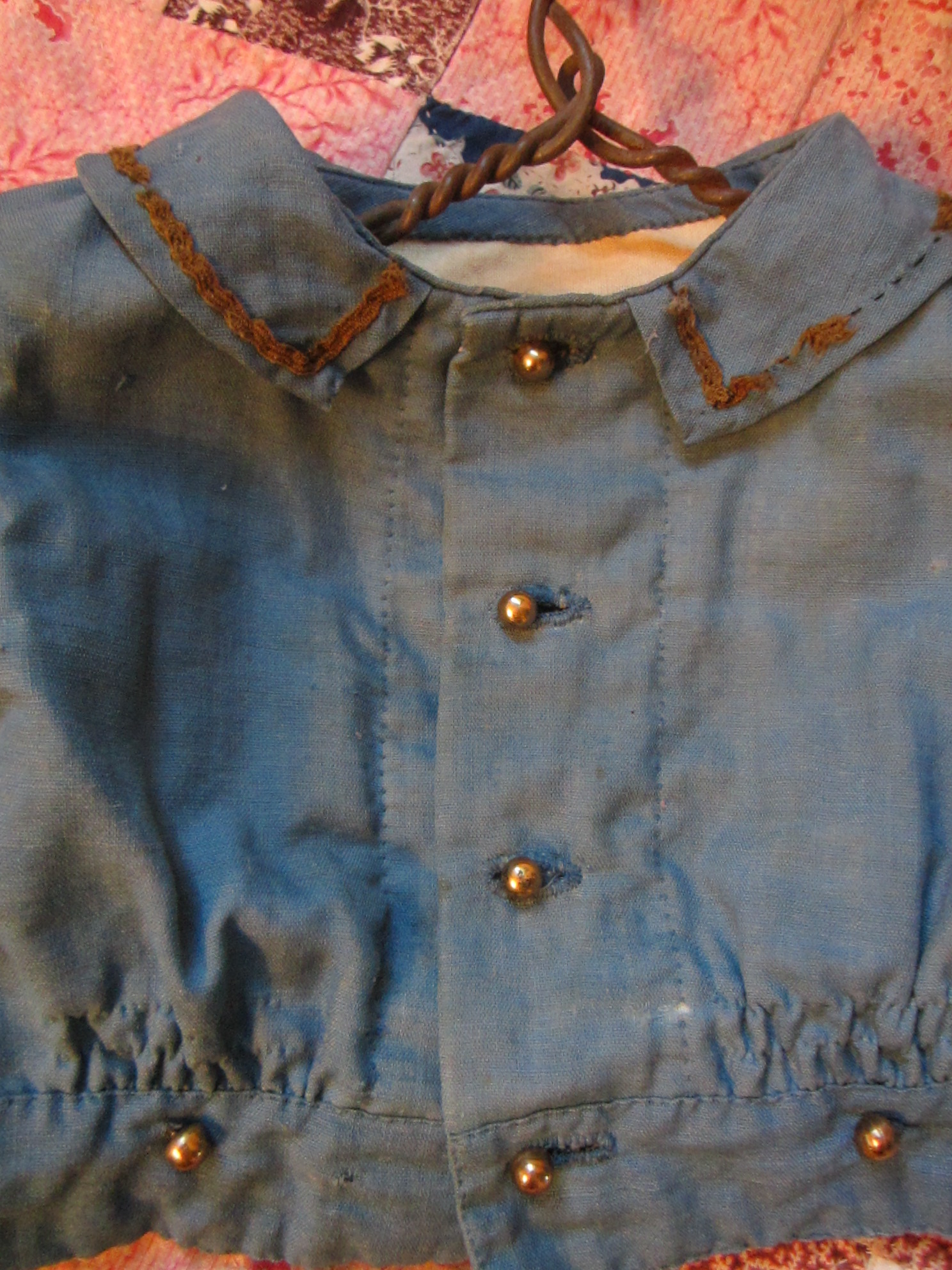
Here is your freshly washed chemise and dress.Fancy scallops on the sleeves ❤Every party dress needs lace!The dress fabric is a woven white on white cotton that has turned to a lovely pale ivory over time. All of the long seams are machine sewn, with the detail work, such as this tiny cartridge pleating done by hand.The back of the dress is fastened with large brass hooks and eyes.And what should little brother wear to the party? A blue linen jacket trimmed with black braid and brass buttons!A close up look at the hand sewn c. 1850’s boy’s jacket. ❤
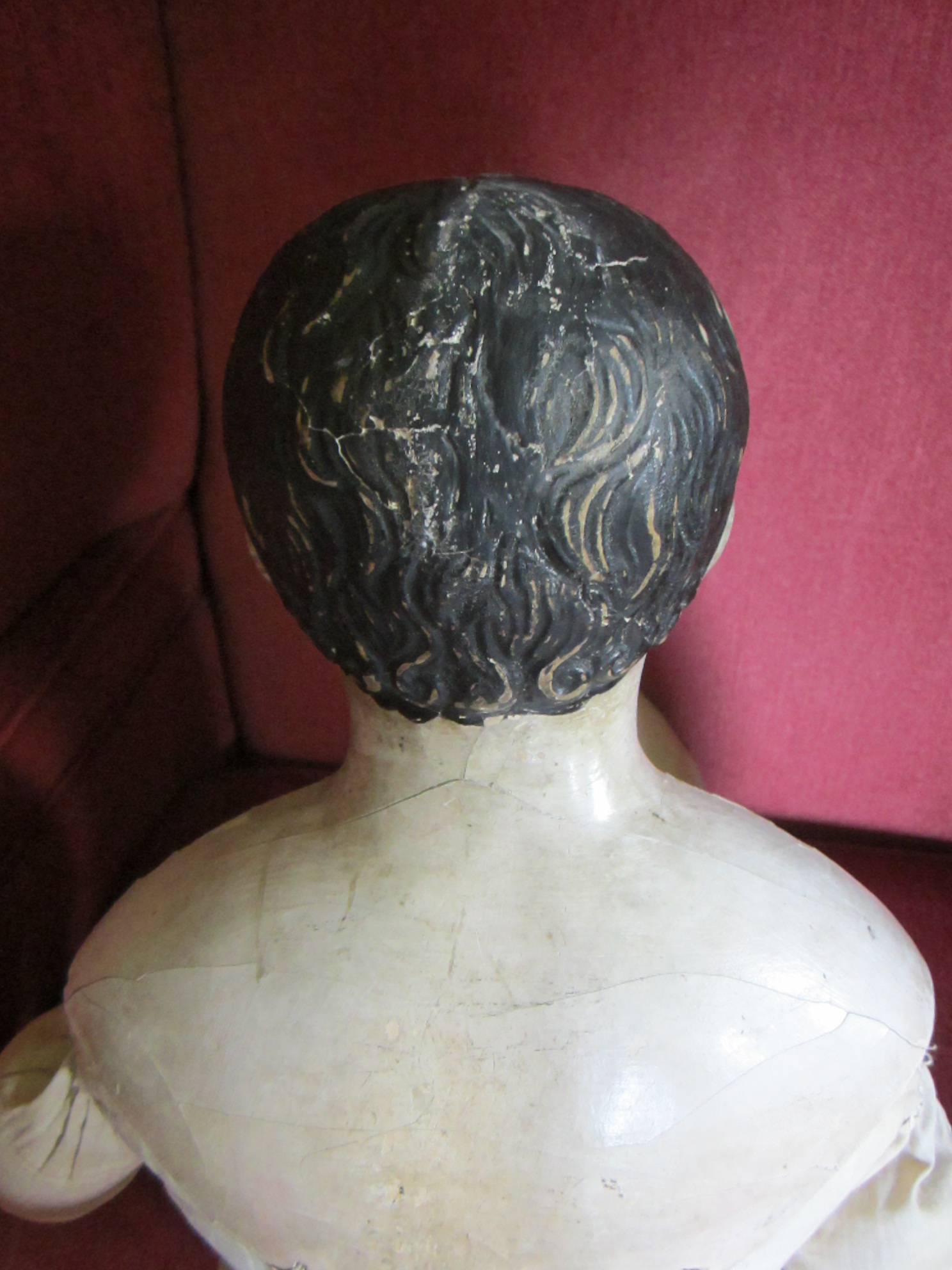
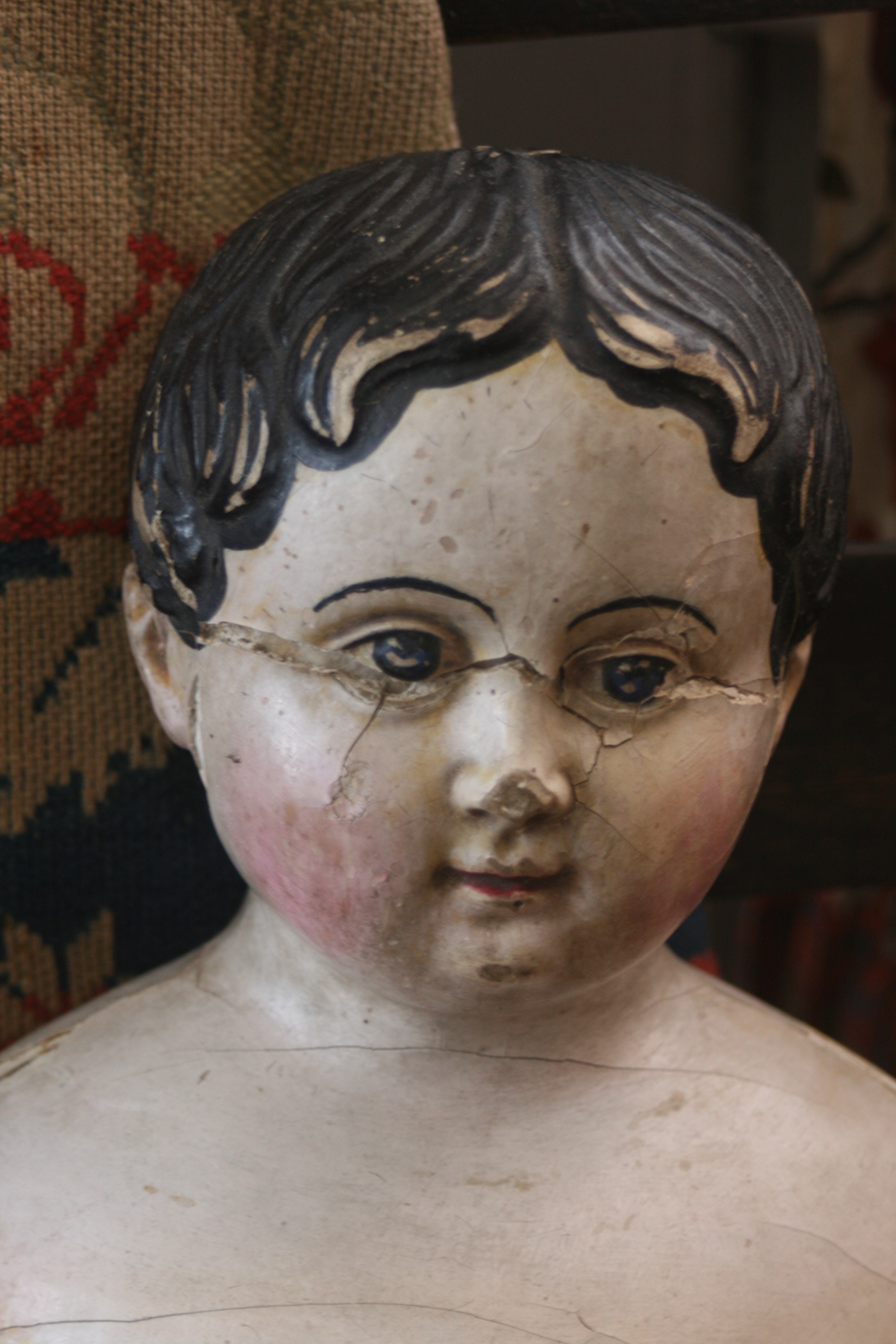
Were you wondering what ever happened to the beautiful papier-mache doll that I was restoring several months ago? She has finally gone home. ❤ I had planned to return her to her owner at our March doll club meeting. Unfortunately the weather interfered with our meeting, which was cancelled due to snow 😦 I couldn’t attend the April meeting because I was out of town, so this doll got to stay with me until May. She was a perfect house guest!
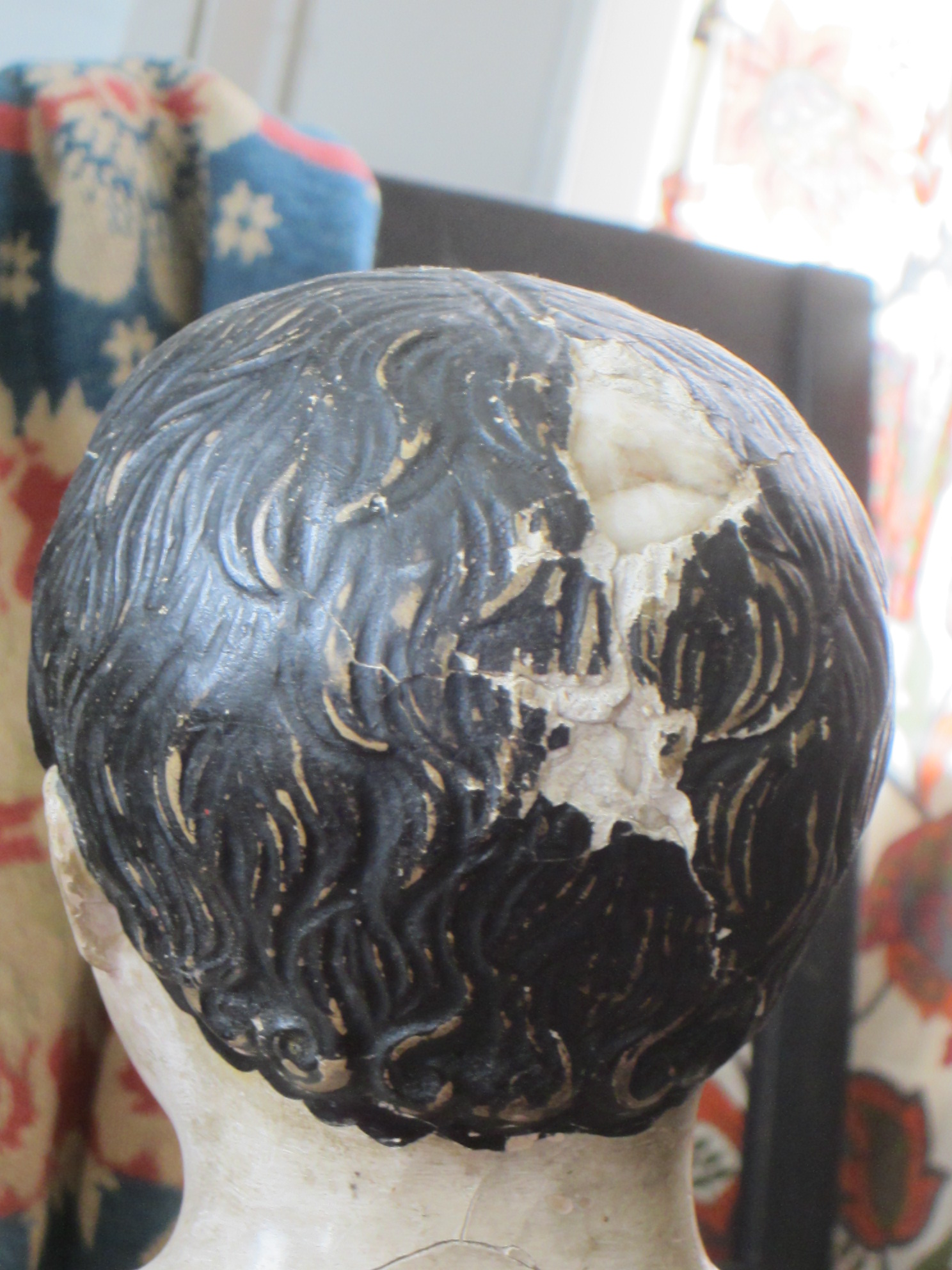
Here are a few photographs of her after I did some minimal restoration. Just enough to let her beauty shine through, without erasing her age and grace.
This very large papier-mache doll can wear children’s size clothing.
Today I have been rendering a bit of loving assistance to this damaged, but still beautiful papier-mache doll. I’ve been asked by her owner to stabilize her condition, more than restore her. I have glued the very large crack in her head and started repairing the holes in the back of her head. Her antique underclothing is currently soaking in a solution of Orvis and distilled water. The idea here is to conserve the doll with a very light touch. I’m doing just enough to keep her together and stop her from deteriorating further, while allowing the story of her life and enchanting time worn appearance to shine.
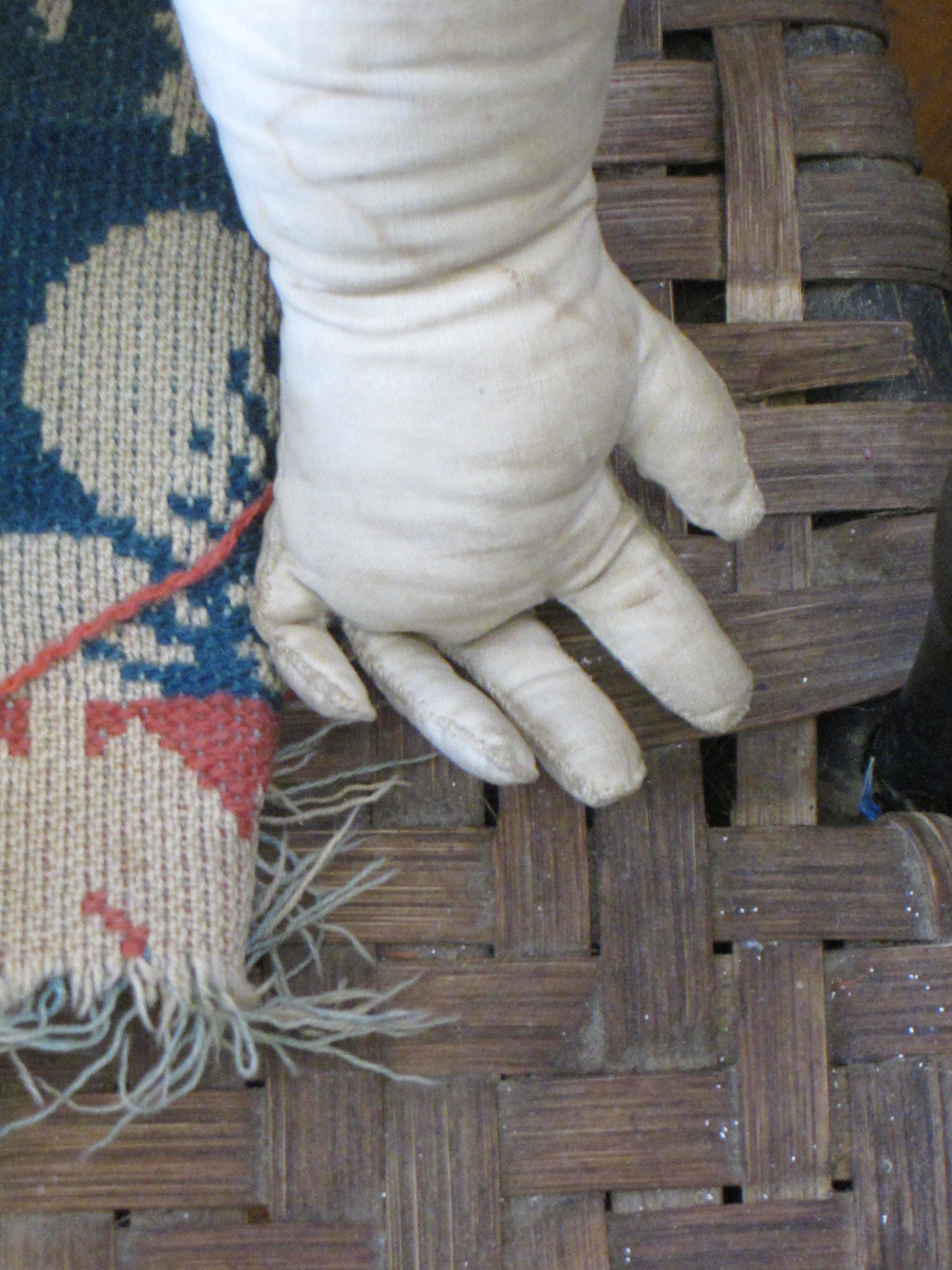
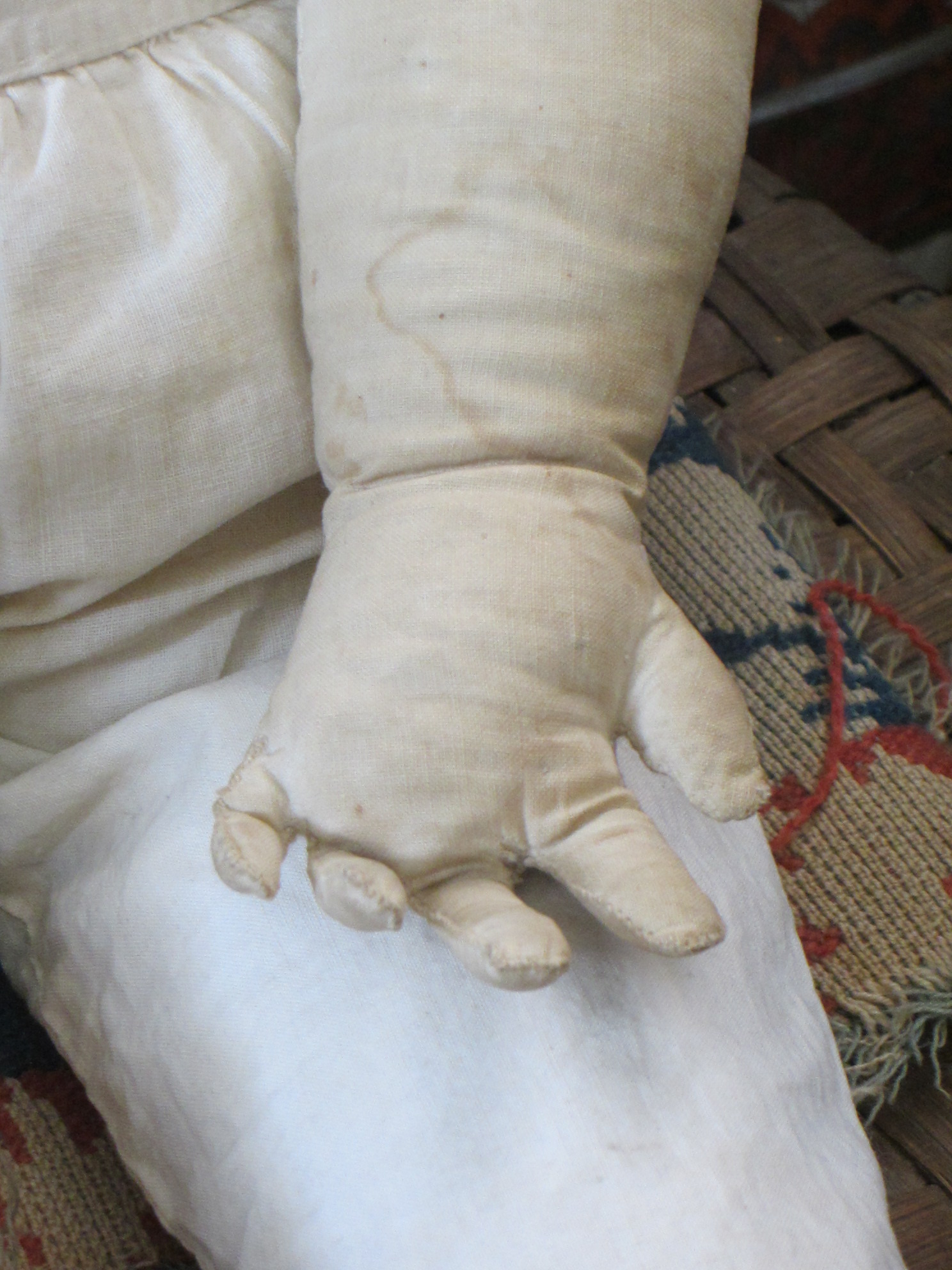
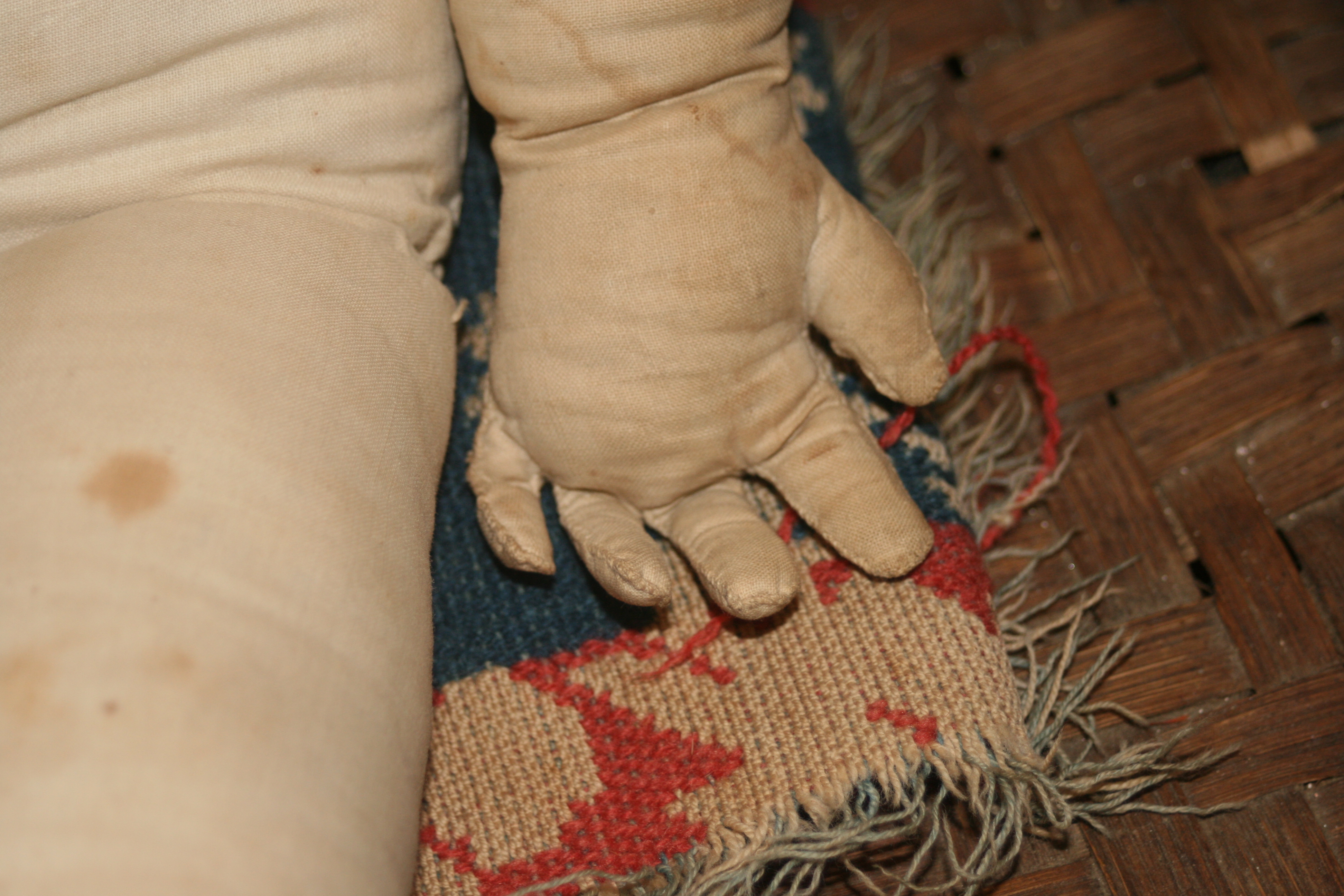
This doll has a very nice hand sewn body, with magnificent fingers and hands!
Come back to visit next week to see how she looks when I’m finished working on her…
I love these little pink shoes with their scalloped edges ❤
Although I don’t often mention it here on my blog, I do a fair amount of restoration work when I can fit it into my schedule. During August and September I spent countless hours doing restoration on three antique Izannah Walker dolls, plus a very unique one of a kind antique painted cloth doll. ❤ ❤ ❤
Helping to preserve and restore antique cloth dolls and their clothing is one of my passions! Equal parts scary and awe inspiring, restoration work is one of the most rewarding and fulfilling things that I do ❤ As with any type of restoration, less is more. I do the least possible to protect and preserve a doll, while at the same time getting her original beauty to show through her veil of years.
Here are some before and after photographs for all of you, who are equally as smitten with antique painted cloth dolls as I am, to enjoy. I do make all cloth, historically accurate reproductions of all three of these Izannahs; with pressed cloth heads that I make in molds taken directly from the original antique dolls. I’d be delighted to make one especially for you ❤
All of my dolls are finely handmade, one at a time, in New England – just over 100 miles from where Izannah Walker lived and worked in Somerset Village, MA and Central Falls, RI. Each doll is historically accurate and requires from 85 – 100 hours to complete.
I’m always happy to talk to you about restoring your antique painted cloth dolls. paula@asweetremembrance.com 860-355-5709 (9:00 – 6:00 Eastern Time).
A LARGE VERY EARLY IZANNAH WALKER DOLL
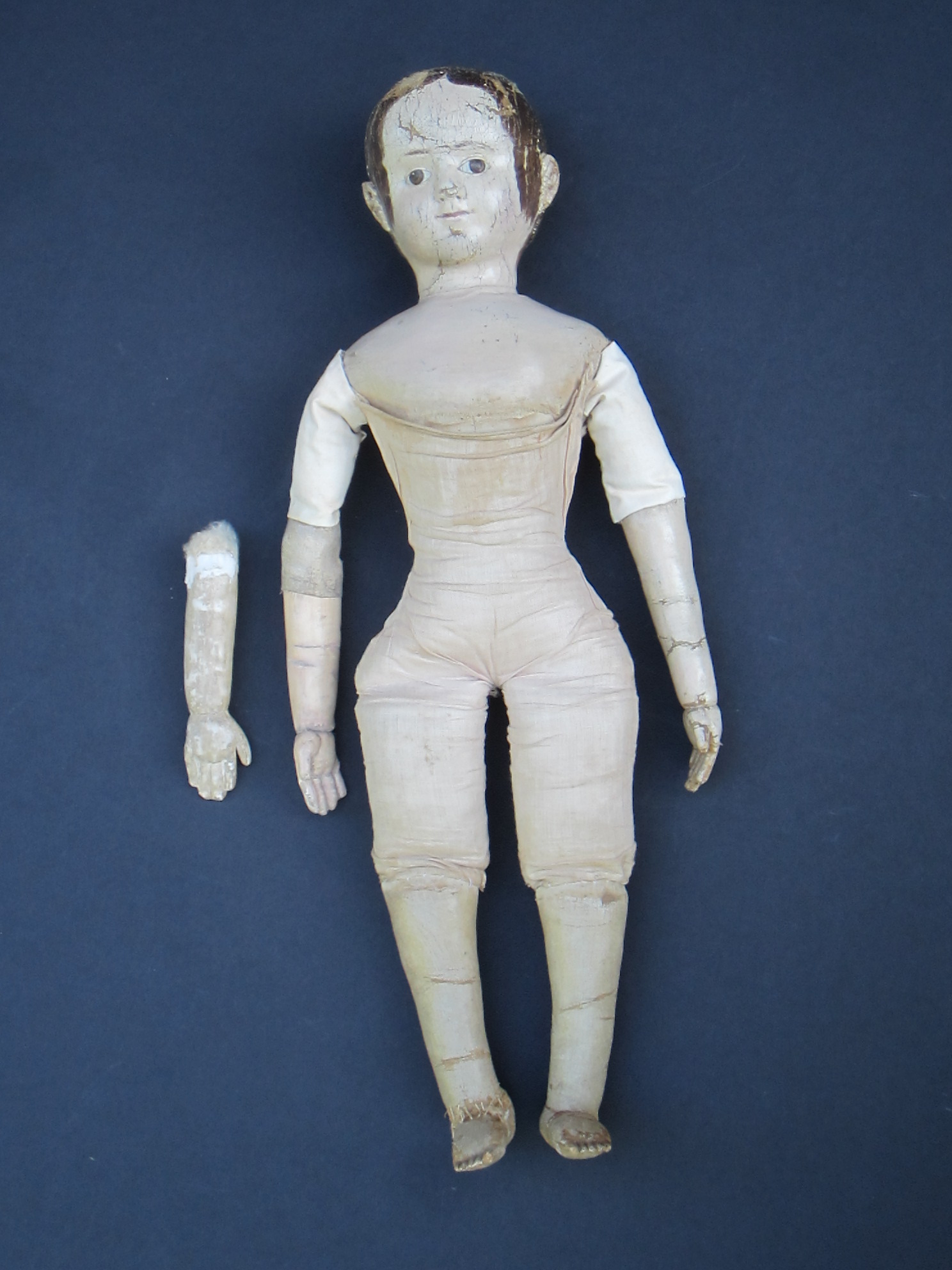
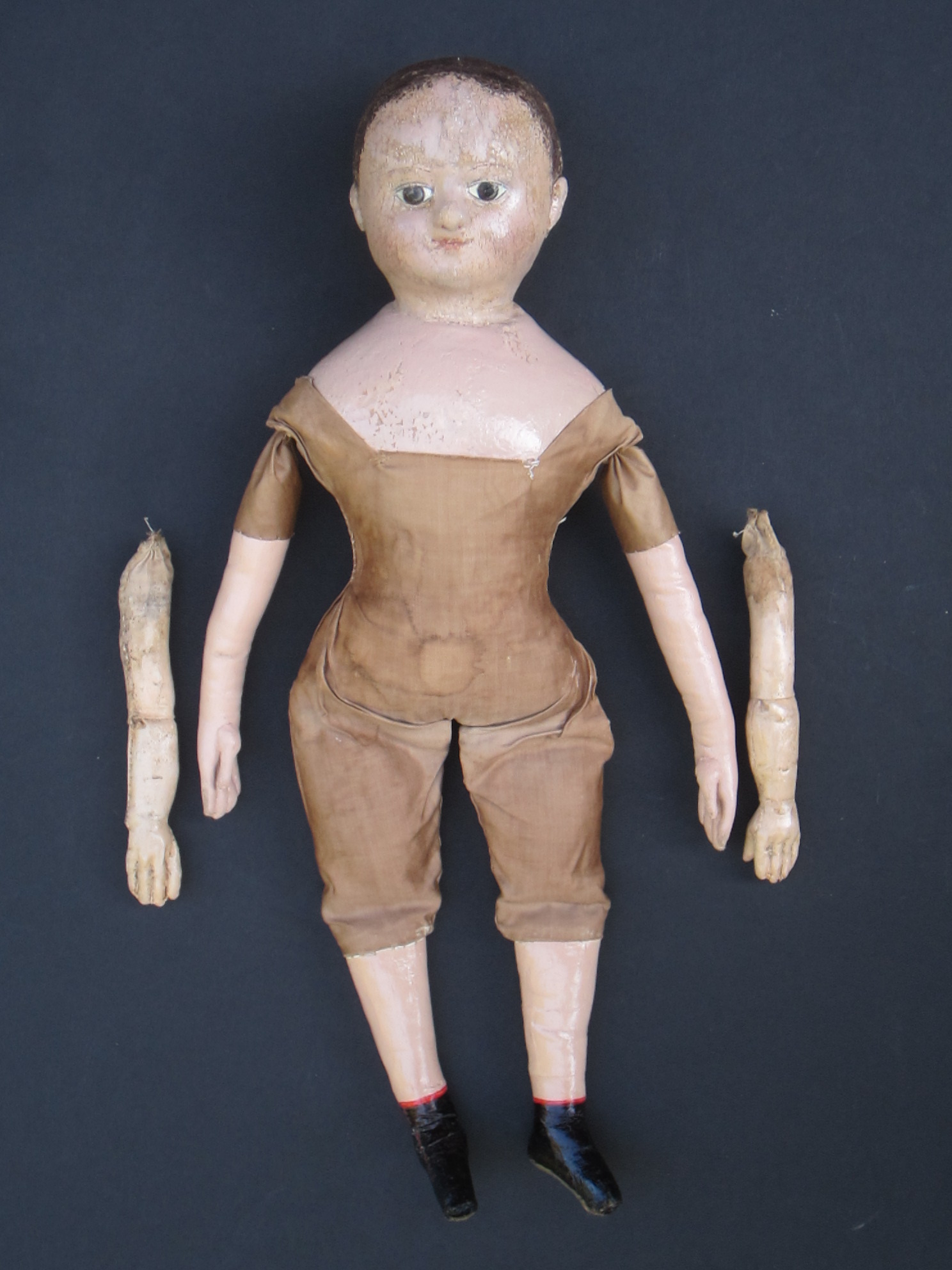
Before restoration.
I was asked to bring back some of the original color to the face and shoulders of this early doll. Years of sun fading and a prior overly vigorous cleaning had turned the doll’s once skin toned paint almost white.
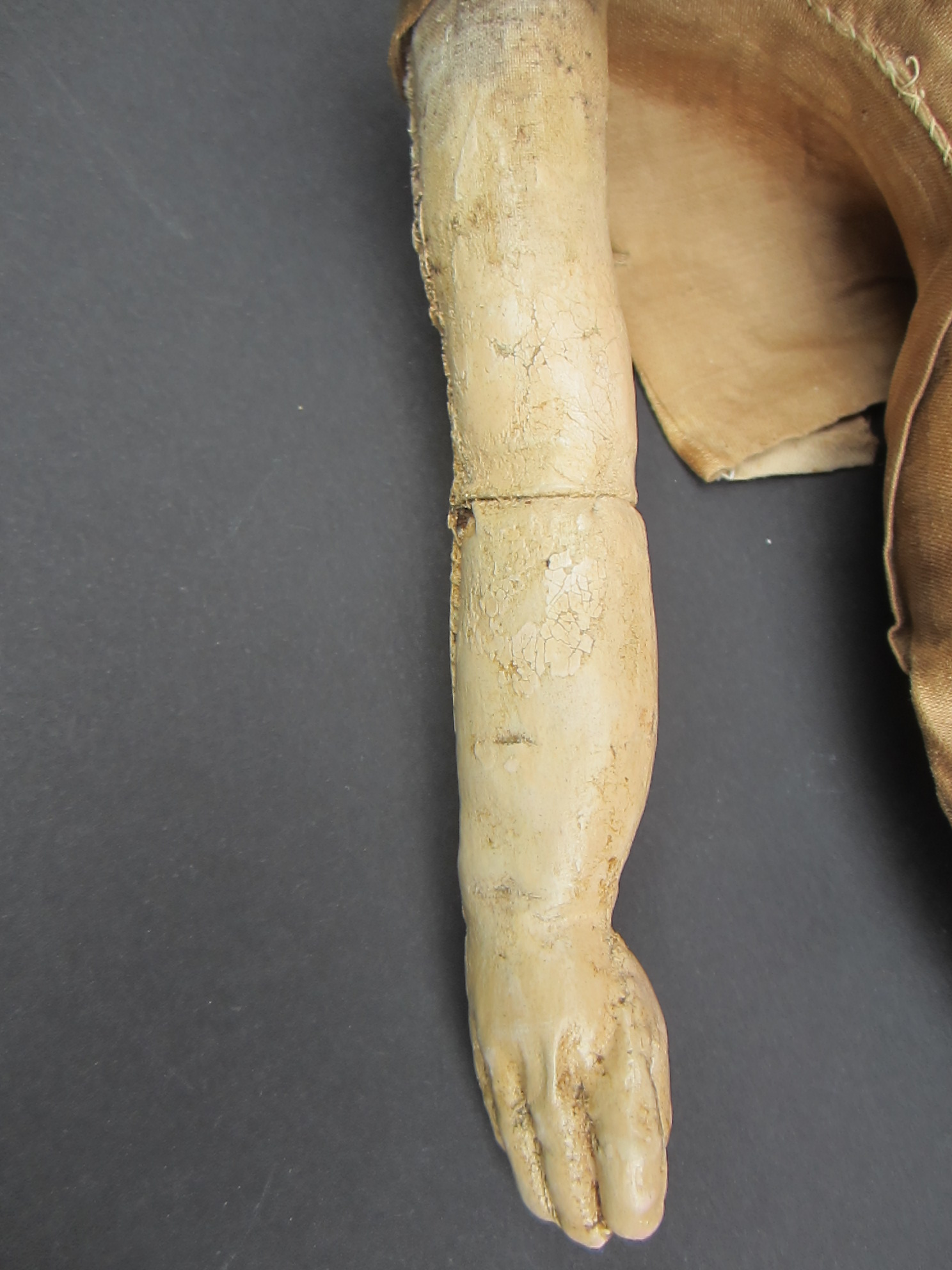
The doll’s linen second skin also needed repairs and a newly made replacement arm was itself in need of replacement.
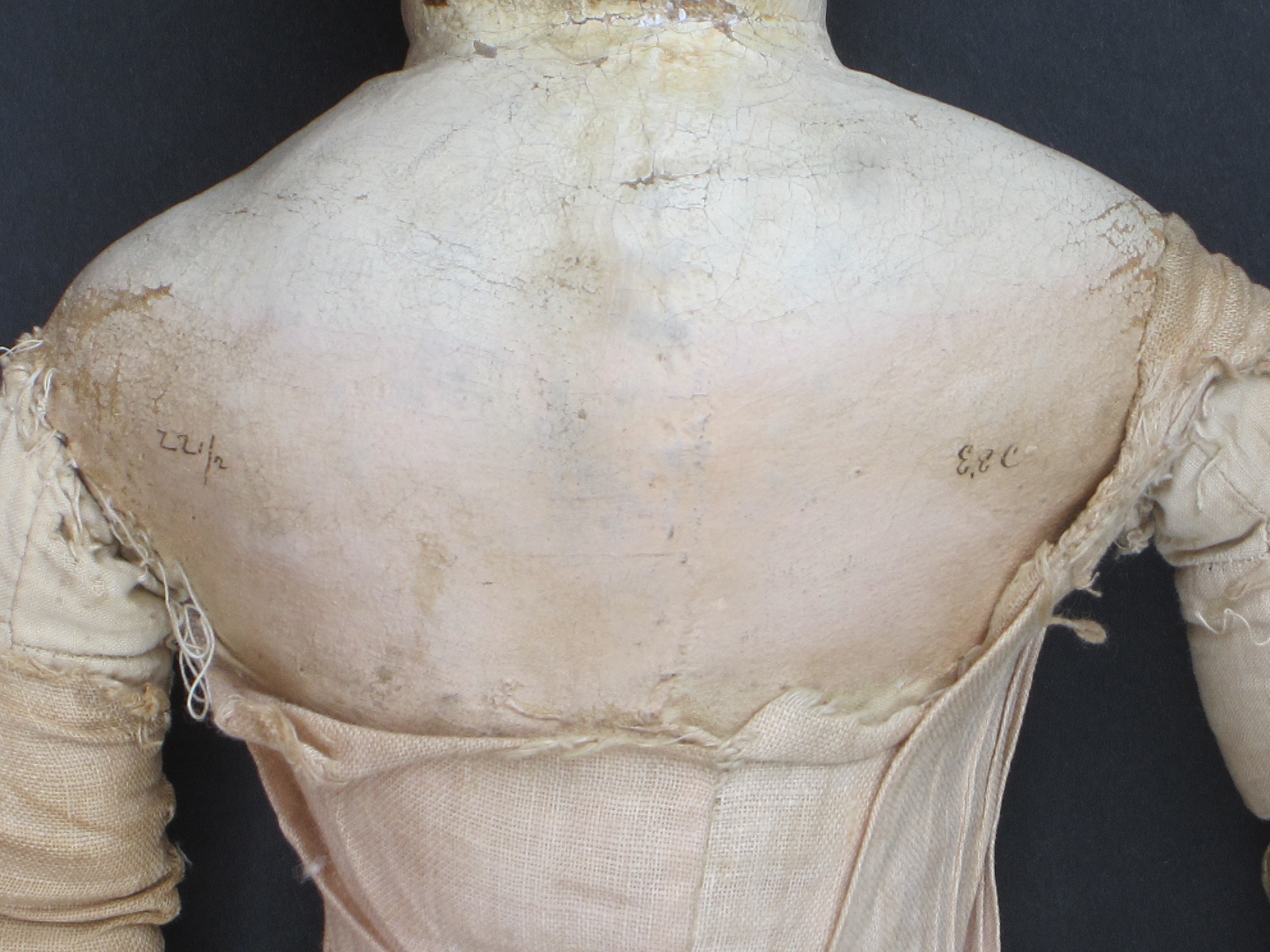
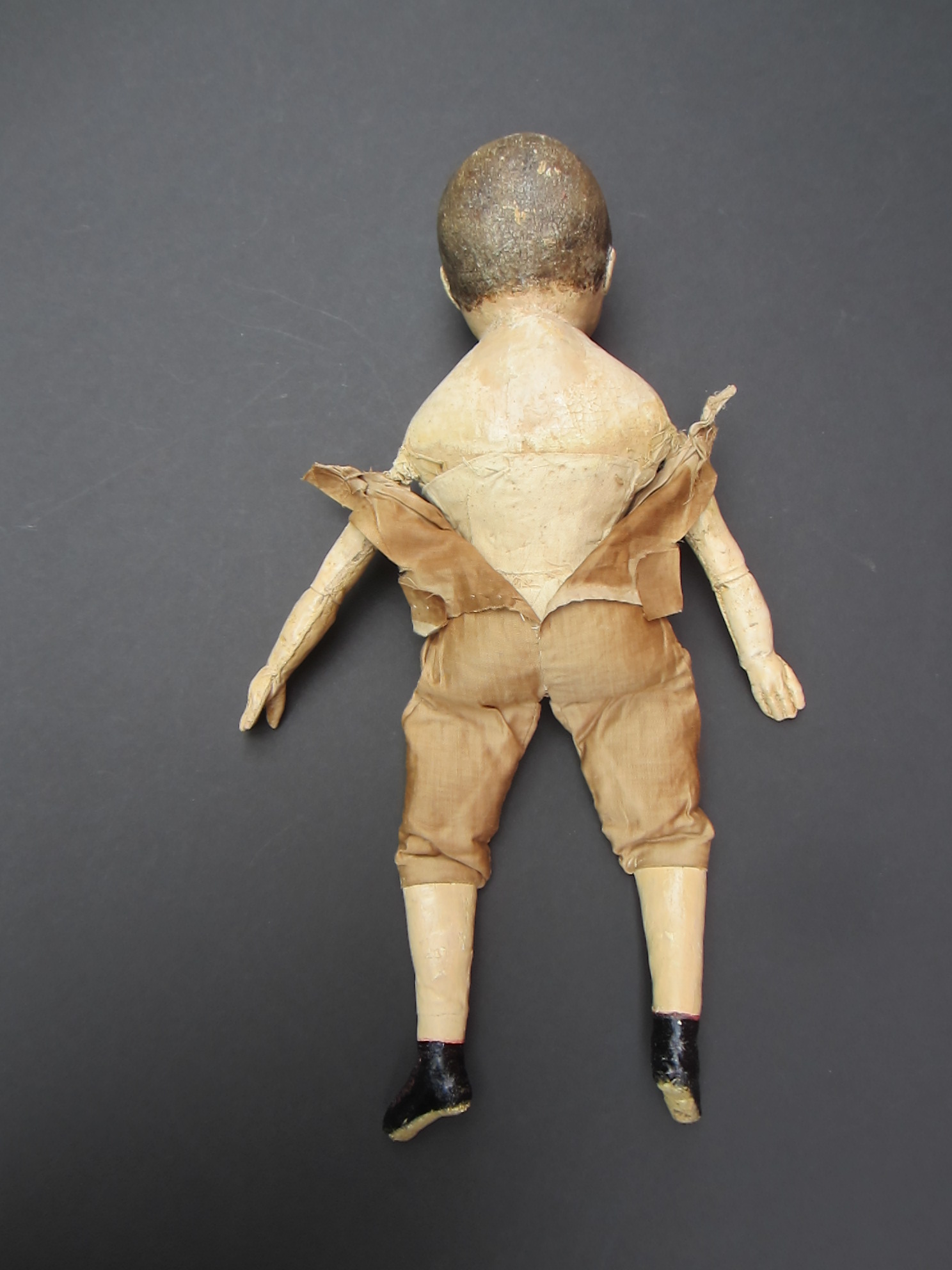
Back view prior to restoration work.
Fortunately the doll’s original paint color was visible on a protected area of her back.
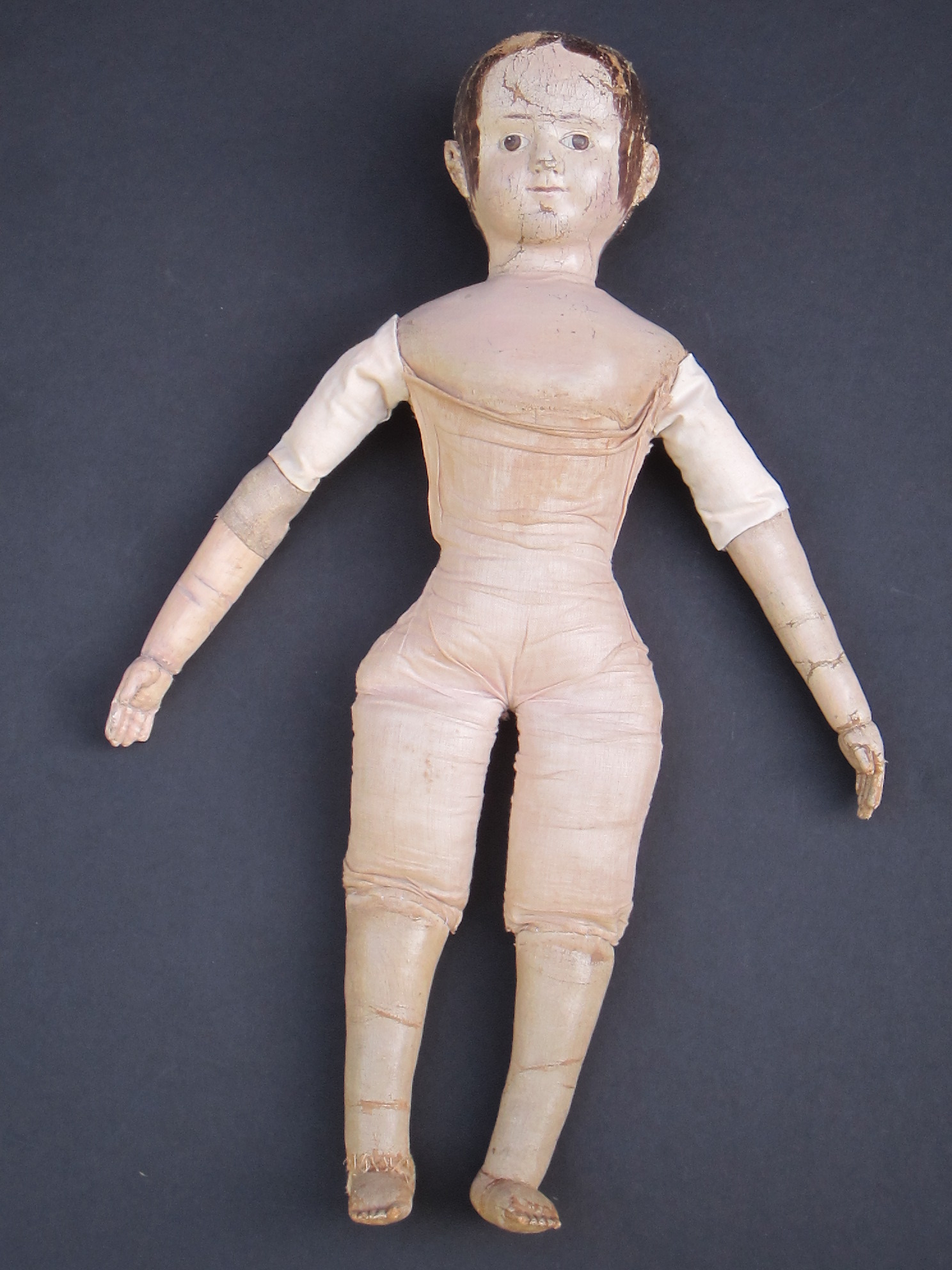
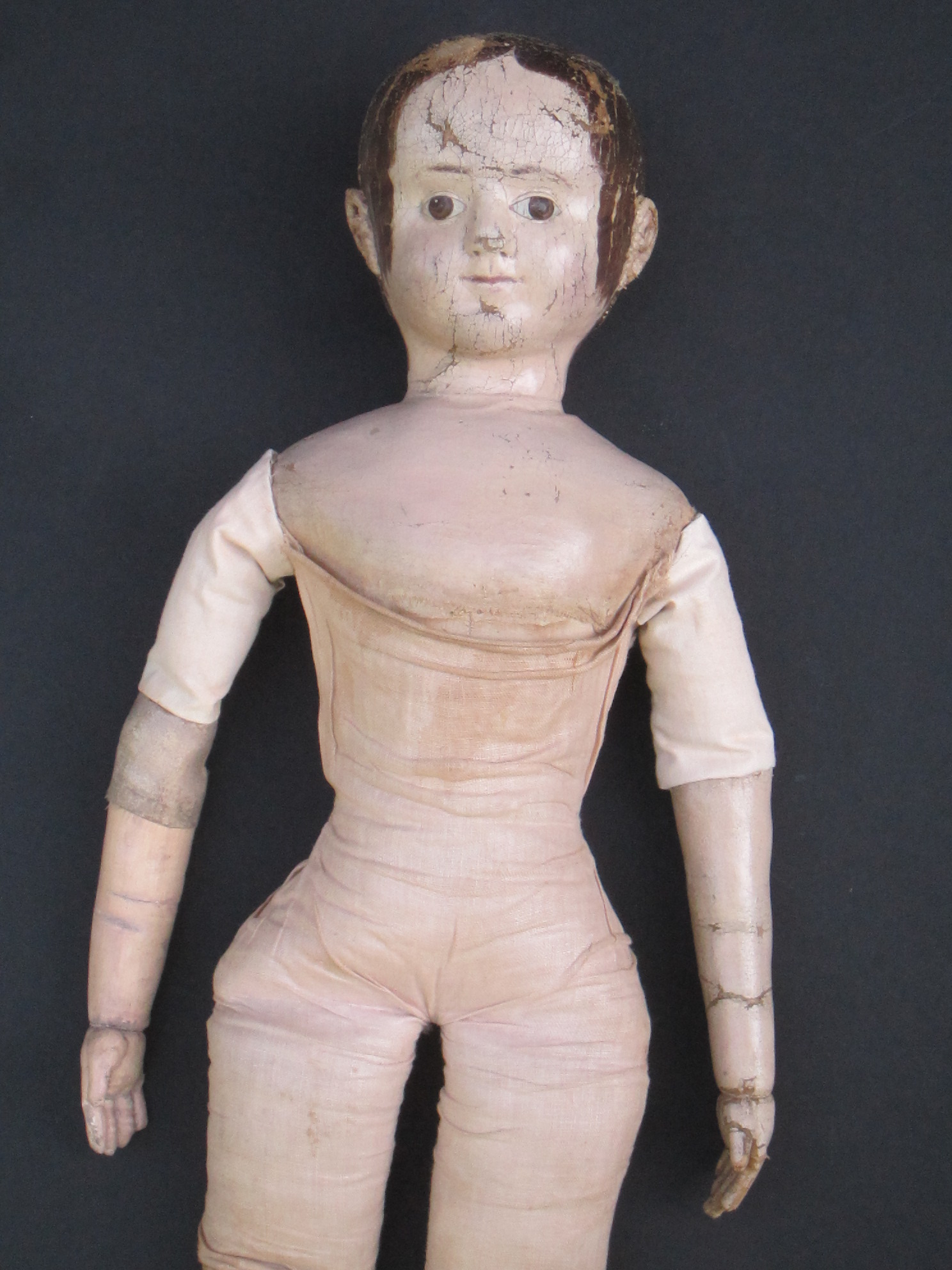
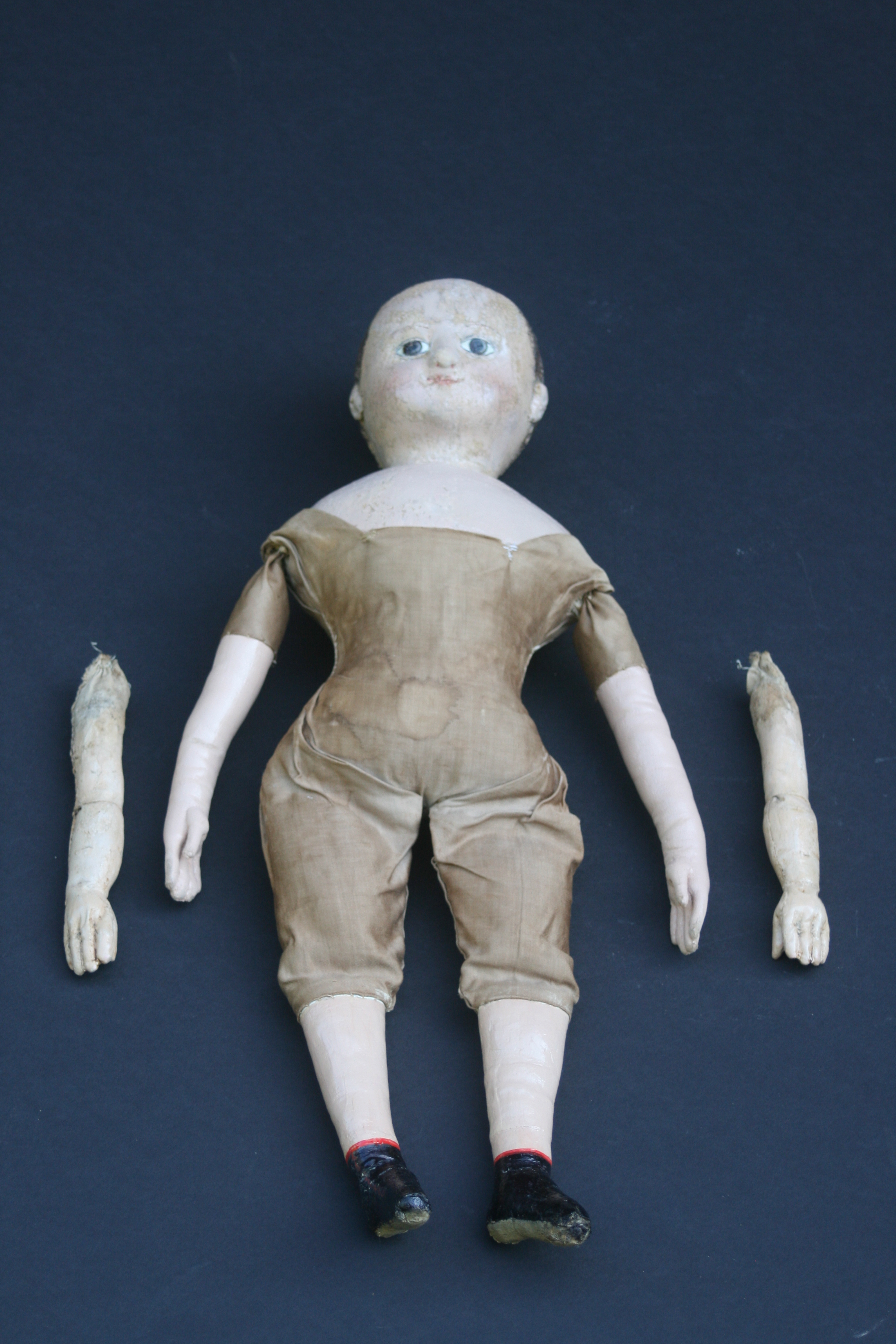
After restoration. The change in color is very subtle. These photos were taken before the doll was seen by her owner. After the owner had a chance to see the replaced arm and replaced antique linen upper arm covering, we decided to “age” the fabric and arm more. The upper arm above the replacement is too fragile to clean, which left the dilemma of what color to paint the replaced lower arm… Should it match the other cleaned arm? Or should it match the uncleanable upper arm fragment it is attached too???
Another look at the color restoration of the face and shoulders. The change in color is very subtle. These photos were taken before the doll was seen by her owner. After the owner had a chance to see the replaced arm and replaced antique linen upper arm covering, we decided to “age” the fabric and arm more.
A third after restoration photo. The change in color is very subtle. These photos were taken before the doll was seen by her owner. After the owner had a chance to see the replaced arm and replaced antique linen upper arm covering, we decided to “age” the fabric and arm more.
After restoration. The doll’s dress is made from very thin fragile wool fabric that has never been washed. It’s original long sleeves were cut off at some point. I did some very minor sewing repairs on the dress and washed all of her under garments with museum conservation cleaning products. These photos were taken before the doll was seen by her owner. After the owner had a chance to see the replaced arm and replaced antique linen upper arm covering, we decided to “age” the fabric and arm more.
A 2nd after restoration photo. These photos were taken before the doll was seen by her owner. After the owner had a chance to see the replaced arm and replaced antique linen upper arm covering, we decided to “age” the fabric and arm more.
HEAVILY REPAINTED 18 INCH IZANNAH WALKER DOLL
A sweet 18 inch Izannah with multiple layers of repaint.
My mission was to remove multiple layers of paint to get back down to the original paint on this doll and to remake her very battered replacement arms.
Prior to restoration.
These were not the original arms on this doll.
Before any over painting was removed.
After restoration. The old replacement arms are being preserved as part of the doll’s history.
After restoration.
These photos were taken before the restored doll was shown to her owner. After she got a chance to see the doll, we decided to add additional aging to the new arms. I always like to consult with owners through out the restoration process to make sure that the cosmetic part of the restoration looks the way they want it to.
This is what she looks like after I removed four layers of repaint and did a very small amount of judicious in-painting. As you can see, much of her original paint had been worn away, so it is very easy to understand why she received a new coat of paint.
After most of the restoration was finished, but before additional aging was added to her newly remade arms. All of her clothing is freshly washed and aired. ❤
ISANE
This doll belongs to me. You may remember seeing previous photos of her here on my blog.
This is a photo of Isane last year, shortly after I purchased her. She had been repainted not long before coming to live with me.
Isane, after I removed all of her recent repaint.
Isane during restoration.
Isane after restoration. Because she had suffered significant paint loss and had filler added before the last time she was repainted, I did have to do some in-painting.
Isane after restoration.
Isane post restoration.
Isane as she looks now after restoration.
Much better!!! (following restoration)
Isane and I are both happy with the way she looks now after I did 60+ hours of restoration work ❤
A WONDERFUL ANTIQUE PAINTED CLOTH DOLL
Before I did any restoration work.
The neck of the doll suffered a lot of wear and tear over the years. Portions of the painted cloth are missing.
The back before restoration work.
The main thing I needed to do to this doll was to keep her very fragile neck from coming completely apart and make sure her head stays attached to her body.
This is how the doll looks after I did a bit of repair to her neck and ankles.
Her ankles are still fragile, but all of their stuffing is in place and they are more firmly attached.
This is the doll after minor repair to her neck.
Thankfully, after a little restoration work, the back of the neck looks much better.
The addition of a black velvet ribbon provides support and helps keep added stress off of the delicate neck.
After restoration she is ready for her next 150 years!
Aging gracefully ❤
After restoration.
It was a wonderful treat to have this doll come visit for a few weeks while I worked on her 🙂
Read my latest article in the Summer 2013 issue of Prims magazine and look for my ads in Prims and Art Doll Quarterly.
I’m very pleased to announce that the Summer 2013 issue of Prims, which features an article about three of my bears, will be on sale tomorrow. If you would like to see more of my bears please visit my website, Paula Walton’s A Sweet Remembrance, or go to my blog, Paula Walton’s 18th Century Home Journal, for photos and tips on restoring antique and vintage teddy bears.
April is starting out to be a terrific month. Friday was my son Blair’s birthday. The whole family got together to celebrate for the entire weekend.
Friday also brought some very welcome news, when I learned that I have been chosen for Early American Life’s 2011 Directory of Traditional American Crafts. This makes my 23rd time to be juried into the directory. Thank You EAL! Please look for the Directory issue of the magazine which will be on newsstands on June 21st.
In between all of the partying, I managed to squeeze in a little shopping time. On Saturday I went to a couple of thrift shops with one of my sons and his girlfriend. We found quite a few small treasures. Sunday brought the opening day of the Elephant’s Trunk flea market. I was able to replenish my supply of antique white cotton fabrics and I found a wonderful antique paisley shawl. Now all I have to do is decide if I can possibly restore the shawl, or if it is so far gone that it is fair game for doll clothing! Always a dilemma 🙂
During the holidays I had a chance to go rummage around some vintage clothing stores with my youngest son and his girlfriend. We unearthed several treasures, including this antique doll dress made of a ombre printed pink cotton. The dress is not quite right for any of my Izannahs, but it will be perfect on one of my antique German bisque dolls.
The first thing I did once I got the dress home was to wash it using Orvis and sodium perborate. If you would like to read more about how to do this, check out my previous post on the subject.
This is what the dress looked like when I bought it.A good washing made a huge difference to it's appearance and will help prolong the life of the fabric.A close-up look at the dress fabric.
Today I am starting the first step in drafting patterns for my Izannah doll making class. Just like in any other type of pattern making, I have to first take accurate measurements before I can actually draw out the pattern. This means I need to start by undressing the doll.
Since I plan to measure both dolls and compare, then average their measurements, I’ll have to do everything twice. Being just like a child, and wanting to play with my new toy first, I’m starting with Izannah II. I really haven’t had the opportunity to actually sit down and spend a lot of time with her since she arrived here. Don’t think she’s been neglected; I’ve stared lovingly at her every time I pass by where she sits, so she doesn’t feel slighted.
Izannah II has only two garments, a chemise and a dress.After carefully removing both pieces of clothing from the doll, I decided to wash them prior to measuring.
These are the steps I use to launder antique textiles:
First, and most importantly, I carefully look over the item I want to wash to make sure that I think it is sturdy enough to survive cleaning.I make sure that it isn’t colored with dyes that will run and bleed when wet and that the fabric itself retains its integrity and is not disintegrating.As a general rule, don’t wash antique silks and examine wools to make sure they have been washed previously before you wash them.Cottons and linens usually wash well.
I wash all antique fabrics with distilled water and Orvus, which is a museum-quality washing paste. If I am washing white or light-colored cottons or linens that are stained or discolored, I bleach them using sodium perborate.Sodium perborate is heat-activated, so it’s necessary to heat the distilled water before using. Never use sodium perborate on wool or silk!.
If the item I’m washing is not too large, i.e. a piece of doll clothing, I usually wash it in an enamelware bowl. A plastic, glass, or other non-reactive bowl would also be fine to use. I place a small spoonful of Orvus in the bottom of the bowl, and then add several spoonfuls of sodium perborate, if I’m using bleach. Next I pour in the heated distilled water. The warmth of the water will dissolve the Orvus and make the sodium perborate start to work. If I want my wash water temperature to be a bit cooler, I add room temperature distilled water to the bowl, then stir and add the item I’m washing.
Soak laundry in the bowl for about an hour, then rinse with distilled water at least three times or until the rinse water remains clear. Occasionally whatever I am washing will be so dirty that I will need to repeat these steps and wash it a second time.
After rinsing, gently lift the antique textile and place it on a clean white towel to dry flat. Use only previously laundered towels, not new ones. Make sure that you lay the textile out to dry in an area out of direct sunlight and away from heat sources.
Because heat is an enemy of antique fabrics, try to keep ironing to a minimum. By carefully smoothing garments as I lay them out to dry, I can usually avoid ironing altogether.
Work day one is at an end, but I’ve gotten side tracked, and all I’ve managed to get done is the laundry! That has a very familiar ring to it. At least this laundry is a lot more fun than the run of the mill dirty t-shirts and jeans.
I generally buy my Orvus and sodium perborate from Mini-Magic. A friend of mine recently found sodium perborate for sale on eBay at a good price, so you might want to check there too. She also located some at The Chemistry Store.









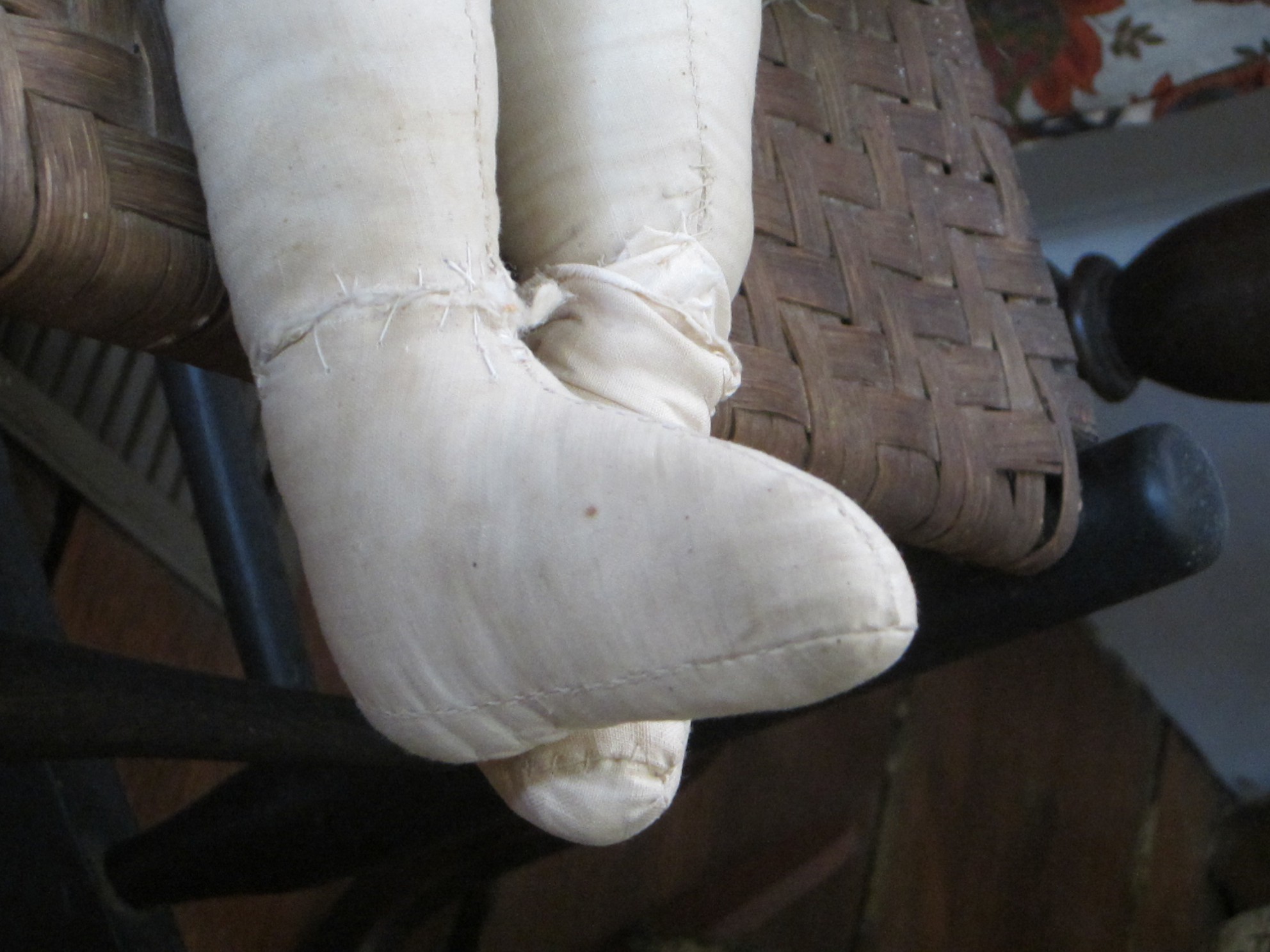
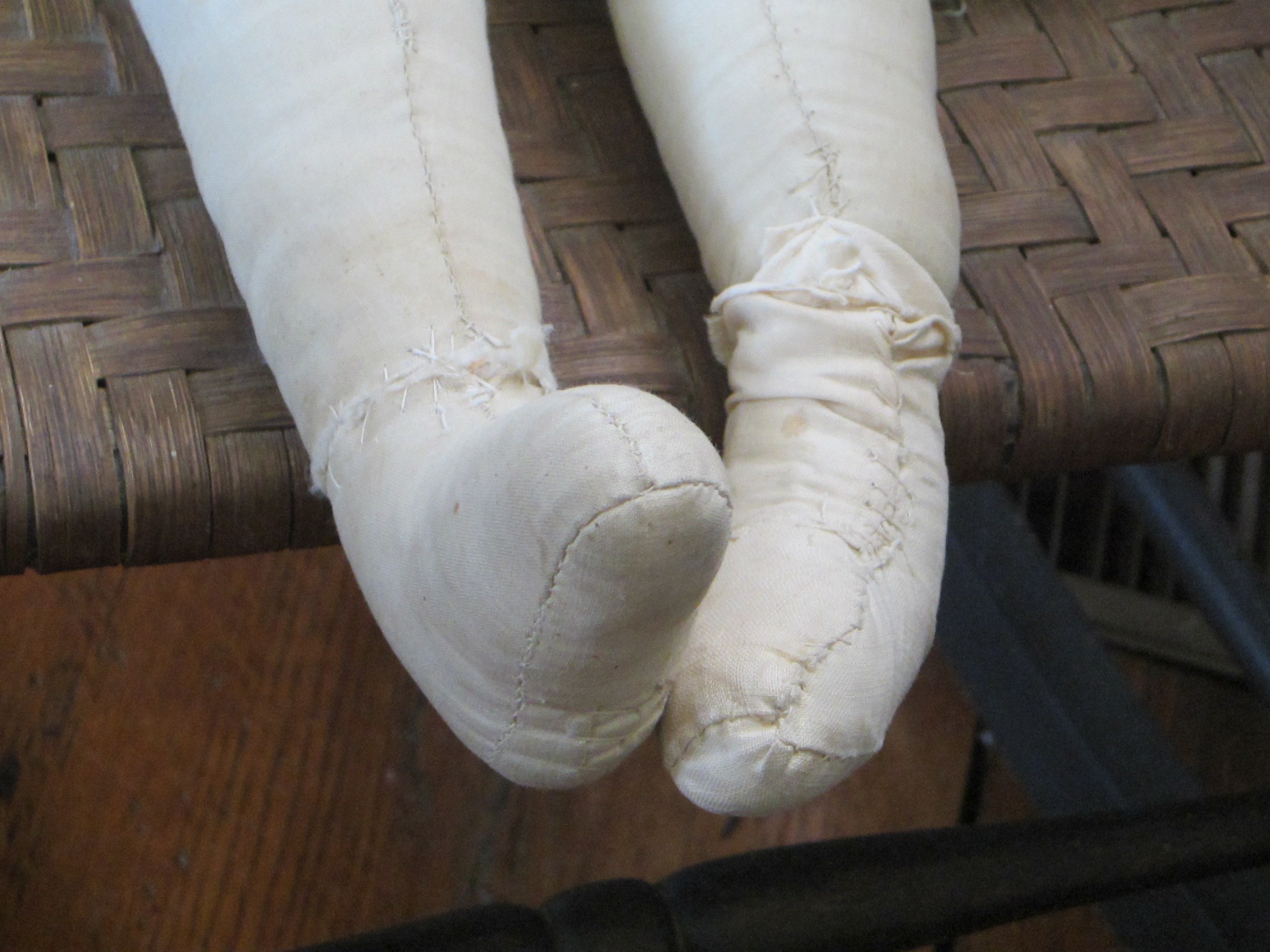
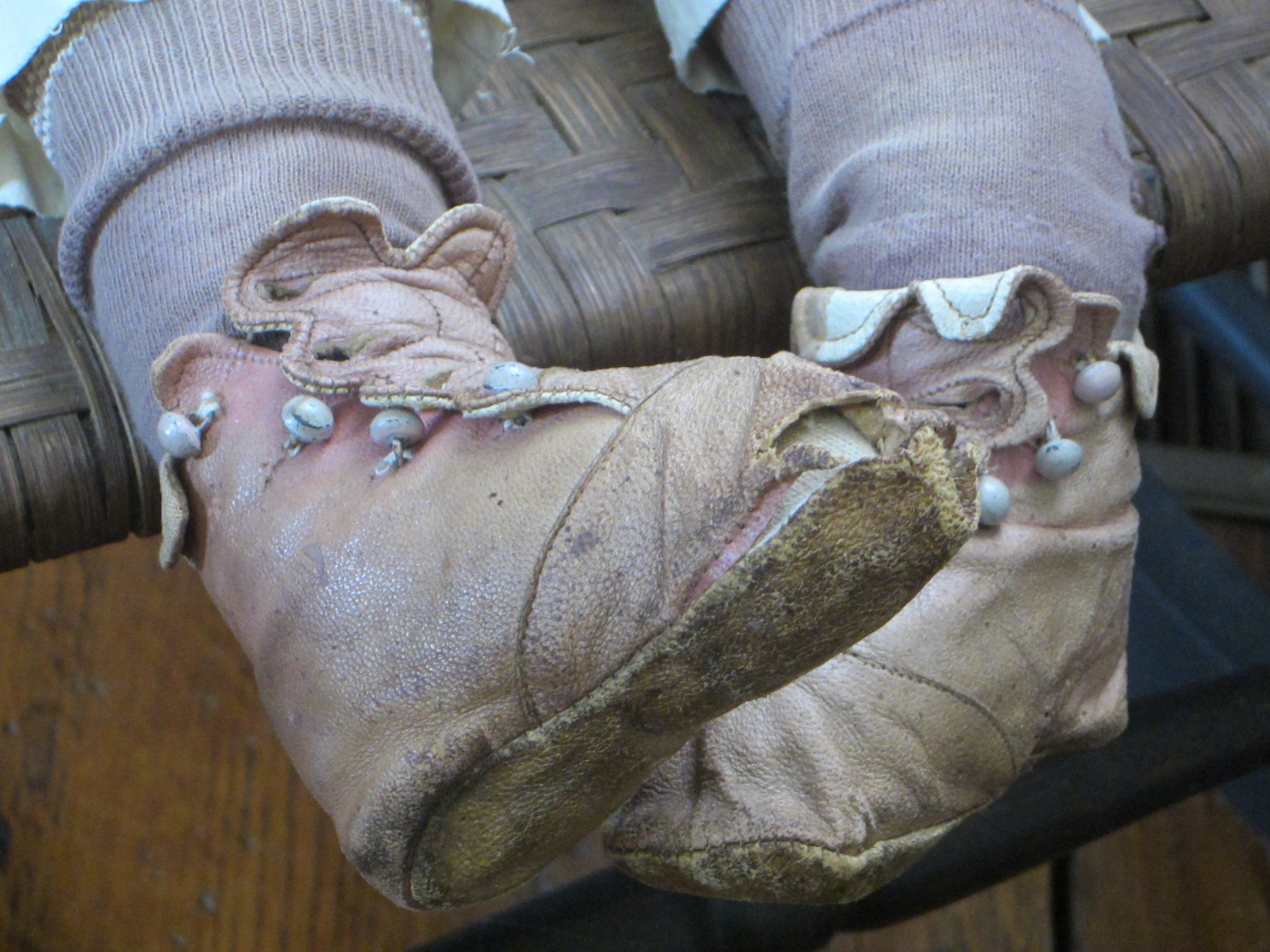
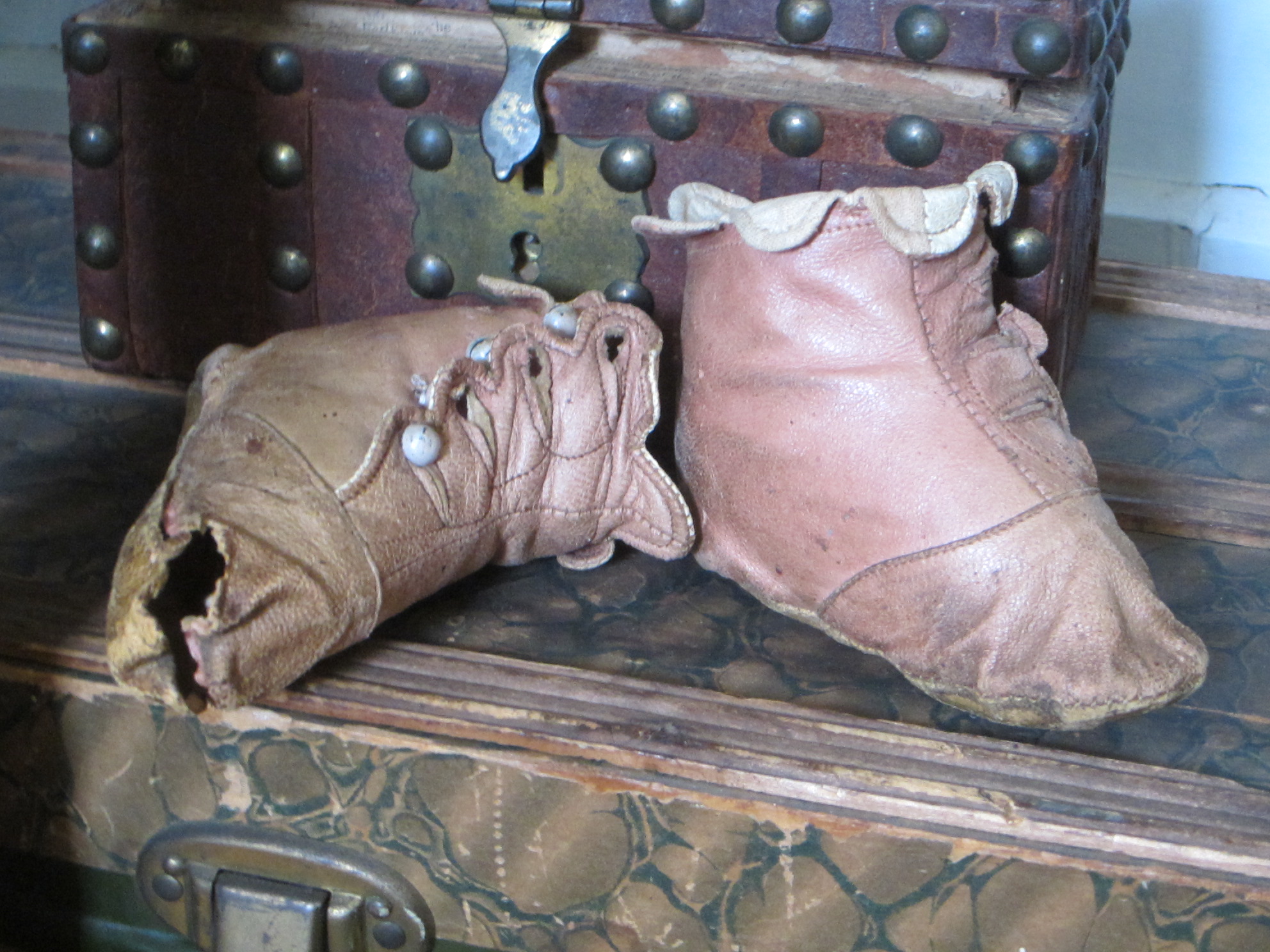
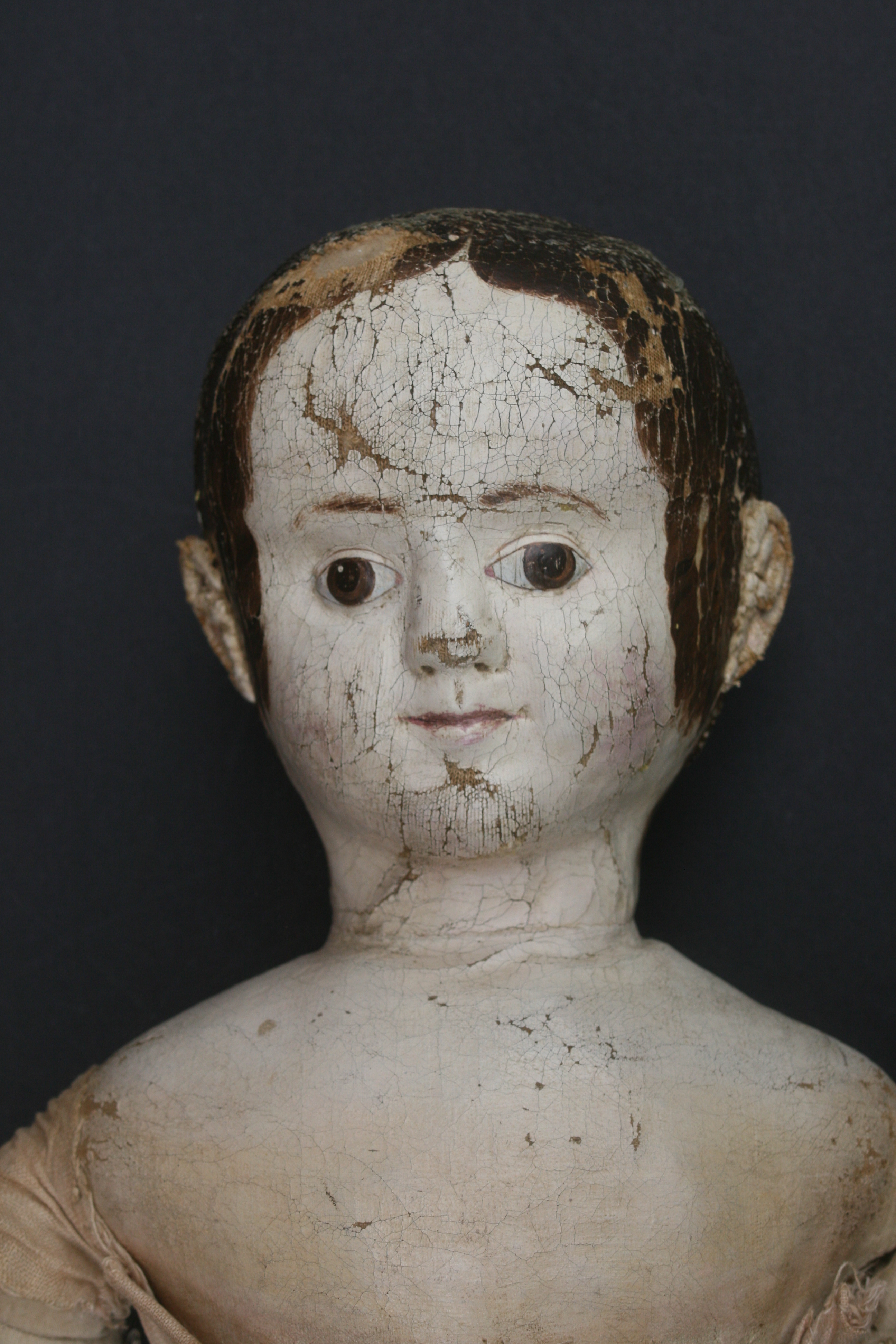
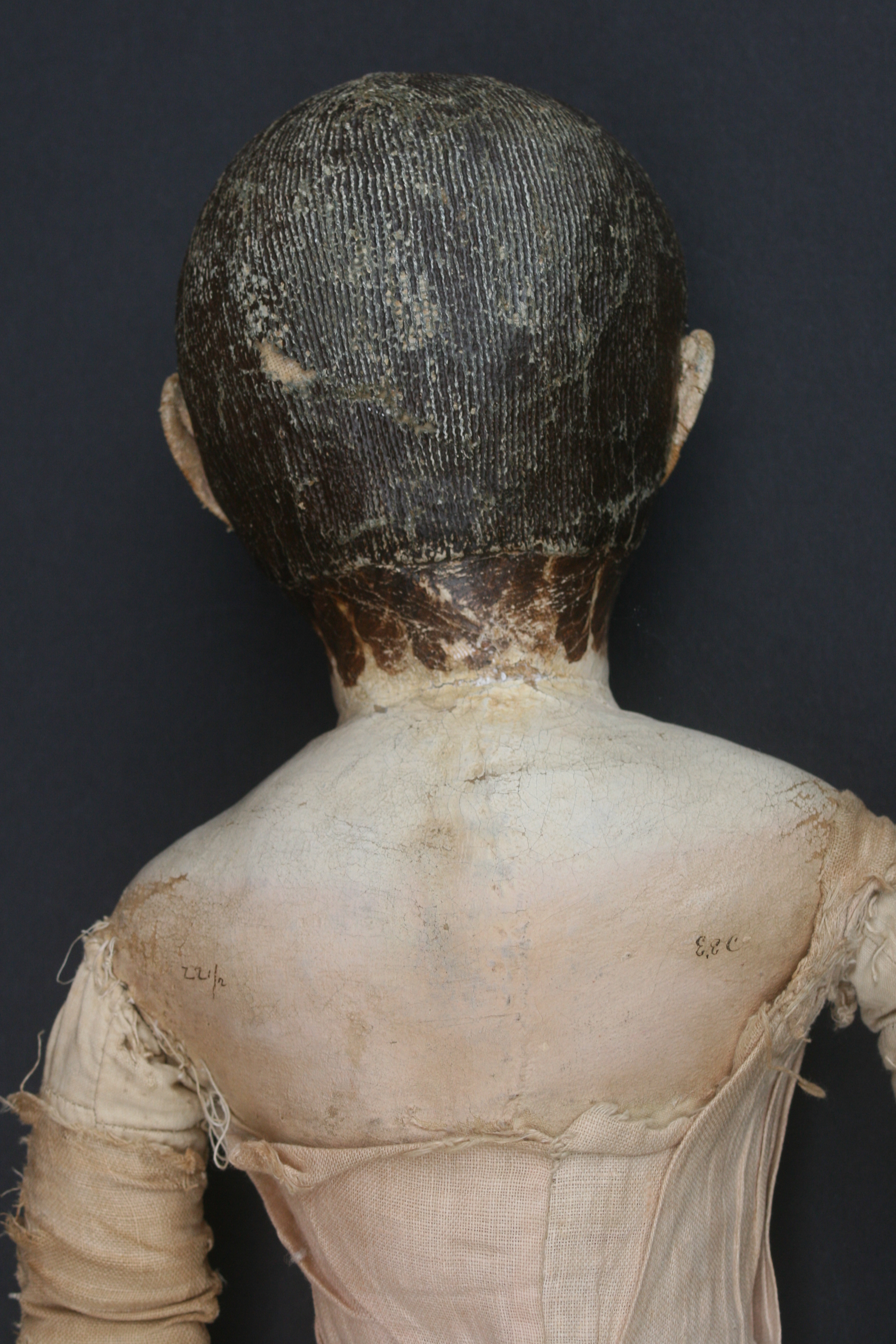
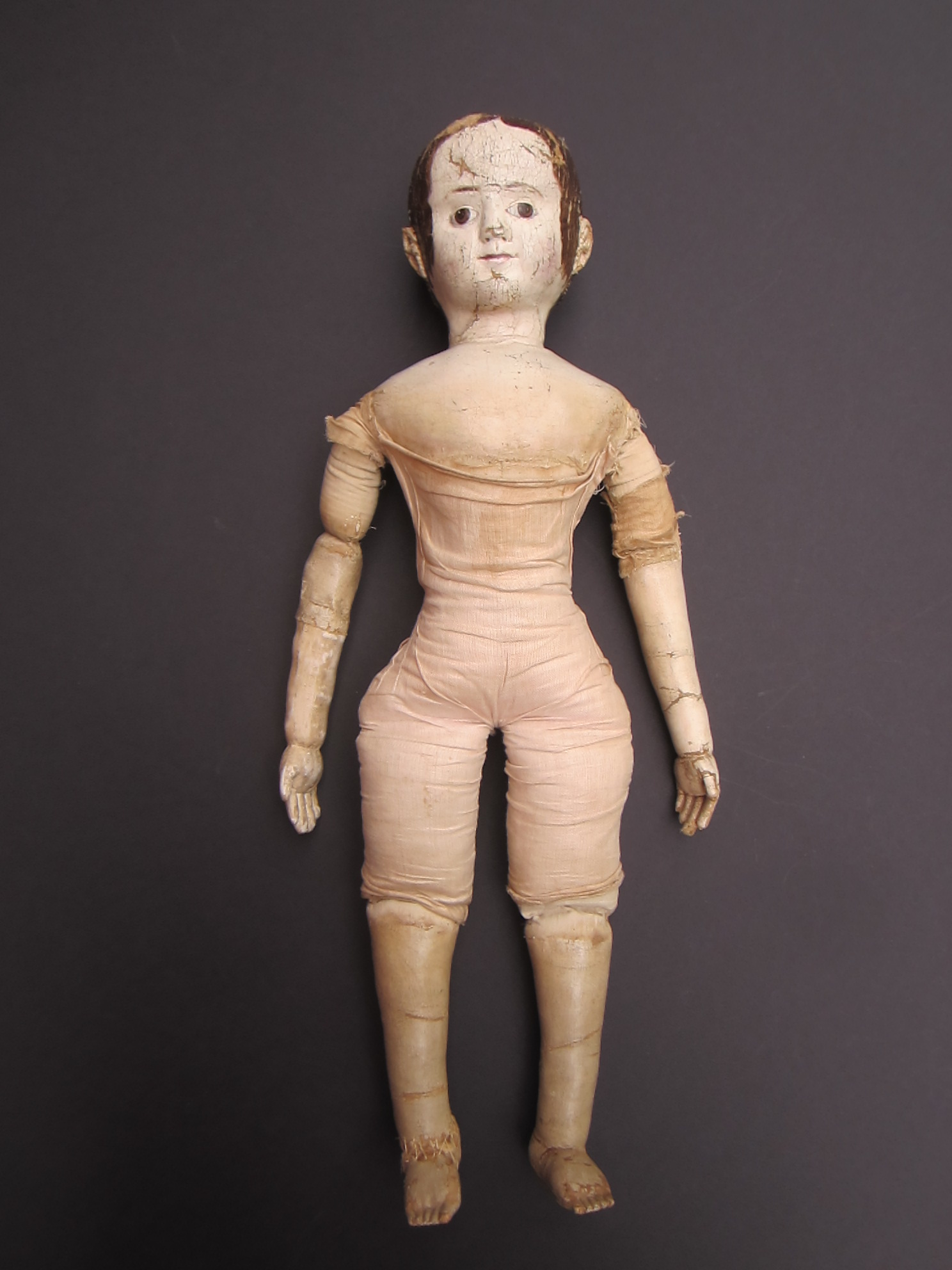
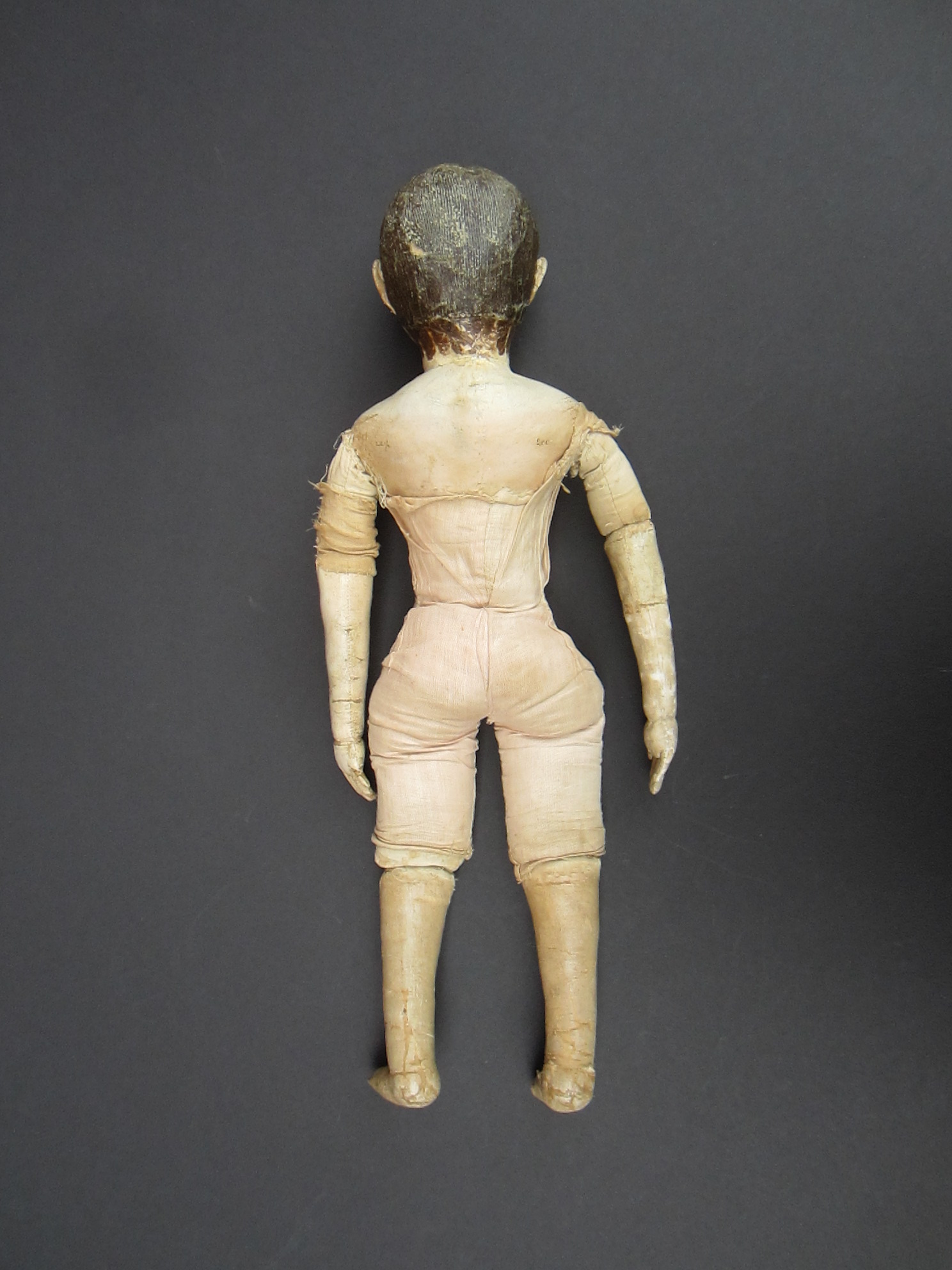
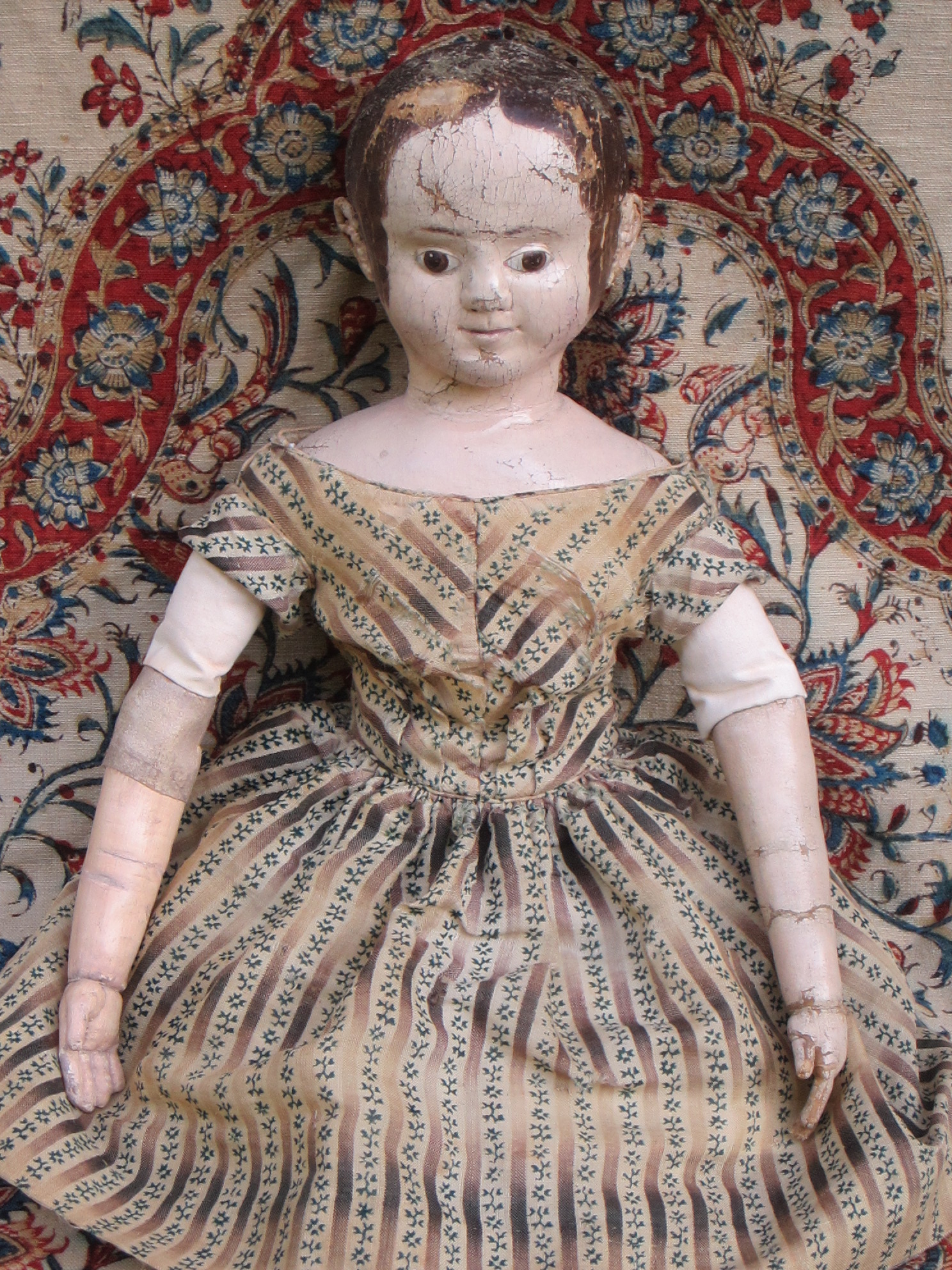

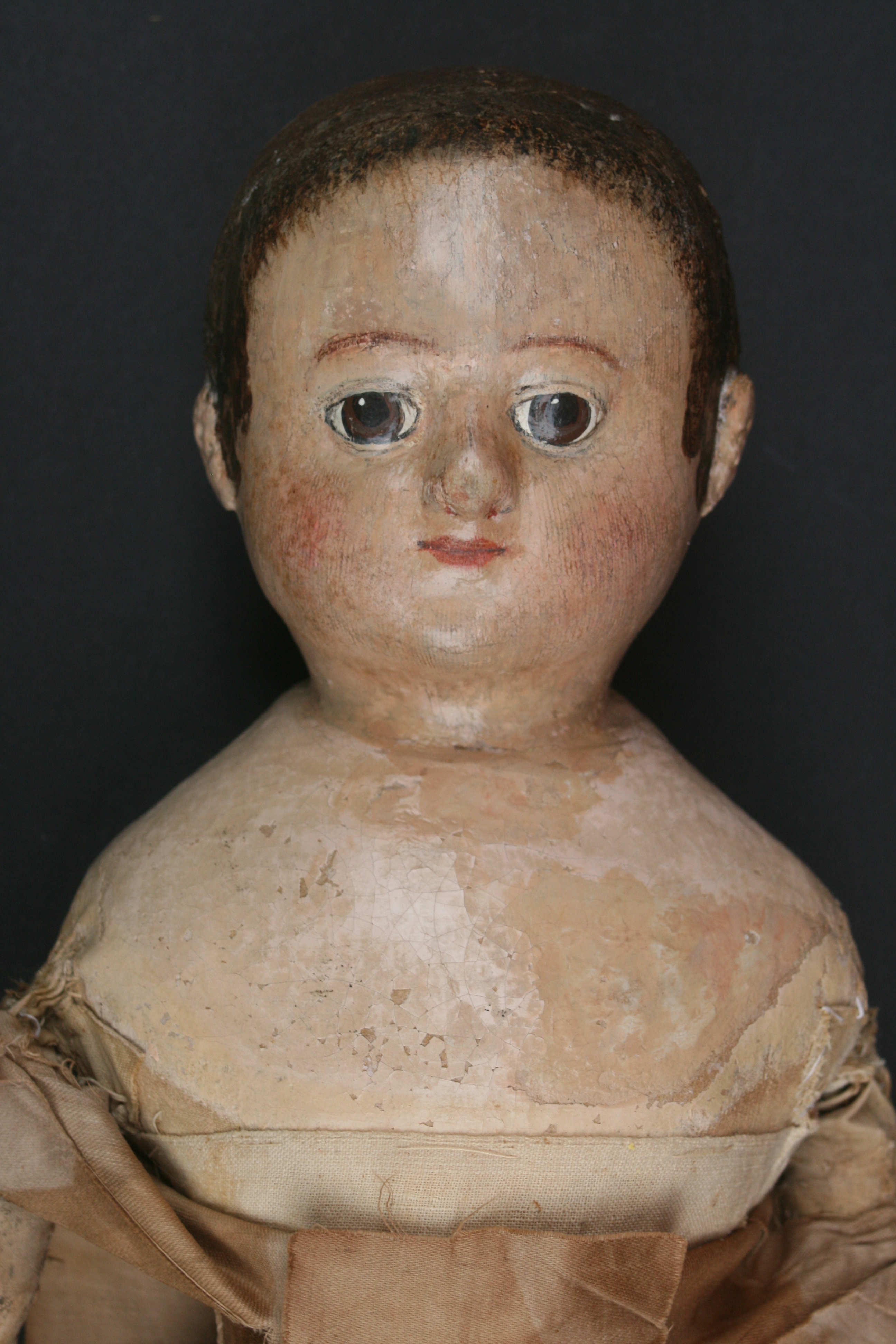
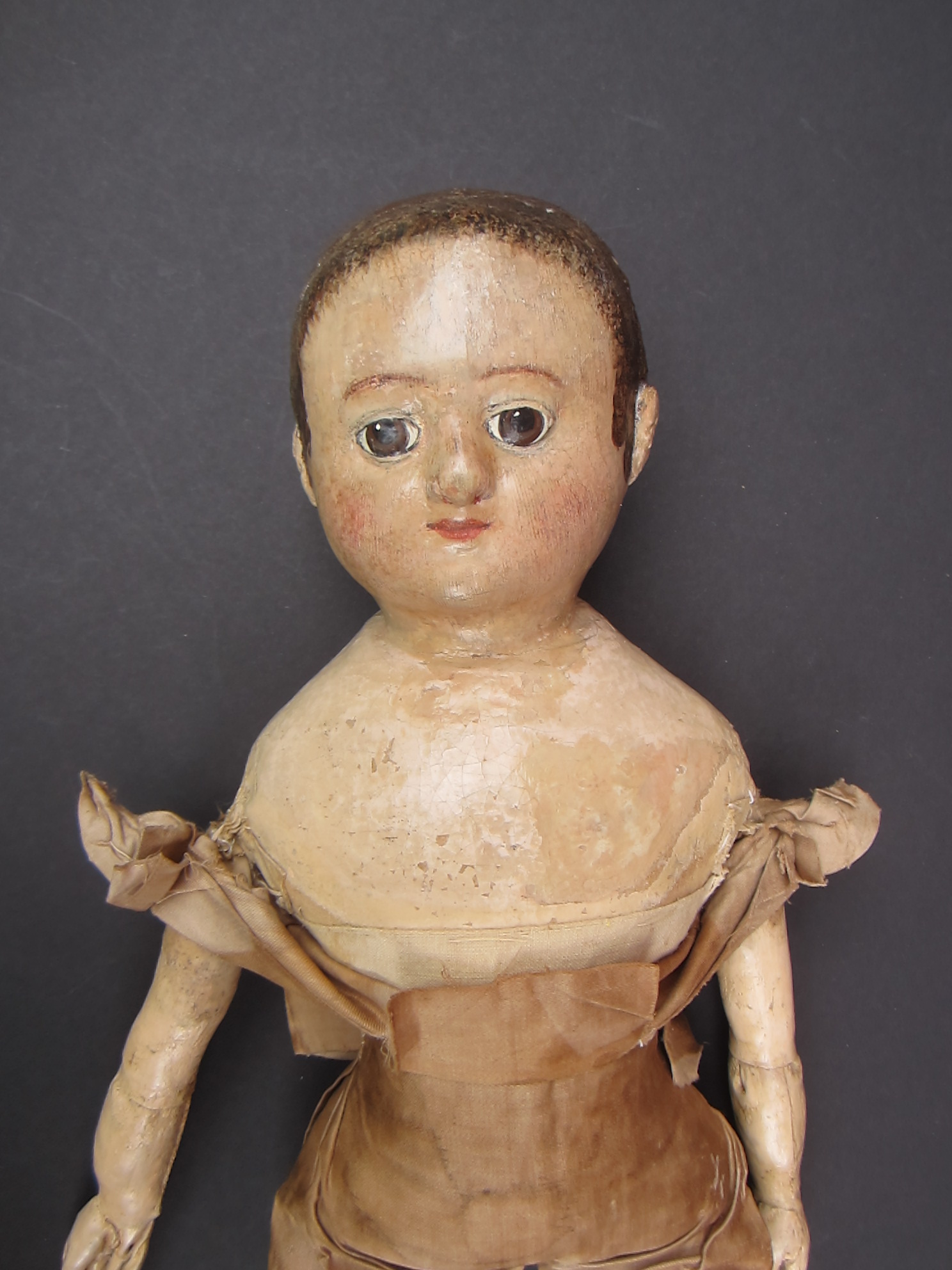
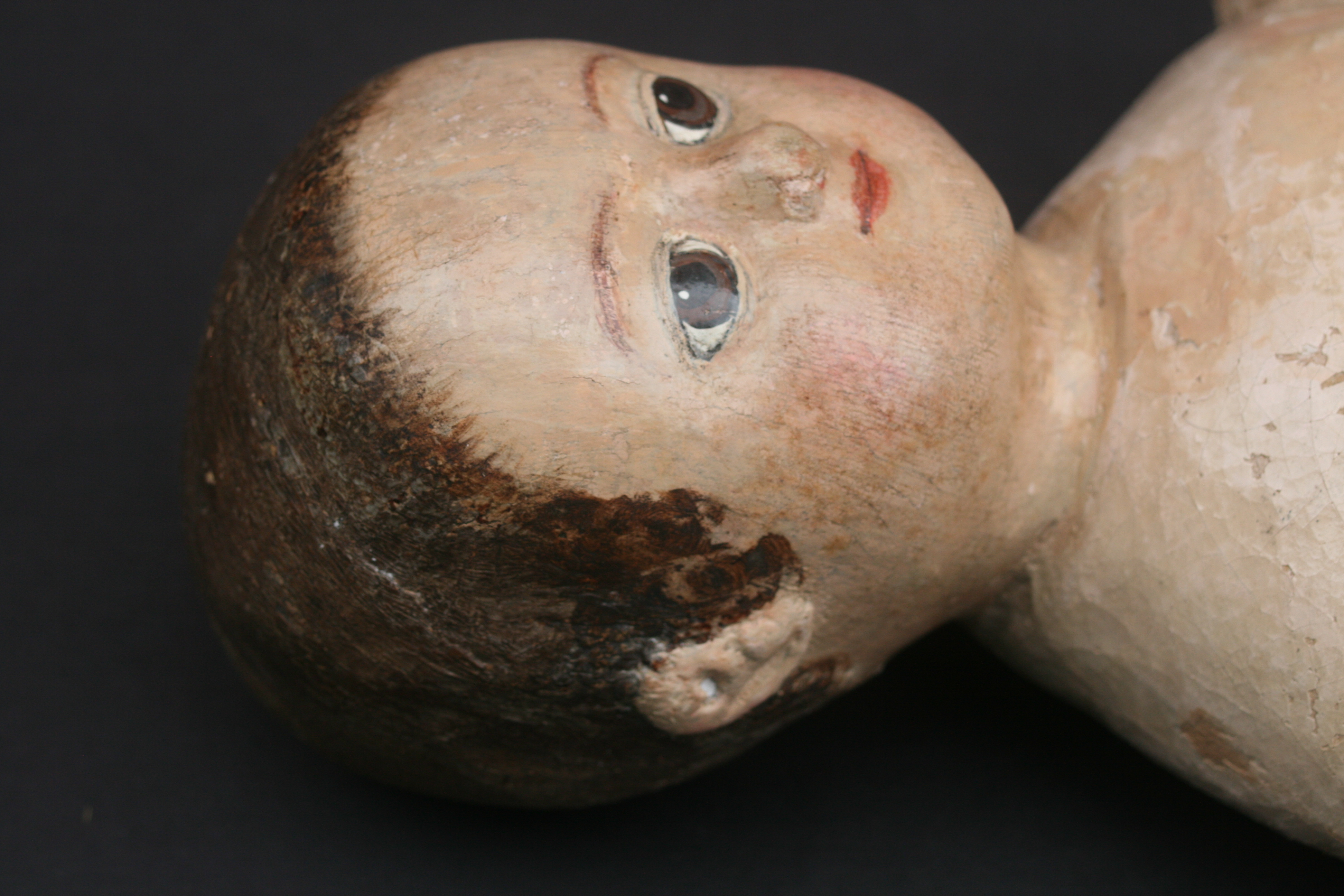
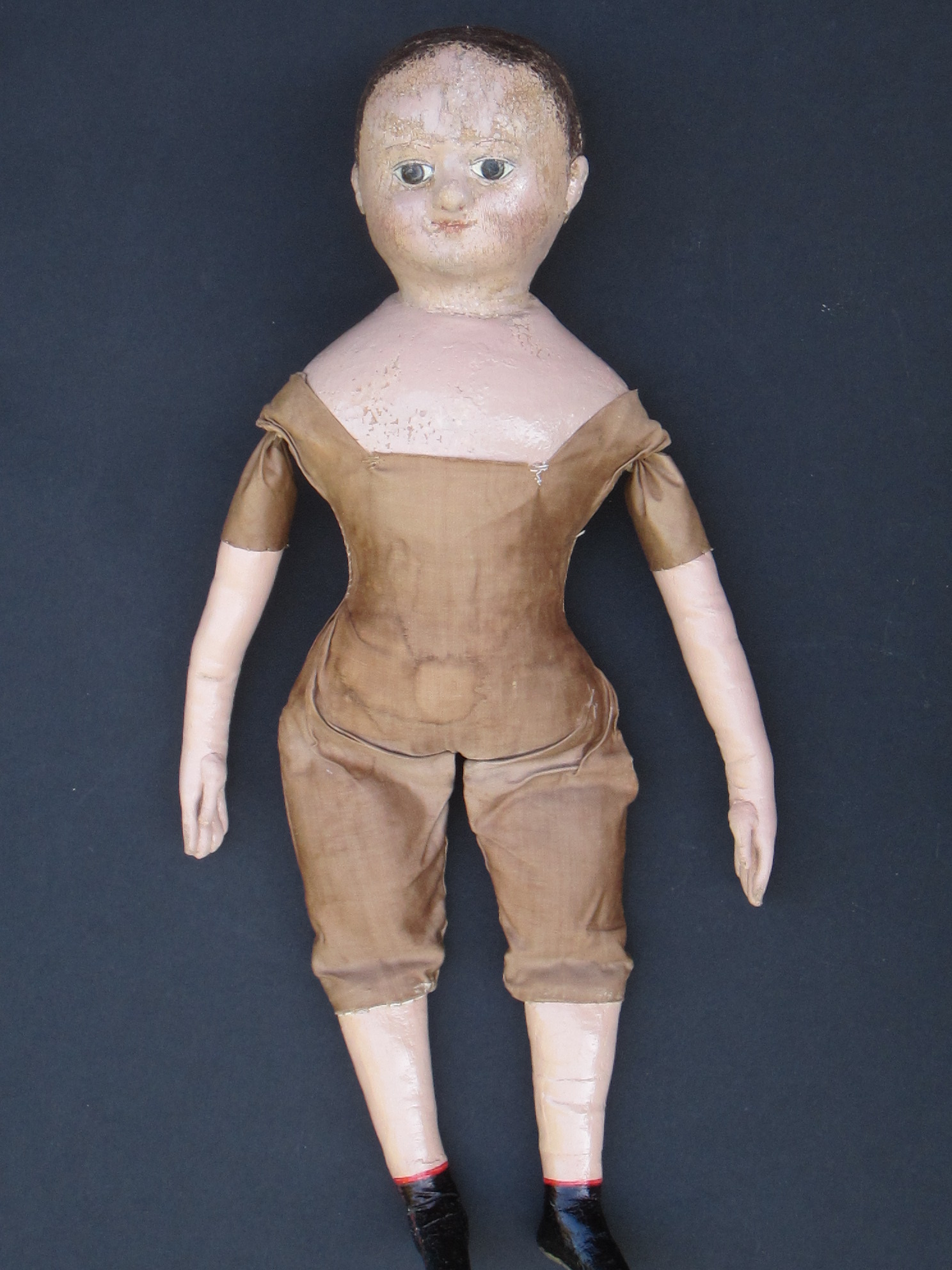
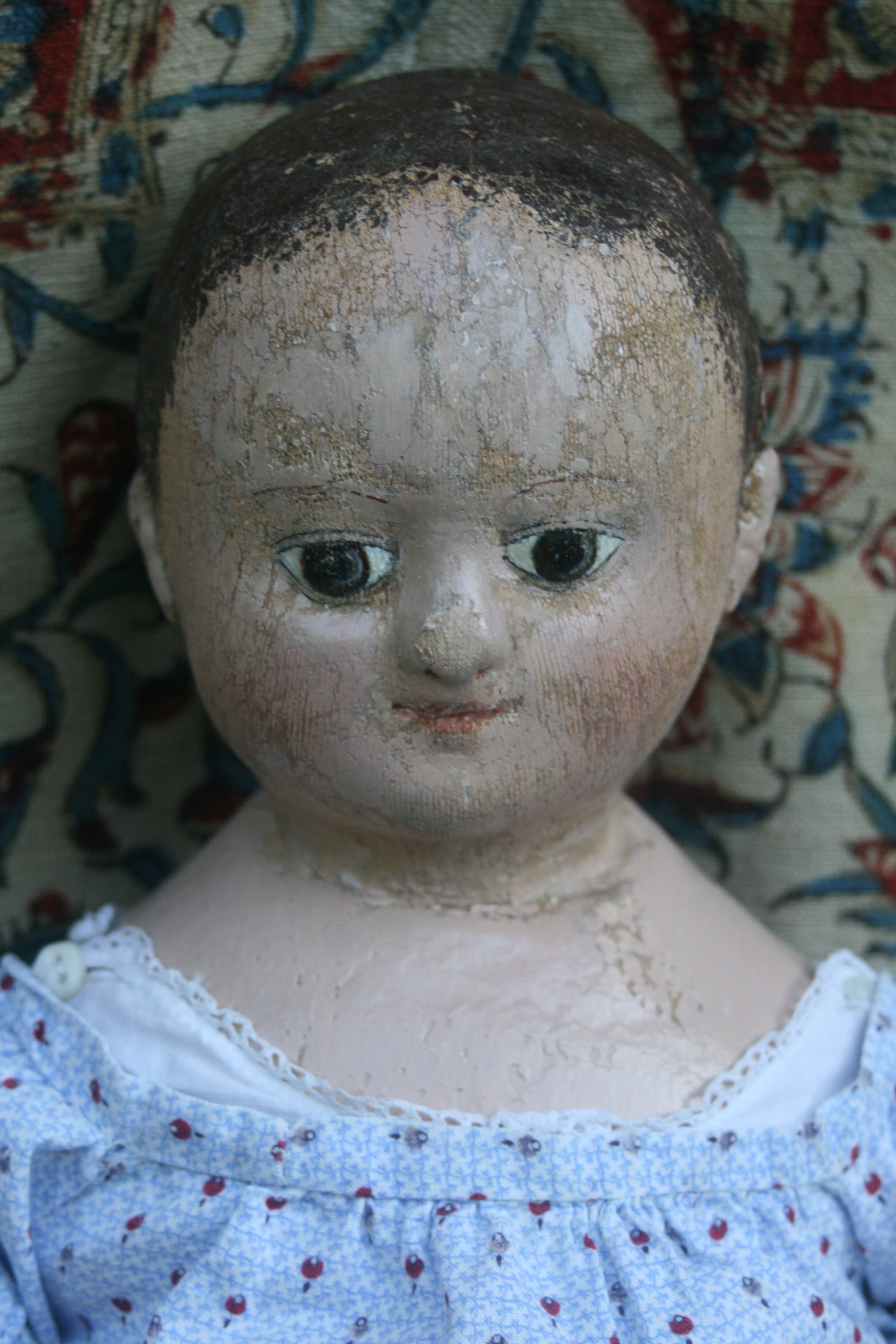
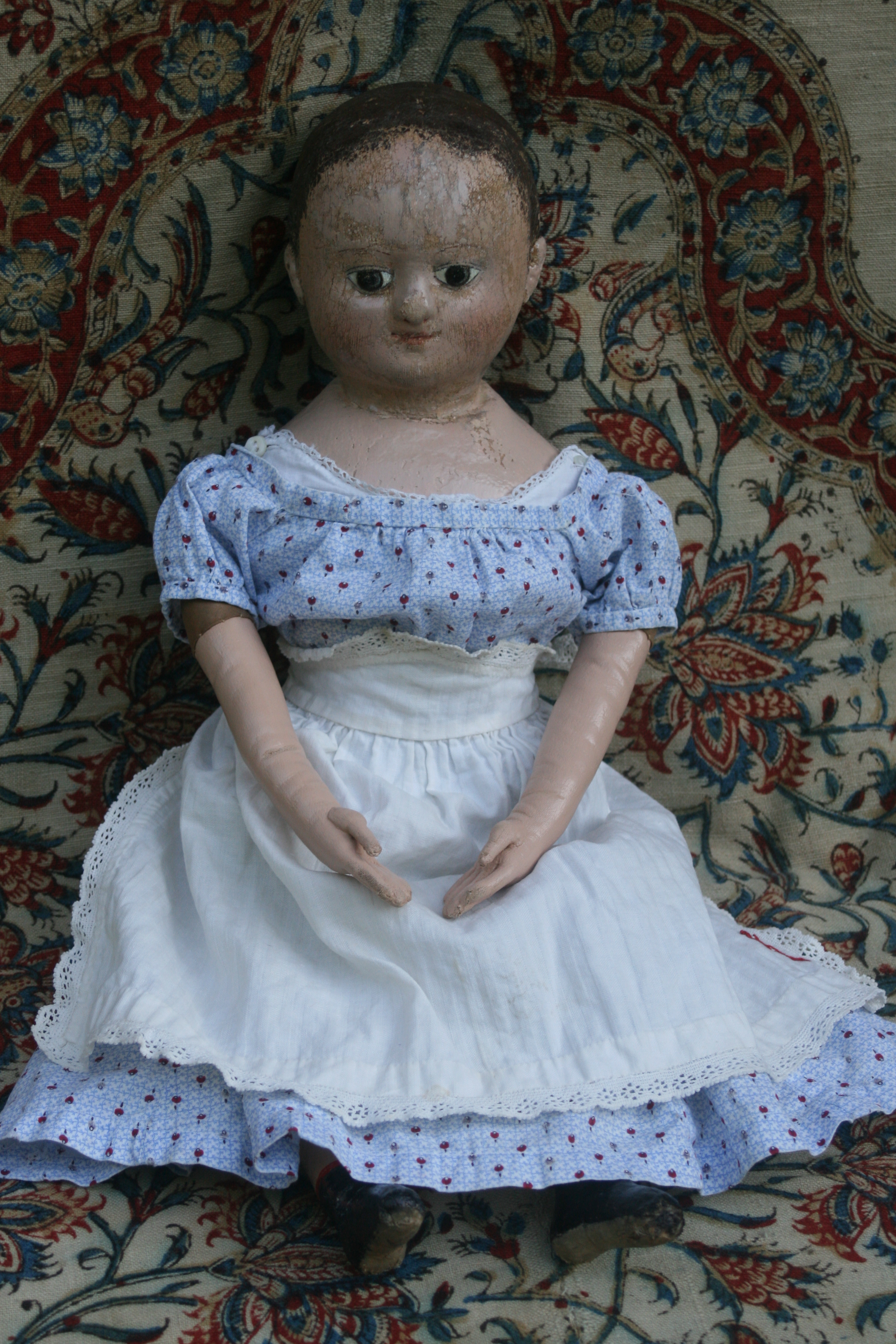
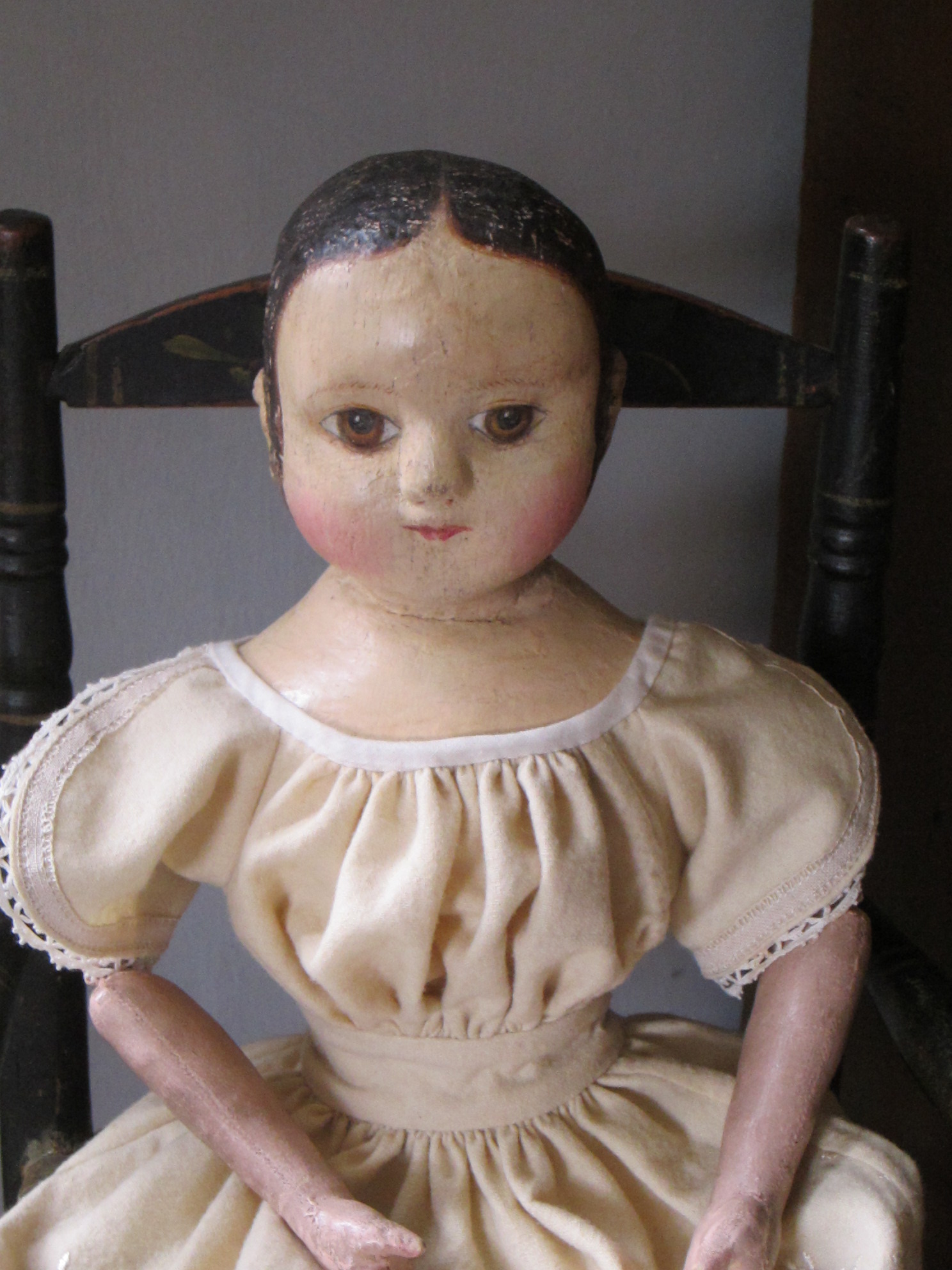
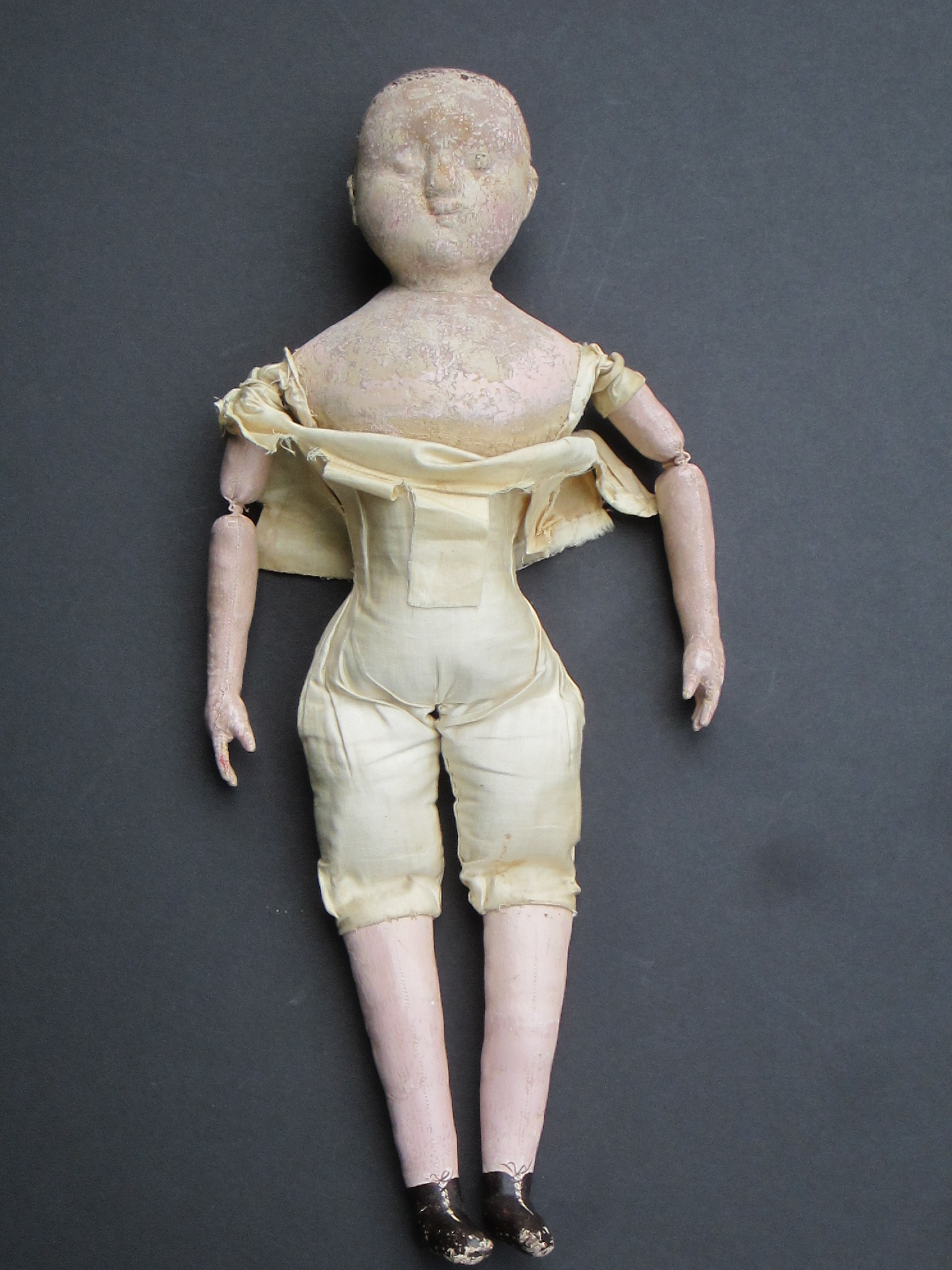
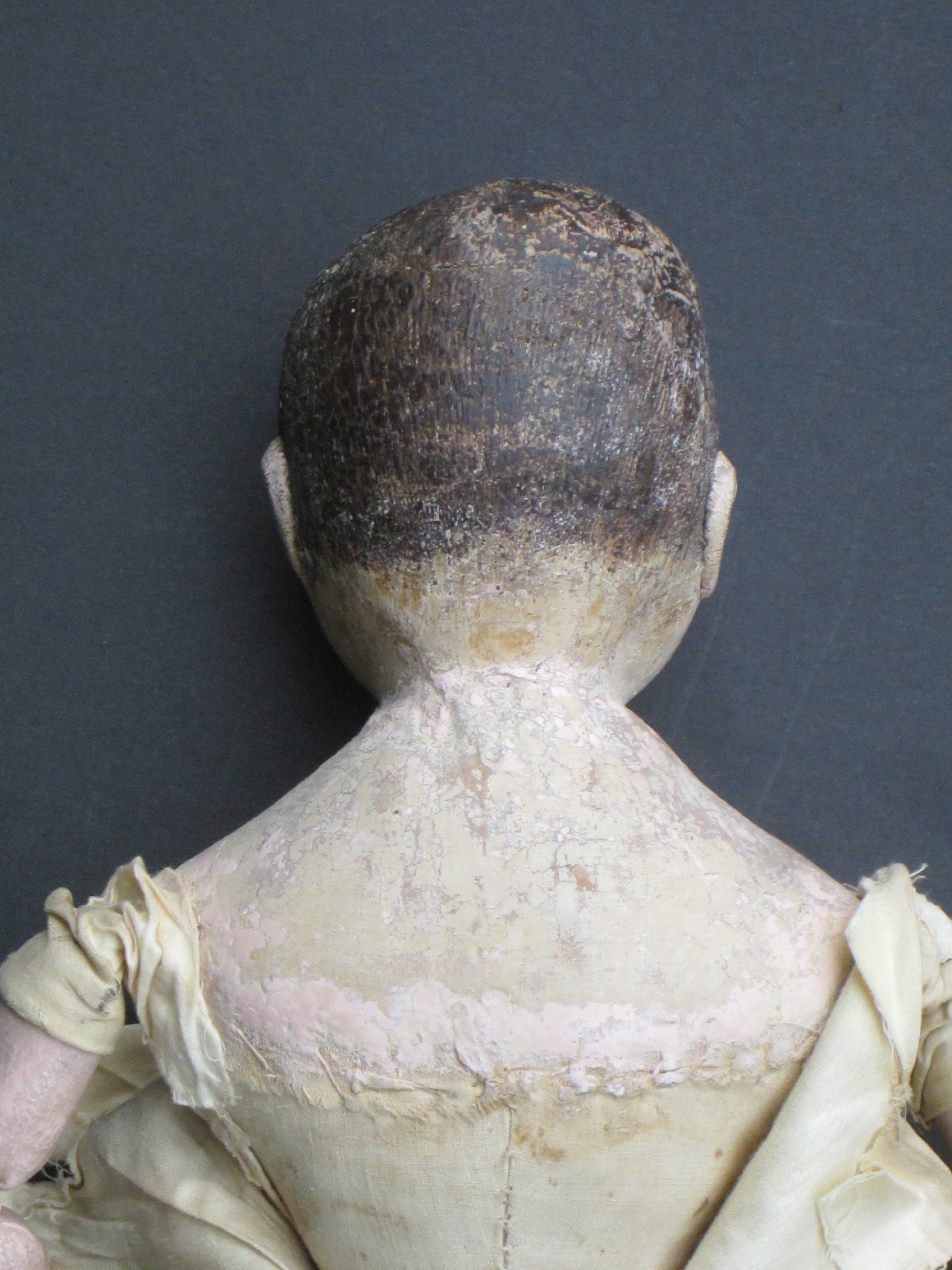
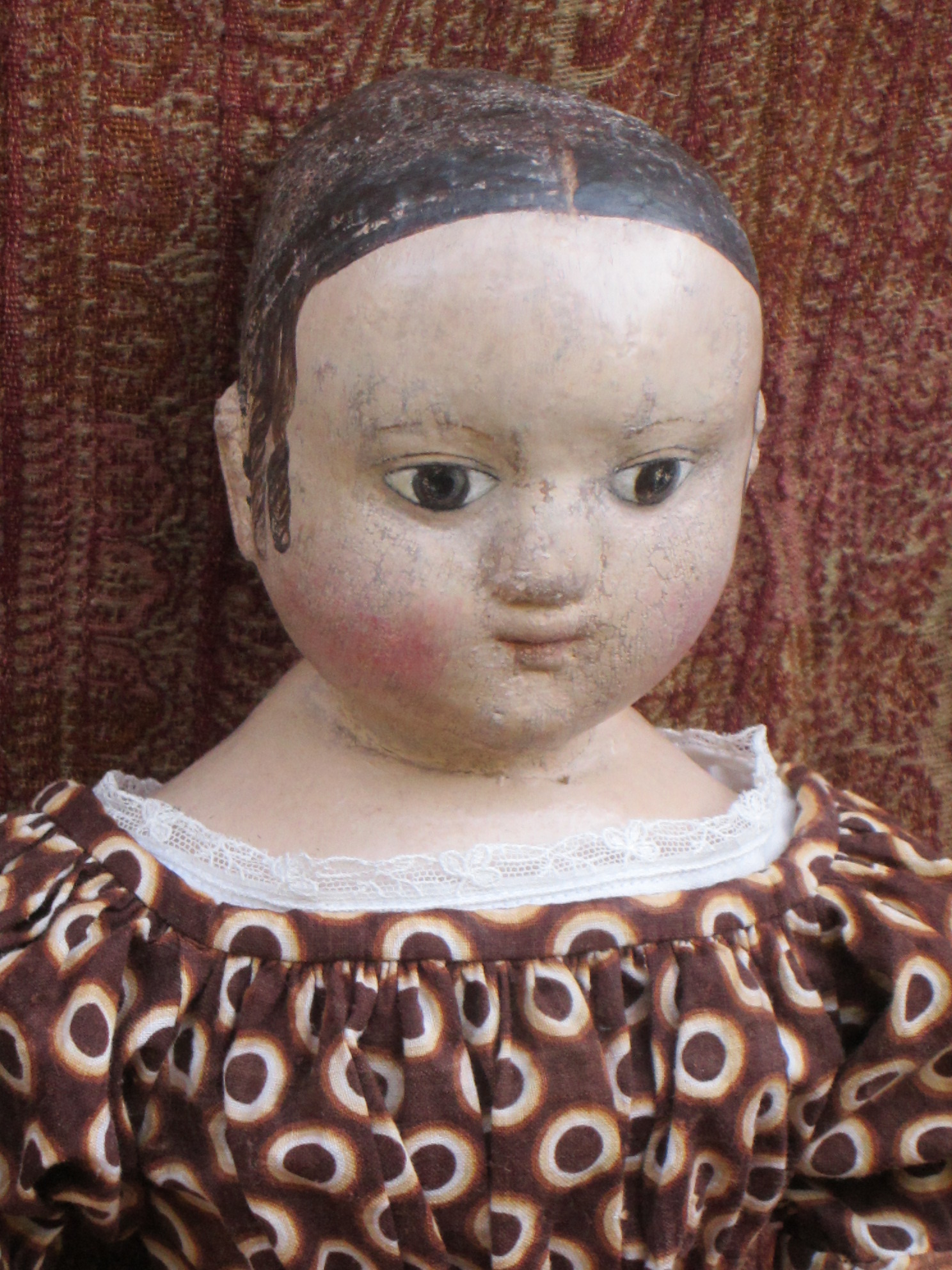
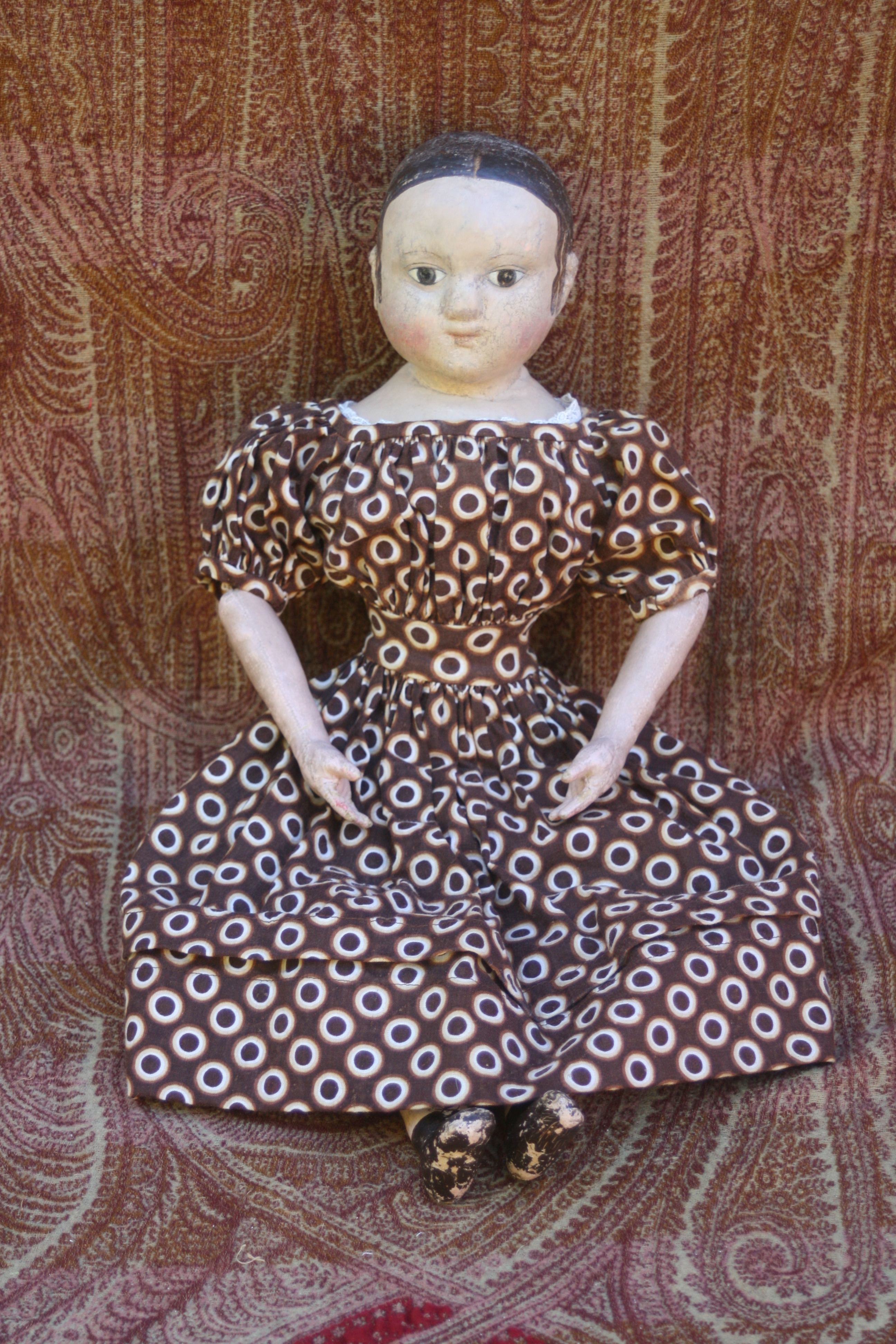
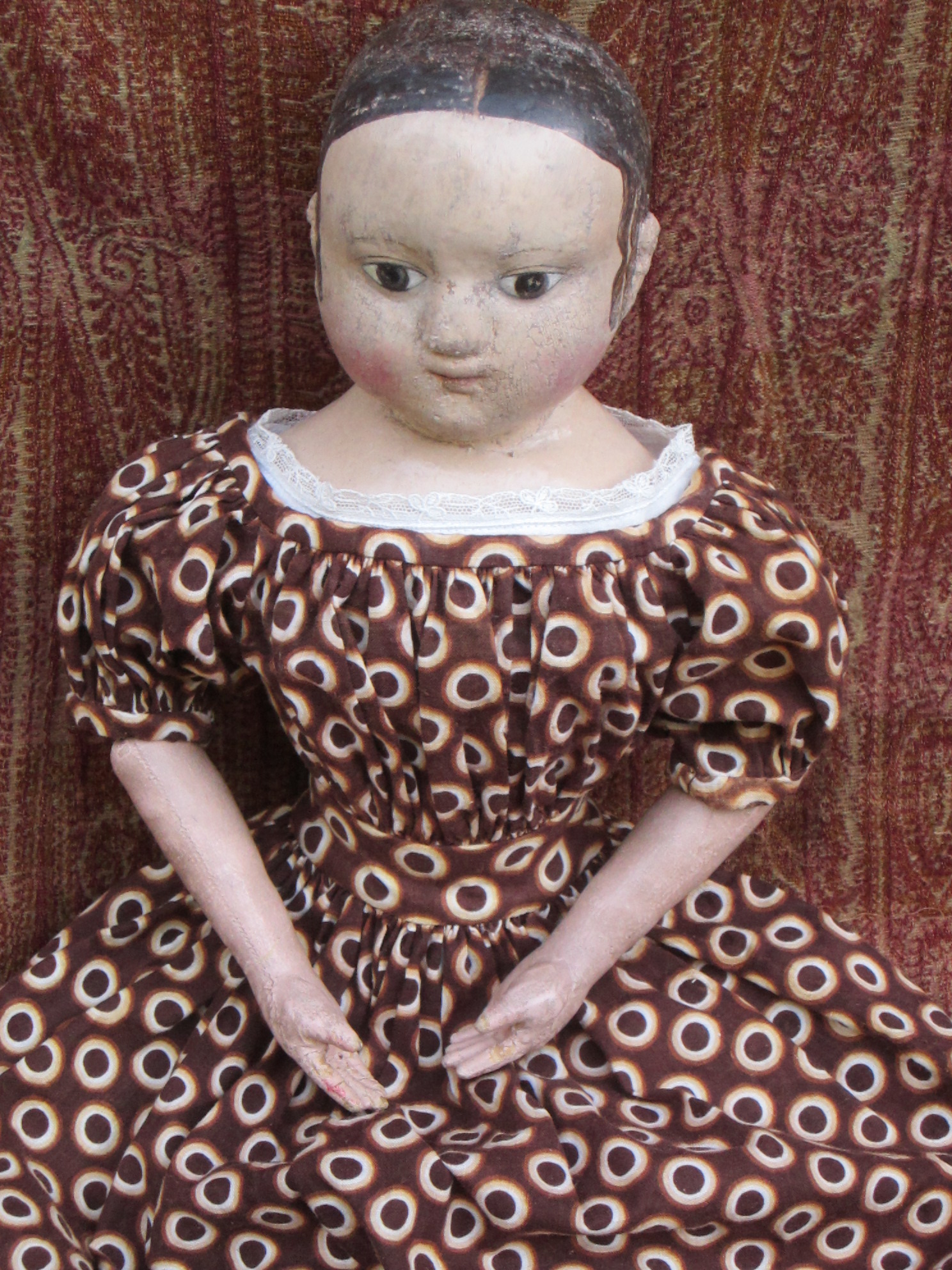
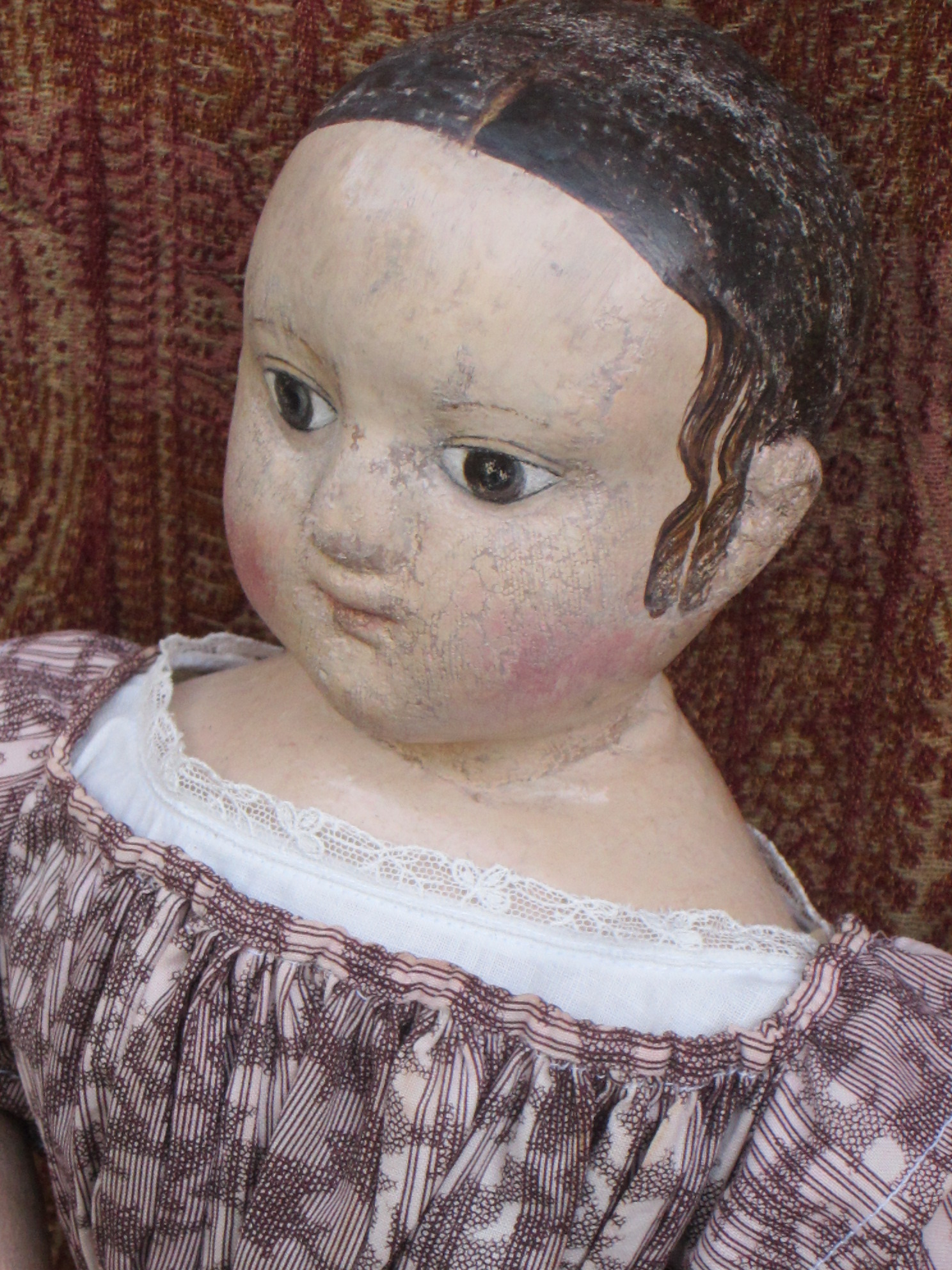
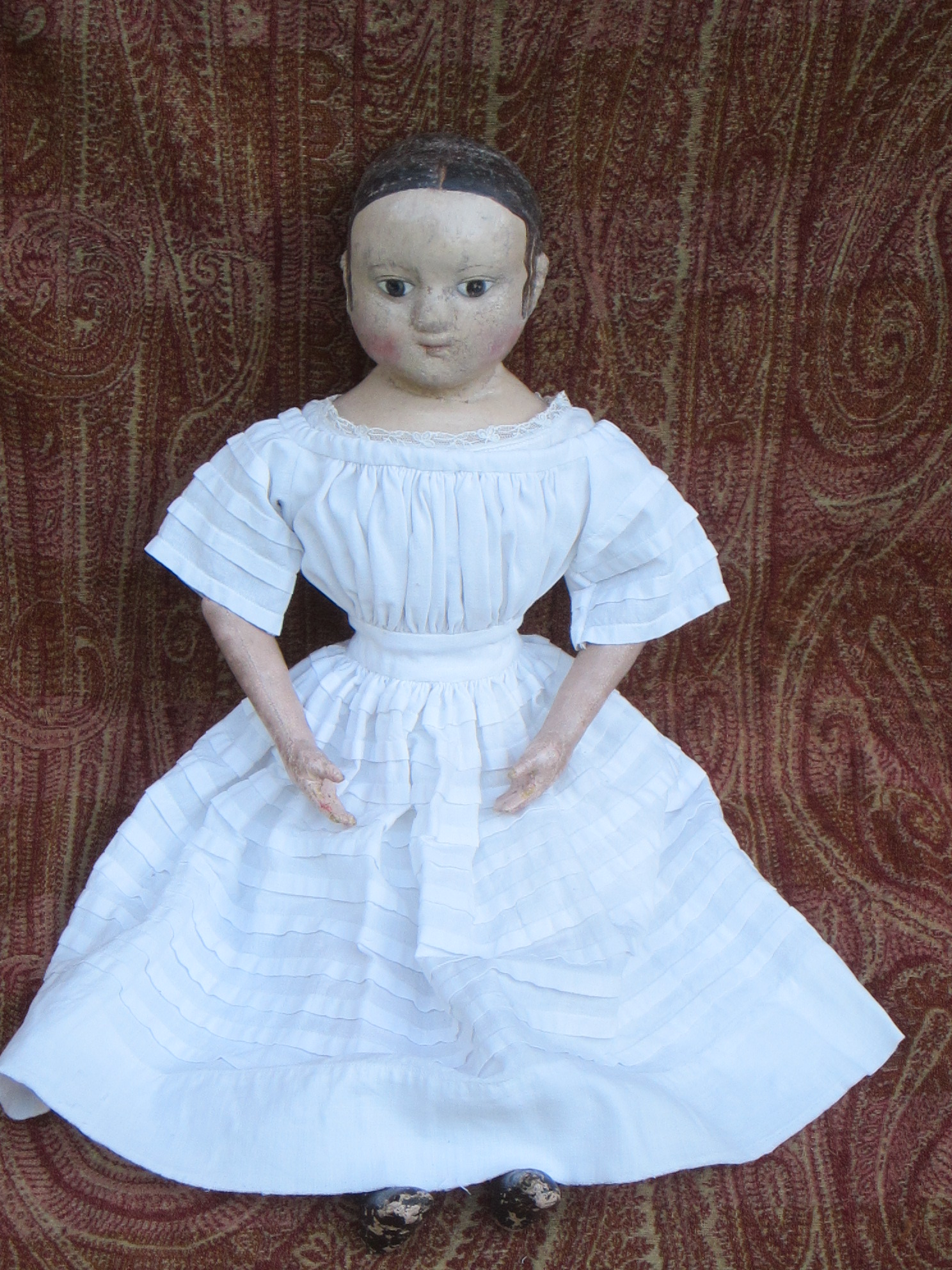
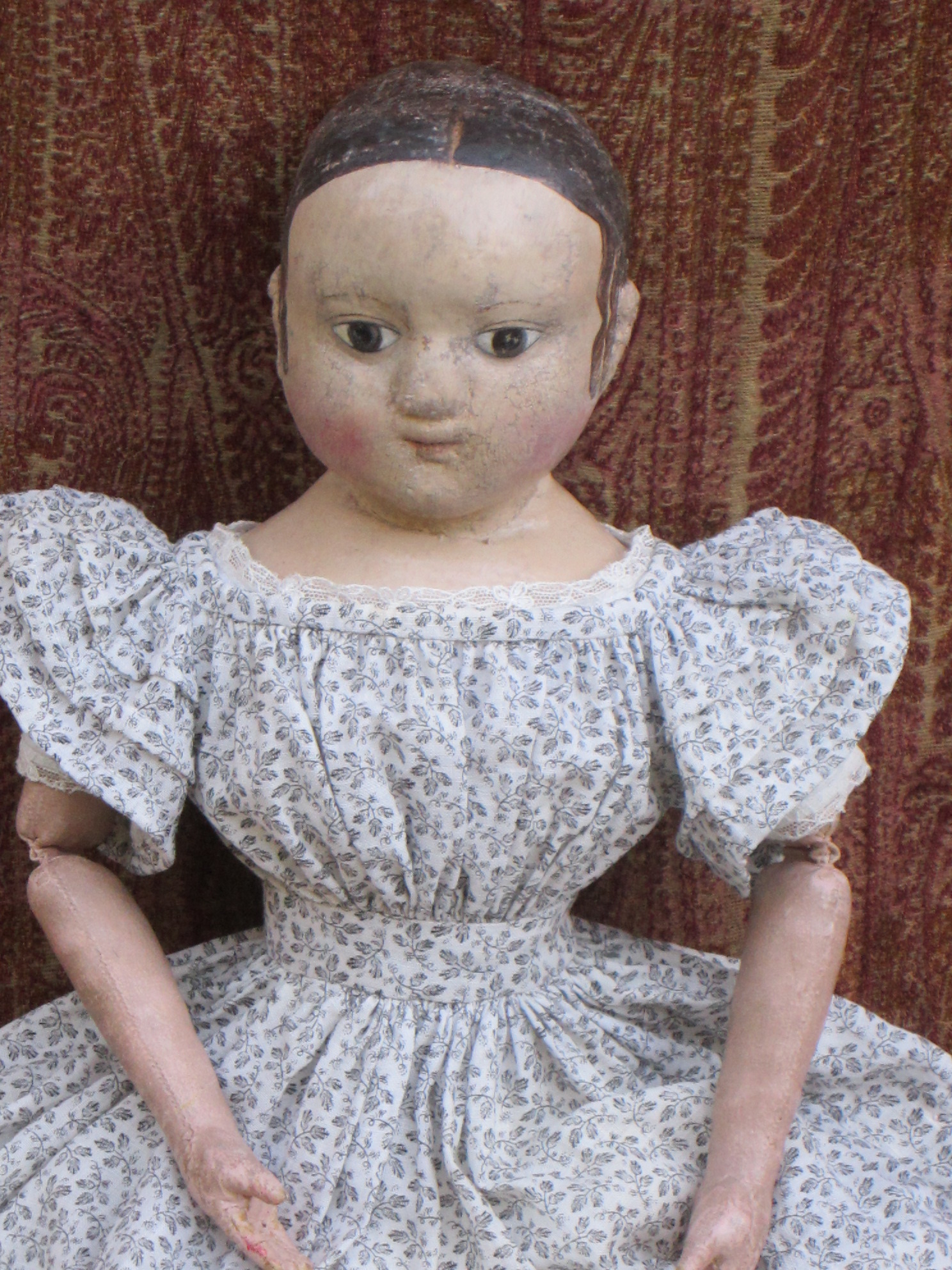
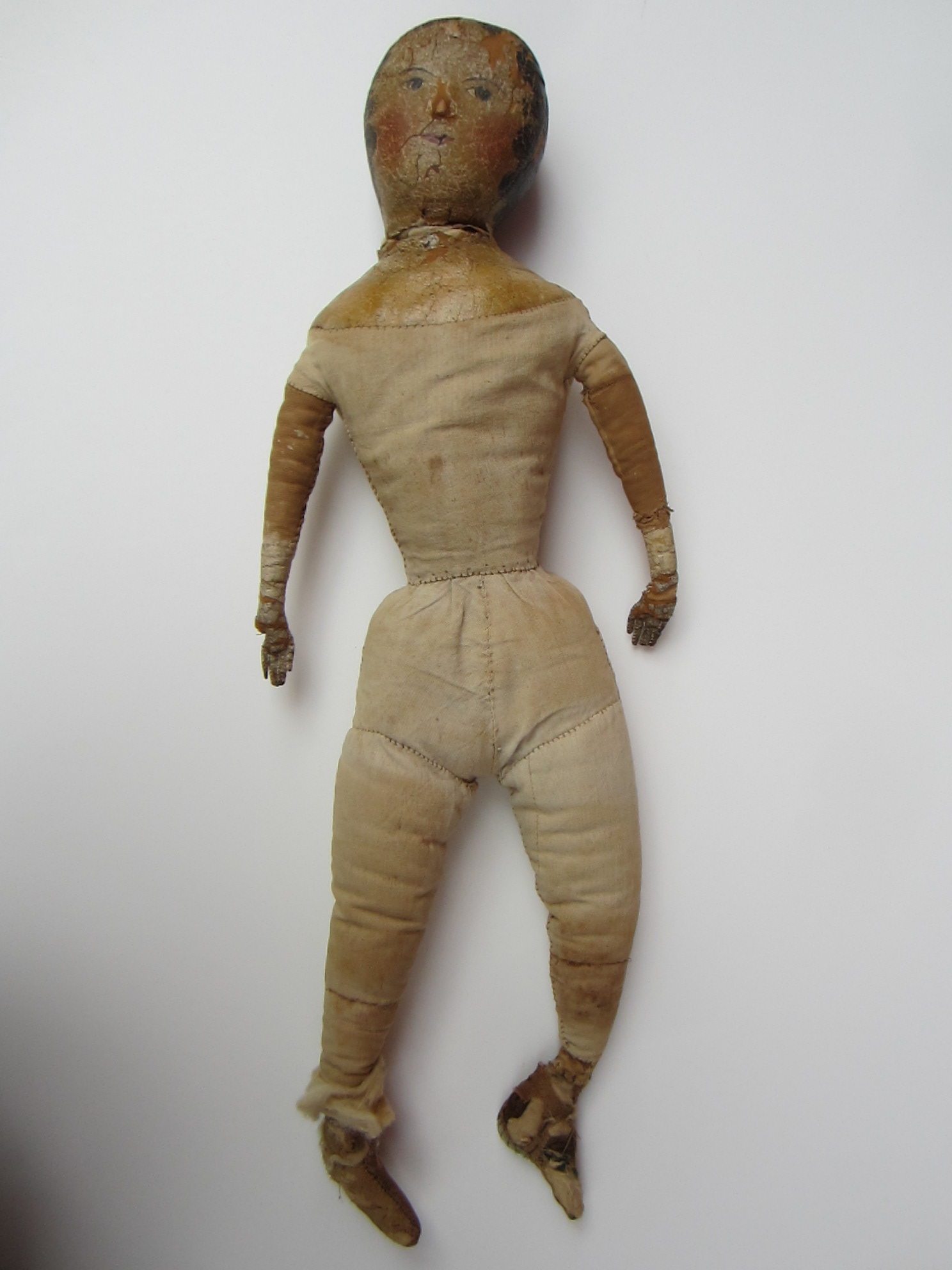
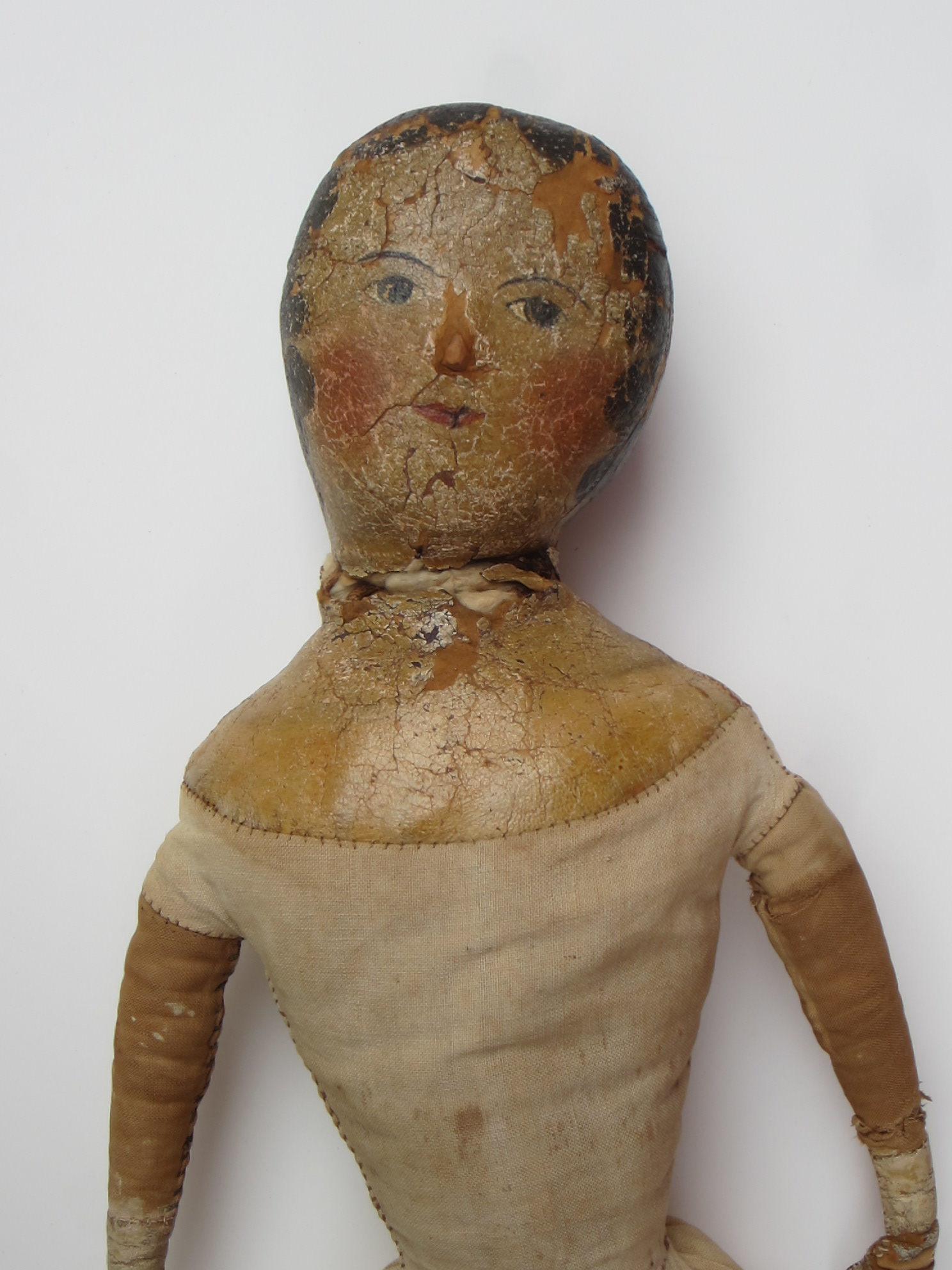
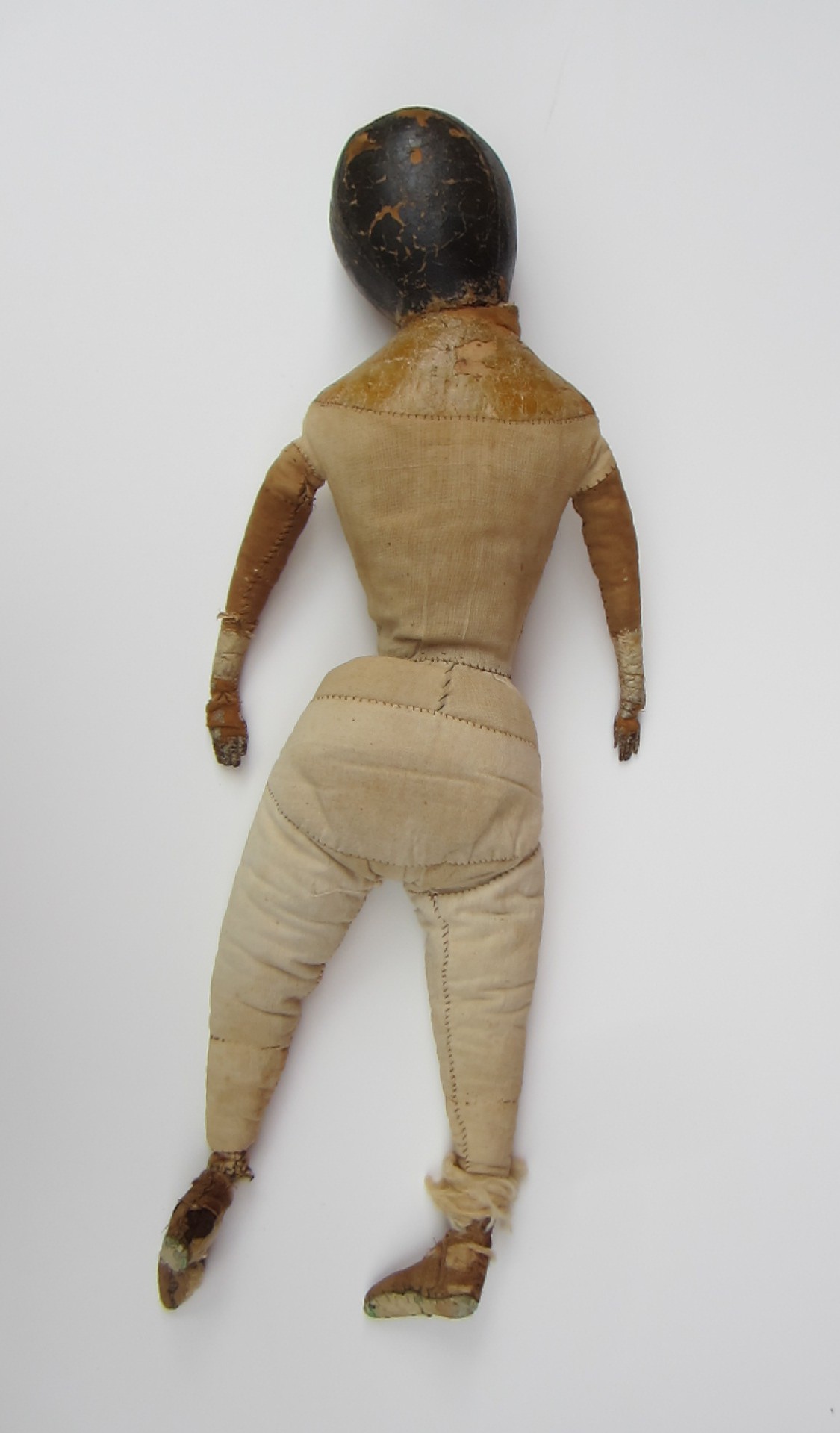
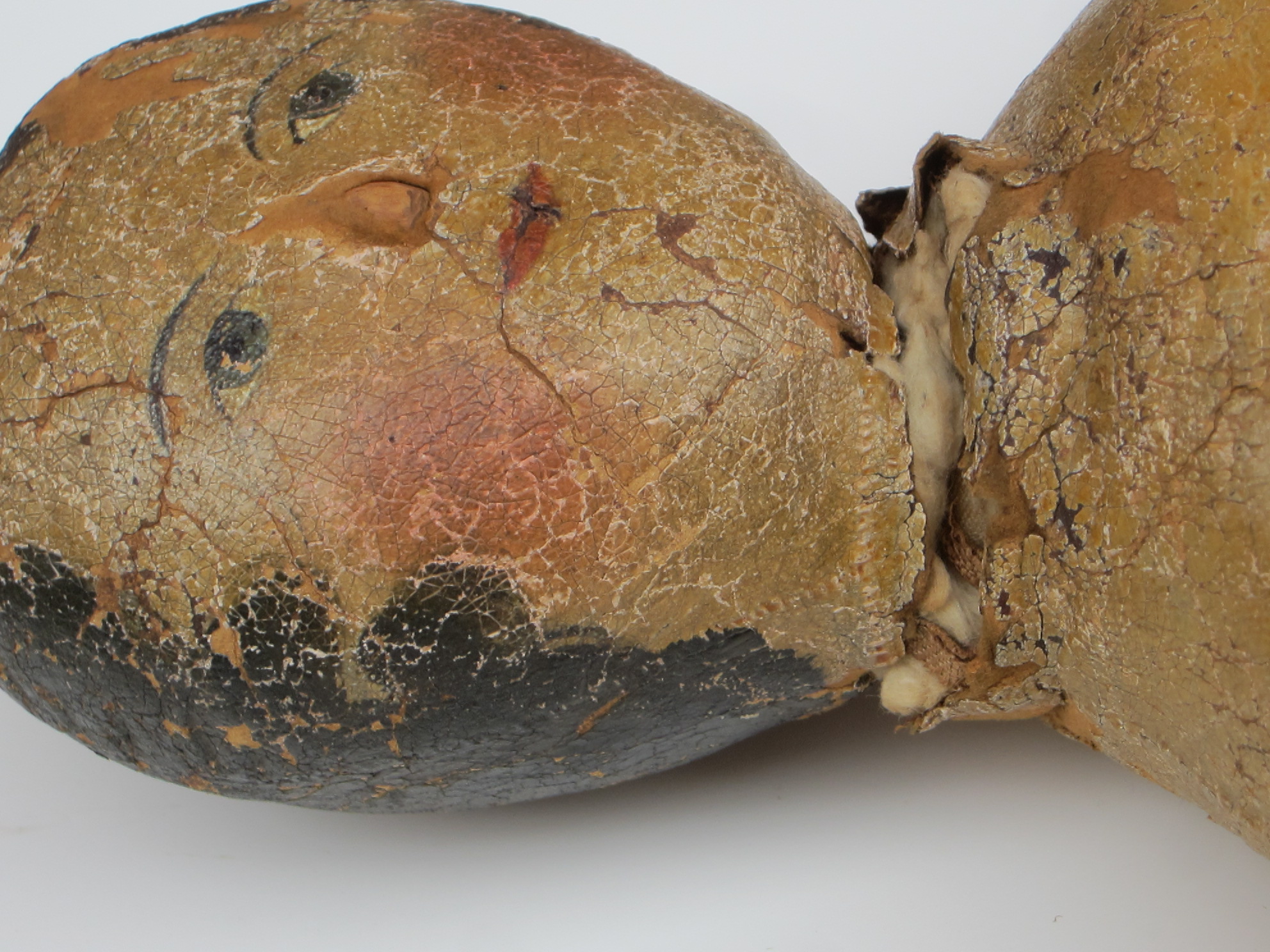
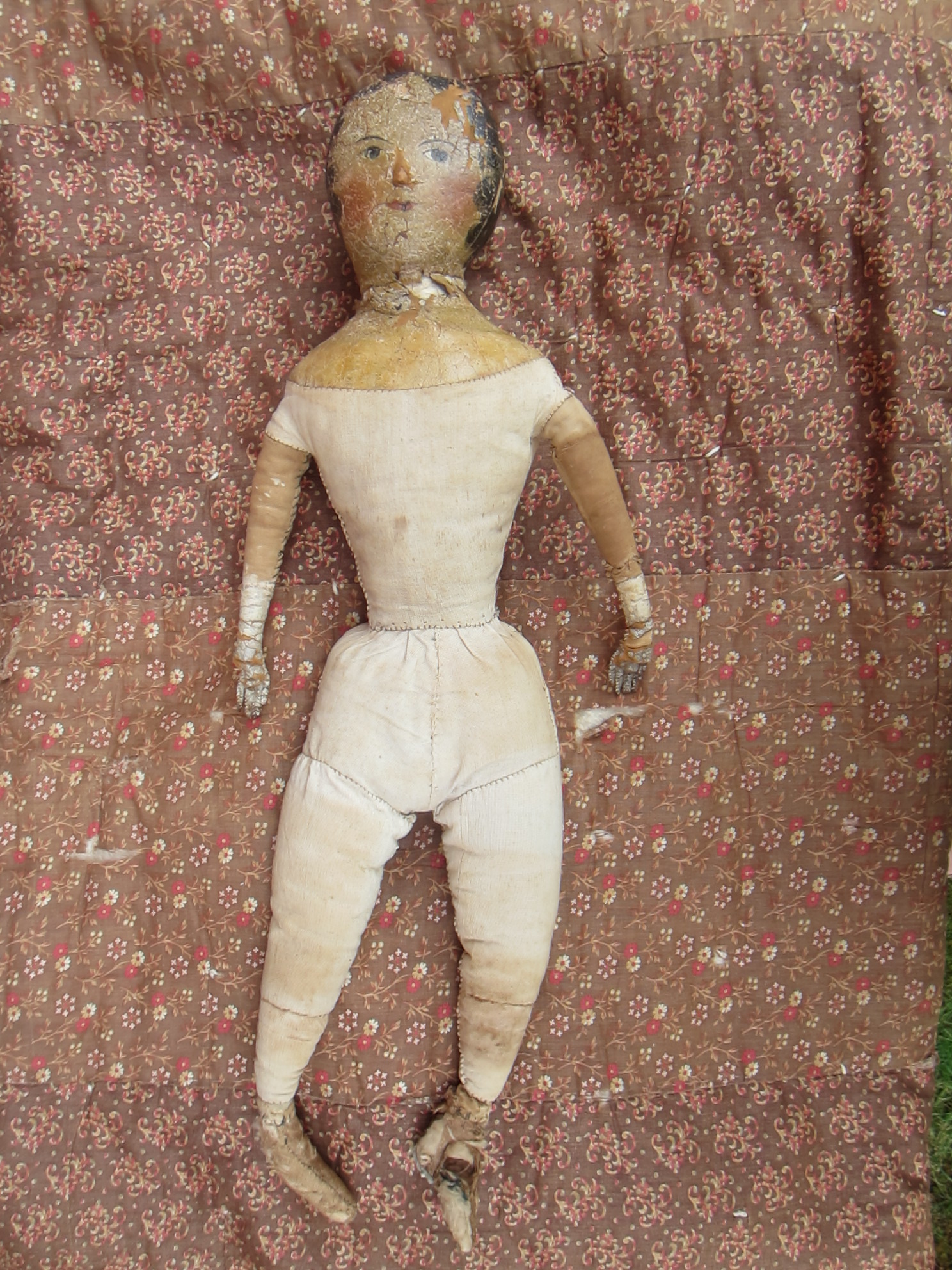
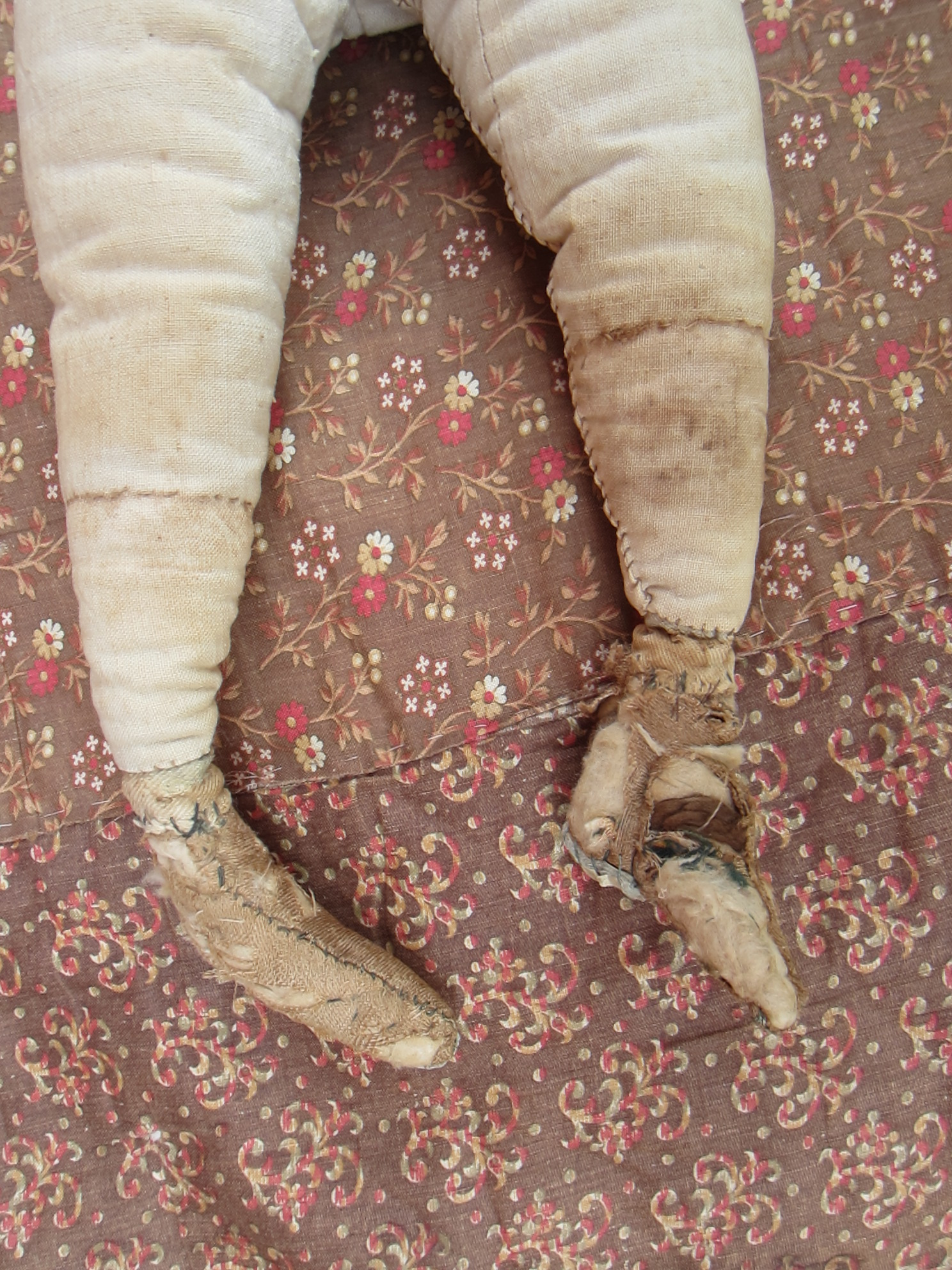
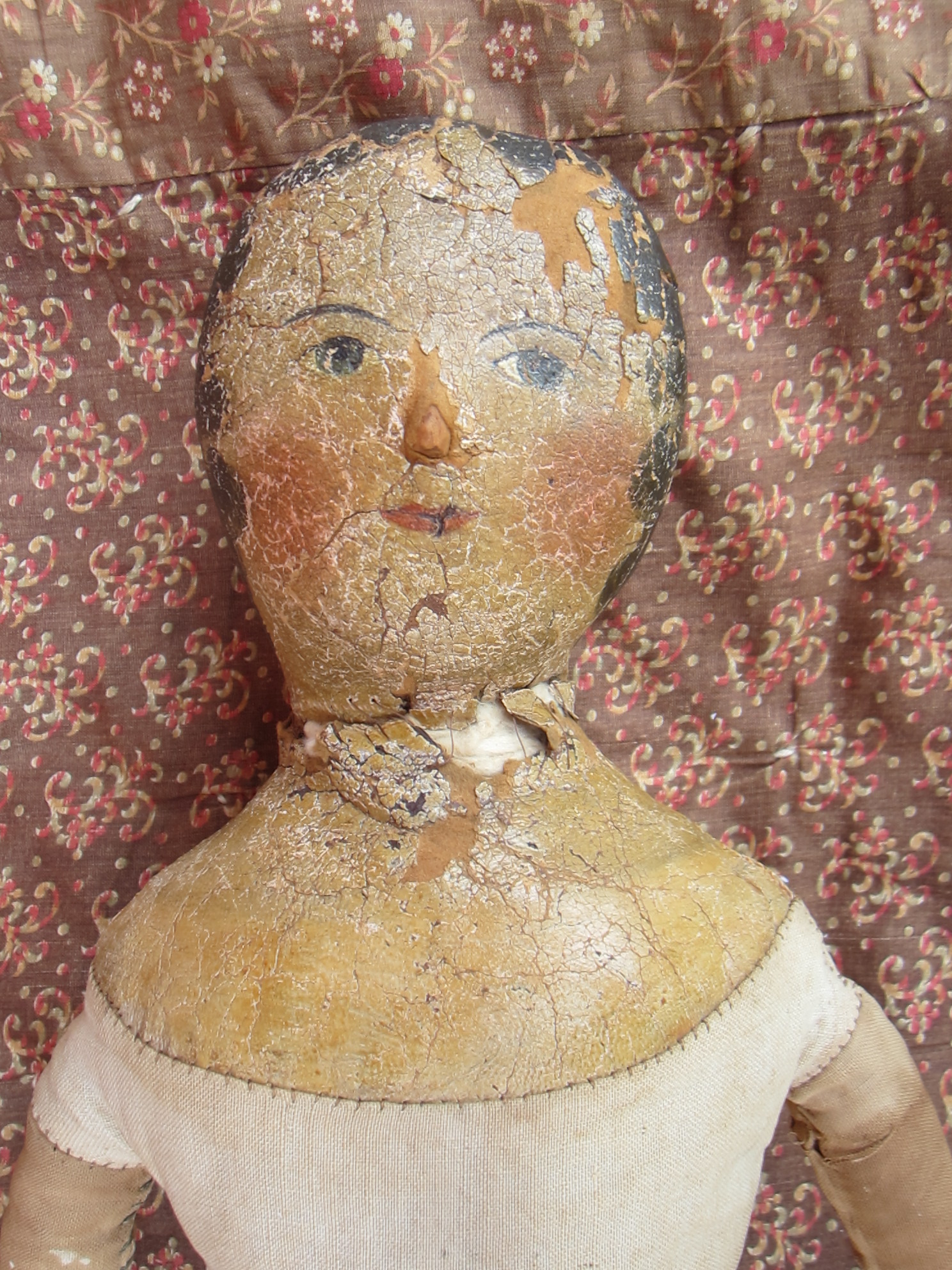
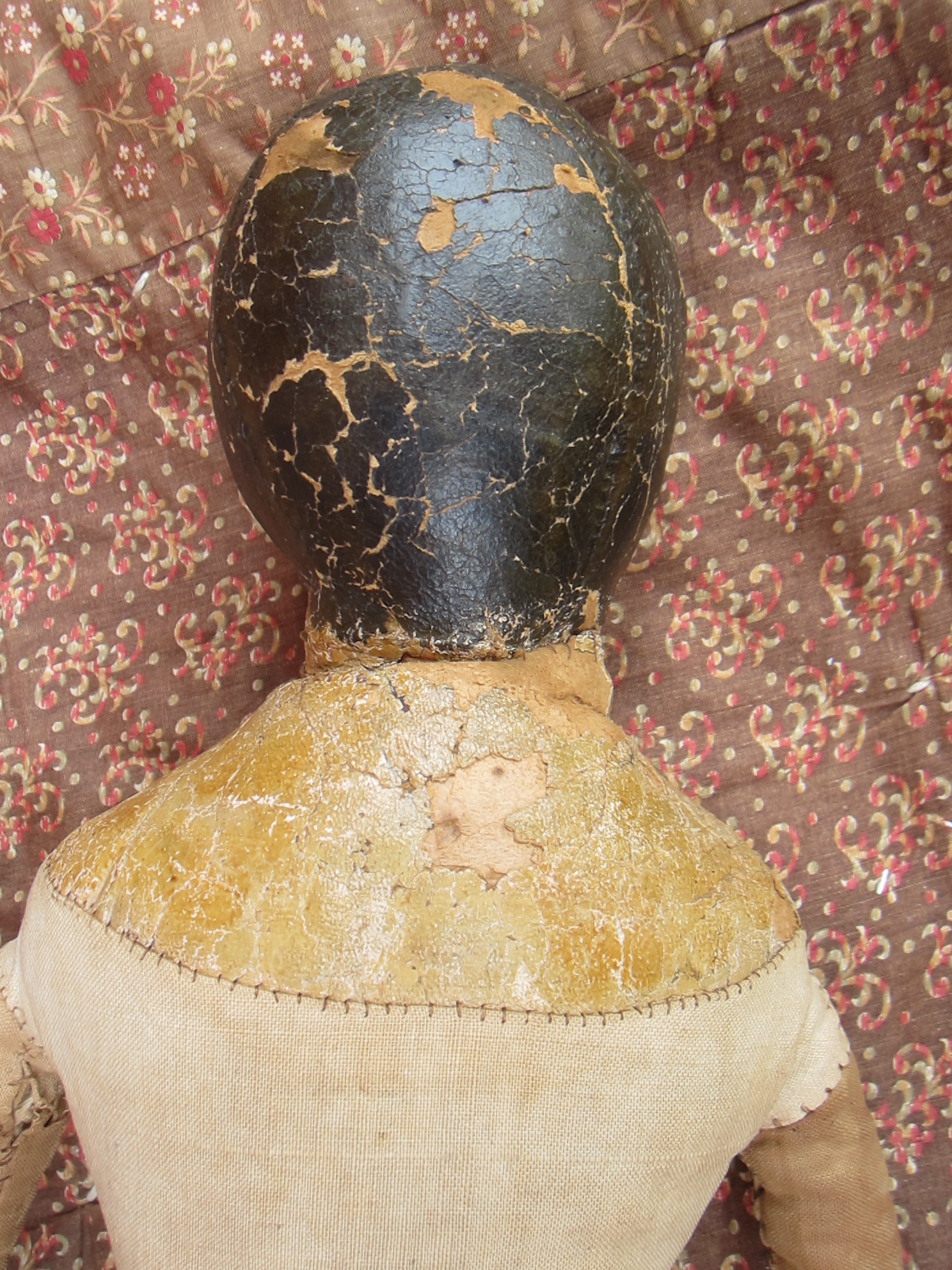


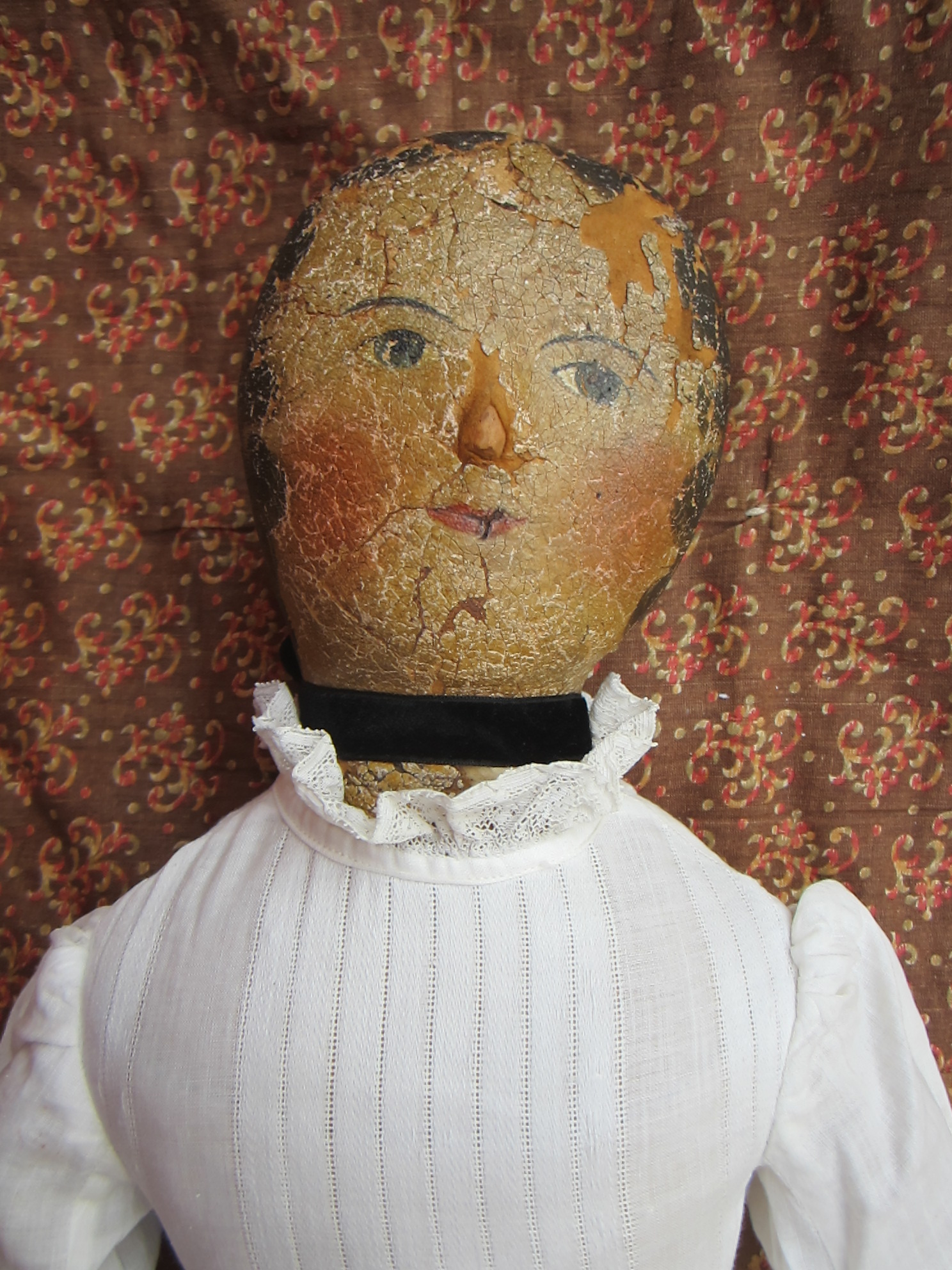
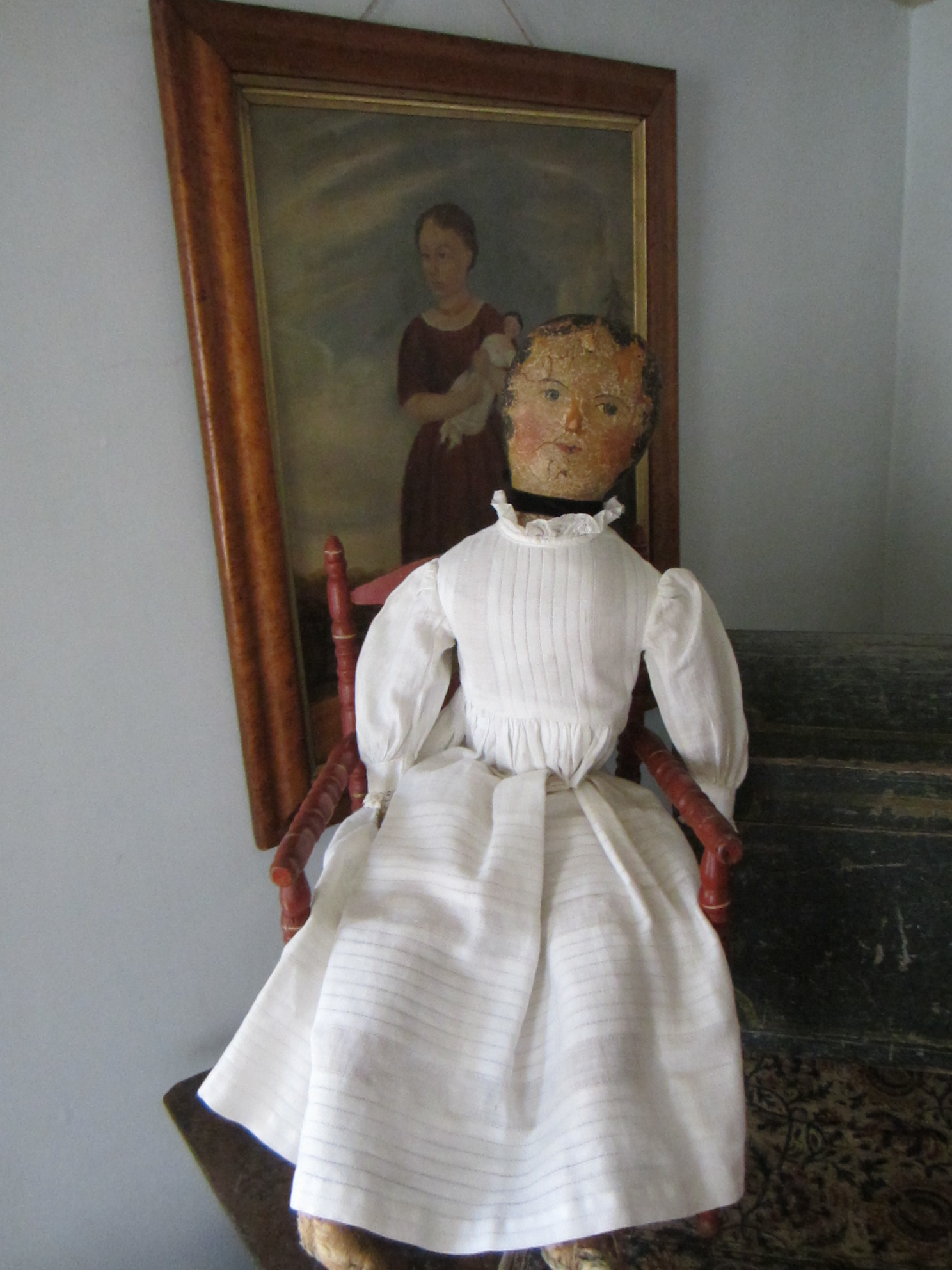


 Today I am starting the first step in drafting patterns for my Izannah doll making class. Just like in any other type of pattern making, I have to first take accurate measurements before I can actually draw out the pattern. This means I need to start by undressing the doll.
 If the item I’m washing is not too large, i.e. a piece of doll clothing, I usually wash it in an enamelware bowl. A plastic, glass, or other non-reactive bowl would also be fine to use. I place a small spoonful of Orvus in the bottom of the bowl, and then add several spoonfuls of sodium perborate, if I’m using bleach. Next I pour in the heated distilled water. The warmth of the water will dissolve the Orvus and make the sodium perborate start to work. If I want my wash water temperature to be a bit cooler, I add room temperature distilled water to the bowl, then stir and add the item I’m washing.
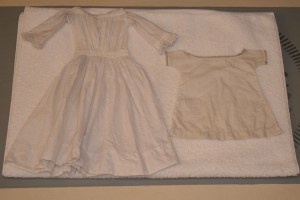 Work day one is at an end, but I’ve gotten side tracked, and all I’ve managed to get done is the laundry! That has a very familiar ring to it. At least this laundry is a lot more fun than the run of the mill dirty t-shirts and jeans
 Izannah Walker Journal